


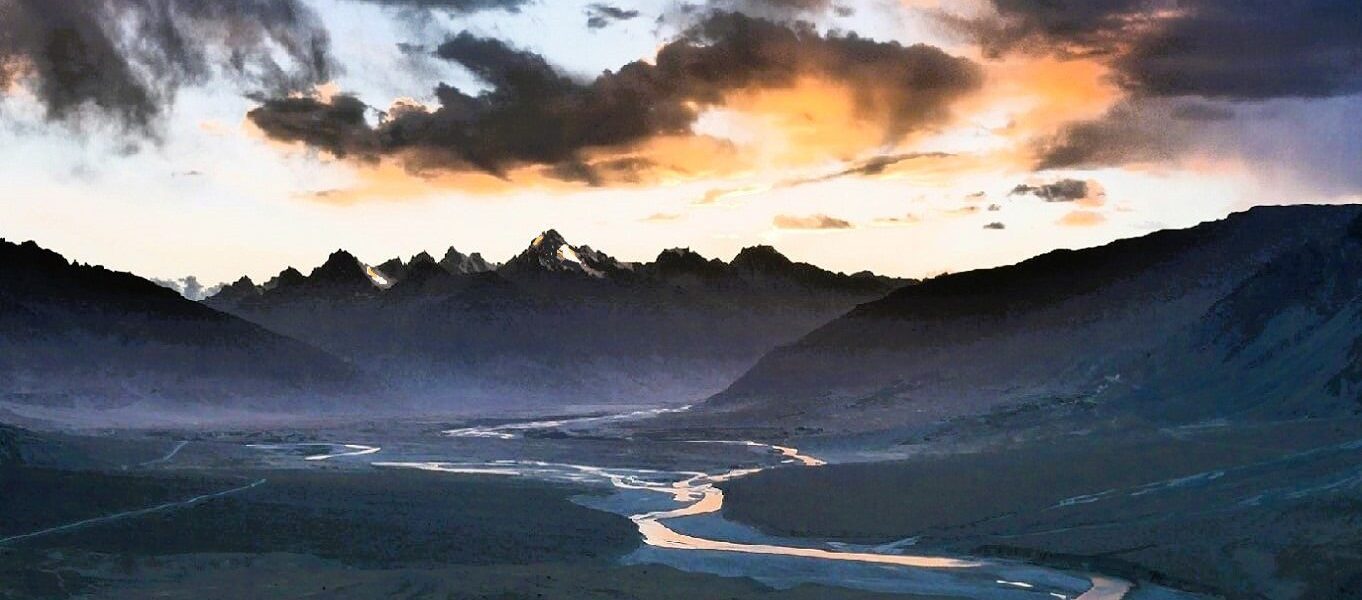
Under Zanskar Light, Silence Becomes a Daily Practice
By Sidonie Morel
A Ridge of Air and Intent
Arriving without the usual noise
The road into Zanskar does not flatter anyone. It narrows and widens without warning, then tightens again at bends where the valley seems to fold itself, stone over stone. In the car, conversation thins. Not from awe, not from drama—simply because the air is dry enough to pull the moisture from your mouth, and the view is too exacting to let the mind drift. You notice practical things first: how quickly lips chap, how dust finds the hinge of the window, how the sun strikes the dashboard as if it were metal. When you step out, your boots make a clean sound. It is not silence in the sentimental sense. It is the absence of padding.
A Ladakh itinerary can be written in hours and kilometres, but Zanskar refuses the neatness of a schedule. Here, the primary keyword that people arrive with—Ladakh travel—often dissolves into a more precise question: what do you do with yourself when you cannot hide behind speed? Under Zanskar light the mountain keeps its silence in the plainest ways. A slope gives no shade. A wall gives shade but keeps the cold. Water does not wait where you left it; it moves, freezes, reappears. You are forced to make smaller plans.
The first evening, the practical checks are not romantic: how to layer without sweating, whether your hands still feel warm after the last turn in the road, how many steps it is from the room to the latrine in darkness. The “high desert” is not a label here; it is a working condition. A single towel left damp becomes stiff by morning. A plastic bottle left by the window turns slick with frost. These are minor facts, but they change the rhythm of thought. The city habit of excess—extra clothing, extra words, extra options—does not translate well.
The first small rule: carry less, notice more
Most visitors think of “simple living” as a choice made in comfort. In Zanskar, simplicity is what remains after the environment has negotiated your habits down to what you can maintain. Carry less does not mean carry nothing; it means stop carrying what you cannot use. The air makes this obvious. An extra sweater that you never reach for becomes weight you resent on every stair. A gadget that needs charging becomes an object that quietly nags you. The most useful items are the blunt ones: a scarf that seals the gap at your neck, a small torch that turns the courtyard into a navigable space, a thermos that keeps water from turning mean.
Notice more happens whether you try or not. When you do not have abundant distractions, you register the mundane details that usually blur: the grit of fine sand at the ankle, the clean friction of wool on dry skin, the particular smell of smoke that comes from dung rather than wood. You begin to measure a day not by the clock but by changes in light on stone. Late afternoon hits the slopes at an angle that makes the surface look rougher; the same cliff at noon looks flat, almost polished. At night the cold arrives quickly, not gradually. You learn to complete small tasks before the temperature drops, because your fingers lose their patience first.
The Room with No Extras
What a Ladakhi home teaches in ten minutes
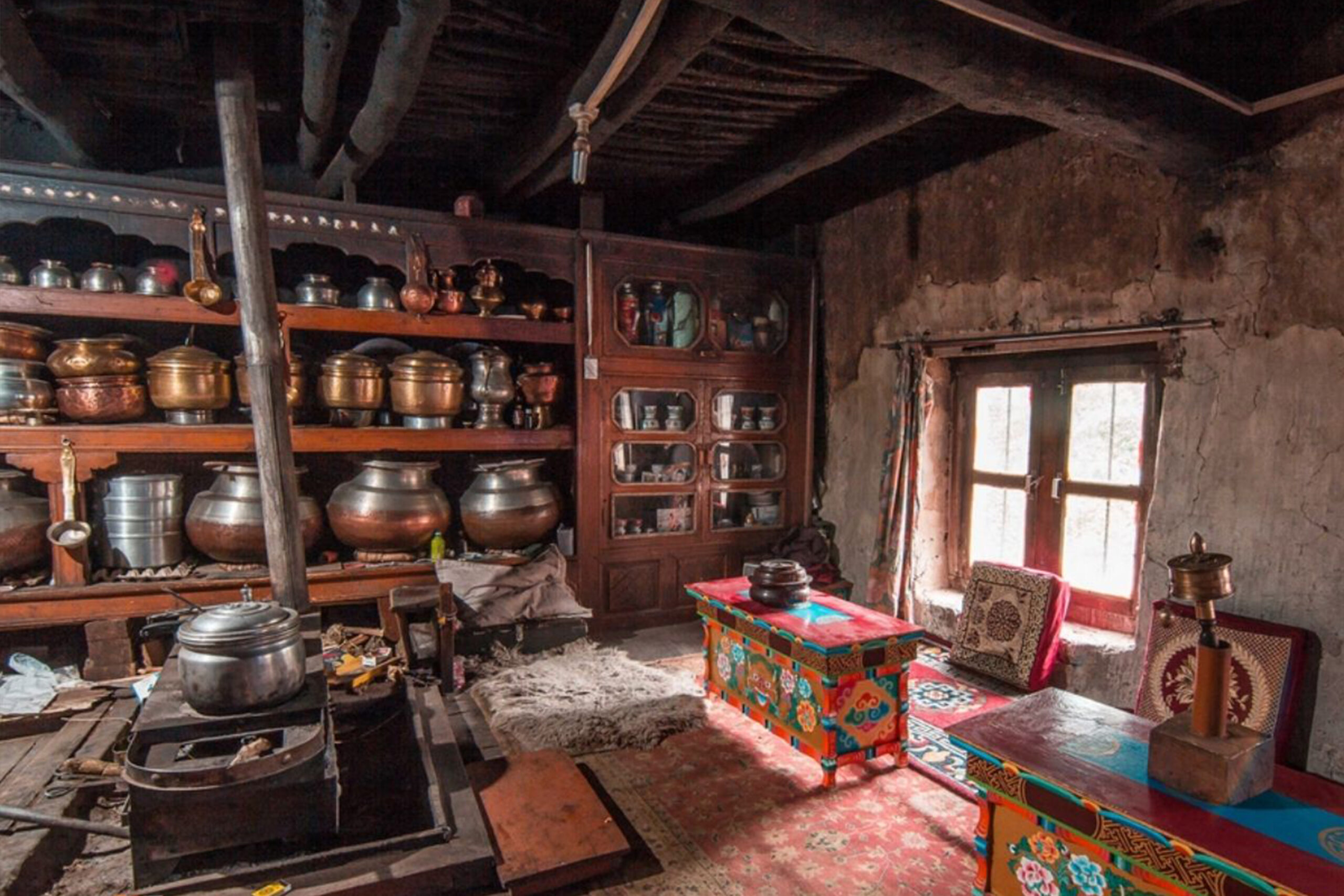
A room in Zanskar is often arranged with the logic of necessity. There is space for sleeping, for sitting close to heat, and for keeping what must stay clean. The rest is deliberately spare. If there is a rug, it is there to prevent cold from rising, not to decorate. If there are cushions, they are shaped by use. The walls may be whitewashed, the corners softened by soot. A shelf might hold a metal pot, a bowl, a small jar of tea, a stack of utensils tied together by habit. Nothing suggests a desire to impress a guest. Hospitality happens anyway.
Ten minutes is enough to feel the difference. In many European interiors, the eye is invited to roam across objects that are not strictly needed. Here, the eye rests because there is not much to scan. That calm is not aesthetic. It is an economy. The household has already done the editing. “Simple living in Ladakh” is sometimes used as an idea for people who want an antidote to clutter, but in Zanskar the simplicity is structured around what must survive: cold, dust, long distances, tight supplies.
You also learn the local order of priorities. Heat matters more than light. A low stove, a corner where people sit with knees tucked in, a kettle that stays within reach. Water is handled with care; it is not spilled casually, not left in open containers. Food is stored in ways that assume dryness is an ally. A thick door is not charming; it is a buffer. Windows are small for a reason. The design is not a style. It is a response.
Fewer objects, fuller usefulness
The longer you stay, the more the scarcity of objects begins to feel like a kind of clarity. Each thing has a job. A metal cup is for tea, for water, for soup; it is not assigned to one drink by branding. A basin is for washing, for carrying, for sorting. A blanket is folded in a particular way because that fold keeps dust away from the part that touches your face. The repetition of use gives objects a quiet weight. When something breaks, it is repaired if possible. When it cannot be repaired, it is repurposed. Waste feels too exposed here.
This is where the Thoreau-like lesson slips in without needing a lecture. The experiment is not performed in isolation; it is performed in a social environment that already knows how to do more with less. If you came to “detox” from a city life of abundance, Zanskar will not congratulate you. It will simply require you to participate in the same economy of attention as everyone else. You start to understand why minimalism as a trend can feel hollow: it often centres on choosing fewer objects while keeping the same appetite. Here, appetite is trained by circumstance. The mountain keeps its silence by refusing to indulge excess.
Tea as a Daily Treaty
Salt, butter, warmth—how morning is negotiated
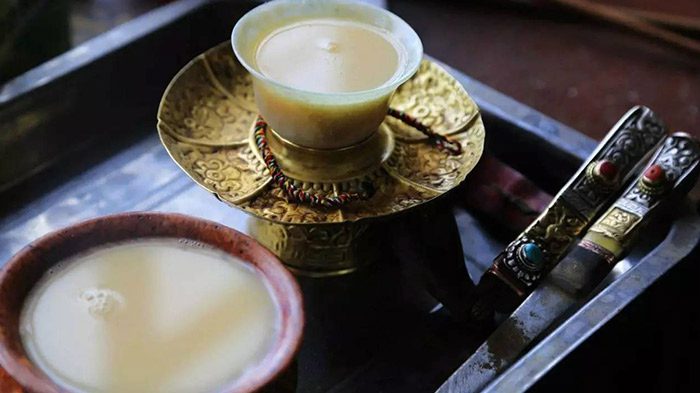
Morning in Zanskar does not begin with spectacle. It begins with heat, and heat begins with work. A stove is fed. A kettle is filled. The sound of water as it warms is more noticeable because everything else is quiet. Butter tea arrives as a practical measure, not as a cultural performance: warm fat, salt, liquid. The first cup is often taken without fuss. You hold it with both hands, not for ritual but because the metal is cold and your fingers need time.
If you want to understand Ladakh culture through daily life, watch what happens around tea. Someone checks the flame, adjusts the pot, passes the cup. The smallest gestures carry a kind of competence. In a high-altitude valley, breakfast is not an indulgence; it is a calibration. The body needs warmth. The mouth needs moisture. The stomach needs something that will hold. In the dry air, thirst can present as fatigue. Tea is the first correction.
Visitors sometimes expect a tasting note, the way they would speak about wine. Butter tea does not invite that kind of commentary. It tastes like what it is: salt, butter, tea. The point is not flavour complexity but function. Under Zanskar light, a day begins with these blunt facts, and you learn not to romanticise them. It is the honesty that makes it memorable.
Rituals that keep the body honest
The routine repeats and, because it repeats, it teaches. You drink, you warm, you move. You learn how quickly your hands crack if you wash with cold water too often. You learn that a small bowl of porridge or bread is more useful than a sweet pastry that disappears too fast. You learn that the best place to sit is not the one with the best view but the one that keeps your back out of the draft. The body does not lie in this climate. It reports to you directly.
In a city, many discomforts can be softened by convenience. Here, comfort is a matter of small discipline: closing the door properly, placing shoes where they will be warm enough to wear, keeping a scarf ready, not letting water bottles freeze. These are not heroic tasks. They are the quiet scaffolding that makes a day possible. That is the kind of “experiment” that holds: not a grand statement, but a daily practice.
Walking as a Method
Distances measured by breath and light
In Zanskar, walking is not a leisure activity; it is a way of understanding distance. A kilometre is not the same when the air is thin and the ground is uneven. You step over stones that roll slightly under the sole. Dust settles into the seams of shoes. The body learns the slope. You begin to notice how villages sit in relation to water, how fields hold their edges, how paths avoid loose scree, how a line of poplars marks a channel that would otherwise vanish into gravel.
The effect on the mind is simple: walking reduces argument. It is difficult to sustain abstract anxieties when your attention is busy with footing, with breathing, with the angle of the sun. If you are looking for “digital detox” in Ladakh, you could force it by turning off devices; walking does something more direct. It returns you to the scale of your body. You start to remember what your day feels like when it contains fewer interruptions. The mountain keeps its silence by requiring full presence for ordinary movement.
Along the path, sound is spare. A dog barks once, then stops. A group of goats passes, and their bells give the valley a brief texture. A stone dislodges somewhere above and you hear it bounce, then settle. These are not cinematic moments. They are small facts that accumulate until you realise you have been paying attention for an hour without effort.
Why roads do not cancel the footpath
Roads exist, and they matter; they bring supplies, connect families, shorten journeys. But they do not erase the footpath. For daily tasks, the footpath often remains the most reliable route: between houses, fields, water sources, and the edges of settlement. Even with vehicles available, there are places where a car is simply unnecessary or impossible. The path holds the older logic of the valley.
For a visitor, this matters because it changes what you see. From a car, villages pass as clusters of buildings. On foot, you see the working details: a line of irrigation, a pile of dung cakes drying in the sun, a doorway set low to keep heat, the roughness of stone walls where hands have brushed past for years. You begin to notice that “travel” here is less about collecting sights and more about learning a set of relations—between people, land, water, weather. That relation is not explained. It is demonstrated.
Work That Leaves a Clean Trace
Water carried, grain measured, tools returned
In Zanskar, the labour is not hidden. You see it because it happens near the household, near the path, near the places where visitors also move. Water is carried in containers that are simple and sturdy. Grain is measured with a casual accuracy, scooped and levelled without fuss. Tools are returned to a corner where they will be found again. When there is a task, it is done in a sequence that has been practiced enough to look effortless.
This kind of work does not announce itself as “authentic.” It is simply necessary. For someone arriving from a life of services, there is a particular relief in watching tasks have clear beginnings and endings. There are no emails about them later. No follow-up meetings. A pot is cleaned. A floor is swept. A bundle is tied. The trace is clean. The mind can rest because the work is complete.
Thoreau wrote about the dignity of a life pared back to essentials, but Zanskar offers something even stricter: essentials shaped by climate. Dryness means flour keeps well if stored right. Cold means food can be preserved without machines. Dust means you cover things. Scarcity means you do not waste. These are not moral declarations. They are logistics.
The dignity of repeating what must be done
Repetition is often despised in modern life because it is framed as drudgery. In Zanskar, repetition is what builds stability. You can see it in the way tea is made each morning, in the way a room is kept, in the way animals are tended, in the way water is fetched and used. The repetition has a small dignity because it is not optional. The person doing it is not performing a lifestyle; they are maintaining a household against weather.
For a visitor, the lesson is sharp: if you want the calm of a simpler life, you cannot take only the aesthetic of simplicity and leave the maintenance behind. The calm is built by the maintenance. Under Zanskar light, even the quiet seems earned.
The Economy of Weather
Wind, dust, sun—how plans are edited in real time

Weather in Zanskar is not a background; it is a working editor. Wind arrives and changes the valley’s mood without warning. Dust lifts from paths and settles on everything, including your face, your sleeves, the rim of a cup. Sun warms surfaces but not always the air. Shade is cold. Cloud cover can reduce the temperature quickly enough that you notice it in your joints.
The practical response is visible. People step inside. Doors close. Work shifts to whatever can be done sheltered. A plan to go farther is postponed without complaint. In many places, postponement creates anxiety because schedules are tight. Here, postponement is normal because weather is part of the schedule. A day can be productive without being extensive.
This is one of the most transferable lessons for European readers who are not trying to imitate Zanskar but to learn from it: let your day be edited by reality instead of forcing reality to match a plan. It sounds like advice when stated plainly, so it is better understood by watching it happen. In Zanskar, you see a household adjust without drama. A change in wind becomes a change in pace. The day continues.
When the sky becomes your schedule
Over a few days, you begin to read the sky not as a view but as information. The colour of light in the morning suggests how quickly the valley will warm. A thin haze tells you dust will be in your teeth by afternoon. A sudden stillness at dusk hints that cold will settle hard overnight. These observations are not poetic; they are the basis of comfort.
At home, people often try to keep their internal rhythm separate from external conditions. In Zanskar, rhythm and condition are the same thing. You wake when light shifts. You eat when the body needs warmth. You move when the air allows it. This is not a rejection of modernity. It is an alignment with what is already present.
Silence Isn’t Empty Here
What you hear when the valley stops performing
Silence in Zanskar is not the absence of life. It is the absence of constant signal. There are sounds, but they arrive as single events rather than a continuous layer: the scrape of a pot, the short call of a bird, the dull thud of a door closing against wind, the faint rhythm of prayer from within a building rather than amplified outward. At night, you hear your own movement: the rustle of clothing, the shift of a blanket, the small crackle of a stove settling down.
Many travellers chase silence as if it were a spa product. In Zanskar, silence is simply the normal state of a place where energy is conserved. Talk is not absent, but it is not incessant. People speak when there is something to say, and they stop when it is said. In a European city, silence can feel like emptiness because it is rare. Here, silence is ordinary, and because it is ordinary it becomes a medium for noticing.
You begin to hear your own habits: the urge to fill a pause, the impulse to check a screen, the instinct to narrate experience. Under Zanskar light, those habits look slightly exaggerated. The valley does not need your commentary. The mountain keeps its silence by offering no reward for over-expression.
Solitude with a human face
Solitude here does not mean isolation from people. It means that your inner life has fewer external interruptions. You can sit in a courtyard while someone nearby works, and neither of you needs to entertain the other. This is a kind of social ease that is rare in places where attention is constantly demanded.
If there is any “civil disobedience” in the Thoreau sense that belongs here, it is not theatrical protest. It is a refusal to live at the tempo of constant consumption. Zanskar does not advertise this refusal; it simply lives differently. The refusal is built into the structure of the day: heat before hurry, water before ornament, work before display.
Hospitality without Theater
Food offered plainly, accepted carefully
Hospitality in Zanskar is often direct. Tea is offered. Food appears with minimal ceremony. A guest is given a place to sit close to warmth. The gestures are not elaborate, but they carry weight because resources are not endless. Accepting food is therefore not a casual act; it involves attention to what is being shared.
The most respectful posture is not exaggerated gratitude but careful participation. You eat what is offered without turning it into a performance. You do not waste. You follow the rhythm of the household. If you are cold, you do not pretend you are not. If you need water, you ask simply. This is not about etiquette. It is about aligning your needs with what is practical.
For European readers, this can feel unfamiliar because hospitality is often framed as abundance: more dishes, more wine, more talk. In Zanskar, hospitality can be spare and still complete. A warm cup and a steady seat can carry the full meaning.
The guest’s responsibility
In places that attract travellers, the guest can become a burden without noticing. Zanskar makes this visible because the margin is small. A guest who demands constant hot water, constant charging, constant movement creates extra work. A guest who moves with care becomes almost light. You learn to clean up after yourself. You learn to close doors properly. You learn not to ask for what is difficult to provide.
This responsibility is not preached. It is implied by the environment and by the way households operate. The mountain keeps its silence by making each person accountable for the noise they bring.
What to Refuse, Gently
Conveniences that cost too much inside
There is a particular kind of convenience that arrives with modern travel: the idea that everything should be immediate and on demand. In Zanskar, that idea frays quickly. Power may be limited. Hot water may require time and fuel. Connection may be intermittent. If you insist on immediate comfort, you create tension—first in the household, then in yourself.
Refusal becomes a skill, and it is often quiet. You refuse the urge to photograph everything. You refuse the habit of checking messages at every pause. You refuse the impulse to turn the valley into content. You refuse to treat silence as a backdrop for your own narrative. None of this requires a speech. It is done by choosing to sit longer, to look once and then stop, to let a scene remain uncollected.
This is where the Thoreau-like idea of conscience fits without strain. The refusal is not against a government but against a personal economy that has become too noisy. The question is practical: what can you live without, and what becomes easier to see when you do?
Learning to say “enough” before you are forced
Saying “enough” is not deprivation. In Zanskar it is competence. Enough tea to warm you. Enough food to hold you. Enough walking to understand the valley without exhausting it. Enough conversation to share what matters. When you say “enough” early, the day stays spacious. When you say it too late, the body forces it on you with headache, dry throat, fatigue.
The mountain keeps its silence by making “enough” a condition of comfort. The lesson is not exported as a slogan. It remains in the body: the relief of a lighter bag, the calm of a room that does not demand attention, the steadiness of a routine that does not chase novelty.
Notes from the High Desert
Small practices to carry home: time, appetite, attention
You leave Zanskar with a few habits that are difficult to explain to people who have not been there. They are not souvenirs; they are small adjustments. You reach for water before you reach for distraction. You prefer warmth over spectacle. You notice how much your day can hold when it is not chopped into constant notifications. You stop adding objects to a space just to fill it.
Back in Europe, “simple living” is easily commodified—sold as a set of products, a tidy aesthetic, a weekend retreat. Zanskar does not offer that version. What it offers is a working simplicity, born from climate and distance, held up by repetition and care. Under Zanskar light, the mountain keeps its silence by making you aware of what you add and what you remove.
If there is an experiment here, it is not a performance of austerity. It is the quiet test of whether you can live with fewer interruptions and still feel full. Zanskar does not give you a doctrine. It gives you a day: tea, wind, stone, work, walking, and a room that contains only what it must. The rest is left for you to carry—lightly, if you have learned anything at all.
a storytelling collective exploring the silence, culture, and resilience of Himalayan life.