


A Week Put Back Into Season
By Sidonie Morel
Early winter — the taste that only exists in one month
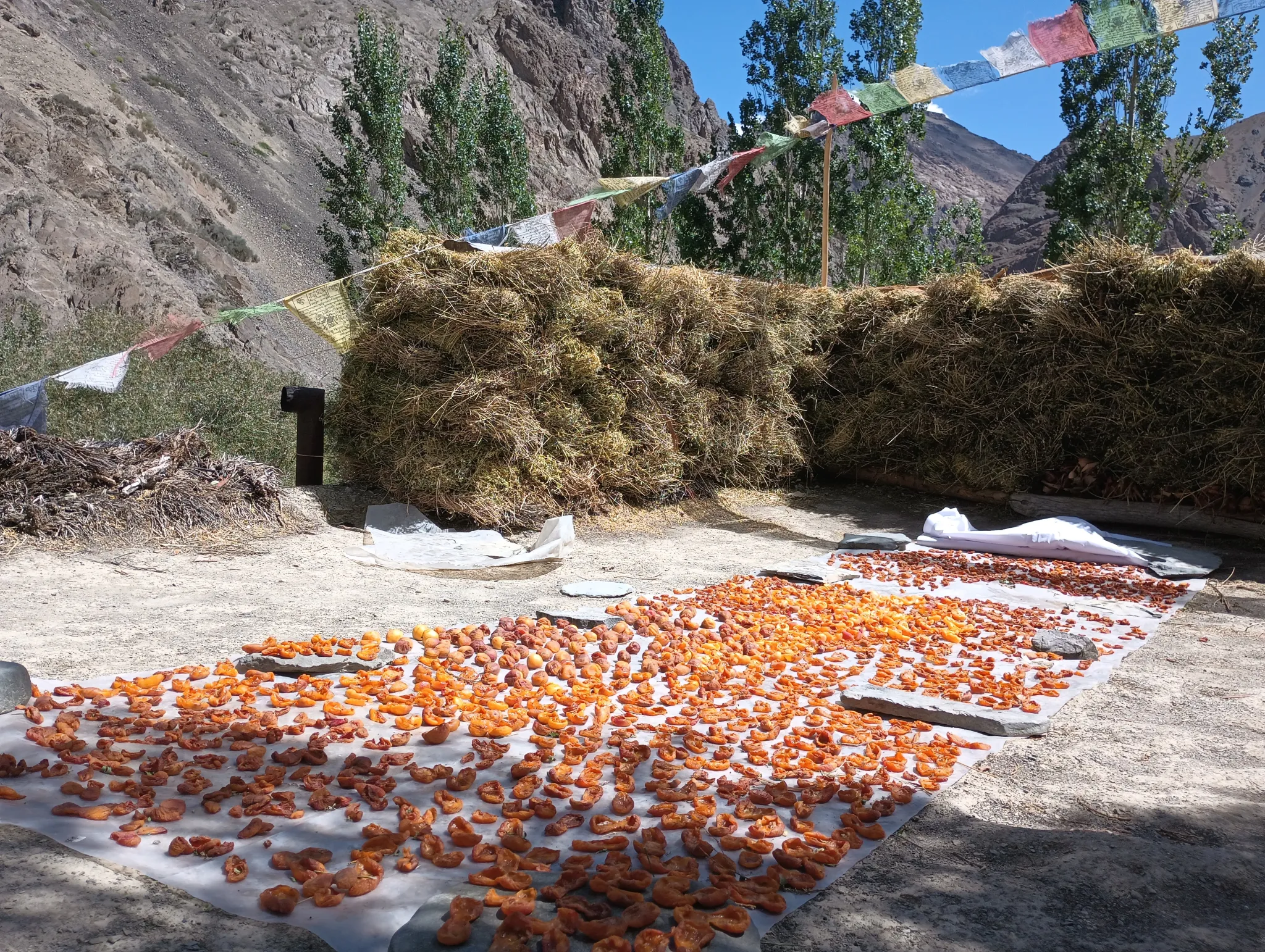
In Ladakh, the kitchen keeps time in stored things. Late in the year, when nights sharpen and water containers start to skin over at the edges, the signs are not decorative. They are practical: apricots split and laid on a flat roof to dry in direct sun; greens blanched and spread thin on cloth; sacks of barley flour tightened against damp; jars opened, wiped clean at the rim, and closed again. The work sits where hands can reach it quickly, because winter reduces time outside.
From a European kitchen supplied without interruption, seasonal eating can look like preference. In Ladakh it is closer to method. Food follows what can be produced in a short growing season and what can be carried through months when roads close or travel slows. Taste changes on purpose: more salt where storage demands it, more sourness where fermentation holds a vegetable past its fresh state, heavier grains and soups when cold increases fuel use and appetite. Nothing needs a slogan. The conditions explain the choices.
This is the idea behind eating as a seasonal contract: you accept what the month offers now, and you prepare—however modestly—for what the next month will require. In Ladakh the contract is enforced by climate. In Europe, it can be chosen as a small weekly practice without pretending to live someone else’s life.
Food as household method, not lifestyle identity
Most Ladakhi kitchens I have been in are compact, arranged around storage and heat. Shelves sit higher than you would expect, away from damp and rodents. Tins close with a hard click. Cloth sacks are tied and double-tied. A window is used for light and sorting—lentils checked for stones, dried greens turned so they crisp rather than soften. A drying line is not quaint. It is infrastructure.
Drying is the easiest to see because it happens outside. Fermentation and souring are quieter but common: a jar kept in a stable corner, a taste that shifts over days. Smoke appears not as an aesthetic choice but as a by-product of fuel and enclosed cooking, and it marks winter food. When fat is available, it is used with care: for warmth, for work, for the physical effort of carrying water, fuel, and fodder.
Conversations about food in Ladakh often turn quickly to timing and storage: which potatoes keep longest, which week is best for drying before the air turns damp, which seal holds, what can be bought when the road is open, what must be made at home. The European language of food—optimization, guilt, “good” and “bad”—does not help much in that context. The Ladakhi language stays close to what can be done.
What the seasonal contract actually is
A seasonal contract is not a vow and not a performance. It is two simple actions repeated until they become normal. The first is acceptance: you stop expecting every flavour to be available at all times. January is not treated as a problem to be solved by logistics. It is treated as a month with specific foods and specific cooking methods.
The second is preparation: you keep a small set of staples that make seasonal eating easy when you are busy. In Ladakh, preparation can be extensive because winter is long and severe. In Western life it can be modest and still useful: a jar of something fermented, a bag of dried beans, broth frozen in portions, dried herbs, or a few vegetables stored for weeks rather than days.
One practical way to test whether the contract is working is simple: can you tell what month it is by what you are eating? In Ladakh, many people can, because the pantry and the market change in visible steps. In Europe, the signals are often flattened, and the contract is a way to bring some of them back.
The year-round same taste problem in modern Europe
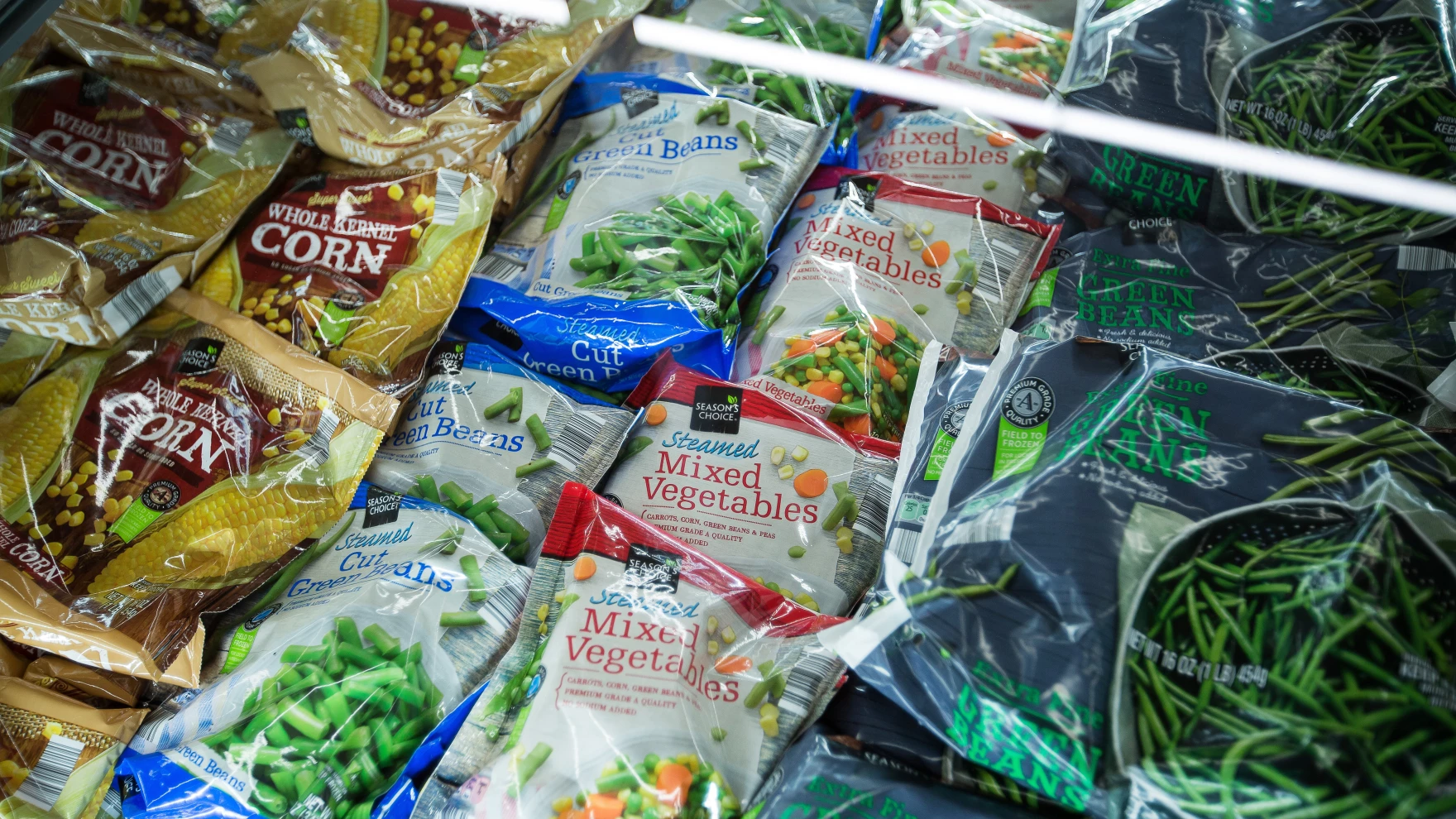
The supermarket is efficient. It reduces risk and expands choice. It also flattens time. Tomatoes appear in winter, grown under lights or shipped long distances. Strawberries arrive when fields outside are bare. Herbs sit in plastic sleeves regardless of weather. The same salad can be repeated through months that used to taste different.
When season stops shaping food, food becomes another area of constant decision-making. People chase novelty or try to manage the endless options with rules: macro targets, supplements, lists of “allowed” foods. The language becomes managerial. Meanwhile, older cues—abundance, scarcity, storage, the first greens of spring—become faint.
This is not an argument against modern supply. It is an observation about what disappears when time is removed from taste. Eating as a seasonal contract brings back a small amount of structure without adding a new identity to maintain.
One weekly meal that obeys the month
The simplest translation from Ladakh to modern Western life is one meal a week that follows the season rather than preference or habit. One meal is enough to create repetition. A whole week can be unrealistic for people with work, children, travel, or limited access to markets. Repetition matters more than intensity.
Choose the day as you would choose an appointment you intend to keep. It can be Sunday lunch, Friday evening, or the night you normally rely on takeaway. The best day is not the most virtuous day. It is the day that will actually happen. If your city has a clear market rhythm, you can anchor the meal to it: the first week roots replace tomatoes, the week squash becomes abundant, the week citrus piles appear, the week the fish changes.
Keep the rule visible and simple. Use ingredients that are abundant locally right now. Cook in a way that fits the season: longer simmering in winter, quicker cooking in summer, more roasting in autumn. Add one preserved element—fermented, pickled, dried, or stored—to connect the meal to preparation. That small addition is the contract made tangible.
Season-by-season logic without turning into recipes
Winter and spring
Winter eating in Ladakh is shaped by constraints that are easy to name: freezing nights, limited fresh produce, roads blocked, fuel and water managed carefully. The results are also easy to name: grains, legumes, stored roots, dried greens, and soups or stews that retain heat. The European equivalent does not require imitation, only method. A winter seasonal meal can be a warm bowl built from beans or lentils, roots, grains, and broth, finished with one acidic or fermented note—pickled cabbage, yoghurt, a spoon of fermented chilli, lemon—so the meal has structure and does not rely only on heaviness.
Spring, in high places, is incremental. The logic is “lighten, but do not become careless.” Greens return. Bitter flavours return. Herbs reappear. A spring seasonal meal can be built from plain criteria: one green element that is genuinely local and newly available, one stored staple (beans, grains, potatoes), and one sharp element (vinegar, a ferment, citrus) that marks the shift away from winter cooking.
Summer and autumn
Summer allows freshness and speed. The logic is “use what is fresh while it exists.” In Europe, this is when markets are full and cooking can be quick. The seasonal contract still benefits from one small act of saving: herbs dried, tomatoes roasted and frozen, a jar of quick pickles. The point is not to preserve everything. The point is to preserve something, so the season does not vanish the moment it ends.
Autumn is when kitchens start thinking ahead again. In Ladakh, drying and storing intensify because winter arrives without negotiation. In Europe, autumn is when routines return and markets shift toward vegetables that keep: squash, brassicas, apples, onions, potatoes. Cooking tends to move toward roasting and braising. This is also the season when one preserved item for winter can be made without drama: a jar of sauerkraut, a chutney, beans cooked and frozen in portions. The contract becomes preparation rather than a theme.
The pantry as a bridge between months
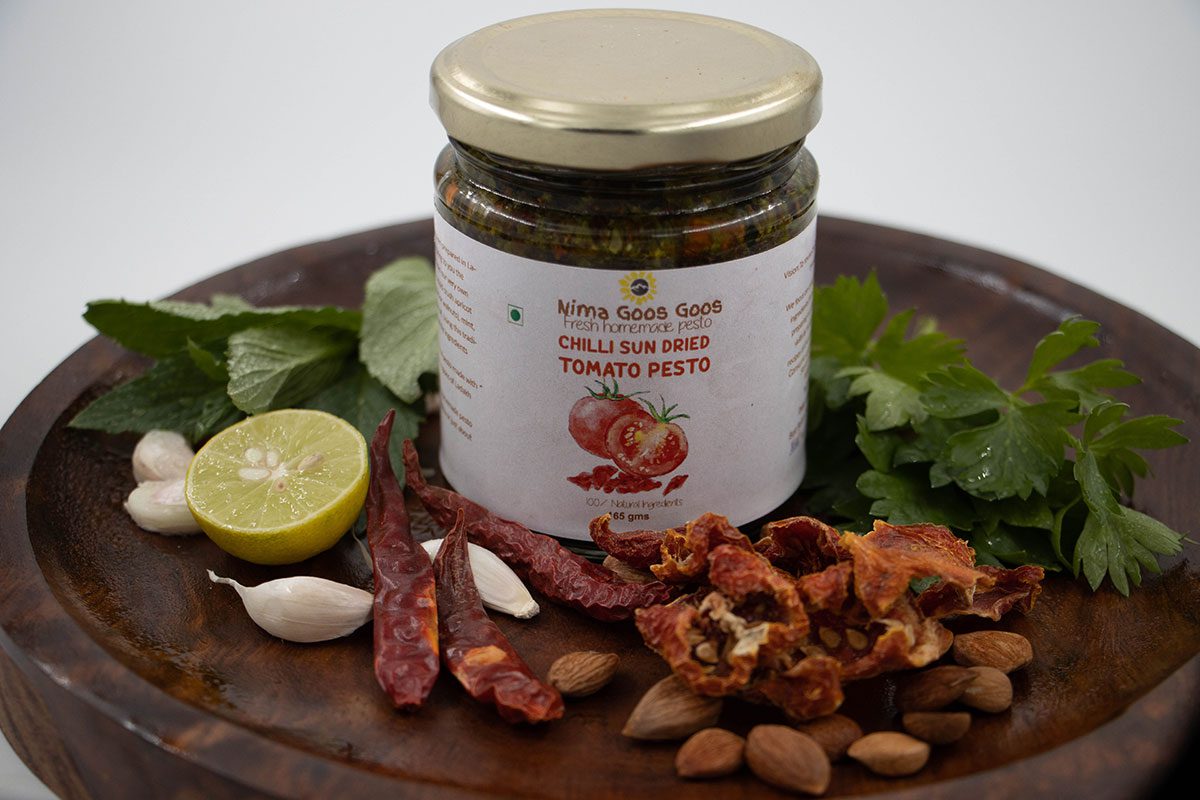
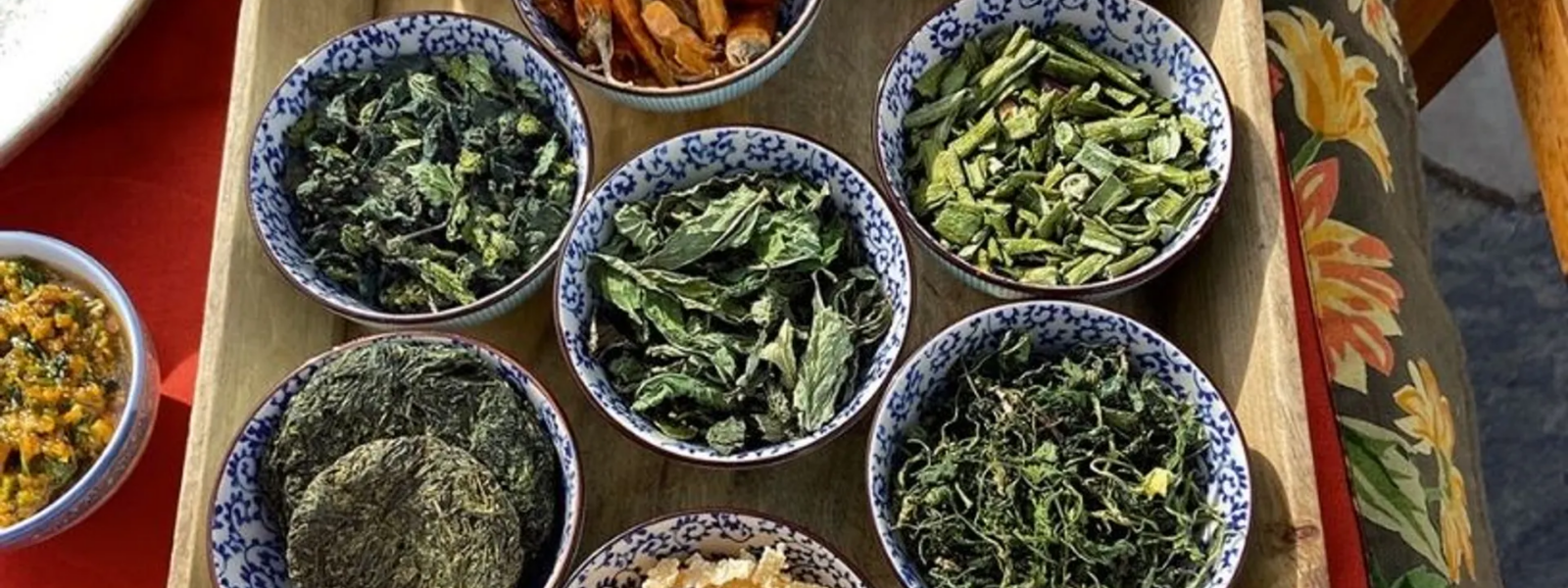
In Ladakh, the pantry is not a hobby. It is continuity. You can see the past season sitting in front of you: dried apricots from sun months, flour milled earlier, greens that were fresh once and are now brittle. Winter food contains traces of summer and autumn in changed form.
In a Western flat, you can build a smaller version. Start with one preserved practice you can repeat. Fermentation is often the simplest: shredded cabbage and salt pressed under its own liquid; carrots cut into sticks; a jar kept in a cool corner and checked once a day. Drying can be as plain as herbs hung in a warm room or fruit slices dried slowly. Freezing is also storage, and it functions in the same way when it reduces effort later.
What matters is not sophistication. What matters is that you create a visible link across time. When you open a jar made in October in midwinter, you are not chasing an ideal diet. You are using preparation to reduce friction and to let the year show itself again.
Keeping it ordinary
Seasonal eating becomes fragile when it turns into a public identity. In Ladakh, the work is private and repetitive, and that privacy is one reason it lasts. If you want the weekly seasonal meal to persist, treat it as a household tool.
Make it easy to repeat. Use the same pot in winter. Keep a shelf for a few staples. Rotate a small set of meals rather than constantly searching for new ones. If you cook for others, do not announce a theme. Cook what makes sense for the month. If you eat alone, sit at a table, because the practice depends on noticing what is present: the root, the grain, the preserved sour note, the herb that appears only for a few weeks.
Over time, the change is visible in ordinary ways. Shopping becomes quicker because you stop scanning for everything. Cooking becomes steadier because you repeat methods suited to each season. The year returns in the kitchen not as an idea but as a sequence of foods that appear, peak, and disappear—then return again.
Sidonie Morel is the narrative voice behind Life on the Planet Ladakh,
a storytelling collective exploring the silence, culture, and resilience of Himalayan life.