
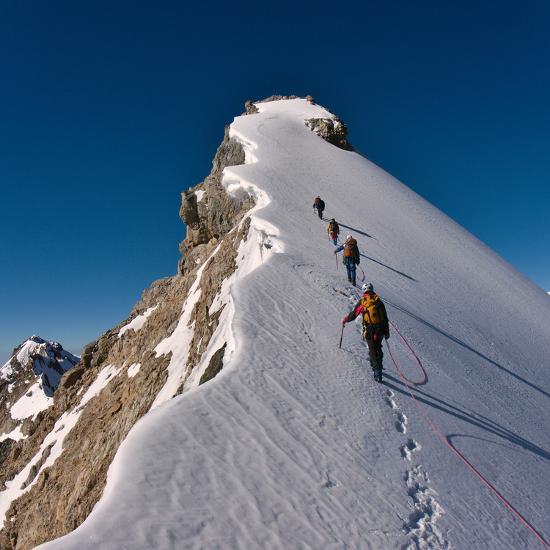
What do we call people who climb mountains?
The term “mountain climber” is commonly used, but it doesn’t encompass the many styles of mountaineering. Each style has its own challenges, risks, allure, and community. Some devote their entire lives to mastering one style. Below, I introduce the various styles of mountain climbing:
Hiking / Hiker
Often involves walking on rugged terrain where basic route finding is helpful. Typically, there are established trails, and technically difficult sections are rare. It’s the most popular style, with routes like the main route of Ben Nevis, Grues Grind, and Plain of Six Glaciers being popular. Many people reach summits using this method.
Trekking
Trekking is done on established routes often supported by facilities like porters and huts. There’s no need to carry equipment, and though not true wilderness, altitudes are often high. Popular treks include El Camino, Everest Base Camp, Machu Picchu, and West Highland Way. Trekking often doesn’t reach the summit but provides convenient access to nearby peaks like Machu Picchu and Wana Picchu.
Backpacking
Requires camping skills and basic route finding. Involves walking long distances with all food and gear, sometimes crossing peaks or mountains like the West Coast Trail or Rainier Circuit.
Mountaineering
This is a continuous progression of skills and activities. It applies to everything requiring above-average route-finding abilities and technical movement skills when moving through alpine regions. This is guided by the “Freedom of the Hills” guidelines.
Scrambling / Scrambler
This term isn’t widely used outside the UK, Canada, and parts of the US. It refers to very challenging hikes involving steep ridges requiring the use of hands and, occasionally, more minor climbing. Most scrambles have a mid-point at distinctive peak summits. After hiking, this is the second most popular way people reach the summit.
Mountaineering / Mountaineer
This activity is essentially the same as scrambling but involves glaciers, snow, and other technical features requiring special skills and equipment. It’s the most well-known form of summit achievement.
Ski Mountaineering
Involves skiing up steep terrain and then descending or crossing glaciers using alpine skiing techniques. Requires advanced skills and familiarity with various types of equipment and terrain.
High Altitude Climbing / Commercial Expeditions
These aim for peaks over 6000 meters (some define it as 7000 or 8000 meters), requiring extensive acclimatization, preparation, and setup over several months. Done in alpine style (ascending in a single push) or siege style (multiple camps, ropes, supplies), the latter being more common.
Many high-altitude climbs are commercial, often criticized within the broader climbing community as time-consuming or, in the worst cases, vanity projects for wealthy clients. Indeed, many earnest but inexperienced individuals attempt such climbs.
One legitimate reason for this elitist attitude is the disparity between porters and employers. Sherpa people do most of the actual climbing, setting ropes, carrying loads (including unnecessary comfort items like TVs or coffee machines in some cases), and making tracks for clients to walk on.
All these make climbing as easy as possible and increase the chances of success. They do this for minimal reward and face very high mortality rates by being on the most routes. It’s all to exempt wealthy clients from the duties usually expected on expeditions.
In climbing culture, this is considered cheating and inappropriate. Many climbers don’t consider people climbing the Seven Summits as climbers for this reason. How can they claim to be part of this culture without knowing anything about these deep traditions? It’s like calling someone a triathlete for running a 10km race, swimming casually, or riding a bicycle. Technically correct but completely missing the point.
Climbers don’t use the term “mountain climbing.” It’s an ambiguous term that doesn’t define what type of climbing they’re doing. In my experience, this term is most popular among those unfamiliar with climbing traditions, culture, and practices, and in non-climbing media.
Free Climbing
Generally included in mountaineering. It uses the same techniques, but most climbers don’t call themselves mountaineers. Everything that requires using hands and feet to climb on technically rock or ice except for aiding is called free climbing. That is, climbing without climbing gear, such as using artificial scaffolding and hand gear to create a climbing route. Free climbing uses gear to stop climbers during falls. Most climbers climb in this style. Free solo is climbing without a rope, and climbers sometimes have ropes for descent or trouble. Rock climbers usually climb on tradition and sport only, and do not interest people like alpine.
Bouldering / Boulder
Climbing technical sections of rocks without ropes, usually protected on a cushioned mat. I’m not actually climbing anything over 20 feet, but it’s a critical part of climbing. Large rocks and later mentioned high ball are likely to take.
Sport Climbing / Sport Climber
Climbing using permanent bolts fixed to rocks, attaching quickdraws to them, and then hooking ropes onto the quickdraws in case of a fall. If there’s a fall, the quickdraw supports its weight. Usually, climbers pass the quickdraw before the rope pulls and stop falling. Generally, sports routes do not reach the summit, but I know there are several such routes in the Dolomites.
Traditional Climbing / Trad Climber
Using passive protection (nuts and hexes) or active protection (camming devices, e.g., camlocks, dragons, friends) instead of bolts to prevent falls. These devices are inserted into cracks and projections on the rock. Trad climbing requires more technical skill and focus than sport climbing, and improper installation won’t prevent falls. The term trad climbing typically refers to climbs under 10 pitches or multi-pitch climbing. These routes rarely reach important peaks, but these skills are essential for climbing many difficult mountains.
Ice Climbing
Climbing ice using ice tools (aggressive ice axes suitable for vertical use) and crampons. Protection from falls on ice is done with small stainless steel tubes screwed into the ice called ice screws.
Mixed Climbing
Climbing rock and ice using ice tools and crampons. Bolts, trad gear, and screws are usually used for protection. It requires advanced skills and a good sense of balance.
Deep Water Soloing
Except for very few places like Thailand, it’s not very popular. These routes are relatively short lengths of rock climbing that use the water surface to soften the impact of falls.
Top Rope Climbing
Setting ropes from climbers to anchors and then hanging them from the belayer allows climbers to catch immediately in case of falls or fatigue and can fall for significant distances.
Big Wall Climbing / Aid Climbing
When peaks are very vertical and featureless and seem impossible, it’s time for aid climbing and big wall climbing. Aid climbing is about the technique, and big walls are about the remote area, spending many days moving methodically and slowly. Climbers use ladders made of nylon tapes, extensive amounts of gear, hooks, pitons, and cams, and aid climbers use every means possible to make seemingly impossible climbs. This requires great courage, skill, time, and money.
Alpine Climbing / Alpinist
Here are the people called alpinists in English. This uses a complex set of skills to climb very technically demanding routes in mountainous areas. Good examples are the north face of the Eiger, Mount Temple in Greenwood Lock, and the Bugaboo Mountains (Becky Swanard Route). Here are two climbers climbing Slovakia Direct. Alpine climbing usually aims for the highest point of the mountain, but in reality, there are many routes to climb subsidiary peaks and other distinctive terrain.