
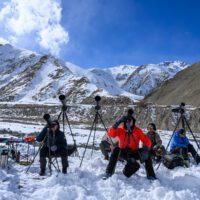
When the Valley Refuses to Perform By Sidonie Morel A Flight Into Thin Light Leh, at the speed of the body In winter, Leh receives you without ceremony. The airport is efficient, the road into town is a strip of tarmac cut through pale ground, and the first facts arrive before any romance can: altitude, dryness, cold. A car door shuts with a short, hard sound. Breath shows itself, immediately, as something you can see. Inside the hotel lobby, the heater has that faint smell of hot dust, and the carpet feels too soft after the grit outside. Acclimatisation is not a suggestion here; it is the first etiquette. The […]
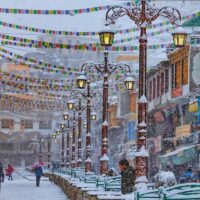
Where Winter Footsteps Leave No Trace By Sidonie Morel Arriving in Leh when the air feels newly sharpened The first breath at altitude The airport doors open onto a cold that does not rush you, but it does set terms. In the first minutes, you notice how quickly moisture leaves the mouth. A sentence feels longer. The inside of your nose stings. In Leh in January, even the simplest actions—hoisting a bag, crossing a small patch of ice near the taxi stand—ask for a fraction more attention than they would elsewhere. On the drive into town, the usual distractions are subdued: fewer honking spirals, fewer clusters of motorcycles, fewer quick […]
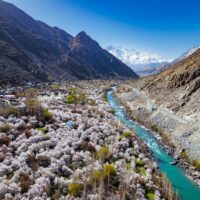
When Apricot Trees Open the Valley By Sidonie Morel The First Color That Does Not Announce Itself Blossom before certainty Apricot blossoms in Ladakh do not arrive with a clear beginning. There is no moment when the valley declares that spring has started. Instead, a branch changes. Then another. Pale flowers appear quietly along stone walls and irrigation channels, close to houses where winter routines have not yet been fully put away. The mornings are still dry and sharp. The ground still holds last season’s dust. And yet, something has shifted. These trees are not ornamental. They stand where they have always stood—near kitchens, near water, near the paths that […]

In Drass, Winter Stays on the Slope By Sidonie Morel The town that measures time in snow Morning on the Kargil road Drass sits along the Srinagar–Leh road, the long seam that stitches Kashmir to Ladakh. In summer, it is a place you pass through with the windows down, counting apricot trees where you can. In winter, the same route narrows into a corridor of caution: tyres fitted for cold, engines left running a little longer, tea poured before anyone says what they came for. The town’s name travels ahead of it, often delivered as a warning—cold, colder, coldest—yet the fact of Drass is less theatrical than the reputation suggests. […]
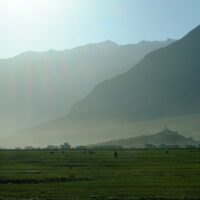
In Ladakh, Every Necessary Walk Can Become a Pilgrimage By Sidonie Morel The First Steps Are Not Spiritual, Yet A doorway, a threshold, a small errand that turns into distance In Ladakh, the day often begins with something ordinary: a kettle that needs filling, a matchbox that has gone missing, a note that must be delivered before the wind rises. These are not announced as pilgrimages. No one ties a scallop shell to a backpack. There is no stamp book, no ceremonial farewell. Yet the first steps out of the house carry a quiet seriousness, because a short walk here is rarely short in the way it is elsewhere. The […]
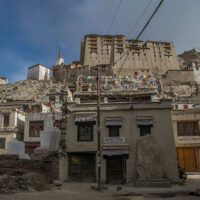
The Footpath That Runs the House By Sidonie Morel Morning, Before the Shops Fully Wake The first circuit: latch, dust, water, return In Leh the day often begins with a small walk that does not announce itself as anything special. A door latch lifts with a familiar resistance; the hinge answers in a dry squeak. In the lane, the ground holds yesterday’s dust in a fine layer that rises easily and settles again on socks and cuffs. A dog watches without moving. A broom scrapes somewhere behind a wall, steady and unhurried. The route is short: a turn past shuttered storefronts, a few steps along a low wall, then the […]

When Water Sets the Rules: Permaculture Days in Ladakh By Sidonie Morel A place where water arrives as a schedule, not a background Morning errands measured in kilograms In Ladakh, water announces itself by weight. A jerrycan is not an abstract unit; it is twenty litres held close to the body, the plastic biting into the palm where the handle narrows. The day begins with containers—metal buckets with dented rims, a kettle reserved for drinking water, a smaller bottle kept separate because someone in the house insists it “stays clean.” The domestic order is visible: one corner for vessels that touch cooking, another for those that touch washing, a third […]

Under Zanskar Light, Silence Becomes a Daily Practice By Sidonie Morel A Ridge of Air and Intent Arriving without the usual noise The road into Zanskar does not flatter anyone. It narrows and widens without warning, then tightens again at bends where the valley seems to fold itself, stone over stone. In the car, conversation thins. Not from awe, not from drama—simply because the air is dry enough to pull the moisture from your mouth, and the view is too exacting to let the mind drift. You notice practical things first: how quickly lips chap, how dust finds the hinge of the window, how the sun strikes the dashboard as […]
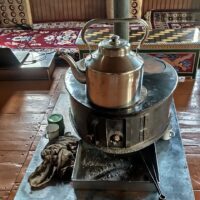
When the Month Rewrites the Household By Sidonie Morel Before the snow commits The first changes happen indoors In Ladakh the season rarely arrives with ceremony. The sky can be perfectly clear, the sun sharp enough to make stone look polished, and yet the house has already started acting as if winter has signed its name. A pot stays on the stove rather than being washed and put away. The kettle is kept within reach. A blanket is folded and moved closer to the one chair that gathers everyone without being assigned to anyone. The edits are small, almost modest, but they are deliberate. Doors are closed with a different […]
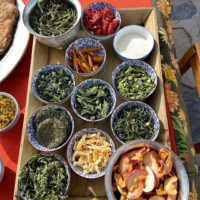
A Week Put Back Into Season By Sidonie Morel Early winter — the taste that only exists in one month In Ladakh, the kitchen keeps time in stored things. Late in the year, when nights sharpen and water containers start to skin over at the edges, the signs are not decorative. They are practical: apricots split and laid on a flat roof to dry in direct sun; greens blanched and spread thin on cloth; sacks of barley flour tightened against damp; jars opened, wiped clean at the rim, and closed again. The work sits where hands can reach it quickly, because winter reduces time outside. From a European kitchen supplied […]