
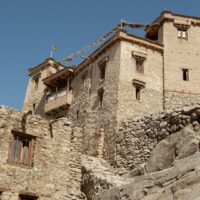
In our fast-paced world, where luxury is often defined by gold-plated fixtures and branded accessories, Ladakh quietly redefines what true richness means. Here, where luxury meets sustainability in traditional architecture and local craftsmanship, visitors discover that the most profound form of wealth isn’t found in thread counts or marble bathrooms, but in authenticity, connection, and respect for the land. Standing at 11,483 feet above sea level, Leh sits as one of the highest altitude towns in the world, yet it’s not the elevation that takes your breath away—it’s the realization that true luxury has been quietly practiced here for centuries through a philosophy of living that values harmony over opulence. […]
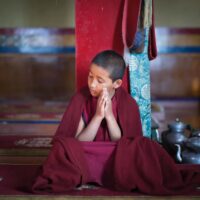
There’s something profoundly jarring about the first day in Ladakh. Not the altitude—though that hits you too—but the silence. The absence of that familiar digital buzz we’ve grown so accustomed to that we barely notice it anymore. Here, at 11,500 feet above sea level, your phone struggles not just with thin air but with the reality that Ladakh offers something radical: stillness, remoteness, and the humility of silence. In our hyperconnected world, we’ve forgotten what it feels like to be truly unreachable. Do you long to escape the constant barrage of notifications and digital distractions? A break from the digital world could be just what you need. Ladakh isn’t just […]

There’s something magical about losing your way in Ladakh—something that guidebooks can’t teach and GPS can’t navigate. In this land where ancient caravan routes once carried traders between Tibet and Kashmir, getting lost isn’t just inevitable; it’s transformative. I learned this firsthand during a solo bike ride that began as a straightforward journey to Nubra Valley and ended as something far more profound. What started as a mechanical breakdown near Khalsar village became an unexpected lesson in the value of unplanned encounters. The word ‘Ladakh,’ known in Tibetan as ‘La-dvags,’ means ‘the land of high passes.’ But perhaps it should also mean “the land where getting lost leads to getting […]
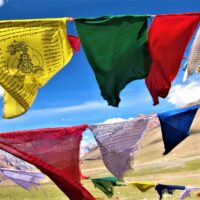
There’s something magical that happens when you take your first step onto a Markha valley trail in the Hemis National Park. The thin mountain air forces your breathing to slow, your pace to moderate, and suddenly you realize – your thoughts are changing too. In Ladakh, walking is never just about getting from one place to another. It’s about transformation. Ladakh, often compared to Tibet in terms of its cultural and spiritual richness, provides an unparalleled opportunity to experience Buddhist teachings in their most authentic form. Here, spirituality isn’t just a concept – it’s a way of life. The monks in the monasteries, the prayer wheels spinning in the wind, […]
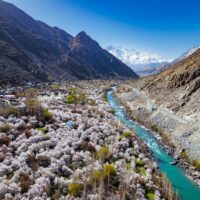
Apricot Blossom Festival 2026 in Ladakh: When the Mountains Turn Pink Every April, something extraordinary happens in Ladakh. In a landscape famous for its stark mountains, cold desert valleys, and ancient monasteries, the villages suddenly burst into soft shades of pink and white. This is the season of the Apricot Blossom Festival, known locally as “Chuli Mendok.” For a brief window of time, the valleys along the Indus and the villages of Aryan Valley transform into blooming orchards. Travelers who arrive during these weeks often describe it as one of the most unexpected sights in the Himalayas: delicate blossoms floating against the backdrop of snow-covered peaks and deep blue skies. […]
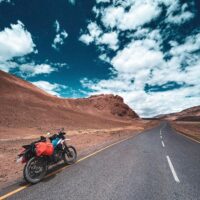
Picture this: you’re standing at 17,000 feet above sea level, the open roads, and the breathtaking Himalayas. The wind carries whispers of ancient prayers from invisible monasteries. There’s no one beside you to share the moment, no one to interrupt the profound conversation between your soul and the mountains. This is Ladakh solo travel at its most transformative – where Ladakh, when traveled solo, becomes more than a destination. It becomes a mirror. Solo travel in Ladakh isn’t just about checking destinations off a bucket list. Ladakh isn’t a holiday. It’s an initiation. At 11,500 feet, the land strips away your masks. Here, in this mystical land often called the […]
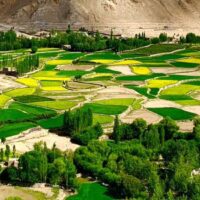
In a world increasingly dependent on digital connectivity and modern infrastructure, Ladakh stands as a remarkable example of life lived largely off the grid. This high-altitude cold desert in the Indian Himalayas offers profound insights into sustainable, self-sufficient living that has thrived for centuries without the conveniences most of us take for granted. The Art of Water in a Desert Ladakh’s traditional irrigation channels, known locally as khuls, serve as the lifeblood of Ladakhi villages, channeling glacial meltwater from mountains to farmlands, sustaining both crops and communities. These channels are constructed as narrow, winding channels that direct glacial meltwater across villages and agricultural plots, hand-dug along the natural slopes of […]
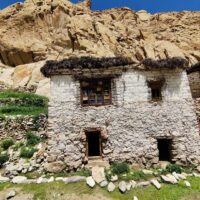
In our increasingly complex world, where we measure success by accumulation and expansion, there exists a remarkable place that challenges everything we think we know about what makes a fulfilling life. High in the trans-Himalayas, where the air is thin and the landscape appears almost barren, the people of Ladakh have quietly perfected something most of us are still searching for: true contentment through living small. Ladakhis have proven that a satisfying life can be lived, even with minimal natural resources, through cooperative spirit – an invaluable lesson for our modern world. What strikes visitors most isn’t just the breathtaking moonscape of mountains and valleys, but the radiant sense of […]
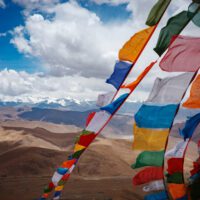
Nestled between the towering Karakoram and Himalayan ranges in northern India, Ladakh is a sanctuary of Buddhist calm that beckons adventurous souls from around the globe. This high-altitude desert, often called “Little Tibet,” offers some of the world’s most spectacular trekking experiences, where ancient culture meets breathtaking wilderness at altitudes that scrape the sky. For trekking enthusiasts, Ladakh is a great place for adventure tourism in India. It offers a variety of adventure sports and outdoor activities. Trekking is one of the most popular adventure sports that can be enjoyed during a Ladakh trip. The region’s unique position as one of the few Himalayan areas best visited during summer months […]
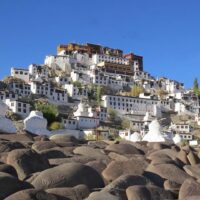
High in the Indian Himalayas, where the air grows thin and the landscape stretches into impossibly blue skies, lies Ladakh, a high-altitude desert nestled in the Indian Himalayas, often described as a ‘land of extremes.’ This remarkable region stands as a living museum of culture, where ancient traditions have endured for over a millennium despite the harsh mountain environment. The story of Ladakh’s culture begins with its deep spiritual roots. Buddhism spread into western Ladakh from Kashmir in the 2nd century. Ladakh’s culture is deeply tied to Tibetan Buddhism, which reached the region around the 8th century. This spiritual foundation would shape everything from the region’s architecture to its daily […]