
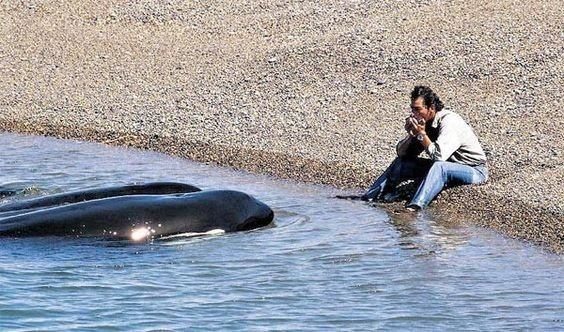
Once again, nature and animals have conspired to enact a miracle.
Roberto Bubas, an Argentine wildlife ranger, found himself captivated by the world of orcas, leading to a profoundly special friendship.
One day, as he was engrossed in observing the nature of orcas from the beach, a pod of orcas approached the shore, releasing a pile of seaweed from their mouths.
Without hesitation, Roberto retrieved the seaweed, crumpled it, and flung it back into the sea. Remarkably, the killer whales, much like obedient dogs, fetched the ball of algae and brought it back to shore.
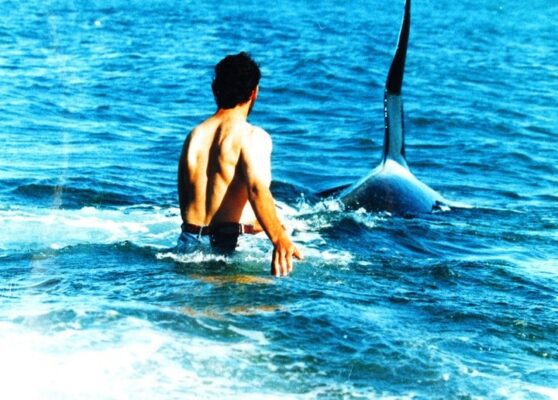
From that singular moment onward, Bubas forged an unbreakable bond with these majestic creatures, often found seated by the seashore playing his harmonica—a harmonious signal beckoning his marine friends, who would promptly emerge and stand motionless, as if in rapt attention, listening intently.
However, the true beauty of this tale lies not here.
Thousands of miles away, a 9-year-old boy who had never before uttered a word began gently caressing the TV screen, exclaiming, “Me! Me!” while pointing excitedly at Bubas and the orcas in a documentary showcasing the biologist’s extraordinary work with whales.
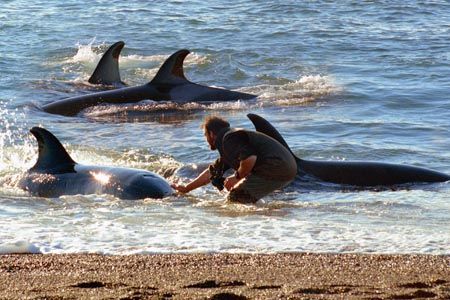
Agustín’s parents were astonished, swiftly deciding to take him to the Valdés Peninsula, where the ranger resided.
Inspired by this incredible journey, Bubas penned a heartfelt book titled “Agustin Open Heart.” This story also found its way onto the silver screen as “The Lighthouse of the Orcas,” now available for viewing on Netflix.
Agustín, once diagnosed with autism, has since blossomed into a 19-year-old artist attending university with a loving partner by his side. When asked about the miraculous transformation of this young boy, Bubas reflected, suggesting perhaps it was not Agustín who harbored an affliction, but rather, the world itself that was ailing. Could it be that there exists a collective autism preventing us from truly understanding the world we inhabit?