


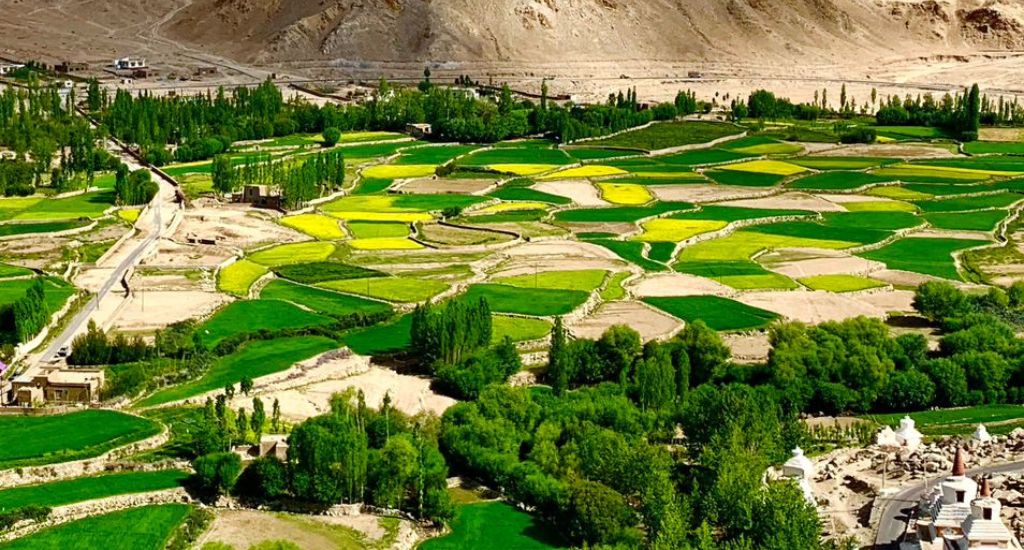
In a world increasingly dependent on digital connectivity and modern infrastructure, Ladakh stands as a remarkable example of life lived largely off the grid. This high-altitude cold desert in the Indian Himalayas offers profound insights into sustainable, self-sufficient living that has thrived for centuries without the conveniences most of us take for granted.
The Art of Water in a Desert
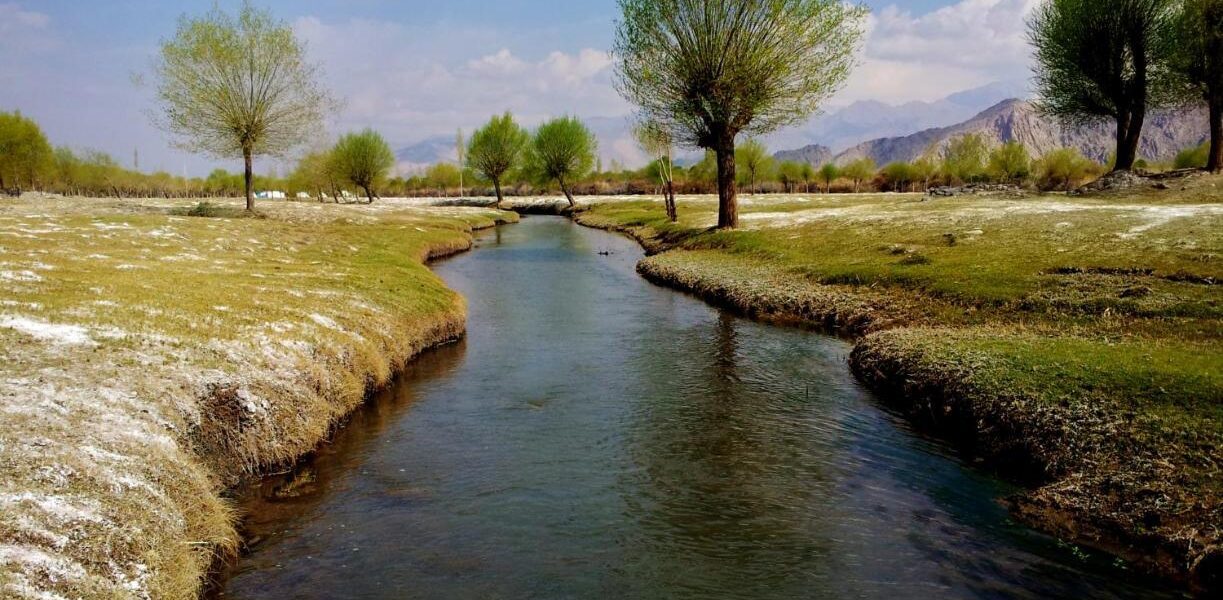
Ladakh’s traditional irrigation channels, known locally as khuls, serve as the lifeblood of Ladakhi villages, channeling glacial meltwater from mountains to farmlands, sustaining both crops and communities. These channels are constructed as narrow, winding channels that direct glacial meltwater across villages and agricultural plots, hand-dug along the natural slopes of the mountains to maximize gravity-fed water flow.
What makes this system remarkable is its community-driven approach. Chuspon are annually appointed at the beginning of the agricultural season, with villagers historically electing a man with extensive knowledge of customary duties, rights and responsibilities related to water management, though nowadays it is appointed on a rotational basis. A chuspon is responsible for managing water distribution, irrigation turns, overseeing maintenance, resolving water disputes, and ensuring equitable water distribution among all village families without personal bias or favouritism.
This isn’t just about moving water from point A to point B. Every Ladakhi village features a community water reservoir called zing, where meltwater is collected directly for irrigation, connected to water canals called yura, which supply water to the fields. The entire system operates without electricity, pumps, or modern technology – just gravity, community cooperation, and centuries of refined knowledge.
Energy Independence Through Ancient Wisdom
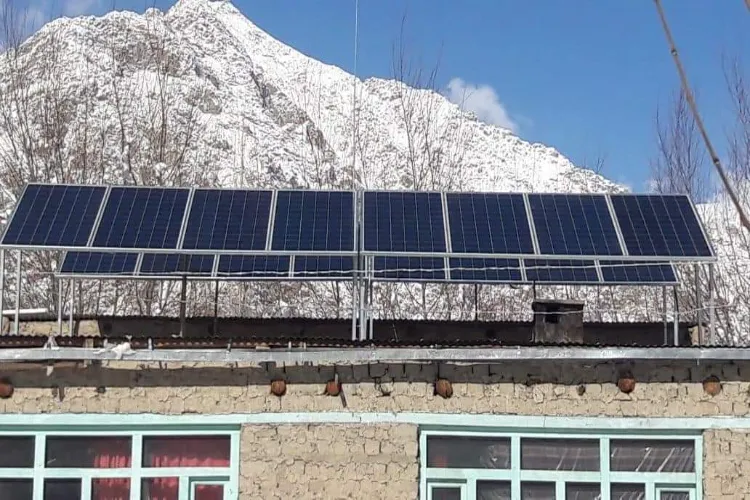
Long before solar panels became trendy, Ladakhis mastered the art of harnessing the sun’s energy. Traditional Ladakhi homes are designed to withstand extreme temperatures, using locally available materials and passive solar heating techniques. Traditional Ladakhi homes are designed to maximize solar gain, with modern innovations improving passive heating techniques.
Built from mud and stones, the traditional Ladakhi house has windows and ethnic roofs designed from Poplar wood, with houses being 1-2 storied with courtyards within them occasionally, allowing the family to sleep in rooms during bitter cold winters, and sleep in open spaces during summers. This ingenious design means families can adapt to extreme temperature variations without central heating or air conditioning.
Today, this traditional wisdom merges beautifully with modern renewable energy. The Ladakh Renewable Energy Development Agency (LREDA) has been instrumental in promoting off-grid solar solutions, ensuring that even remote villages have access to clean energy, with solar photovoltaic systems widely implemented across Ladakh to provide electricity for homes, schools, and monasteries. Solar panels support all the electrical needs and the house is off-grid.
Growing Food in the Impossible
Farming in Ladakh seems impossible at first glance. Ladakh is an extremely harsh and driest inhabited high-altitude region with subsistence economy based on an agro-pastoral system, supporting 80 per cent of its population. Agriculture in Ladakh, “the cold desert”, differs from the mainstream Himalayan regions in having almost no forest support and severe climatic constraints which allow cultivation only in irrigated fields during summer months.
Yet Ladakhis have created a remarkably productive agricultural system. Farming in Ladakh is deeply rooted in the region’s history and is practiced using sustainable, organic methods, with primary crops including barley (nas), wheat, peas, and mustard, with barley being the staple crop used to prepare tsampa, a roasted barley flour that has sustained Ladakhis for centuries.
What’s particularly fascinating is how they’ve developed water-efficient techniques. In Ladakh, farmers regulate optimum irrigation by inserting a belcha (spade) in the soil – if it is completely inserted (front portion), the land is considered to be properly irrigated, and in other cases, mud is thrown in the air with its splitting into pieces showing proper irrigation. These simple but effective methods allow farmers to maximize crop yields while using minimal water.
Community as Infrastructure
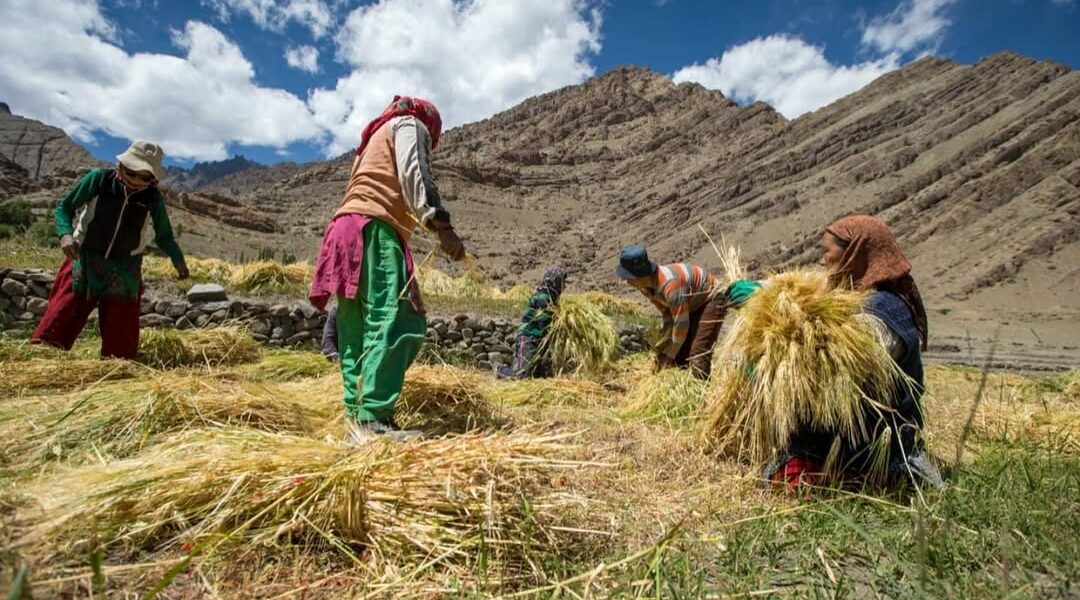
Perhaps the most striking aspect of Ladakhi off-grid life is how community serves as infrastructure. A notable feature of the people of Ladakh is that they have a close bond with each other, with everyone from the community energetically participating in cultivating each other’s fields during harvest season.
A Ladakhi lifestyle makes you ‘Atmanirbhar’ or self sufficient and independent in the true sense, with most locals doing more than 2-3 jobs. This diversification isn’t just economic strategy – it’s survival wisdom. During tourist season, people might run homestays or guide trekkers. In winter, they focus on crafts, animal husbandry, or monastery work. Most people are farmers and rely on agriculture for their income, with a fair section depending on tourism with seasonal income from April to July.
Ladakhis also follow an unwritten policy of ‘basic and bare minimum’ that is practiced religiously in their daily lives. This isn’t about deprivation – it’s about understanding what you truly need versus what you want, a distinction that modern consumer culture often blurs.
Lessons for Modern Off-Grid Living
What can we learn from Ladakh’s centuries of off-grid mastery? First, that true self-sufficiency isn’t about isolation – it’s about intelligent interdependence within community. A very strong sense of community is showcased by the dwellers of Ladakh, with all members of a village energetically participating in reaping and sowing regardless of whose field is being cultivated.
Second, that working with natural systems rather than against them creates more sustainable solutions. Watching Ladakhis farm in sync with nature raises the question of whether we’ve overcomplicated sustainability, as while we chase technological fixes, this remote region quietly lives the solution – building resilience through diversity, conserving water, nurturing soil, and putting community first, showing that real sustainability comes from balance, not scale.
Third, that diversification and flexibility are key to resilience. By integrating traditional knowledge with modern solutions, Ladakh can secure a resilient and self-sufficient future. This isn’t about rejecting modernity but about thoughtfully incorporating what serves you while maintaining the wisdom of traditional ways.
The Modern Challenge
Today, Ladakh faces the challenge of balancing traditional wisdom with modern pressures. The tourism industry in Ladakh has seen significant economic development, leading to water issues and environmental damage from increasing waste pollution and poor air quality, but policymakers can remedy this by regulating tourist activities, encouraging sustainable practices, limiting large hotel construction and promoting community-based eco-tourism.
At one level, this ignores the fact that Ladakh has probably always been ‘climate-negative’, in that emissions from its local livelihoods and lifestyles have most likely never exceeded the carbon absorption capacity of its vast landscape. The region offers a living laboratory for understanding how human communities can thrive within planetary boundaries.
A Different Kind of Connectivity
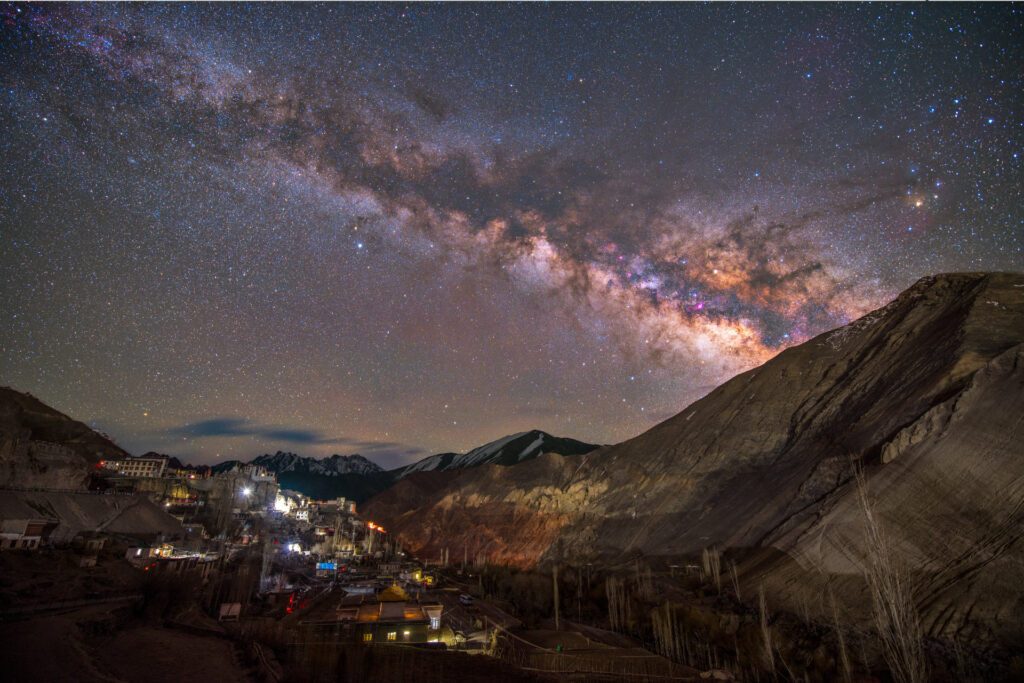
Without notifications pinging, you’re free to absorb the stark beauty of the landscape: barren cliffs, winding rivers, and the occasional flutter of prayer flags – a chance to trade scrolling for stargazing, emails for elevation, with the allure lying in the freedom to disconnect, making this not just a hike but a journey into the wilds where the only network is the one you build with nature.
In Ladakh, off-grid living isn’t a lifestyle choice or trendy experiment – it’s a refined art passed down through generations. It demonstrates that disconnecting from modern infrastructure doesn’t mean disconnecting from abundance, comfort, or community. Instead, it can mean connecting more deeply with the rhythms of nature, the strength of community, and the satisfaction of genuine self-reliance.
As our hyperconnected world grapples with sustainability challenges, Ladakh offers not a blueprint to copy, but principles to adapt: work with natural systems, prioritize community resilience over individual comfort, embrace seasonal rhythms rather than fighting them, and remember that the most sophisticated technology is often the simplest solution, refined over generations of use.
In the end, Ladakh’s off-grid wisdom reminds us that living disconnected from modern infrastructure doesn’t mean living disconnected from the good life – it might just mean discovering what the good life actually is.
About the Author: Junichiro Honjo is the founder of LIFE ON THE PLANET LADAKH, a sustainable tourism advocate dedicated to promoting responsible travel experiences that honor local communities and preserve fragile ecosystems. Through his work, he bridges the gap between authentic cultural exchange and environmental conservation, creating meaningful connections between travelers and the timeless wisdom of Himalayan communities.