


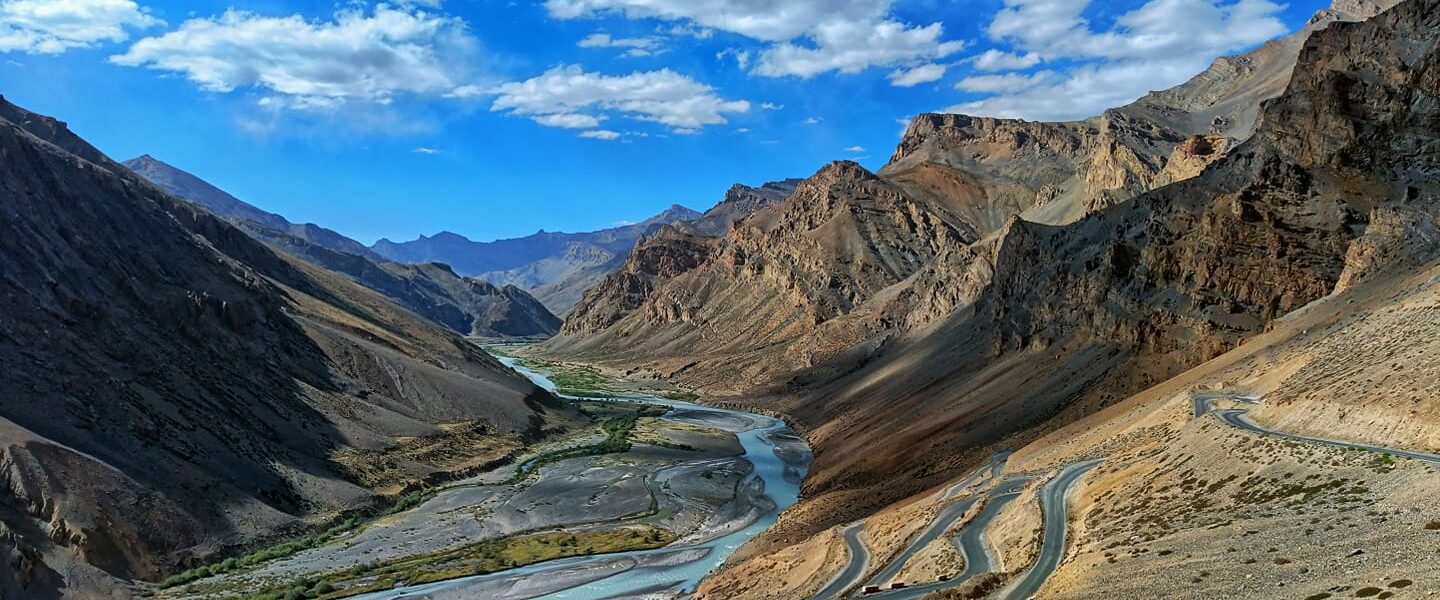
Where the Road Thins into Sky: Ten Passes That Teach Ladakh
By Sidonie Morel
There is a habit, when people speak of Ladakh, to reduce it to a single image: a high valley, a pale river, a monastery held to a cliff like a barnacle. But Ladakh is also a sequence of crossings. Not metaphors—actual saddles of land where the road narrows, the surface changes, the wind finds a different angle, and a day’s plan can be rewritten by cloud and grit.
This roadbook of ten mountain passes is not a list for bragging rights. It is a way to understand the region as it is experienced on the ground: by drivers and mechanics, by families with sacks of provisions, by small convoys edging past each other, by travellers who learn—often quickly—that altitude is not an idea but a condition. The details that follow come from the texture of real journeys: the Srinagar–Leh road with its long middle, the open spine toward Nubra and Pangong, the Manali–Leh line with its clustered high crossings, the slower gate into Zanskar, and a far-eastern climb where permits, borders, and physiology set the terms.
If you read carefully, you will notice that the most important information is rarely announced. It appears in practical gestures: a driver loosening his grip to rest his forearms; a passenger sipping water without thirst because headache is easier to prevent than to cure; a queue of vehicles waiting for a landslide to be cleared; a tea stall’s kettle kept on because cold returns the moment you stop moving.
Arriving by a Narrow Door: Zoji La
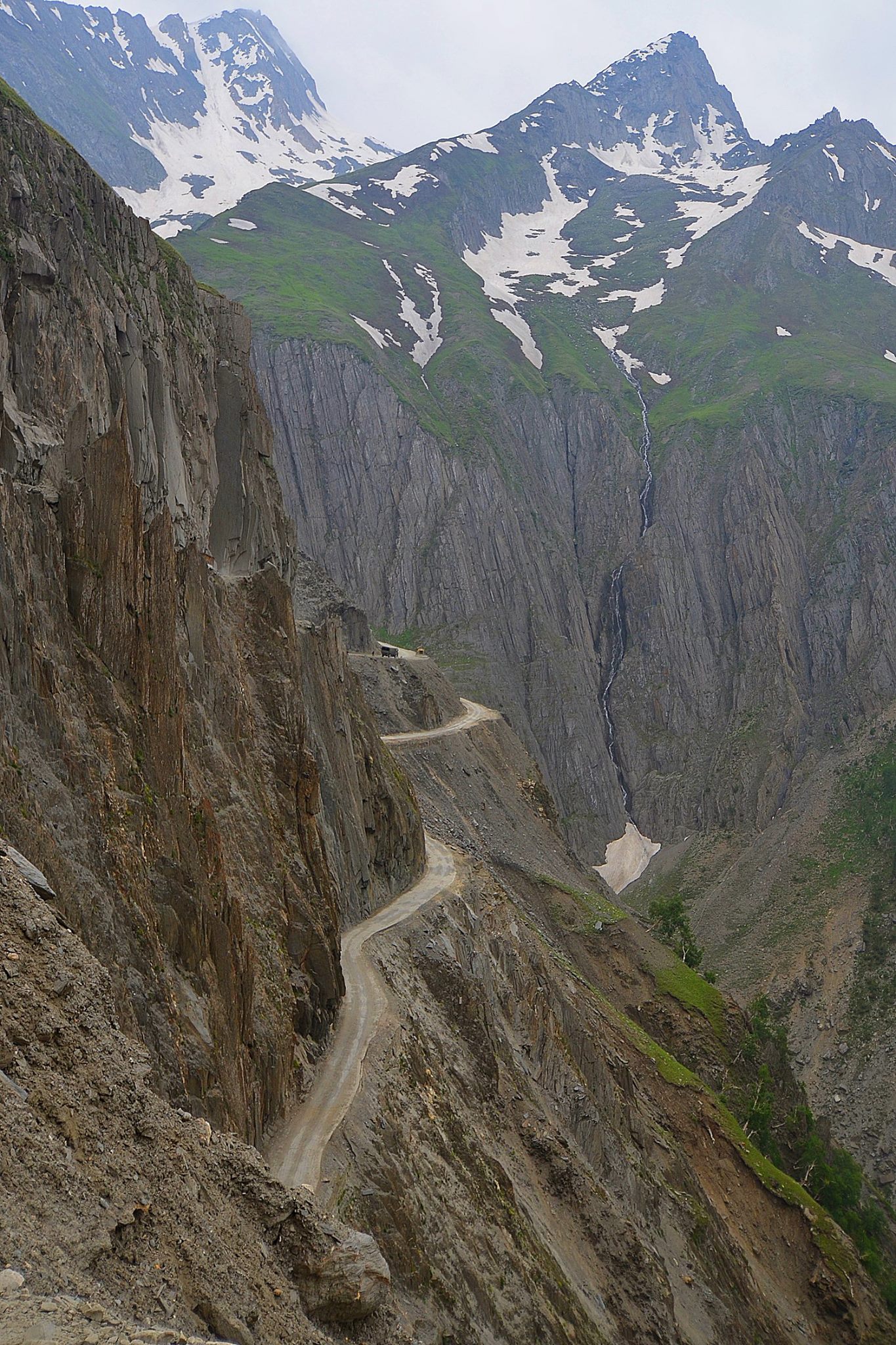
The first squeeze of the mountains—traffic, rockfall, and that sudden hush after the last pine
Zoji La is often described as an entrance, and it is, but not in any ceremonial way. The approach can feel like ordinary travel—green slopes, trees, roadside life—until the road begins to tighten and you find yourself paying attention to details you usually ignore: the width of a shoulder, the quality of gravel under tyres, the distance between your mirror and the cliff. It is a pass where traffic is part of the landscape. Trucks, taxis, tourist vehicles, and army movement share a corridor that is not interested in accommodating impatience.
Here, the mountain announces itself through interruptions. A line of vehicles may sit for half an hour because a section ahead is being scraped clear of debris. Dust hangs in the air with its dry metallic taste. Someone gets out to stretch, then sits back inside because the wind is sharper than expected. At times the pass feels less like a point on a map and more like a working zone: men with shovels, machinery, a hand raised to stop you, a wave to send you on. On days when the surface is rutted or wet, speed becomes irrelevant. The pass tells you what the pace will be.
For European readers used to alpine passes with guardrails and neat signage, Zoji La’s lesson is simple: this is a road that exists because it is maintained continuously, not because it is naturally friendly. The best approach is not courage but composure. Keep windows up when convoys kick up dust; keep a scarf or mask accessible; accept that you may arrive later than you imagined.
Between Kashmir’s green and Ladakh’s dust: how the air changes before you notice it
Once you cross the crest, the shift is not theatrical, but it is unmistakable. The vegetation thins, then steps back. The air becomes drier; the light is less filtered. A jacket that felt unnecessary an hour ago becomes useful the moment the vehicle stops. You may notice that your lips dry faster, that you reach for water without being prompted by heat. In the villages that follow on the Ladakh side, the buildings and road-edge details begin to look different: flatter roofs, stonework, walls that seem designed for wind rather than rain.
Zoji La also sets the tone for the next days of travel. It gives you a first encounter with the essential Ladakh equation: distance plus altitude plus road conditions. A journey of a few hundred kilometres can take far longer than expected, not because anyone is incompetent, but because the terrain refuses uniform speed. It is worth arriving with a mindset prepared for pauses—unplanned ones, and the planned ones you should take for your own body.
If you are coming from Europe and your first night is in Kargil or further on, consider how you handle the transition. Eat lightly. Let the first evening be quiet. If you tend to headaches, do not wait for one to appear before you change your habits: drink steadily, avoid alcohol, and sleep early. Zoji La is only the first door; Ladakh is full of thresholds, and the best travel is the kind that lets your system adjust rather than protest.
The Highway of Long Breaths: Namika La & Fotu La
Namika La—wind that smells of stone, and the sense of leaving softness behind
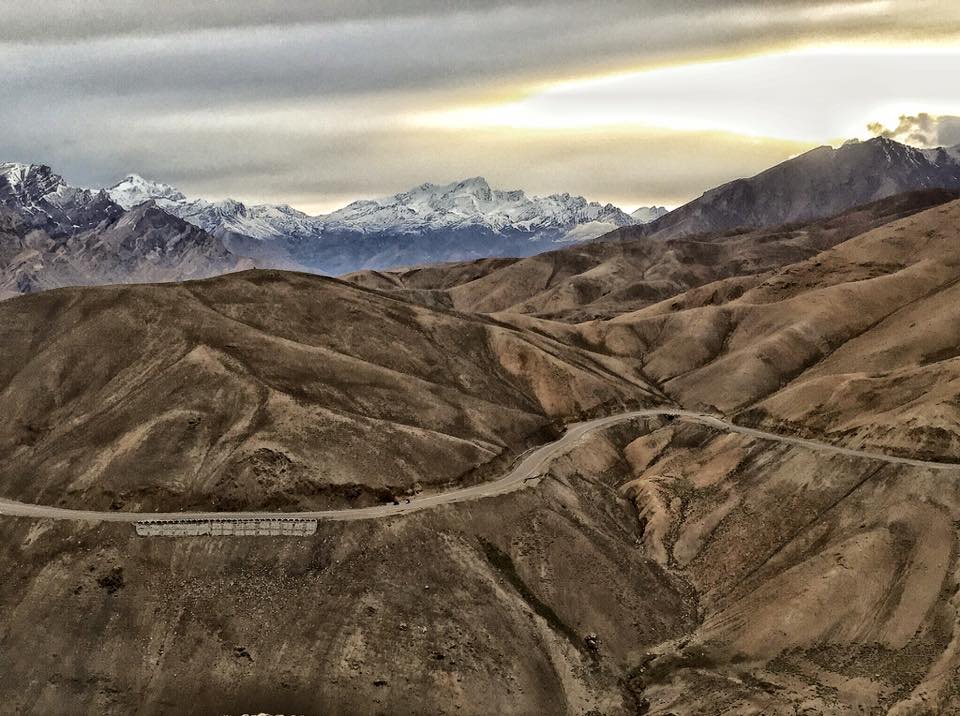
On the Srinagar–Leh route, the road begins to develop a particular rhythm: long stretches of forward motion punctuated by moments where the landscape seems to tighten into a decision. Namika La is one of those moments. It is not always the most talked-about pass, which is precisely why it belongs in a serious roadbook. It is a crossing you experience as part of a day that includes many small adjustments: the driver choosing a line through uneven patches, passengers shifting to relieve pressure points, someone opening a packet of biscuits because appetite can vanish at altitude.
The wind on these passes is specific. It is not the soft breeze of a coastal holiday. It is dry, thin, and direct, and it carries the smell of crushed stone and dust heated by sun. When you stop for a photograph, you quickly learn the practical side of this wind: it steals warmth from your hands; it turns your eyes watery; it reminds you to keep a hat secured because a loose cap can become rubbish in seconds. If prayer flags are present, you can see the force in how they snap and strain rather than flutter.
Namika La also shows how Ladakh contains multiple climates within a day. You might have started in milder air, and by midday you are in something cleaner and harder. If you travel with older family members, or anyone prone to nausea, this is a good point to slow down and watch for signs: unusual fatigue, dizziness, irritation that does not match the conversation. The pass is not a test; it is a reminder to travel in a way that leaves room for the body’s timing.
Fotu La—flags and ridgelines, the road curving like a thought you can’t quite finish
Fotu La is often remembered for its altitude and for the view it offers into the surrounding folds. But what stays with you on the ground is more prosaic: the way the ridges arrange themselves, one behind another, in a sequence that makes distance look layered rather than flat. The road may be in better condition on some days and rough on others; the point is not the surface itself but how quickly it can change. This is where you begin to understand why local drivers carry spares and why they do not treat a puncture as a catastrophe but as part of the day.
At Fotu La, the air can be bright enough to feel almost clinical. Shadows are sharp. If you take off gloves to operate a phone camera, your fingertips cool rapidly. On clear days you can see the geometry of the terrain: slopes that look like they were scraped by a giant rake, lines of stone that read as old riverbeds, pale patches that might be salt or scree. In such light, the human additions—road signs, small structures, flags—look temporary. Not fragile, exactly, but provisional.
In practical terms, Fotu La is a useful place to refine your habits. Eat small amounts. Move slowly when you step out of the car. Keep layers accessible rather than packed. If you have travelled in high regions before, you may be tempted to treat this as routine. Resist that urge. The cumulative effect of altitude is often more important than any single dramatic moment, and Fotu La sits in that long middle where people overestimate their resilience because nothing obviously bad has happened yet.
Roadside pauses: tea, repair crews, and the small choreography of passing on a thin lane
Between Namika La and Fotu La, and in the stretches that lead to them, the Srinagar–Leh road teaches another lesson: travel here is collaborative. A truck yields because it must, not because it is polite. A driver edges toward a shoulder that barely exists to create space for an oncoming vehicle. When road workers have a section reduced to a single lane, everyone accepts the hand signal and waits. You begin to notice the choreography: vehicles arranged by size, people stepping out with hands in pockets, one person taking responsibility for directing a small cluster through a narrow point.
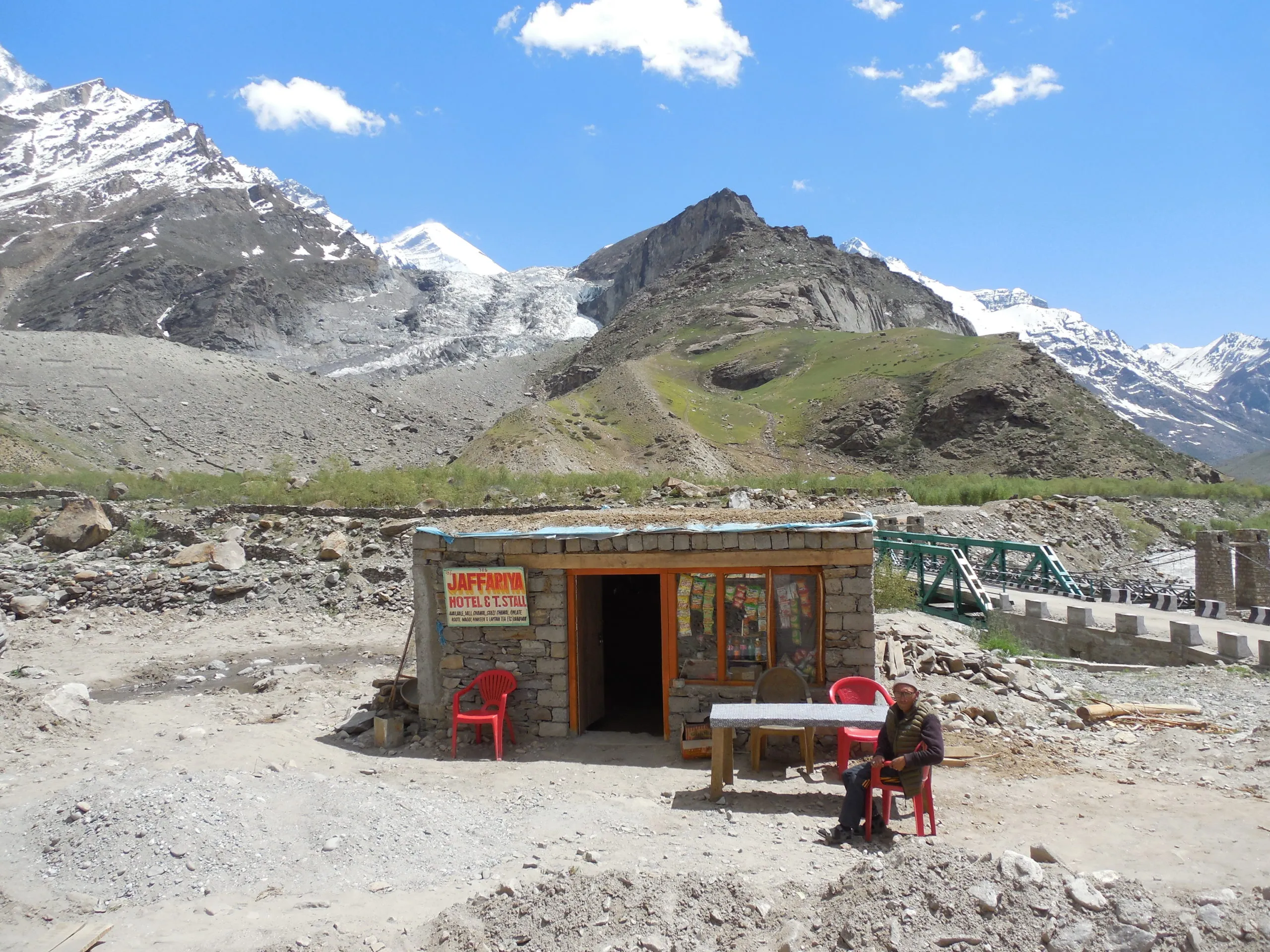
Tea stalls appear at intervals, sometimes simple enough to feel like an extension of a household: kettle, cups, a tin of biscuits, a cloth used as both towel and potholder. The warmth is immediate, and not just from temperature. The pause itself matters. Sitting for ten minutes with a hot cup can change how you feel for the next hour. It also gives you a chance to see the road from another angle: to watch a convoy pass, to see how quickly dust settles, to hear the hard clack of stones under tyres.
If you are travelling with children or anyone anxious about heights, these pauses are not optional luxuries. They are tools. They allow the nervous system to reset. They also reduce the temptation to treat the journey as something to “get through.” Ladakh’s passes are not scenery outside a window; they are the structure that holds the region together, and you travel better when you let the road set a humane pace.
Two Famous Names, Two Different Silences: Khardung La & Chang La
Khardung La—Nubra’s threshold, where excitement fights the headache
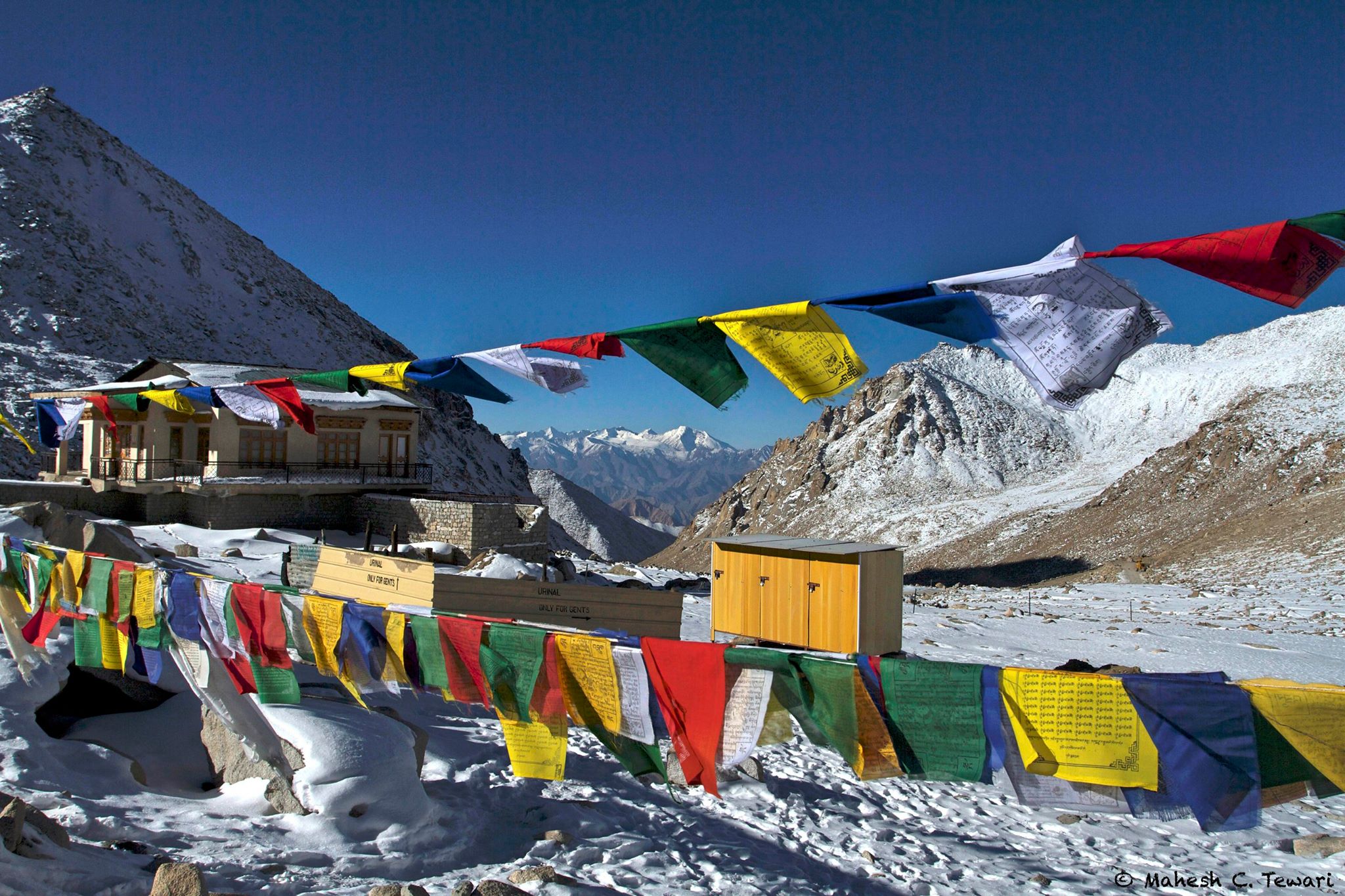
Khardung La is one of those names that appears early in people’s dreams of Ladakh. It is often spoken of as a milestone, and for many travellers it is. Yet the pass itself, in real life, is not an empty summit waiting for applause. It is a working crossing, busy in season, with a particular mix of tourism and necessity. Vehicles stop and start. People pose quickly because wind and altitude make lingering uncomfortable. A small shop might sell tea, snacks, sometimes souvenirs, and the bustle has an edge because everyone is aware—consciously or not—that the body is under stress.
From Khardung La you drop into Nubra, and that descent is part of the pass’s meaning. The change in terrain becomes visible: the slope opens, the valley begins to suggest itself, and later the landscape shifts toward sand and braided rivers. If you want to write honestly about this pass, the most important detail is not a superlative about height. It is the way a short stop can make you feel both eager and oddly depleted. Many people feel it here: a slight nausea, a dull pressure behind the eyes, an irritability that vanishes once you are lower.
A quietly practical suggestion: treat Khardung La as a quick crossing rather than a long picnic. Take photographs, yes, but then move on. If you want a longer rest, do it later at a lower altitude in Nubra. Bring water within reach, not in the boot. Dress for the stop, not for the drive. And if someone in your group is prone to altitude issues, keep the plan flexible—Nubra will still be there if you need to descend sooner than expected.
Chang La—toward Pangong, the cold arrives early, even in sunlight
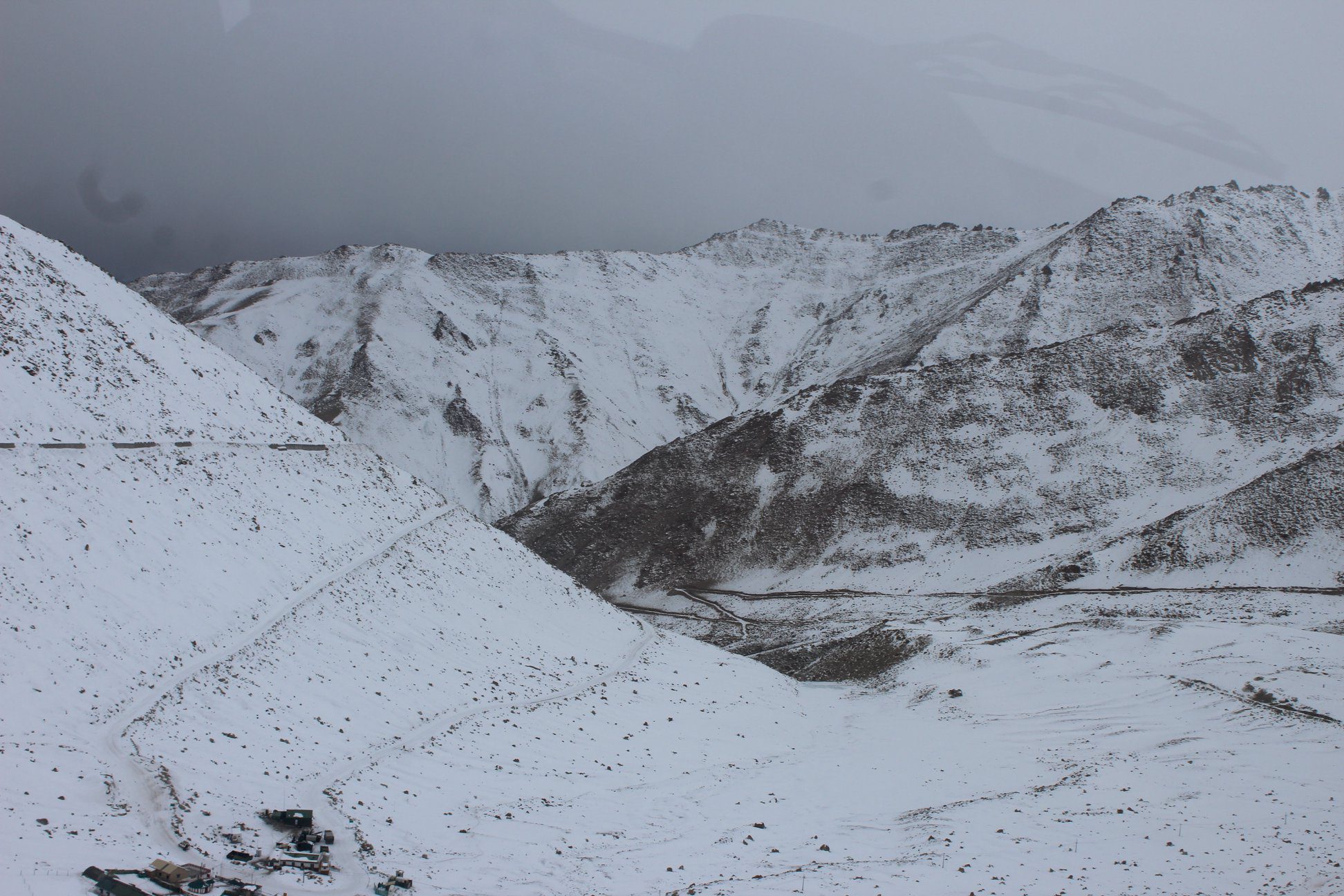
Chang La, on the way to Pangong, has a different atmosphere. It can feel more exposed, with the cold arriving as soon as the vehicle door opens. Sunlight does not guarantee comfort. On some days the sky is clear and the wind is still, and even then the temperature can make your fingers clumsy. The pass is also a reminder that Ladakh’s popular routes remain high, and that “a day trip” is not a gentle excursion when the road spends hours above the level where many bodies prefer to operate.
The approach to Chang La often includes a sense of anticipation because Pangong is one of those places people have seen in photographs. That anticipation can make travellers careless. They forget to eat. They forget to pace. They treat the pass as an inconvenience between them and the lake. But Chang La is part of the story of Pangong: it shapes how you arrive, how you see the water, how you feel at the edge of the shore when the wind comes off the surface and the air has little softness.
If you are travelling with a driver, trust their instinct about when to stop and when to continue. If you are self-driving, give yourself time. Keep a thermos. Keep snacks that do not crumble into dust. Do not assume that because the road is a known route it is an easy one. Chang La is famous, yes; it is also a place where small errors—dehydration, rushing, poor layering—become large quickly.
What altitude does to the body—and to conversation: how speech shortens, how listening grows
At these passes, you may notice a curious change in how people talk. Conversation becomes shorter, not because anyone is in a bad mood, but because breath is a limited resource. You choose simpler sentences. You listen more. A guide gives instructions with fewer words. A driver responds with a nod rather than a paragraph. This is not poetic; it is physiological. The body, in thin air, becomes economical.
For a European reader, it may help to consider acclimatisation less as a medical warning and more as a travel skill. The travellers who enjoy Ladakh most are often those who treat the first days as slow: a night or two in Leh with gentle walks, steady hydration, modest meals. Then, when they go higher, they travel with respect for what their system is doing. If you have never been above 3,000 metres, consider that even people who think of themselves as “fit” can be surprised. Fitness helps, but it does not immunise you against altitude.
A simple rule that does not feel like a rule: if you are short of breath while standing still, you are already asking a lot. Sit down. Drink. Let your heart settle. Avoid turning the pass into a stage. Ladakh’s high crossings do not reward drama. They reward steadiness.
The Middle of the Plateau: Tanglang La
More Plains and that deceptive ease—flatness that still lives at the edge of breath
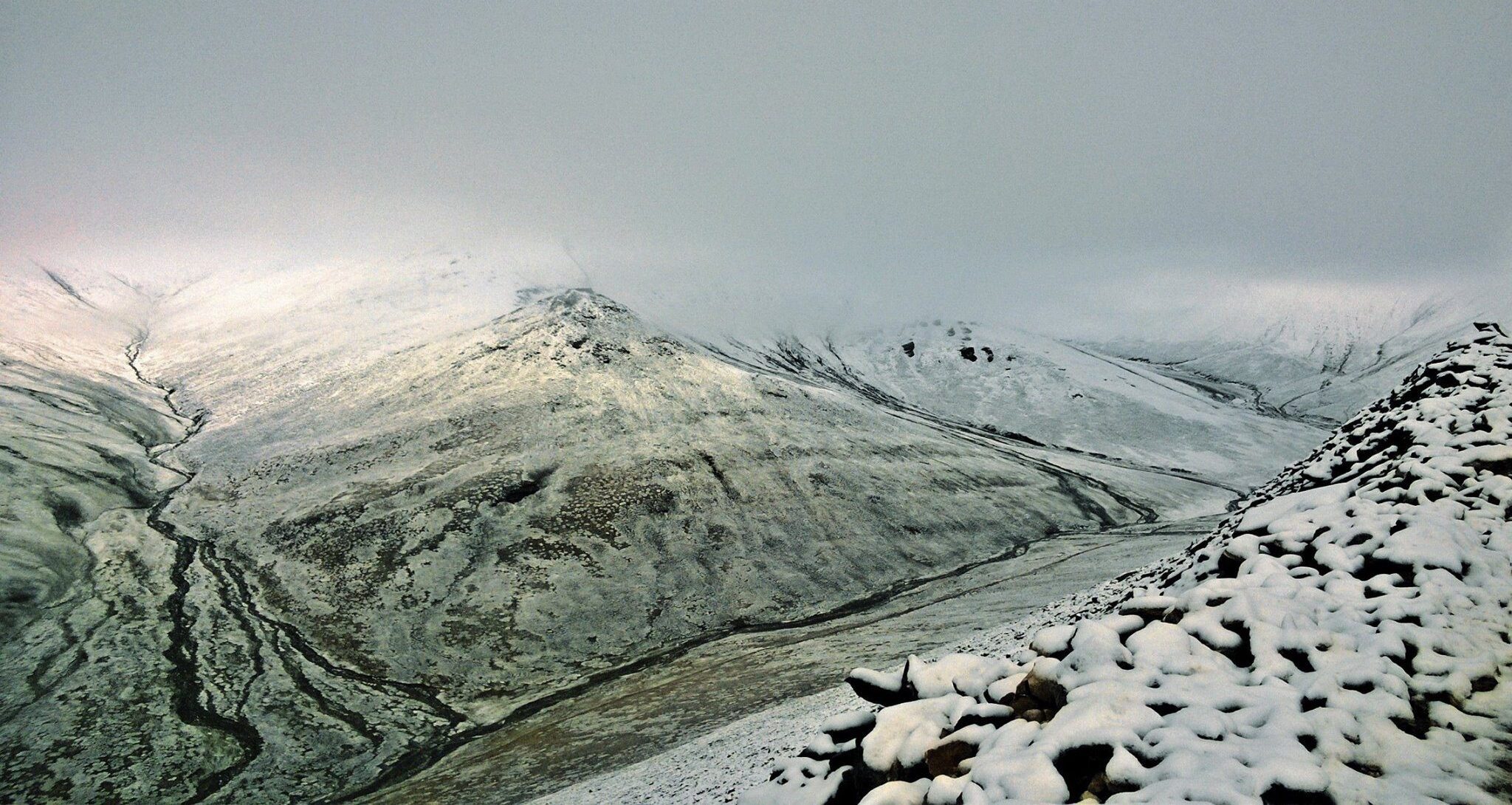
On the route toward Manali, the landscape sometimes opens into stretches that look calm from a distance. More Plains are often described with admiration by riders and drivers: wide, open, a sense of space. Yet this “ease” is deceptive. The altitude remains high, and the road can be rough enough to remind you that openness does not mean smoothness. Dust rises in a fine layer that settles on your clothes and inside your mouth if you speak too much with the window open.
Here the practicalities of travel become more visible: fuel planning, tyre awareness, the importance of leaving early to avoid afternoon weather changes. You may see people pulled over, not because they are sightseeing, but because their vehicle needs attention. A mechanic’s hands in this environment are a kind of expertise: quick, efficient, accustomed to cold metal and stubborn bolts.
For travellers, this is also where monotony can creep in. The eye grows tired of the same palette—stone, dust, occasional streaks of water—and attention can drift. This is exactly where you should resist the temptation to rush. The plateau demands focus because problems, when they arise, are often far from help. Keep the day’s essentials close: water, layers, sunscreen, a spare phone battery. Not as an emergency fantasy, but as ordinary preparedness in a region where “just in case” is simply common sense.
Tanglang La—high, open, almost abstract; a place that feels like pure geography
Tanglang La is a pass that can look almost simple on paper: a crossing on the Manali–Leh highway, a name on a sign. In reality, it is a point where the environment strips away decoration. The slopes are spare. The air is spare. You see what the land is made of. On some days the horizon looks close because the light is so clear; on others, haze turns distance into a pale smear and the road feels as if it is moving through a thin veil.
What is memorable here is often the act of being there rather than the view. The vehicle slows. The engine sound changes slightly. People step out and immediately feel how quickly the cold finds them. This is not the cold of snow. It is the cold of altitude: dry, immediate, and indifferent. You may see other travellers, but everyone seems to keep their own small boundary—no lingering, no unnecessary movement, just the brief business of documenting the moment and moving on.
If you want to understand Tanglang La in the context of a Ladakh roadbook, consider it as part of a chain rather than a trophy. It is one high crossing among several on this line, and the real difficulty is not a single pass but the cumulative effect of spending day after day at elevation. Tanglang La asks you to conserve yourself, to travel with a steadiness that leaves space for the unexpected.
Why the best moments aren’t views, but transitions: the exact instant the road “tips” into another world
Travel writing often leans on panoramic description because it is easy and because photographs encourage it. But on these routes, the most precise moments are often transitions: a few minutes where the road changes character, where the vehicle begins a descent and your ears adjust, where the light shifts and the terrain begins to suggest the next valley. The “tip” can be physical—switchbacks beginning—or it can be subtler: the first appearance of a ribbon of water, the first patch of grass that looks almost implausible.
These are the moments you notice if you are paying attention. They are also the moments that stay with you because they carry information. They tell you what is coming: a lower campsite, a village, a stretch where weather gathers. If you are travelling with locals, watch how they read these changes. They speak about cloud movement, about wind direction, about the look of the road ahead. It is a skill built from repetition, and it is worth respecting.
For the reader, these transitions are also what make a “10 Mountain Passes of Ladakh” column feel real. Ladakh is not a gallery of static views. It is movement across changing conditions. The road tipping into another world is the region’s most honest narrative device—because it is what actually happens, again and again.
Three High Crossings on the Manali–Leh Line: Baralacha La, Lachulung La
Baralacha La—weather that can rewrite the day; clouds that arrive like verdicts
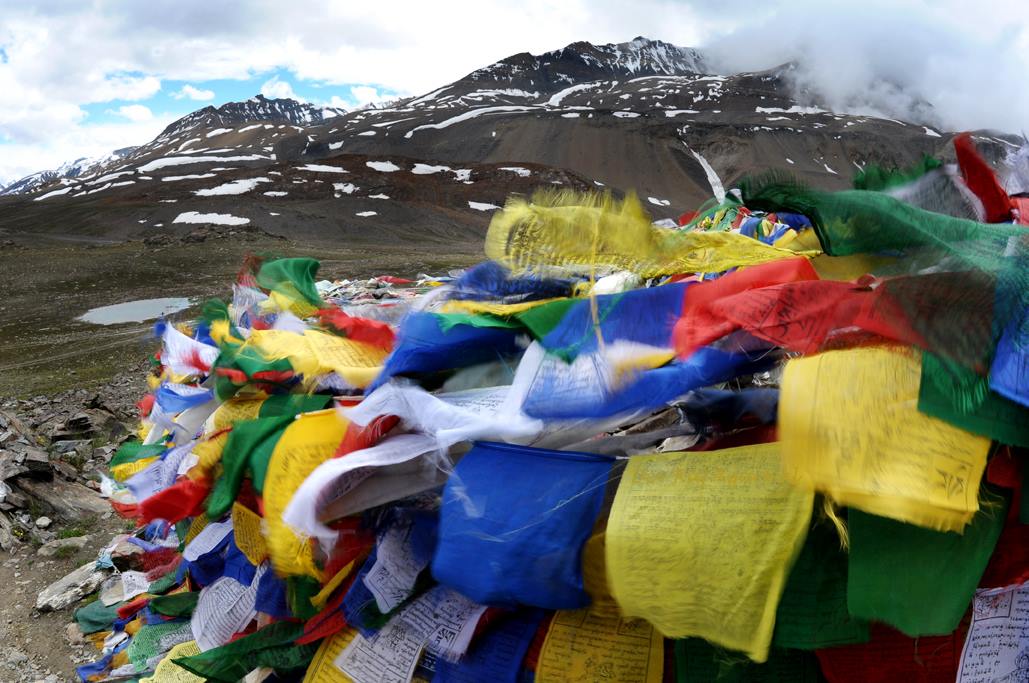
Baralacha La sits on a route where plans are always provisional. On one morning you may wake to clear sky and dry ground; by midday a wind rises, cloud thickens, and the pass becomes a different place. What makes Baralacha La notable is not only its height but its mood swings. You can feel the temperature change as you gain altitude. You can see patches where water has run across the surface and left a crust of dirt. If snow appears, it can be thin and harmless-looking, or it can be the beginning of a longer delay.
Baralacha La also exposes the gap between the romance of road travel and its reality. A rider might imagine heroic solitude; what you often find is shared caution. Vehicles stop in clusters. People check on each other with brief questions. Drivers exchange information: whether the road is open, whether a section ahead is slick, whether a queue is forming. This is not a place for bravado. It is a place where the day’s success is measured in arriving without incident.
If you are travelling this line, carry food you can eat without cooking. Carry a warm layer you can put on without unpacking half your luggage. If you rely on phone signal, adjust your expectations. Consider Baralacha La the kind of crossing where being comfortable with uncertainty is more useful than any specific itinerary.
Lachulung La—switchbacks, grit, and the stern beauty of getting on with it
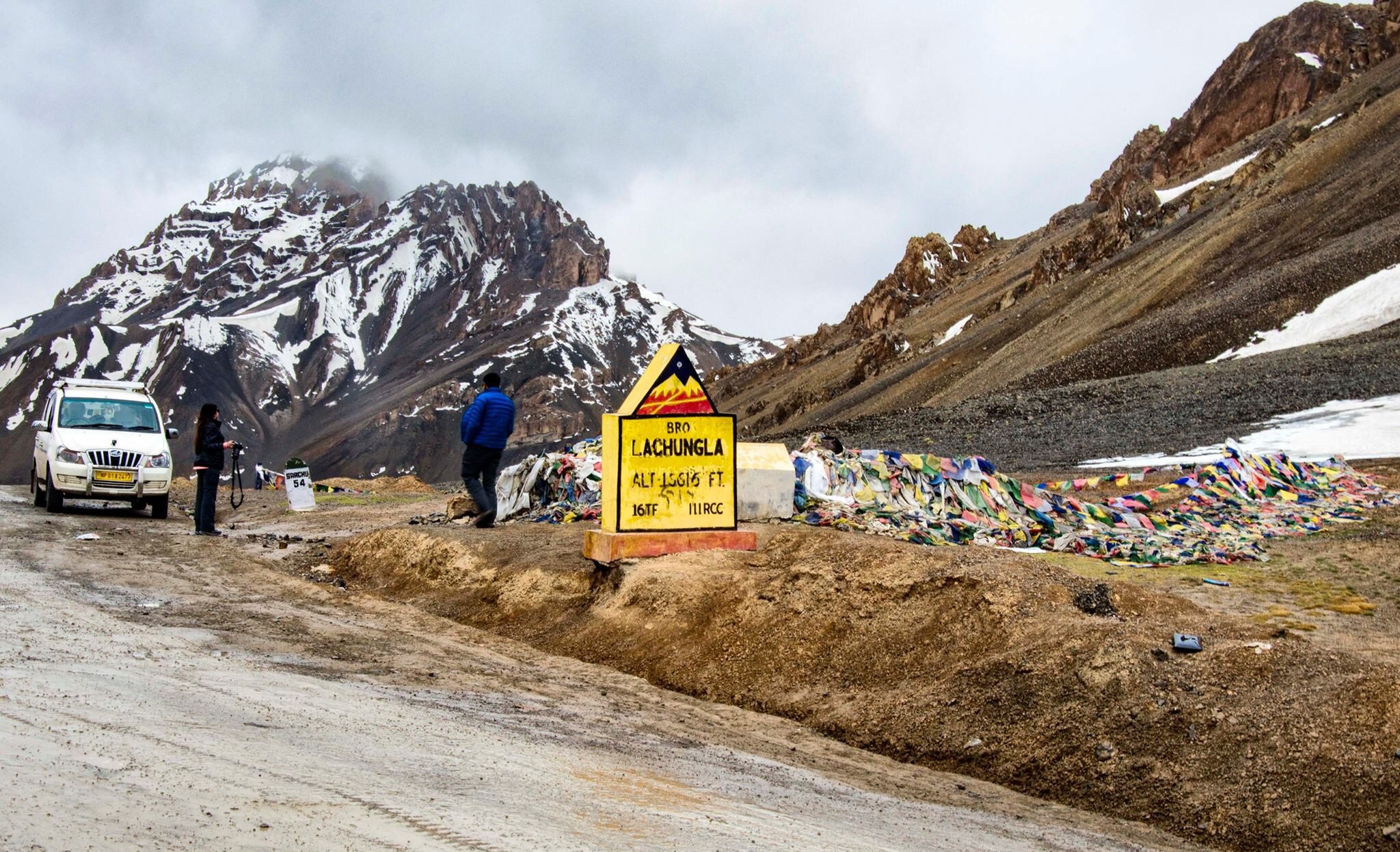
Lachulung La comes with a particular kind of fatigue. By the time you reach it, you have likely already crossed other high points. The vehicle has been rattling for hours. Dust has found its way into seams and zippers. People who began the day chatty have turned quiet. And then the road begins to climb again, turning on itself in a series of switchbacks that look like a diagram drawn on the hillside.
What you see at Lachulung La is the effort of travel: not an abstract concept, but the physical work of engines, the careful steering, the slow crawl when the surface is loose. It is also where you may notice the small domestic objects of road life—water bottles, thermoses, a packet of almonds—becoming meaningful. They are not accessories; they are how people keep themselves steady. A sip of warm tea. A bite of something salty. A scarf pulled up because dust makes the throat raw.
For European travellers, this is where comparisons to alpine roads begin to fail. The scale is different, yes, but more importantly the infrastructure is different. You may see road crews at work, signs of ongoing improvement, the evidence of constant repair. The pass feels stern not because it is unfriendly, but because it does not offer indulgence. You cross it by continuing. There is a plainness to this that can be oddly reassuring.
Night sounds at high camps: engines cooling, fabric snapping, bells of nothing but wind
If your route includes a high camp on the Manali–Leh line, you will learn that night has its own soundscape. Engines tick as they cool, a dry metallic rhythm that can last longer than you expect. Tent fabric snaps in the wind. Zippers pull with stiffness because the cold has tightened everything. Somewhere nearby, a kettle is set on a stove, and the smell of boiling water—simple, almost scentless—becomes a kind of comfort.
At this altitude, ordinary actions are slower. Walking a short distance to a toilet tent feels like a small exertion. People speak less. A guide checks that everyone is warm. Someone asks about the morning’s departure time, then stops asking questions because sleep is more urgent than certainty. If you are prone to restless nights, accept that this may not be the place for perfect rest. The goal is not comfort in a hotel sense; it is competence—staying warm, staying hydrated, staying calm.
These nights are also when you understand why local planning is conservative. Leaving early is not just a preference; it is a strategy to avoid afternoon weather. Eating lightly is not asceticism; it is because digestion can feel heavy at altitude. In the morning, when you step out and the cold hits immediately, you will be grateful for any small preparation that saved you from fumbling.
When “Remote” Stops Being a Word: Umling La (Umling La Pass)
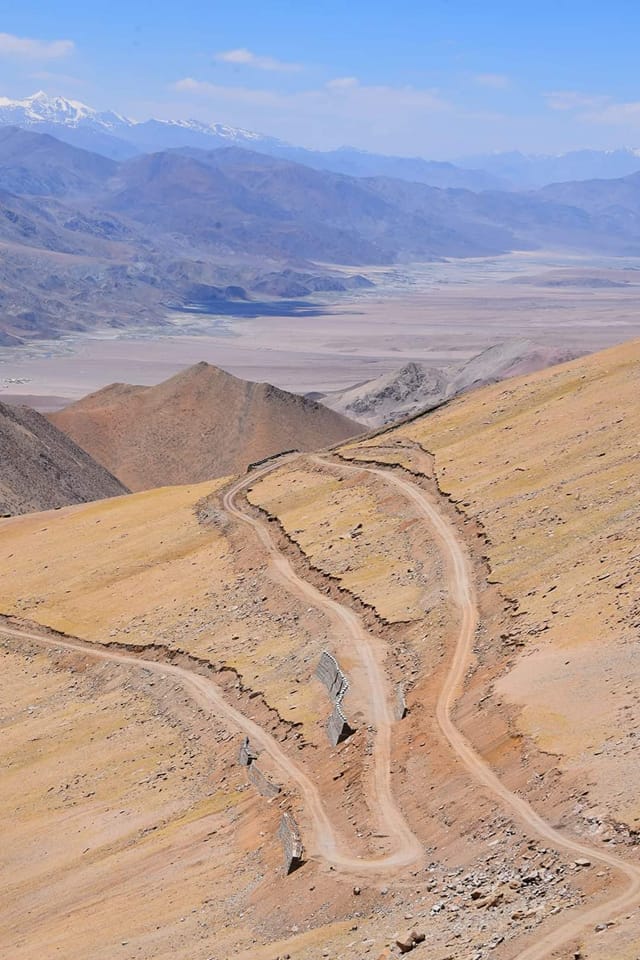
Hanle’s quiet as a preface—then the road climbing into a thinner, stricter reality
Umling La belongs to a different category of pass. It is not simply “high.” It is high in a way that changes the terms. The approach is often made via the far-eastern routes around Hanle, where the landscape is already spare and the settlements feel deliberately placed, as if chosen for shelter rather than convenience. Hanle itself can feel like a pause—thin air, wide sky, an almost clinical silence punctuated by dogs, footsteps, and the clink of a cup against a saucer.
From there, the road begins to climb toward areas where access is shaped by rules as much as by geography. Permits matter. Local guidance matters. Routes can change depending on restrictions, road work, or weather. You may see more military presence, more signage that is not aimed at tourists. The sense of remoteness is not romantic; it is administrative and physical at once. The practical question is not “Can we do it?” but “Are we allowed to, and should we?”
If you are writing or travelling responsibly, Umling La demands that you treat information as something that can become outdated. Conditions and permissions vary by season and policy. Before you go, confirm what is currently possible for your nationality and your route. If you are relying on a local operator, choose one who speaks plainly about limits rather than one who promises everything.
At the top: the body’s honest accounting—pulse, dizziness, awe, and the need to sit very still
At extreme altitude, the body becomes honest in a way it is not at sea level. Your pulse may race with minimal effort. You may feel a slight confusion that is hard to describe, not dramatic but unsettling: a delay between intention and action. You may find yourself sitting down without deciding to. None of this requires panic, but it requires attention. The wise approach is to treat the summit area as a place for a brief stop, not a long performance.
What you can observe is straightforward: breathing becomes shallow and frequent; hands cool quickly; small movements feel larger. People who normally stride now take careful steps. Conversation is clipped. Photographs are taken efficiently. Then you return to the vehicle, not because you lack appreciation, but because the environment does not reward lingering.
For European readers: do not underestimate the difference between “a high pass” and “a very high pass.” Umling La is a place where acclimatisation is not a recommendation but a prerequisite. If someone in your group is unwell, the correct response is not encouragement; it is descent. The most competent travellers are those who can turn back without turning it into a story about defeat.
Permits, restrictions, and responsibility: how borders change the meaning of a “road trip”
Umling La sits in a region where borders are not abstract lines. They shape roads, access, and behaviour. The language of permits and restricted areas may feel unfamiliar to travellers used to open movement within the European Union. Here, your itinerary intersects with state policy and security. This reality affects what you carry, how you behave near checkpoints, and what kind of photography is appropriate.
The practical behaviour is simple: carry identification; keep documents accessible; follow instructions without argument; do not take photographs where told not to. If you are travelling with a local driver, respect their caution. They know which questions to answer and which to keep short. Treat the road not as a personal conquest but as a shared corridor with rules.
It is also worth being honest about motivation. If the only reason to go is a claim about being “the highest,” reconsider. Records shift, and they are not the point. The point is the experience of travelling in an environment that makes you attentive to limits—limits of air, of distance, of policy, of what is safe to insist upon.
What we owe a place this fragile: leaving no drama behind, only footprints that disappear
In regions like this, the simplest ethics are also the most effective. Do not leave rubbish, even small pieces. Do not treat the roadside as a place to scatter wrappers because “someone will clean it.” The environment is too spare for that lie. Waste remains visible for a long time. Bring a small bag for litter and keep it in the car where it will be used.
Keep noise modest. Do not play music loudly at the top because you want a soundtrack for your video. The silence here is not a luxury; it is the default condition of the landscape, and it is part of what you have come to encounter. And if the wind is strong—and it often is—secure everything. A cap, a plastic bag, a tissue: all of it can become debris in an instant. The pass does not forgive carelessness.
On the drive down, you will notice something: your body begins to work more normally. Breath deepens. Speech returns. Appetite comes back. This is not a sentimental ending; it is physiological relief. Umling La is memorable because it makes the limits visible, and then it lets you return to a world where those limits are less strict.
The Gate to Another Rhythm: Pensi La
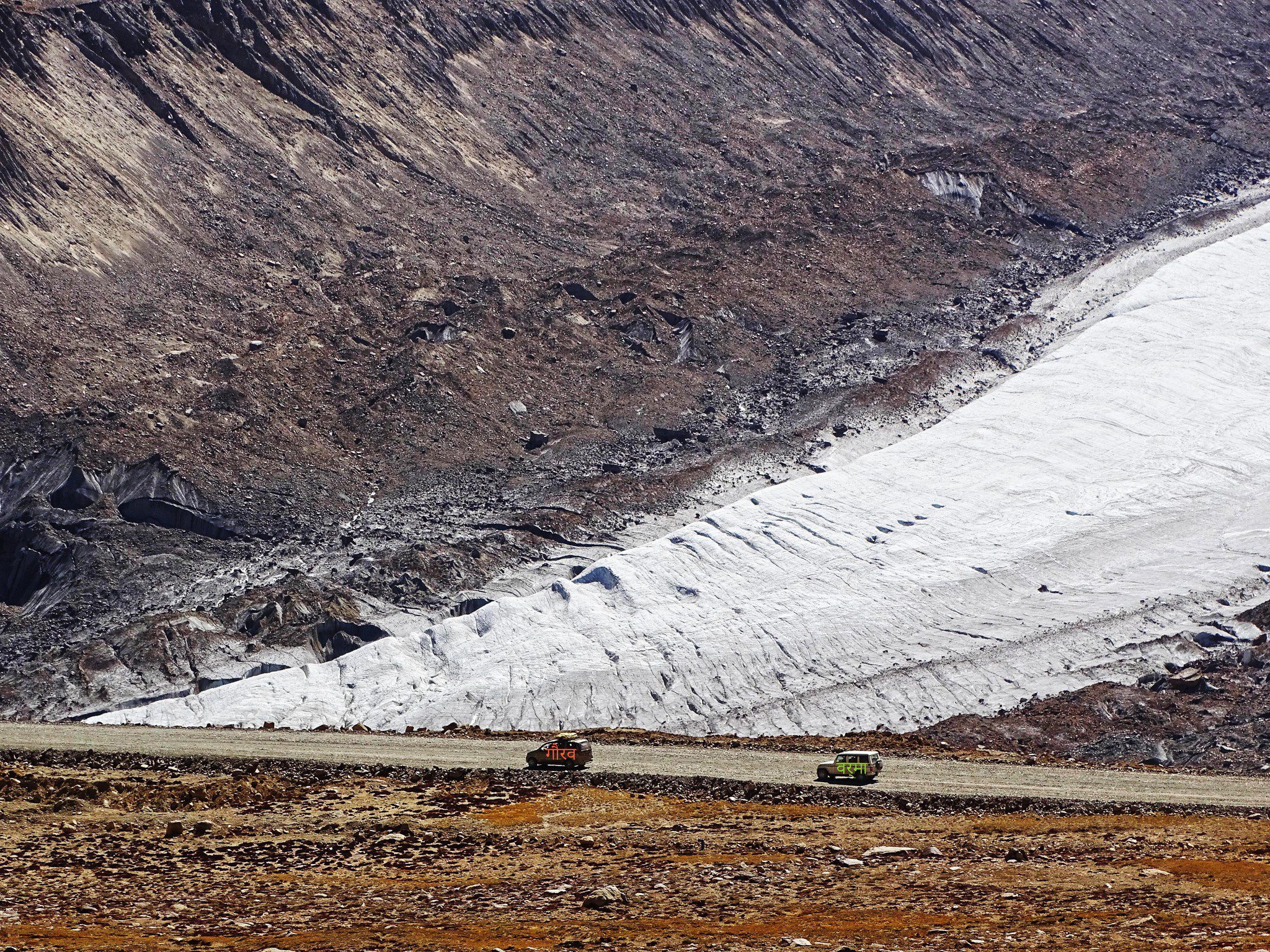
Zanskar’s entrance—where distances feel older, and time stops pretending it’s fast
Pensi La is often spoken of as the gateway to Zanskar, and the phrase holds because the change is not only in scenery but in rhythm. Roads into Zanskar can feel slower, not merely because of condition but because the region carries a different pace of life. Distances have weight here. You begin to think in terms of hours rather than kilometres, and you stop pretending that a tight schedule is a virtue.
On the approach, you may notice how travellers behave differently. People are less eager to prove something. Stops are made for practical reasons—checking a vehicle, stretching legs, allowing a passenger to settle a headache. The pass itself may have moments where you can see how snow and meltwater shape the land. Even without dramatic weather, the air here can be bracing, and the surface can carry surprises in the form of loose stones or sudden rough patches.
For a reader planning a journey, Pensi La suggests a useful adjustment: if you are going to Zanskar, do not treat it as an extension of Leh’s day tours. Give it the time it asks for. The reward is not a single viewpoint. It is the experience of entering a valley where daily life—supplies, travel, work—has long been organised around the reality of distance and winter closure.
A pass with a valley attached: the sensation of “dropping into” a different kind of day
Some passes feel like an interruption. Pensi La feels like a hinge. Once you descend, the day changes character: villages appear with their own routines, the road may feel more intimate, and you begin to sense how travel here has always required planning. Even in summer, you are aware that this is a place where winter is not a distant idea but a dominant season.
What makes the descent memorable is often the quiet domestic evidence: stacked firewood, stone walls, small fields where cultivation is careful because growing seasons are short. If you stop for tea, it may be offered with the directness of people used to travellers but not interested in performance. A cup is handed to you. You drink. You pay. The exchange is simple.
Pensi La, in a roadbook of ten passes, represents a shift from the famous circuits to a route where the road feels less like tourism infrastructure and more like a lifeline. That difference can be felt in how you travel: you keep your fuel margin higher, your expectations looser, your attention sharper. The valley that follows is not “remote” as a slogan. It is remote as a lived condition, and the pass is the point where you begin to take that seriously.
Threads That Tie the Ten Together
Weather as a character: sudden snow, hard sun, and the calm menace of cloud
Across these ten crossings, weather behaves less like background and more like an active factor. Sun can be strong enough to burn skin while the air remains cold. A cloud can arrive and change visibility, and with it the sense of safety. On some passes the wind is the main event, not because it is dramatic but because it affects everything you do: how quickly you cool, how you hold your balance when stepping out, how dust moves, how noise travels.
A useful habit is to treat the sky as part of your route planning. If cloud is building by midday, accept that the afternoon may be slower. If the wind is rising, expect the stop at a pass to feel harsher than you imagined. If you are travelling by motorcycle or bicycle, these factors are even more decisive. But even in a vehicle, you are not insulated from the consequences. A change in weather can mean a delay behind a cleared landslide or a rerouted line of traffic.
In a European travel culture that sometimes treats weather as a minor inconvenience solved by good clothing, Ladakh teaches another version: weather is not only about comfort. It is about whether the road is passable, whether a day’s distance is realistic, whether you arrive before dark, whether a high camp is tolerable. The calm menace of a cloud bank is not poetry; it is information.
Roadwork and resilience: signs, temporary bridges, the patient labour that makes movement possible
On almost every major route in Ladakh you will see evidence of continuous roadwork. Signs warn of falling rocks. Sections are widened or resurfaced. Temporary bridges appear where water has cut through. The presence of these works is not a blemish on the landscape; it is part of how travel is possible at all. A road here is not a finished object. It is a maintained relationship between humans and terrain.
For travellers, this means adjusting expectations. Delays are not failures. They are the cost of a route that must be rebuilt repeatedly. Dust, noise, and uneven stretches are not exceptional; they are normal. If you find yourself irritated, it may help to remember what the work entails: labour at altitude, in wind, in cold, with heavy machinery and the constant possibility that weather undoes progress.
This is also where you learn to value modest competence. The best drivers are not those who race. They are those who read the road surface, who keep a steady line, who know when to stop and when to continue. Their professionalism is part of what makes a “10 Mountain Passes of Ladakh” journey possible without constant stress.
Vehicles as small rooms: the intimacy of shared cold, shared snacks, shared silence
Long days in a car or a shared jeep create a particular intimacy. It is not sentimental. It is physical. You share cold air when the door opens. You share dust that settles on clothes. You share the sound of tyres on gravel, a constant hiss. Snacks become communal not because anyone is generous by nature but because eating together is practical: it reminds people to take in calories, it breaks the day, it gives hands something to do.
Silence is also communal. People fall quiet at altitude. They watch the road. They close their eyes for a few minutes. A driver keeps attention fixed ahead. This quiet can be misread as boredom. Often it is simply conservation. When you are travelling high for days, you learn that not every moment requires commentary.
If you are writing about Ladakh for European readers, this vehicle-life matters. It is where the journey is actually lived. It is where travellers discover what kind of companions they are: impatient or steady, anxious or adaptable, capable of humour when a plan shifts. The passes are the structure; the vehicle is the room in which the structure is experienced.
Prayer flags, mani walls, roadside shrines: faith as part of the landscape’s grammar
On several passes you will see prayer flags and small shrines. They are not decorative. They mark places where people acknowledge risk and offer respect. For travellers unfamiliar with Tibetan Buddhist practice, the best approach is straightforward: observe without turning it into a performance. Do not climb on structures for a better angle. Do not treat sacred objects as props. If you stop, be quiet. Take your photograph quickly if you must, and then let the place return to itself.
These markers also perform a practical role. They announce that you are at a threshold. They remind drivers and travellers that this point has meaning beyond tourism. In a region where life depends on safe crossings—of goods, of people, of emergency access—such markers are part of the road’s social fabric.
Faith here is not an abstract idea. It is woven into movement. It appears where the road is thin and the margin for error is small. If you are attentive, you will notice that the presence of flags and shrines changes how people behave: voices lower, movements slow, the stop becomes brief and respectful. It is a human grammar written into the landscape.
How to Travel These Passes Without Breaking Yourself
Acclimatization as kindness: the difference between “pushing through” and “traveling well”
Acclimatisation is often presented as a warning. It can also be understood as kindness: toward your own body and toward the people you travel with. The difference between “pushing through” and “travelling well” is visible in small decisions. Do you insist on completing every high excursion in the first days, or do you allow a slower start in Leh? Do you treat headache as an inconvenience to ignore, or as a signal to rest and descend?
Travelling well in Ladakh means accepting that your body is part of the itinerary. This is not romantic. It is practical. Many problems are prevented not by medication but by pace: sleeping properly, drinking water regularly, keeping meals light, avoiding unnecessary exertion at the highest points. If you feel unwell, the bravest action is often the simplest: sit down, stop, descend, or adjust the plan.
For European travellers, there can be a temptation to treat discomfort as part of adventure, something to be “managed.” In Ladakh, discomfort can be information. Listen to it. Your trip will become better, not smaller, when you travel in a way that keeps you functional and calm.
Hydration, layers, and pacing: simple habits that keep the day from turning sharp
Hydration at altitude is not a wellness slogan. It is a practical tool. The air is dry, and you lose moisture without noticing. Headaches are easier to prevent than to correct. Keep water where you can reach it. Sip even when you do not feel thirsty. If you dislike plain water, carry something mild—tea, diluted juice, or electrolyte mix—without turning it into an elaborate ritual.
Layers matter because conditions shift within minutes. A warm vehicle can create a false sense of security, and the moment you step out the wind finds you. Keep an outer layer accessible. Keep gloves in a pocket, not buried. Sunglasses protect not only from glare but from wind. Sunscreen matters even on cold days because the sun at altitude is direct and the air does not soften it.
Pacing is the habit that ties everything together. Walk slowly at passes. Avoid running for a photograph. Sit down if needed without embarrassment. Choose short stops at the highest points and longer rests lower down. These are not rules imposed by caution; they are habits that allow the journey to remain pleasant rather than punishing.
When to turn back: the underrated skill of choosing tomorrow over pride
Turning back is not failure. It is competence. In Ladakh, there are many reasons a route may not work on a given day: weather changes, road blocks, permit issues, a passenger feeling ill. The travellers who handle this well are not those who argue with reality. They are those who adjust without creating drama.
If someone has severe headache, nausea, confusion, or unusual breathlessness, descend. Do not negotiate with symptoms. If a driver tells you a section ahead is risky in current conditions, trust their judgement. If a checkpoint or restriction prevents access, accept it. Borders and policies are not puzzles for tourists to solve. They exist for reasons that are not yours to debate on the roadside.
Choosing tomorrow over pride is a practical skill. It keeps your group safe. It preserves your ability to enjoy what you do reach. And it respects the fact that Ladakh’s passes are not staged for visitors. They are working crossings in a harsh environment, and the roadbook is richer when it includes the humility to leave something for another season.
A Closing Road, Still Open
What remains after ten passes: not a checklist, but a quieter sense of scale
After ten crossings, you may find that the details you remember are not the ones you expected. Not the highest signboard, not the most dramatic photograph, but the small practical observations that made the journey real: the way dust settles on your sleeve; the taste of tea when your hands are cold; the brief silence when everyone is concentrating on a narrow section; the patience of a road crew working in thin air; the way conversation returns as you descend and oxygen becomes less precious.
This is the quiet outcome of travelling Ladakh by passes. The region does not ask you to admire it in slogans. It asks you to notice it accurately. To see how a route is maintained. To understand that “remote” has a physical meaning. To accept that roads at altitude are not promises; they are ongoing agreements between terrain, weather, labour, and policy.
If you carry anything home to Europe, let it be this simple shift in scale: a day’s drive can contain several climates; a short stop can demand discipline; a pass can be both famous and ordinary in the same breath. Ladakh is not made of single scenes. It is made of crossings, and the road, when you let it, teaches you how to travel without forcing the world to match your plan.
Sidonie Morel is the narrative voice behind Life on the Planet Ladakh,
a storytelling collective exploring the silence, culture, and resilience of Himalayan life.