


Before the Fire Learns Your Hands
By Sidonie Morel
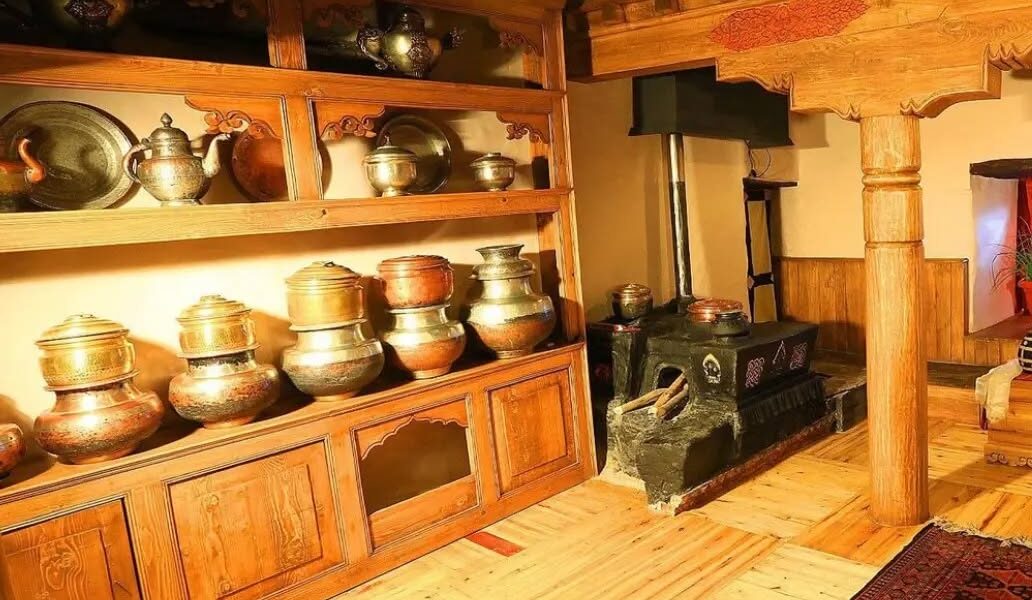
In Ladakh, a kitchen is not a room you pass through. It is a climate you enter. The moment the door closes, the world becomes smaller and more exact: the pull of the stove, the short radius of warmth, the slow choreography of hands that know what the air will do next. Outside, the valley can look like a photograph. Inside, it behaves like a living thing.
I have learned to stop describing kitchens as “cosy.” That word is too soft, too decorative. Here, warmth is a task. It is produced, protected, rationed, and shared. It is the day’s first promise and the night’s final accounting. When someone offers you tea, they are not offering a drink. They are offering a small, defended territory where the body can un-tense for a moment.
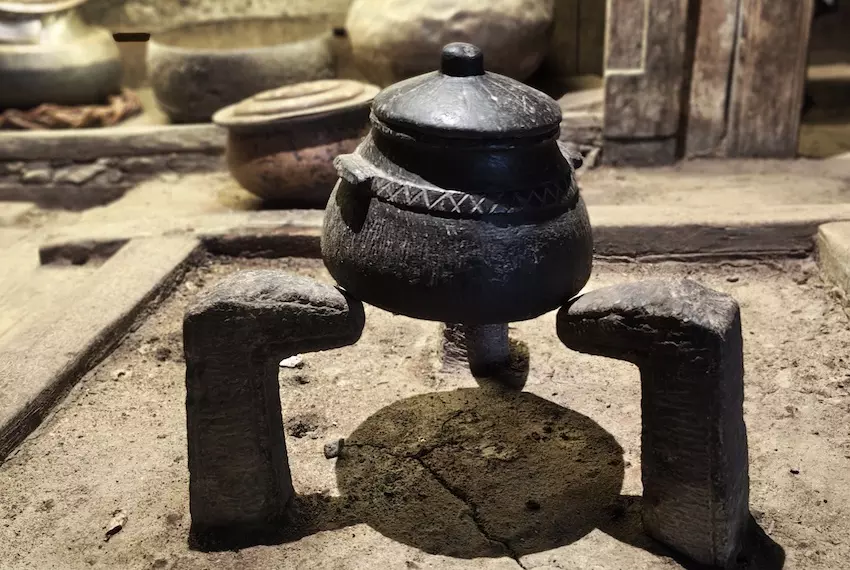
The morning begins with sound: a lid lifted, a pot set down, the brittle crack of kindling. Fuel is never abstract. It has weight, it has cost, it has a finite edge. You see it stacked, measured in bundles, and you hear it being spent. Firewood and dung cakes, propane canisters if the road has been generous, scraps of cardboard saved for stubborn days—everything is counted, because winter will arrive without apology.
In most places, cooking is a style. Here, it is a system. The water you boil has been carried. The flour has a story of fields and irrigation channels. The vegetables are seasonal by necessity, not by fashion. Even the time it takes to feed a family is shaped by altitude: dough rises differently, beans soften slower, and your own attention thins at 3,500 metres.
I watch the routine in a house where the kitchen is also the sitting room, the workshop, and, in cold months, the only place where conversation stays fluid. People enter with errands and leave with small repairs completed: a torn seam, a tool re-tied, an argument softened. A kitchen day is not only about food. It is about maintaining the conditions under which food remains possible.
The most revealing thing is how little is wasted. A bowl is rinsed with care because water is work. A lid is placed quickly because heat is work. Leftovers are not an afterthought; they are the next meal’s foundation. When the tea leaves are used a second time, it is not stinginess. It is respect for effort—human and otherwise.
At midday, the light sharpens and the kitchen briefly feels borrowed from another season. Someone opens the door to shake crumbs into the courtyard, and the cold rushes in like a guest who refuses to be ignored. The door closes. The stove answers. The air settles back into its steady rhythm. The day continues, not with drama, but with repetition that becomes reassuring.
I used to think of travel as movement. Ladakh keeps correcting me. The truer motion here is domestic: pot to stove, dough to board, water to kettle, bowl to hands, hands to fire, fire back to hands. By late afternoon, the kitchen has taught me something practical and oddly intimate: how the body relaxes when it trusts that the next cup of tea will be warm.
LIFE RECEIPT — KITCHEN DAY (Ladakh)
05:47  stove cleared / ash lifted into a tin
06:02  kindling set / flame coaxed, not rushed
06:18  kettle filled / water carried earlier, now spent
06:35  tea brewed / cups warmed before pouring
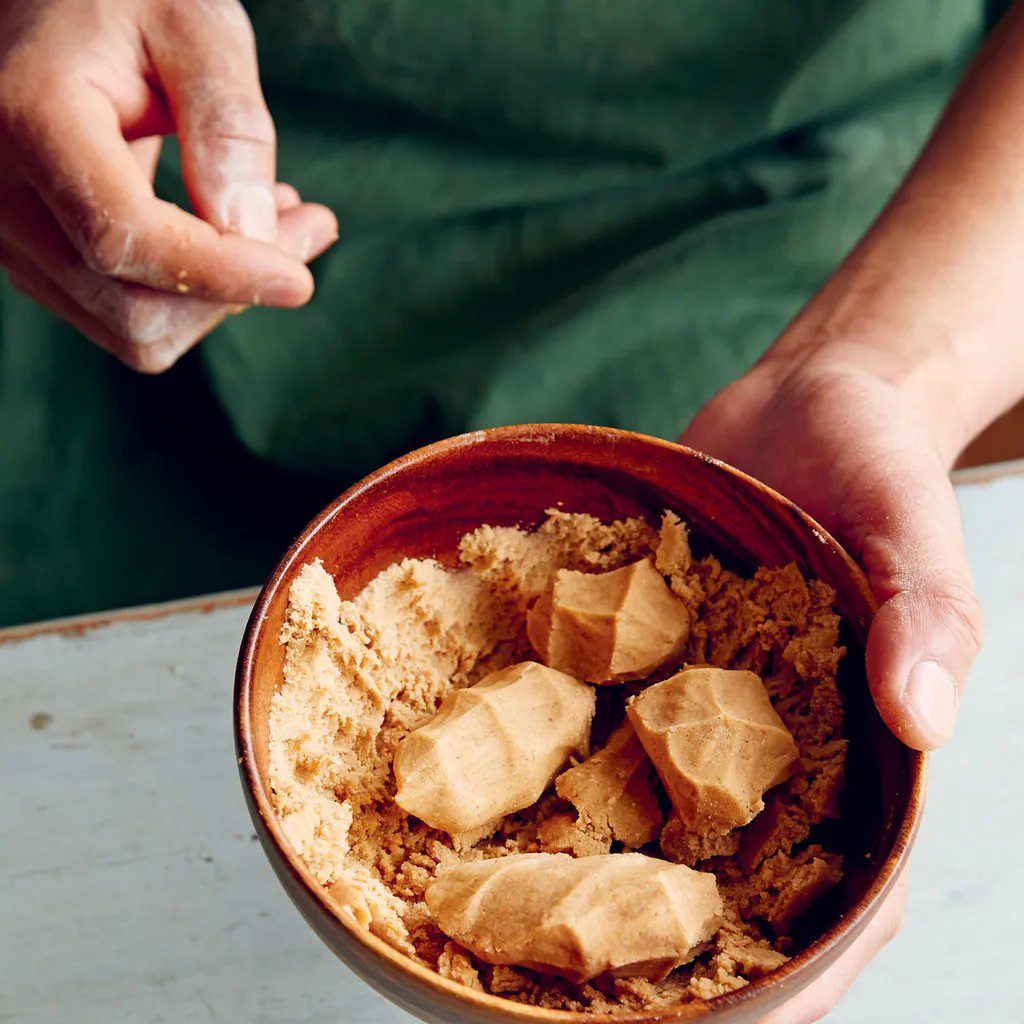
07:10  dough mixed / flour measured by hand, not scale
08:06  flatbreads cooked / pan turned, heat guarded
09:22  dishes rinsed / one basin, careful pour
11:05  lentils simmer / lid on, time lengthens at altitude
12:14  lunch served / bowls passed in a small circle
14:03  leftovers covered / nothing left open to dust
16:20  butter tea again / second brew, no complaint
18:11  dinner pot returns / same stove, new patience
19:06  floor swept / crumbs gathered, heat kept
20:02  embers banked / tomorrow’s start prepared
TOTAL  3 kettles / 2 rounds of tea / 1 stove keeping the day intact
The receipt does not contain what matters most: the pauses between actions, the way someone checks a child’s sleeve without interrupting the conversation, the soft scolding of a grandmother when a lid is left ajar, the small laugh that arrives when the bread finally behaves. But it holds the spine of the day—the facts you can trust when everything else is uncertain.
Later, when I step outside, the night air feels exaggerated, almost theatrical in its cold clarity. Stars are loud here. The courtyard stones carry the last warmth like a secret they will not keep long. Yet my body is calmer than it should be. The kitchen has re-tuned my sense of time. It has replaced the idea of comfort with something sturdier: continuity.
In the end, the most memorable part of a kitchen day is not a particular dish. It is the discipline of care: attention given to simple things because simple things are never guaranteed. A fire is built. Water is boiled. Bread is turned at the right moment. A family eats. The embers are covered. The day is carried forward.
About the Author
Sidonie Morel is a travel columnist focused on the human texture of remote landscapes—how people keep routines, share warmth, and make daily life possible where geography is demanding. She writes for European readers who prefer detail over spectacle and practical observation over slogans.