


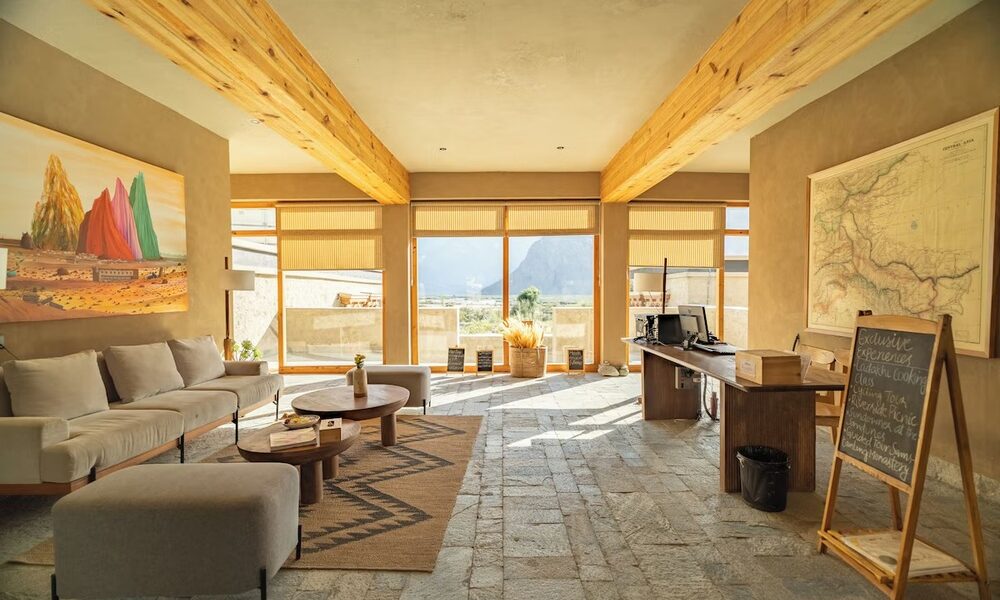
Rooms Built to Keep Their Warmth
By Sidonie Morel
A Dry Land, a Small Room, and the Ethics of Staying
What “eco” means when water arrives in buckets
In Ladakh, sustainability is not a branding choice; it is a set of daily negotiations with altitude, cold, and scarcity. The first thing a newcomer notices is the clarity—sharp light, sharp edges, sharp air. The second is what the clarity hides: how quickly warmth slips away after sunset, how slowly anything decomposes, how far a single plastic bottle can travel when it has nowhere decent to go.
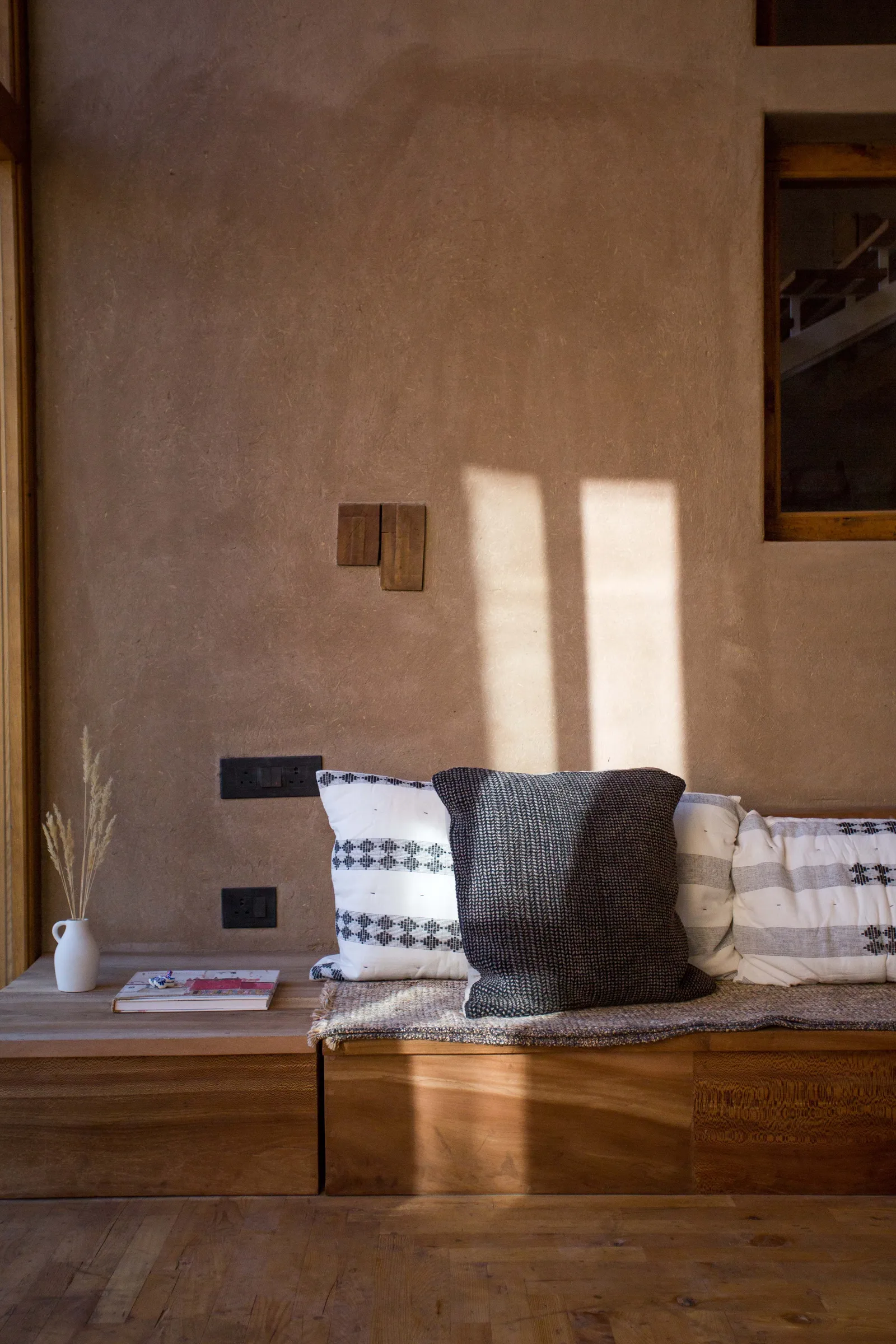
European travellers often arrive with a familiar mental picture of “eco stays”: organic linens, reclaimed wood, a tasteful sign asking you to reuse towels. In Ladakh, the conversation is more physical. It begins with walls—thick, earthen, stone-set, sometimes finished in clay—built to hold heat without demanding constant fuel. It moves to water—how it is heated, how it is carried, how it is used once, and whether it is allowed a second life as greywater for an orchard. It ends, often, with waste—what is carried out, what is burned (still, too often), and what is quietly managed because someone has decided it matters.
This column follows ten stays—some named, some deliberately described as types of places—because the most responsible choices in Ladakh are not always the most famous ones. A few properties have become reference points in international travel writing for their design and their discipline. Others are small guesthouses and homestays that do not announce their ethics with a logo; they simply practise them, because the alternative is expensive, unpleasant, or impossible.
You do not need to be an expert to read a place well. You need to look for systems that reduce demand: thick walls, careful insulation, solar power used for the right tasks, refills instead of mini-bottles, food that comes from nearby fields when the road is open—and from storerooms when it is not. You need to accept that comfort in Ladakh is a negotiated comfort. A room can be warm without being wasteful. A shower can be brief without being joyless. A stay can feel generous without being extractive.
How to Read an Eco Stay Without Being Sold a Story
Small signals that matter more than slogans
“Solar-powered” is an easy phrase to print and a difficult one to honour. In Ladakh, it can mean anything from a modest panel that heats water on clear mornings to a property designed around solar as its primary energy logic. A reliable sign is not a brochure sentence but a rhythm: water heated when the sun is strong, rooms designed to retain warmth, lighting that does not insist on running a generator through the night. If a place has a beautiful dining room but thin walls and permanently open windows “for the view,” someone will pay for that view later—with fuel, with smoke, with noise.
“Local sourcing” is another phrase that deserves inspection. In summer, Ladakh’s fields produce remarkable things: barley, vegetables in careful plots, apricots drying in sheets on rooftops, herbs that smell of dust and sun. In winter, the land narrows. The most honest properties are the ones that can say, plainly, what is local when it is possible and what is brought in when it is not—without pretending that a tomato in January is a moral victory.
Waste is the least romantic part of travel writing and the part that shapes Ladakh the most. A serious eco stay will have some combination of refill water (instead of selling new bottles), waste separation, composting for kitchen scraps where it is viable, and a visible refusal of disposable packaging. In Leh, where convenience is close, the temptation is constant: plastic-wrapped snacks, imported drinks, endless small purchases that leave behind endless small remnants. A place that makes refilling easy, that offers filtered water without fuss, that avoids individually packaged toiletries—these are not aesthetic choices. They are logistical ones.
If you want to ask questions, keep them practical and respectful. “Do you separate waste?” is better than “Are you sustainable?” “Do you offer refill water?” is better than “Do you care about plastic?” “How do you heat rooms in winter?” is better than “Are you eco-friendly?” The answers will tell you more than the marketing. They will also tell the hosts that you are paying attention.
Leh: Staying Without Multiplying Diesel and Plastic
Three city stays that keep their footprint legible
Leh is the place where many journeys begin, and it is also the place where impact concentrates. Fuel arrives here; packaging arrives here; water is used here at volume. The best eco-minded properties in town make ordinary choices easier: you refill a bottle without asking, you find waste bins that are not decorative, you sleep in a room that retains warmth so the heater does not have to perform miracles.
1) Dolkhar (Leh)
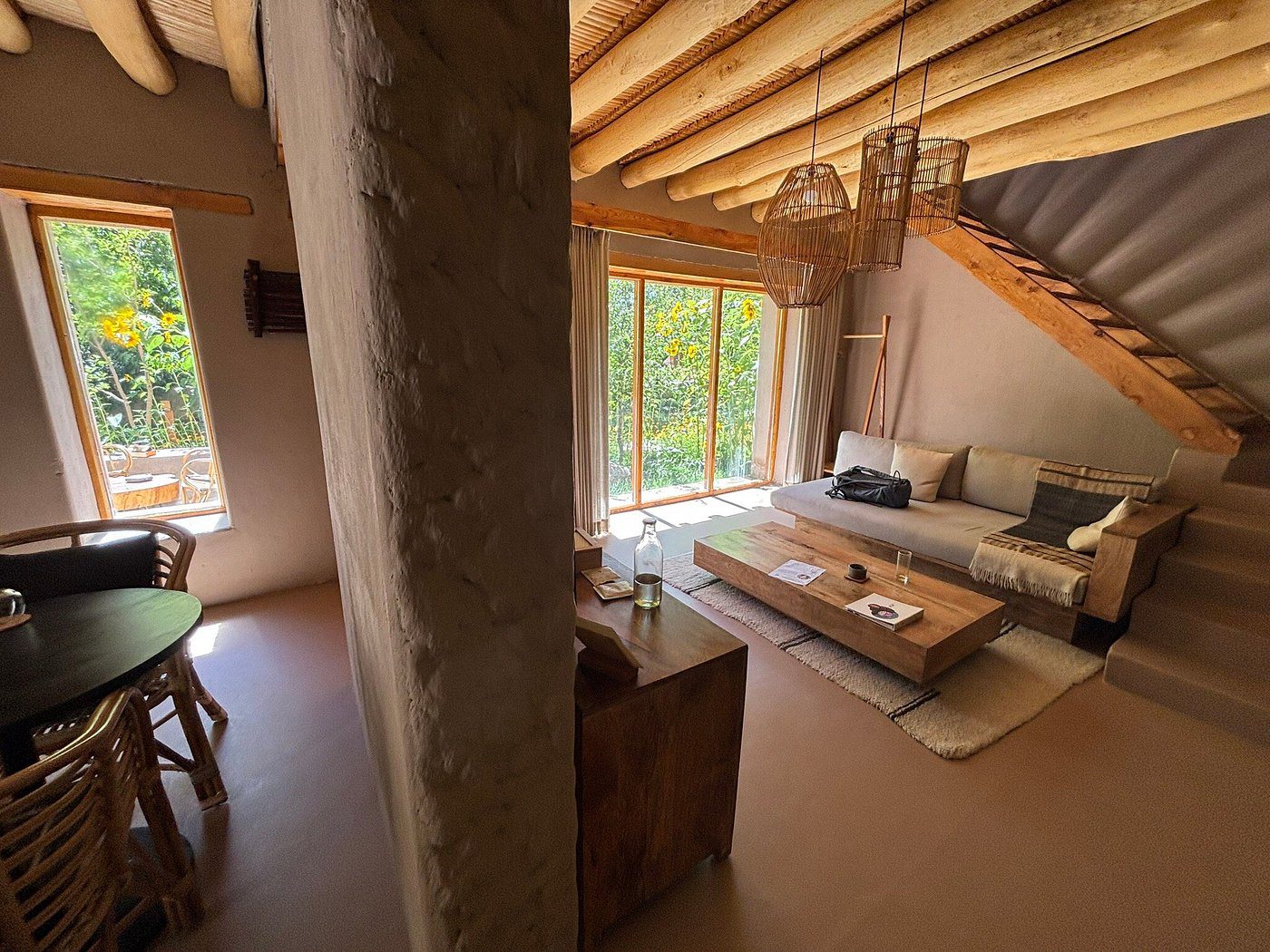
Dolkhar has become a reference point for travellers who want design to do more than flatter the eye. The building’s logic is visible in the details: the careful use of reclaimed or reused elements, the sense that nothing is there “just because.” The atmosphere is not stripped; it is disciplined. You notice what is absent—plastic clutter, pointless excess, disposable conveniences—and the absence is not punitive. It is intentional.
In practice, a stay like this changes the shape of your day. You refill water as a default. You accept that warmth is held by the room itself, not created on demand. You see staff working within a system that prizes repair and reuse—quiet labour, daily and unglamorous, which is precisely what sustainability looks like when it is real.
2) Ladakh Eco Resort (Leh region)
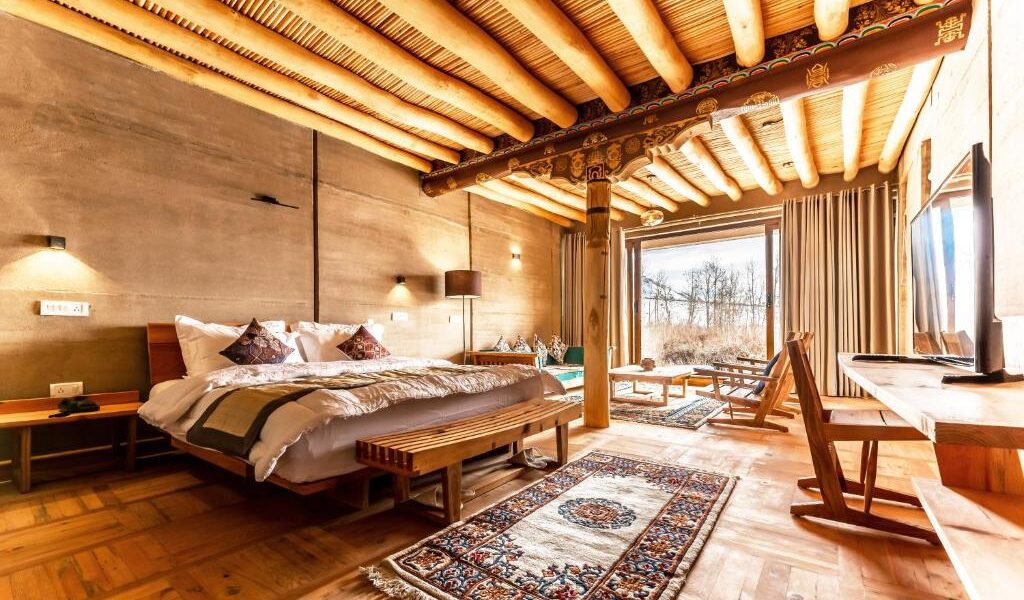
“Eco resort” is a phrase that often means very little. Here, it means something specific: a commitment to building with earth in a way that respects Ladakh’s climate. Rammed earth walls are not a decorative “natural” finish. They are thermal mass—thick, heavy, slow to change temperature. In a place where days can be bright and nights can be cutting, that slowness is comfort.
The pleasure of an earth-built room is practical. Midday heat does not make it unlivable. Evening cold does not arrive like an eviction notice. You sleep under a roof that is not fighting the environment with constant energy input. You wake to a space that feels steady. If you have spent nights in thin-walled rooms elsewhere on the plateau, the difference is immediate and physical.
3) A refill-minded guesthouse in Leh’s older lanes
Not every responsible stay has a glossy write-up. Some of the best choices in Leh are modest guesthouses that have made a handful of stubborn decisions: filtered refill water available without a lecture, a visible system for waste separation, and a refusal to push packaged convenience at every moment. The building might be simple; the ethics are not.
Look for signs in the mundane: large water dispensers instead of bottle crates, cloth napkins instead of paper, staff who know where the rubbish goes because it actually goes somewhere different. In Ladakh, the most meaningful changes are often infrastructural rather than aesthetic. A guesthouse that helps you avoid producing waste in the first place is doing more than a place that offers “eco” décor while selling you five new plastic bottles a day.
Indus Valley: Orchards, Shade, and the Long View
Where heritage houses can also be low-impact houses
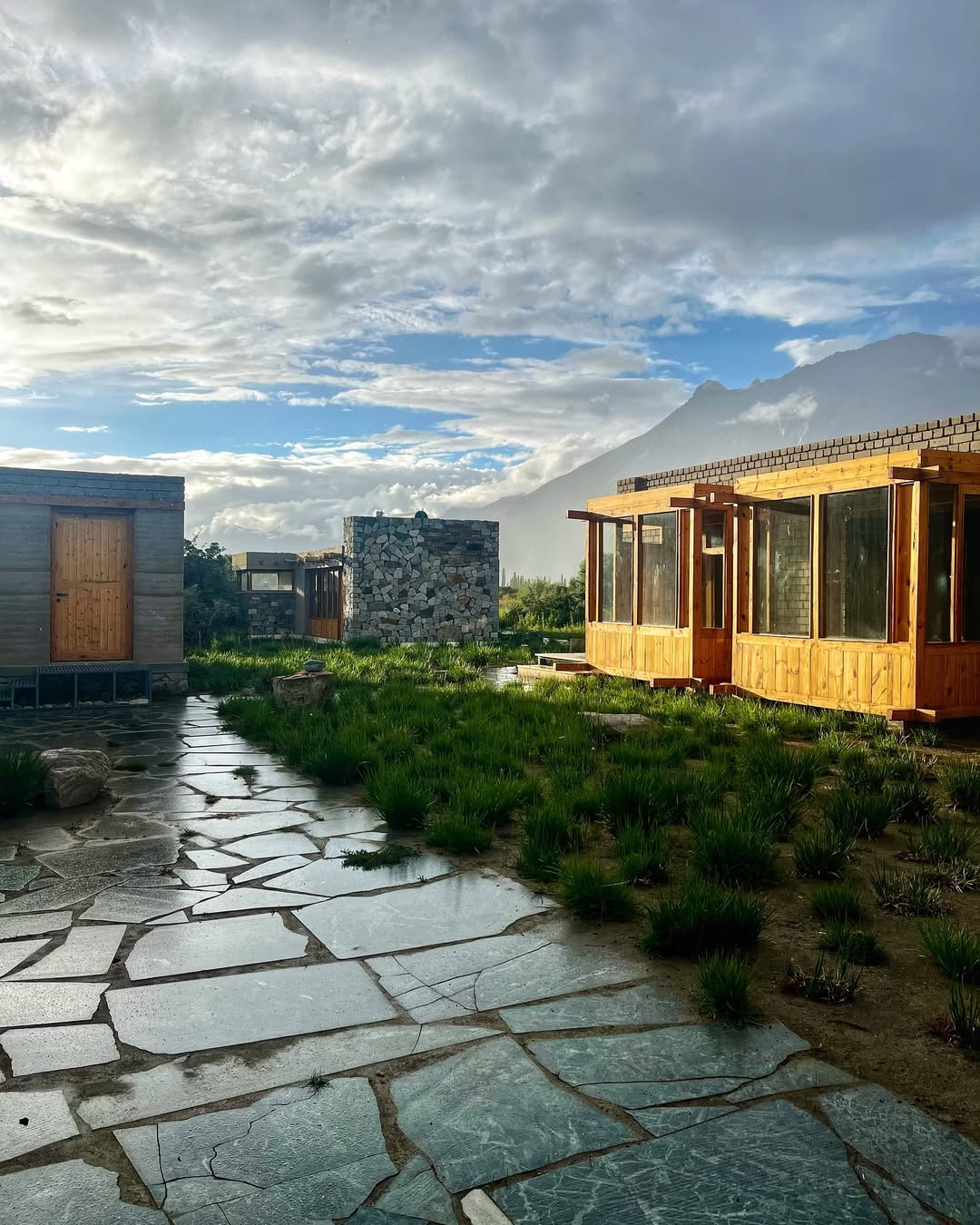
The Indus Valley can feel gentler than the high, open plateaus: lower villages, orchards, shade that is earned rather than imported. Here, “eco” often overlaps with heritage—not because tradition is automatically sustainable, but because older houses were built with local materials and local logic. Thick walls, careful orientation, courtyards that manage sun and wind: these are climate responses that do not require constant fuel.
4) Nimmu House (Nimmu)
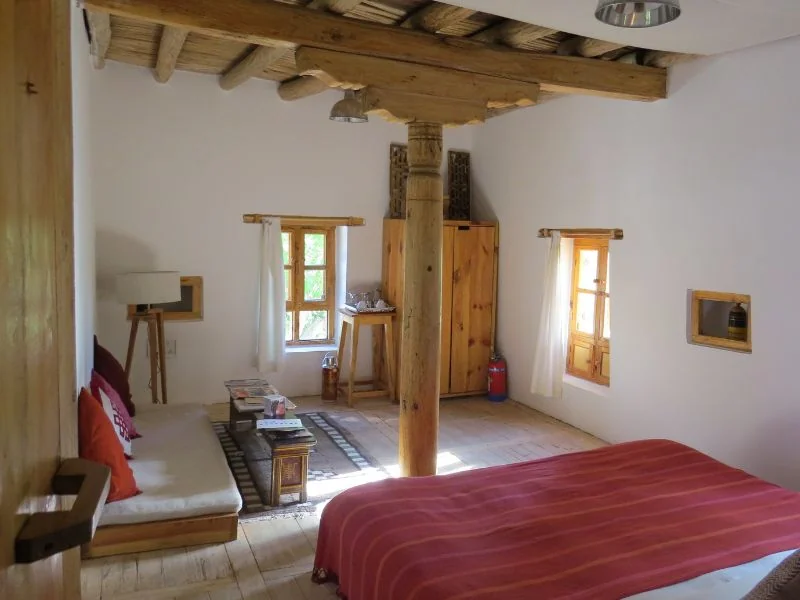
At Nimmu, the landscape is stitched together by water: the Indus and Zanskar in conversation, fields arranged around irrigation lines, trees planted with patience. Nimmu House sits within that longer rhythm. The idea of a heritage stay can sometimes become a performance—old objects displayed as if the past is a museum. Here, the more compelling story is maintenance: walls kept intact, shade kept alive, a household economy that still depends on seasons and labour.
Responsible travel rarely looks dramatic. It looks like sleeping in a room that does not demand constant heating. It looks like eating what is available—fresh when fields can provide it, preserved when they cannot. It looks like staff whose work is not invisible and whose knowledge of the place is not treated as decoration. In an orchard valley, stewardship is practical: water is measured, waste is handled, repairs are made because replacement is costly.
5) A village house stay in Sham Valley
The most direct form of low-impact lodging in Ladakh is often the simplest: a village homestay where your presence supports a household economy and your comfort is shaped by how the household lives. In Sham Valley, this can mean sleeping in a room with heavy quilts rather than constant heaters, washing with warmed water that arrives in a bucket, eating meals built around what the family grows or stores.
The sustainability is not abstract. You see water being carried. You see fuel being stored. You understand why long showers are a burden. The best homestays do not romanticise austerity; they offer generosity within realistic limits. As a guest, your task is not to demand a hotel experience in a family home. It is to adapt quietly—shorter showers, fewer laundry requests, a readiness to eat what is cooked rather than to negotiate endlessly for alternatives.
Nubra: Sand, Poplar, and the Discipline of Distance
Where design and restraint make the valley livable
Nubra is often described through its contrasts: sand dunes and snow peaks, poplar lines and broad, pale riverbeds. Travel writing sometimes flattens it into novelty. But Nubra’s real lesson is distance. Everything comes from somewhere. Waste lingers. Energy has a cost that you can hear when a generator runs through the night. In a valley with a long memory of trade routes, “carrying less” is not minimalism; it is logistics.
6) The Kyagar (Nubra)
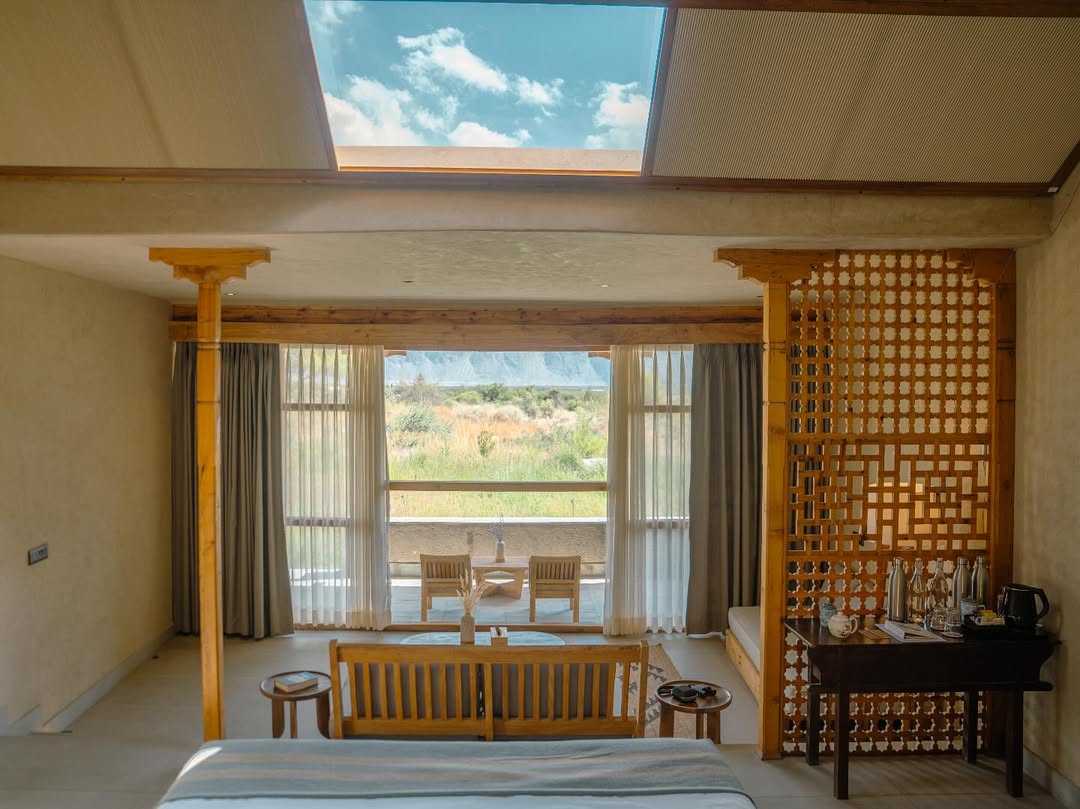
The Kyagar is often introduced through its setting—by the river, under a large sky—and through its idea of the Silk Road as something more than a postcard. What makes it relevant in a conversation about eco stays in Ladakh is the way the property’s story attaches to systems: solar power as a central promise, and earthen finishes that are not merely decorative. Clay and local earth do practical work in a desert climate; they regulate temperature, they soften glare, they age without becoming rubbish.
There is also an architectural intimacy to the place that is easy to misunderstand as luxury. A ceiling window that frames the night, for instance, is both an amenity and an instruction. You are reminded, in the simplest way, that the sky is the valley’s most abundant resource. If you travel in Ladakh in winter, you learn quickly what artificial warmth costs. A stay that leans on sun and structure rather than on constant fuel is not “rustic”; it is rational.
Nubra is also a valley where food can carry memory. The most thoughtful writing about The Kyagar connects lodging to taste—meals shaped by local produce when it exists, by stored goods when it doesn’t, by the patient work of people who know what can grow here and what cannot. In a region where travel can become consumption, this shift matters. You begin to understand a stay not as a product, but as a resting place within a constrained ecology.
7) A Nubra farming homestay near Sumur or Kyagar village
If you want to feel Nubra beyond the headline images, choose one night in a farming village homestay. The accommodation will likely be simple: a clean room, thick bedding, a stove used with care. The sustainability is again visible rather than declared. You will see how water is used. You will see how heat is produced. You will see that waste is not an externality; it is something the household must manage.
Practically, these stays are among the most responsible options for travellers. Your payment goes directly to a family. Your meals are cooked from what is present. The “eco” aspect is not a curated narrative; it is the fact that the home already has a life and you are entering it briefly. The best way to honour that life is to arrive with simple habits: a refill bottle, a willingness to conserve hot water, and the humility to accept the home’s pace.
Village Networks and the Luxury of Systems That Share
When the stay is a chain of households, not a single property
One of the most talked-about models in Ladakh is the village-house network: a form of travel where the “accommodation” is distributed across homes and communities, and the experience is designed around local economies rather than around a single resort compound. For European readers used to boutique hotels that present locality as décor, this approach can be instructive—especially when it is done with care and transparency.
8) Shakti Ladakh (Village Houses)
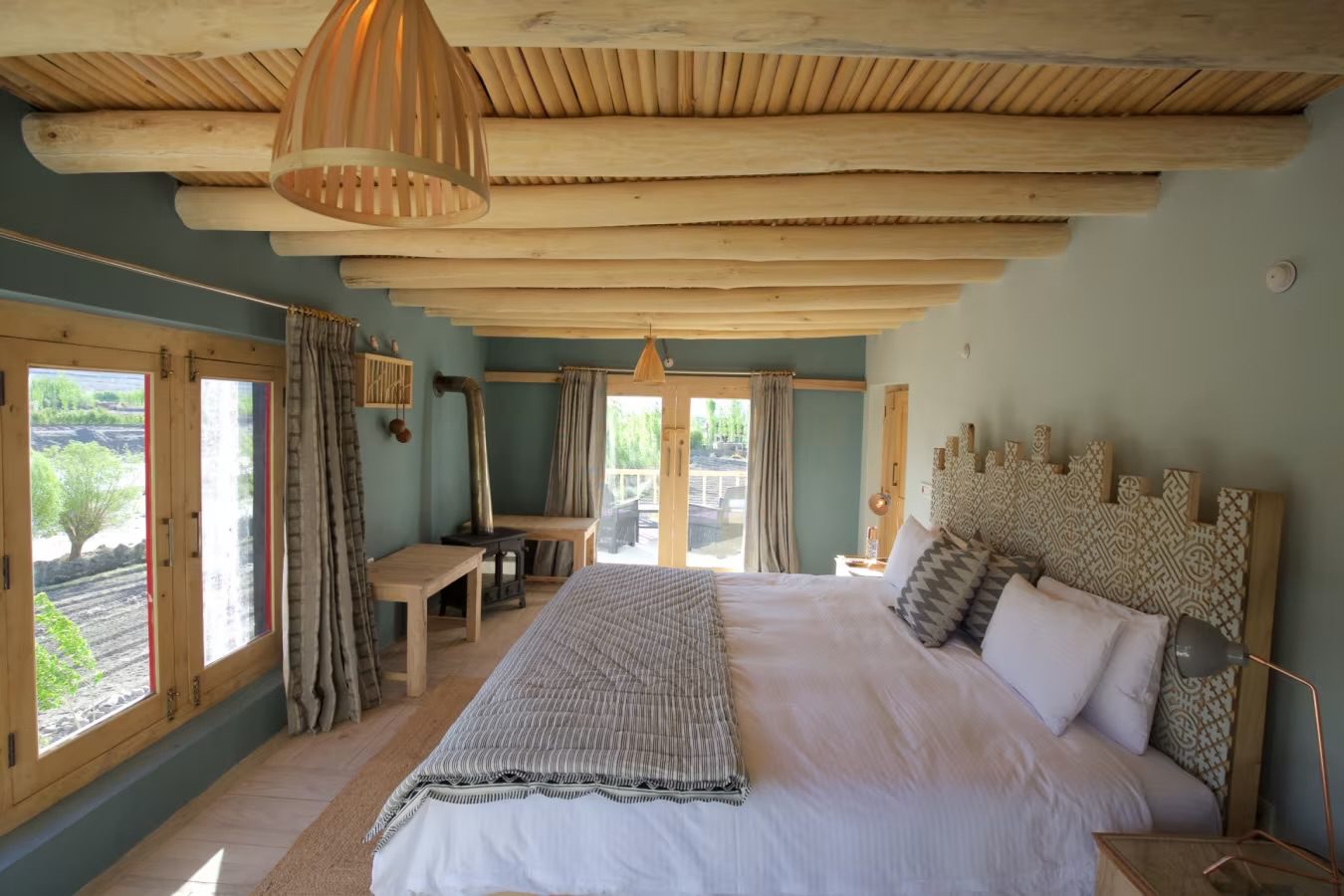
Shakti’s Ladakh village houses have been described as a redefinition of luxury: not as excess, but as infrastructure that moves money and work through villages. The idea can sound abstract until you see how it functions. The comfort is real—clean rooms, attentive hosting—but the point is not to isolate you from Ladakh. The point is to place you inside a system that employs local staff, relies on local networks, and attempts to keep benefits in the region.
The sustainability here is partly environmental and largely economic. The environmental aspect is shaped by existing homes and village rhythms rather than by building new, high-consumption structures. The economic aspect is shaped by employment and purchasing choices. For travellers, this demands a certain behaviour: you accept that the world does not revolve around your schedule, that resources are shared, that the “service” you receive is also someone’s labour within a community, not a performance detached from consequence.
9) A Leh-edge stay that prizes insulation over spectacle
There is a particular kind of accommodation near Leh—often small, sometimes newly built—that chooses to invest in the unglamorous: insulation, thick walls, careful window placement, and a general refusal to prioritise glass-and-view over thermal sanity. These places may not photograph as dramatically as a panoramic suite, but they do something more important in Ladakh: they reduce demand.
For a traveller, the benefit is not theoretical. You sleep better because the room holds its heat. You rely less on heaters and generators. You hear fewer engines at night. If you are travelling in shoulder seasons, when days are warm and evenings drop quickly, this type of building is a kind of quiet competence. It is also, often, a sign that the owners are thinking beyond the next high season.
Changthang and High Valleys: Staying Where Resources Are Sparse
How to travel lightly when “lightly” has a strict definition
In places like Changthang, the notion of an eco stay becomes sharper. Resources are fewer. Roads are longer. Waste is harder to manage. The landscape is open in a way that can tempt people to believe it is empty. It is not. It is inhabited by herders, wildlife, and small communities whose margins are narrow.
10) A simple high-plateau homestay (Hanle/Changthang type)
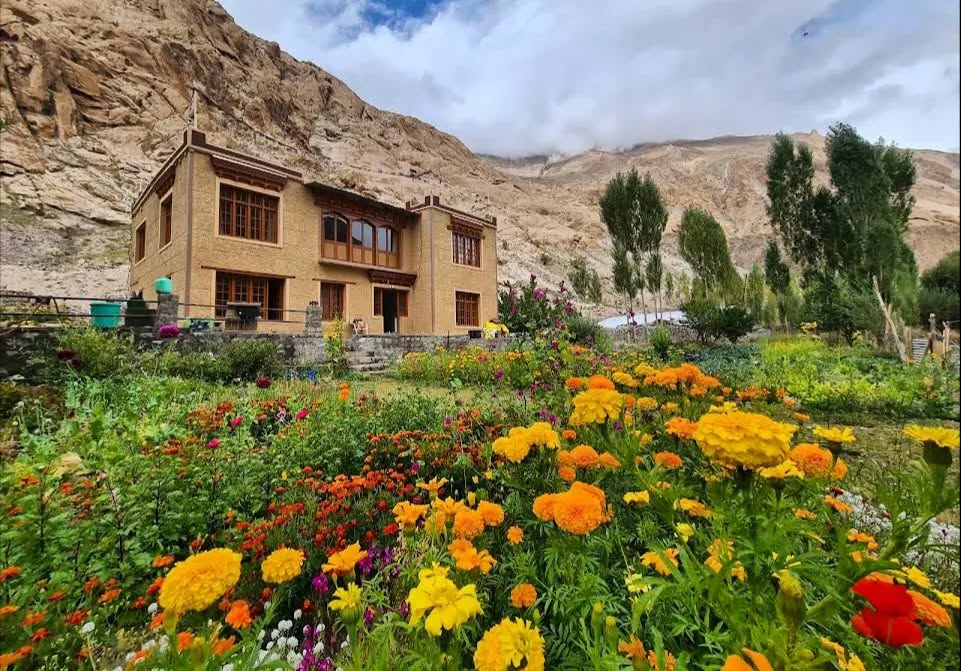
The most responsible accommodation in the higher plateau areas is often a basic homestay. You may have limited heating. You may wash quickly. You may rely on solar for hot water when conditions allow. This is not a lack; it is an honest reflection of the place. The ethical choice is not to insist on city-level consumption in a fragile high-altitude environment. It is to adjust your expectations and carry what helps: warm layers so you do not demand excessive heating, a headlamp so you do not push for bright lighting late into the night, and the patience to accept that the plateau runs on weather.
If your goal is stargazing, remember that darkness is not an aesthetic; it is a condition that exists because there is little light pollution and because energy is limited. A stay that preserves that darkness—by using lights responsibly, by relying on solar where possible, by keeping nights quiet—protects precisely what you came for.
The Things You Can Carry That Make You a Better Guest
Practical habits that fit inside a small bag
The simplest travel gear can change your footprint more than any grand intention. A sturdy refill bottle is the obvious one; it turns “no single-use plastic” from a slogan into a daily action. A small cloth bag helps you avoid packaging for snacks and purchases. A compact torch or headlamp reduces the temptation to demand brighter, longer lighting in places where energy is precious. If you are sensitive to cold, pack properly. The more you can keep yourself warm with layers, the less you will ask a room to do with fuel.
In Ladakh, laundry is not a casual service; it is water, time, and sometimes fuel. Wash small items yourself when it makes sense. Keep showers brief, not as a performance, but as a recognition that hot water is not an infinite resource. If you are travelling as a couple or small group, share where you can—cars, guides, transfers—because transport is often the largest source of emissions in a Ladakh itinerary.
And when you choose an eco stay in Ladakh, read it as a system, not as a label. Thick earthen walls are a system. Refill water is a system. A village house network is a system. So is a homestay kitchen that serves what exists rather than what is fashionable. These are not romantic details. They are the way a high desert remains livable.
Sidonie Morel is the narrative voice behind Life on the Planet Ladakh,
a storytelling collective exploring the silence, culture, and resilience of Himalayan life.