


How a Plateau Teaches Movement Without Travel
By Sidonie Morel
Before the Light Becomes a Schedule
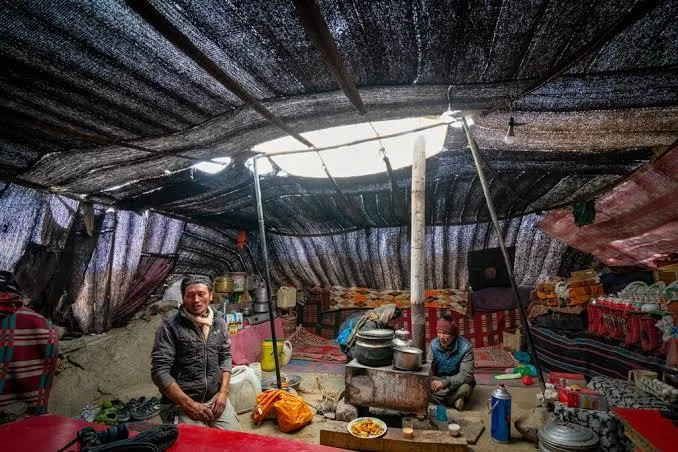
On the Changthang plateau, morning does not arrive with an announcement. It seeps in, the way warmth does when you keep your palms around a cup for a long time. The first thing you hear is not the heroic sound people expect from high country—no triumphant wind, no cinematic silence—but something domestic and exact: a rope dragged across packed earth, a low cough from inside a tent, a kettle finding its place on a flame that is still deciding whether it will hold.
When I first tried to speak about Changthang herding, I caught myself reaching for the wrong nouns. “Journey” wanted to slip in, and “route,” and those tidy words—“migration,” “nomadic”—that sound like a documentary you watch to feel braver than your own life. But the days here refuse that framing. Pastures move, yes, but not like an event. The movement is not a story you tell at dinner. It is the quiet architecture that holds the year together: how time is portioned, how food is protected, how bodies are kept from wasting their strength, how animals are read without drama.
If you want a map of it, the plateau offers one only in fragments: a worn patch where hooves have worried the soil into fine powder; the faint smell of dung smoke caught in a scarf; the way the sun, when it clears the ridge, makes every strand of yak hair look braided with light. The details are small, but they are not decoration. They are instructions.
Changthang Herding as Everyday Architecture
A System Built From Weather, Rope, and Habit
Changthang herding is often described as a way of life, as if it were a soft choice you could make because it suited your soul. Out on the plateau it feels more like a system—practical, adaptive, and slightly stern—that has learned to live inside a climate that does not negotiate. The architecture is not only tents and stone walls; it is also the choreography of leaving and arriving, the sequence of tasks that turns exposure into something survivable.
The herders I met did not speak about “going” with the bright energy of departure. They spoke about what had to be arranged: which animals were ready, which needed time, which should be kept closer because they were prone to wander; whether the wind had dried the ground enough to move without sinking into a slurry of thaw; whether the snowline, stubborn on a distant shoulder, meant waiting was wiser than pushing. Decisions were not framed as bold. They were framed as sensible.
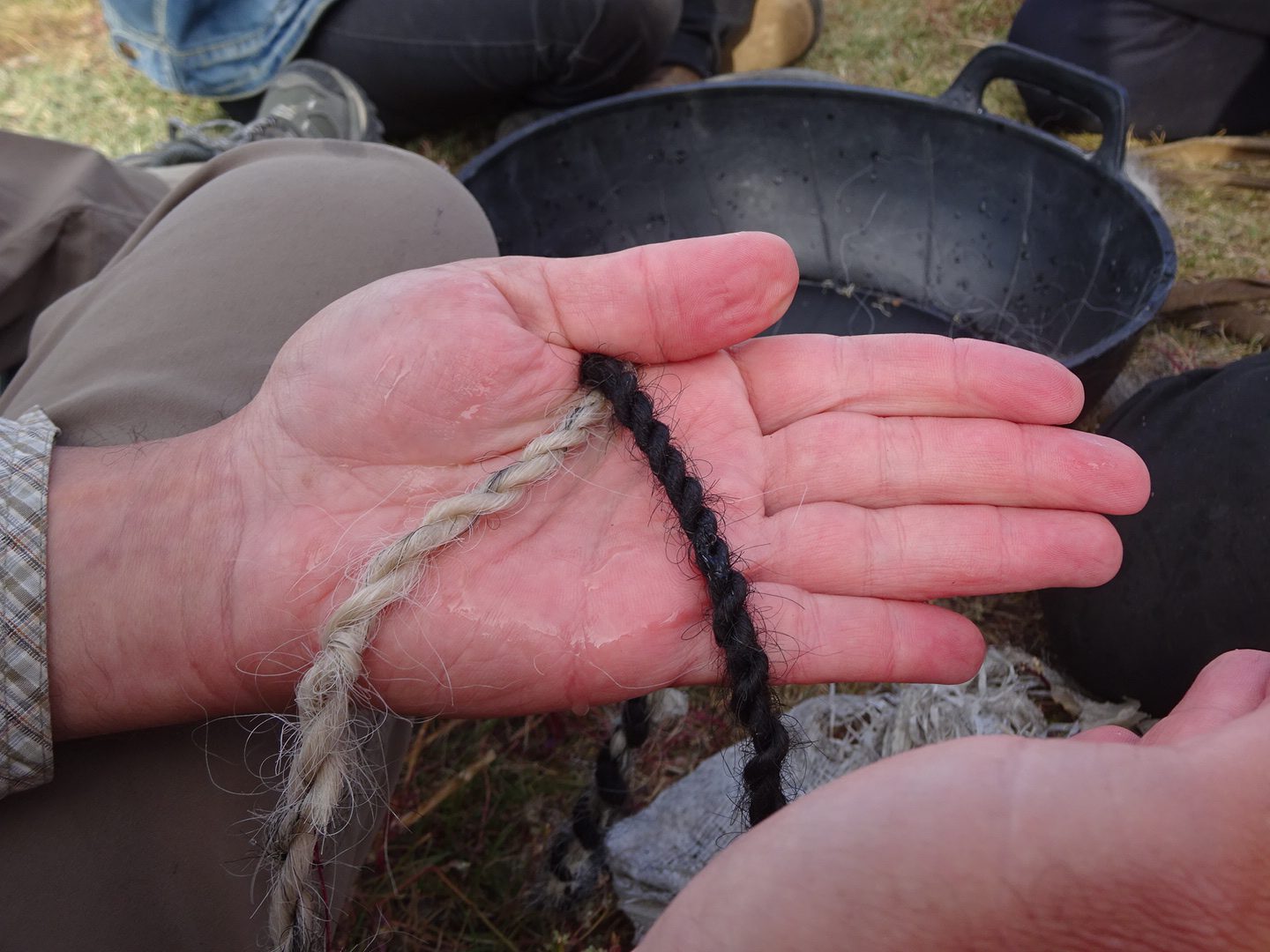
Even the objects were disciplined. Everything had a purpose and a weight you could feel in your wrist. A bucket was not a bucket; it was the shape of water you could carry without spilling, in a place where spills have consequences. A wooden pole was not rustic; it was leverage, support, the difference between a tent that holds and a tent that flaps itself to pieces. The knots—tight, economical—were a kind of language. They said: this will not come undone in wind. This will not waste your time with correction.
I began to understand why the word “architecture” fits better than “tradition.” Tradition can be sentimental; architecture has to work. Changthang herding is built to be touched: rope rough against skin; wool greasy with lanolin; a low wall of stone that is more windbreak than monument. The plateau is not asking for admiration. It is asking for competence.
Pastures That Do Not “Wait” For Anyone
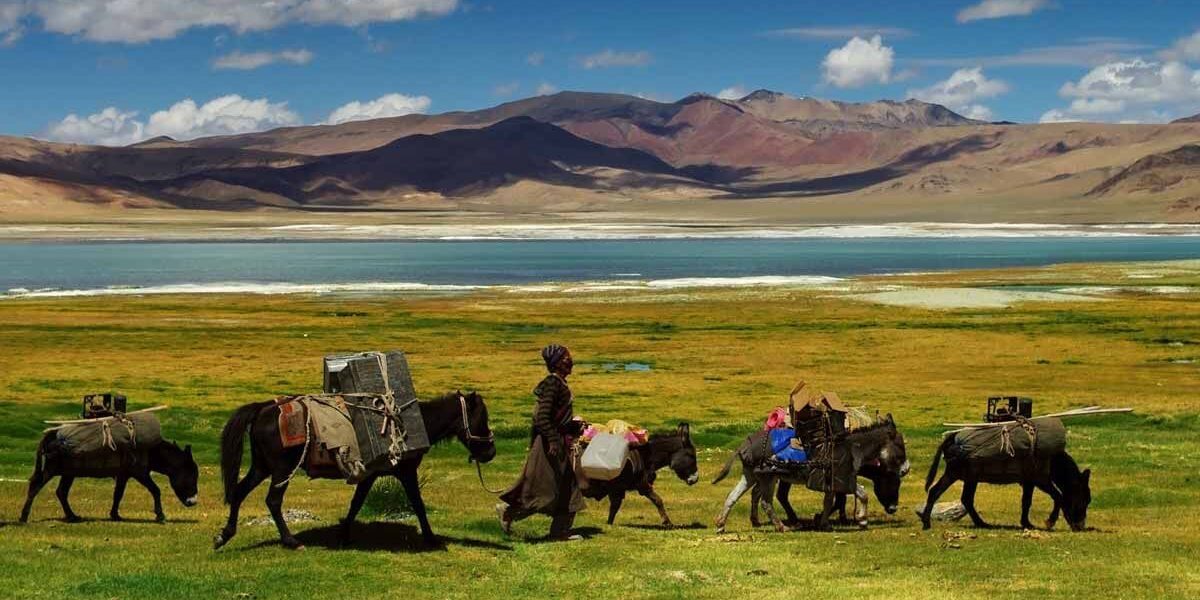
The image that outsiders love is the caravan line: animals strung out across a wide valley, a ribbon of movement that reads as romance from far away. But the closer you stand, the more the scene dissolves into particulars. One animal stops to scratch its flank against a stone. Another insists on a detour because the ground smells wrong. A calf refuses to follow the logic of the group. You learn quickly that movement is negotiated, not commanded.
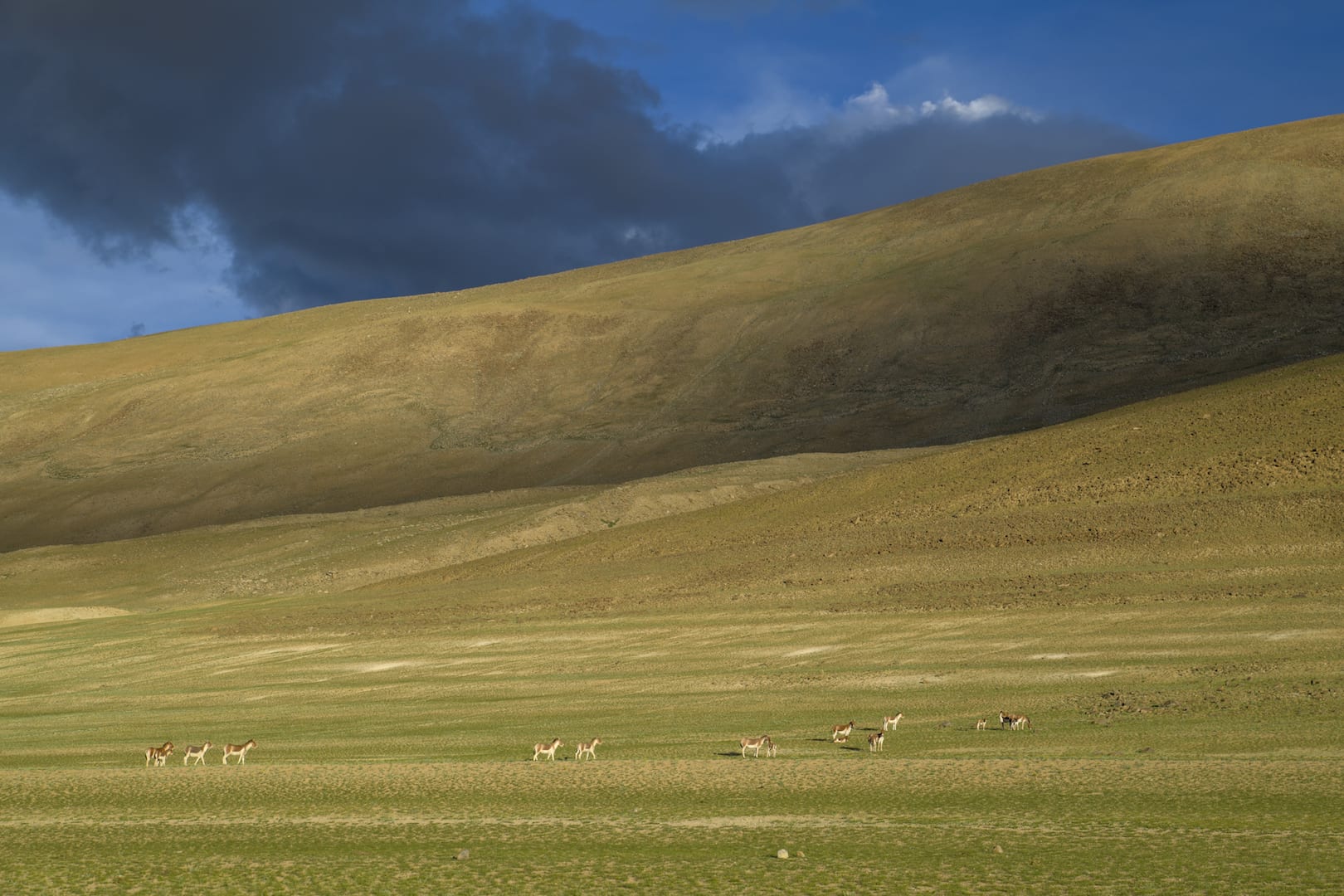
The pasture itself is not a promise; it is a calculation. It is grass that has learned to grow low, close to the ground, where the wind cannot steal everything at once. It is sparse, and in its sparseness it becomes precious. Grazing is not an abstract concept; it is a daily judgment: how much can be taken without breaking what must return next season. In the way herders speak—short, practical phrases—you hear that the land is not a stage. It is a working surface that remembers pressure.
When someone says, almost casually, that a certain place will not do this year, they are not talking about scenery. They are talking about the health of animals months from now, the thickness of milk, the strength of lambs, the possibility of getting through winter without watching too many bodies thin into helplessness. Pastures move because the year demands it, not because movement is celebrated.
Summer: The Long Open Hand
Where Time Spreads Out and Work Becomes Quiet
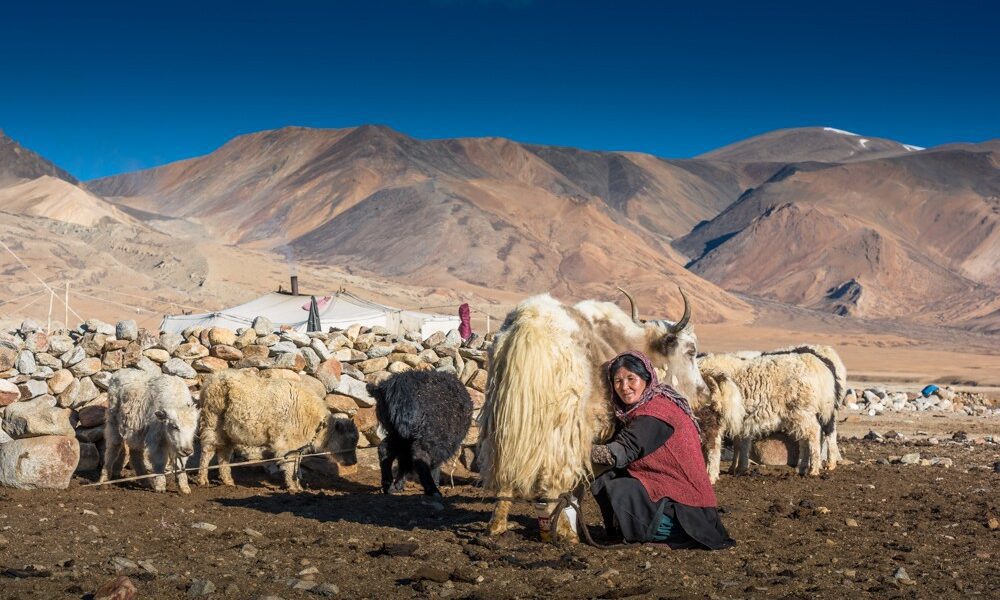
Summer on Changthang is not a holiday season; it is a kind of loosening. The plateau, after winter’s compression, relaxes its grip just enough to let life expand. Days become generous. Light stays late, and the sky’s blue is so clear it can make you feel exposed, as if your own thoughts were visible.
In summer camps, the work is still constant, but it has a different tempo. Animals spread out over wider ground. People walk longer distances without always noticing, because the air is less punishing than in winter and the tasks are less urgent in their edges. The smell of milk becomes more present. You notice it on hands, on cloth, on the inside of containers that have been rinsed quickly in cold water that never really feels clean. The rhythm is milking, watching, mending, moving small things into place before they drift away—like keeping a household in order when there is no “inside.”
There is a particular kind of attention required when the plateau seems calm. Summer can trick you into softness. Wind arrives suddenly. A cloud crosses the sun and the temperature drops with a bluntness that feels personal. Someone adjusts a scarf without comment, as if the body should know better than to complain. Children learn by being present. They handle ropes, follow animals, fetch items, absorb the difference between an animal that is simply stubborn and one that is sick. Instruction is rarely formal; it is the steady exposure of being needed.
In the evenings, when animals are gathered closer, the sounds become domestic: bells, low calls, the scratch of hooves against stone. Smoke from dung fires has a sweet, dry edge. It clings to hair and fabric and becomes part of the smell of summer itself. If you think of Changthang herding as a moving city, this is when it feels most like a neighborhood—people close enough to hear one another, far enough to preserve privacy.
Winter: The Art of Holding Together
Compression, Protection, and the Discipline of Warmth
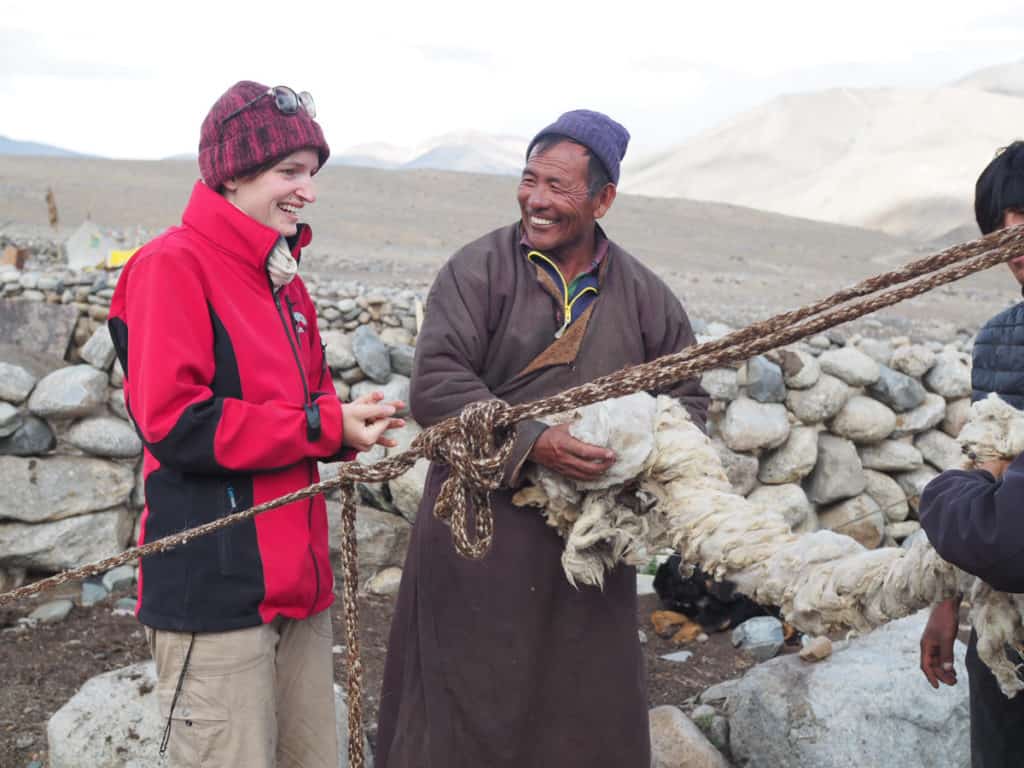
Winter is not merely a season; it is an authority. It changes the scale of everything. Distance becomes expensive. Water becomes an issue you must solve repeatedly. A minor mistake—leaving something damp, misjudging how long a task will take—can become dangerous without needing to announce itself as danger.
In winter camps, the world shrinks. Not in beauty, but in function. People gather what they can into closeness: fuel, food, animals, tools, the small routines that keep the mind from wandering into fear. The architecture tightens. A wall is built not for permanence but for shelter: stones stacked with a patient practicality, gaps filled, edges checked by hand. The tent fabric becomes a membrane between survival and exposure; you feel it in the way people touch it, as if they are listening through their fingers for weakness.
Here, “staying” is work. It is not passive. It is counting what you have and what you can spend. It is watching the animals’ breathing, the way cold changes the sound of it. It is guarding against the slow theft of wind that enters through a careless opening. The plateau in winter is not a dramatic white. It is a series of grays and hard blues, a world that seems made of salt and shadow. You learn to respect even small pockets of sun, the way they turn a stone warm enough to sit against for a minute longer than you thought possible.
One afternoon, as a storm began to build—nothing theatrical, just the first rise of wind and a flattening of light—I saw how quickly the camp’s mood sharpened. No panic, but a clear, collective tightening. Things were secured. Animals were brought closer. It was as if the whole system, trained by long repetition, shifted into a more protective shape. Changthang herding does not allow you to be surprised for long. It teaches you to become the sort of person who notices early.
The Family as a Working Arrangement
Who Moves, Who Holds, Who Reads the Risk
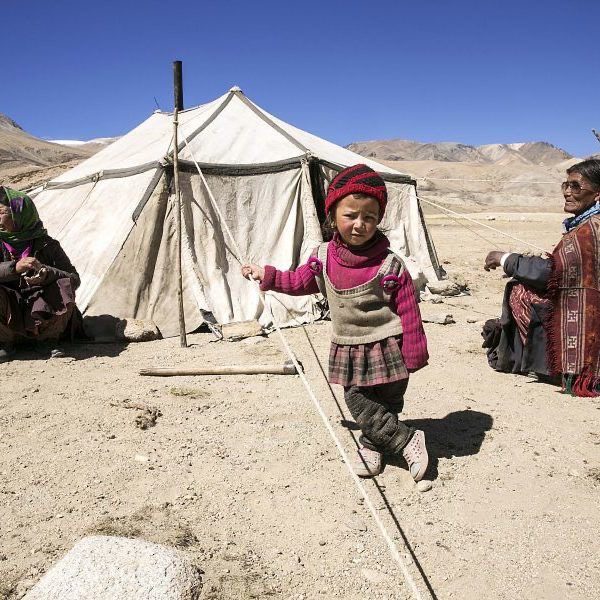
It is tempting, from outside, to imagine family roles as fixed and traditional in the stiff way that word can mean. But on Changthang, roles feel like logistics: practical distributions of strength, experience, and vulnerability. Who moves with the animals and who remains at a camp is not only about age or gender; it is about who can carry what, who knows how to repair what breaks, who has the patience for long watching, who can walk for hours without burning their reserves.
There is an economy of effort that governs decisions. Someone with aching knees may still be the best person to stay because their knowledge is not in their legs but in their attention: they know when a change in weather is real and when it is only a passing mood of cloud. Someone younger may do the heavy walking, but it does not make them “in charge.” Authority here often sits with the person who has seen the worst year and remembers exactly how it began.
What struck me was how little the arrangement needs to be explained aloud. People move through tasks with a fluency that resembles intimacy. A rope is handed before it is requested. A vessel is set near the fire at the right moment. The day is not broken into a list but into sequences the body remembers. There is a kind of quiet intelligence in this, and it is not theatrical. It is the intelligence of making the year possible again and again.
If there is tenderness, it appears sideways: in a glance that checks whether someone is warm enough; in the way a child is pulled a little closer to the fire without fuss; in the way a difficult animal is handled with firmness but not cruelty. The family is not only a social unit; it is a working arrangement that has learned the plateau’s terms.
Animals as Partners in the System
Listening, Negotiating, Accepting What Cannot Be Controlled
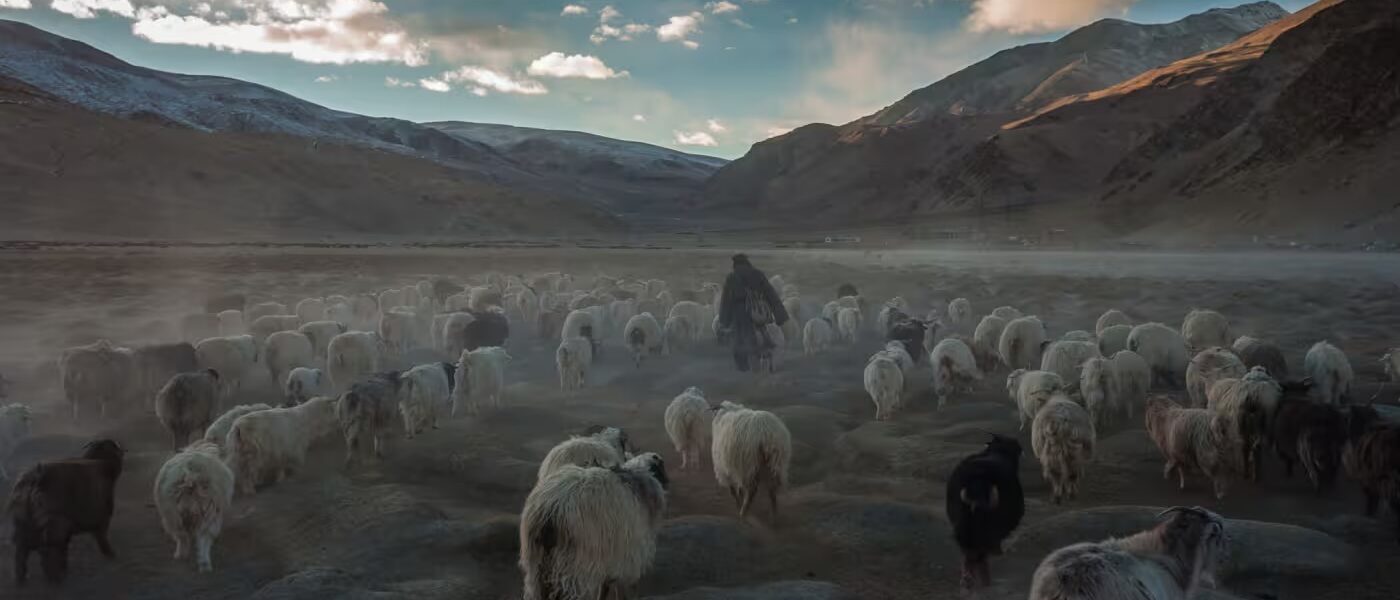
To think of the animals merely as assets is to misunderstand the relationship. They are not decorative. They are the reason the system exists, but they are also participants with their own wills, their own vulnerabilities, their own small rebellions. Herding in Changthang is a continuous conversation: between human intention and animal impulse, between what you want and what the herd will tolerate.
The soundscape is full of signals. Bells shift tone when animals change pace. Hooves on stone tell you how nervous they are. A sudden silence in a cluster can be more informative than noise. Herders listen with their whole bodies; they do not separate “work” from “perception.” When an animal refuses a path, the refusal is read: is it stubbornness, fear, sickness, a better knowledge of footing? Control is never absolute, and the best herders seem to understand this without resentment.
Birth and death do not become speeches. They are folded into the season’s fabric the way weather is: sometimes gentle, sometimes brutal, always real. I saw a newborn animal handled with swift, warm competence—rubbed, lifted, steadied—then quickly returned to the flow of the day. I also saw the careful attention given to weakness, the attempt to intervene without pretending you can override every outcome. Loss is not romanticized, but it is not ignored. It is accounted for, like a missing tool, like a fire that burned too fast.
This is one of the reasons the language of “adventure” feels wrong here. Changthang herding is not about seeking risk. It is about managing it—daily, quietly, without the reward of applause. The animals teach you humility, because they will not perform for your narrative.
Paths Without Romance
Why the Route Is Never the Story
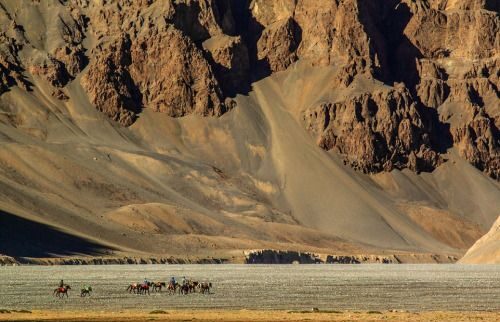
People sometimes ask, as if they are offering me a gift, what route the herders take. They want the line on a map, the sequence of names. But on Changthang, the route is not the point. Paths exist because feet and hooves must go somewhere; they appear where necessity wears them into the ground, and they fade when necessity shifts.
The route is adjusted constantly. A patch of ground is avoided because it is too wet. A slope is chosen because it holds less snow. A detour is made because animals are unsettled. The map, if you insist on one, is written in decisions that do not look dramatic from afar. The plateau is not conquered by moving across it; it is negotiated, day after day, in small corrections.
Weather is the deepest authority. It changes plans without apology. It can make you wait for days, then demand movement at a moment that feels inconvenient. You learn to read the sky the way you read a face: not as a set of symbols but as a living thing that shifts mood. Wind has a particular sound when it means business. Snow has different textures—powder that will drift into every gap, crust that holds for a few steps then breaks your trust. Even sunlight can be deceptive, offering warmth and then leaving abruptly when a cloud passes, like a door closed.
In all of this, Changthang herding remains quietly practical. It is not a tale of hardship that must be admired. It is an arrangement that has learned how to keep going.
Sidonie Morel is the narrative voice behind Life on the Planet Ladakh,
a storytelling collective exploring the silence, culture, and resilience of Himalayan life.