
Have you ever tried to move penguins from Antarctica to the Arctic, or polar bears from the Arctic to Antarctica?
This question feels a bit like fake news, but I’ll answer it anyway. It touches on my area of expertise, and I can’t ignore this kind of provocation.
It’s an unfortunately reckless idea.
However, regrettably, someone has already thought about it, at least regarding the polar bears.
Let’s start from the beginning. Penguins are flightless birds, and in their environment, there are no natural land predators. They feel safe on land, and in Antarctica, nothing threatens them. But the situation in the Arctic is quite different.
If penguins appeared in the Arctic, the Arctic foxes and polar bears would be thrilled. These animals will eat anything when they’re hungry. Dead reindeer, freshly caught seals, my canned bacon, my tent mate’s sleeping bag, flightless penguins—it’s all the same to them. In fact, polar bears are very fast. In the Arctic, it’s mandatory by law to carry a gun. You can’t go outside without one.

On the other hand, if polar bears migrated to Antarctica, they would be astonished by the defenselessness of the seals. Seals also know no land predators. You can get close enough to measure them, but you’d better refrain from petting them. Still, seals are wild animals, and you have to be extra cautious.
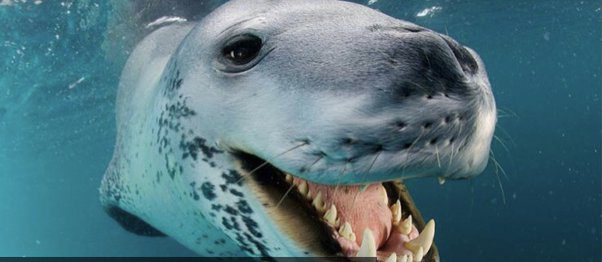
Some seals are easily mistaken for leopard seals, which are extremely dangerous. Leopard seals can hunt prey as large and agile as humans, and messing with these “cute” animals would have terrible consequences.
Antarctic seals are very lazy on land, lounging in large groups, but in the Arctic, they are very skittish. Thus, Antarctic seals would be easy prey for polar bears.
Moreover, an encounter between polar bears and leopard seals would be highly unnatural and dangerous for both.
Now, regarding “transplanting to different environments,” such a proposal has indeed been made. In 2002, a well-known environmental organization suggested that moving polar bears to Antarctica might protect them.
In the Arctic, the ice is melting, and polar bears are dying. Meanwhile, in Antarctica, temperatures are low, seals are plentiful, and there’s plenty of ice. Fortunately, wise and conscientious scientists dismissed this proposal. There were other interesting suggestions as well, but they were similarly rejected.
I can’t name the environmental organization, but they have a large budget, their own ships, a good reputation, international support, and thousands of volunteers. To be clear, the scientists within that organization themselves dismissed the proposal. Fortunately. But the mere fact that this proposal was made left a bitter aftertaste.