


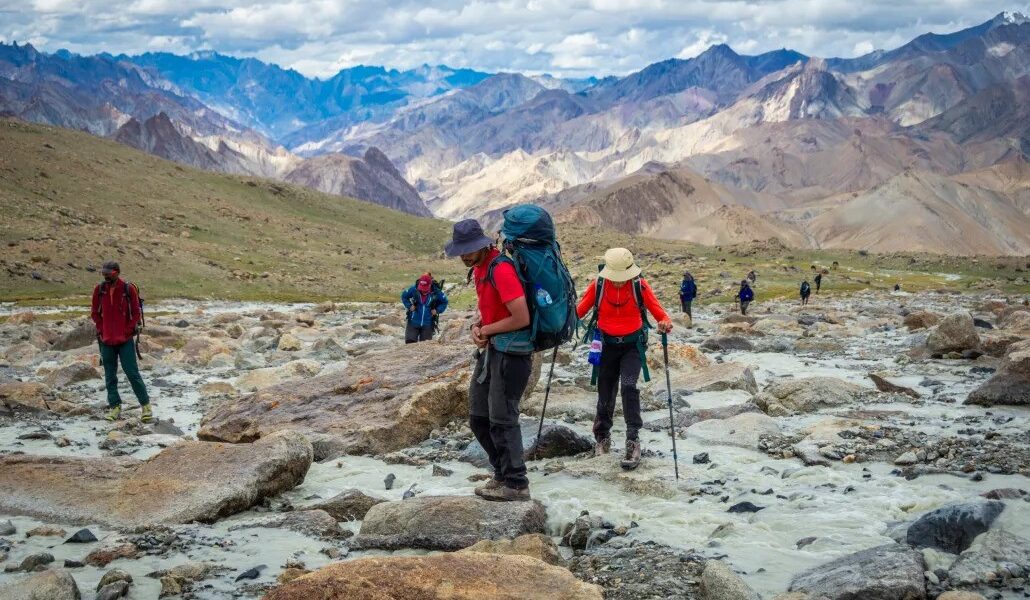
Where the High Desert Teaches You to Walk Slowly
By Sidonie Morel
A Different Kind of Beginning
Leh sits at 3,500 meters, and the first lesson arrives before any trail begins. The air is dry, almost granular. Laundry left outside stiffens in the sun and shade alike. A kettle takes longer to boil. You climb a single flight of guesthouse stairs and notice that your breath has shortened. For many European travelers, this is the real threshold: not a mountain pass, not a summit photograph, but the quiet adjustment to altitude and space.
When people search for beginner-friendly treks in Ladakh, they often imagine difficulty measured in gradients and kilometers. In this region, the scale is different. The paths are rarely technical. There are no fixed ropes, no crampons required in summer. What defines a first trek here is patience—how gently you allow the body to understand height, dryness, and long distances between villages.
Acclimatization is not a dramatic ritual. It is a day spent walking slowly through Leh’s old quarter, where whitewashed houses lean toward one another and prayer flags fade in the wind. It is drinking more water than you think you need. It is declining the impulse to do too much too quickly. Those who begin this way often find that the so-called “easy treks in Ladakh” are less about performance and more about rhythm.
The Soft Entry: Sham Valley and the Art of the Baby Trek
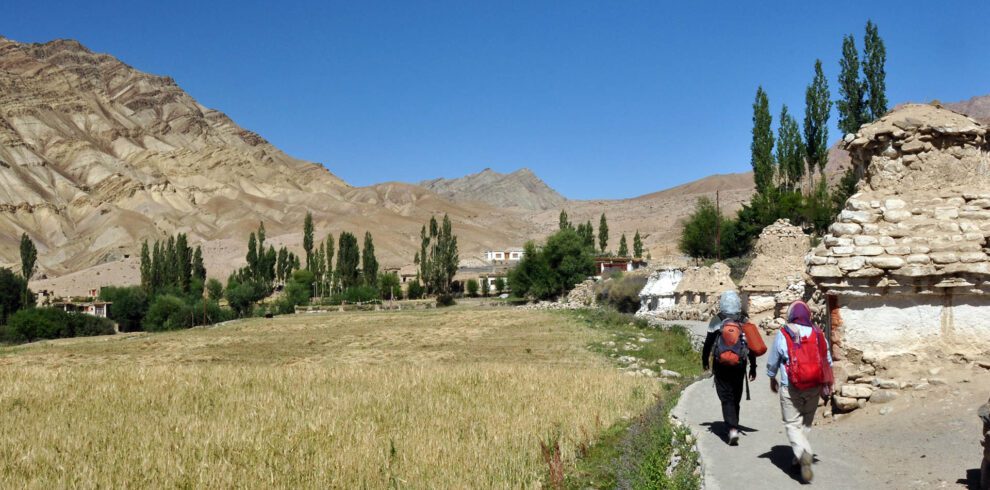
Between Likir and Temisgam: Villages Before Vertigo
The Sham Valley Trek is often introduced as the “baby trek,” a phrase that can sound dismissive until you stand in Likir village at dawn and watch the light move across barley fields. The trail from Likir to Yangthang, then onward to Hemis Shukpachan and Temisgam, unfolds without abrupt drama. Days are moderate in length—four to five hours of walking—over passes that rarely exceed 3,800 meters. For first-time trekkers in the Himalayas, that difference matters.
The terrain is open and readable. Paths are worn by shepherds and schoolchildren. White stupas mark the turns. Apricot trees lean over stone walls. In Hemis Shukpachan, homestays replace tents. You enter a courtyard and are shown a small room with thick blankets folded in geometric piles. The kitchen smells of cumin and wood smoke. Dinner is simple: lentils, rice, perhaps sautéed greens from the family garden. These details anchor the experience more securely than any altitude statistic.
For European walkers accustomed to Alpine refuges, Sham offers familiarity without imitation. There are no cable cars, no marked pistes. Instead, there is conversation in low kitchens and the quiet work of irrigation channels guiding glacial water into fields. The route is close enough to Leh that evacuation is possible if needed, yet far enough to feel like departure. It remains one of the best treks for beginners in Ladakh not because it is effortless, but because it introduces the plateau without intimidation.
Learning the Rhythm of the Plateau
On the second or third day, something shifts. The body begins to measure distance differently. You notice the texture of the ground underfoot—fine dust in exposed stretches, rounded stones on slopes, hard-packed earth near villages. Sunburn becomes a practical concern. So does lip balm. These are not romantic details, but they are real.
Hydration, pacing, and early starts are small disciplines that define success here. Guides will often suggest leaving before the sun grows sharp. By late morning, the light turns metallic, flattening color. Walking becomes slower. You begin to understand that “beginner-friendly trekking in Ladakh” is less about ease than about respect for conditions.
Close to Leh, Close to Confidence: Spituk to Matho and Stok La Without the Drama
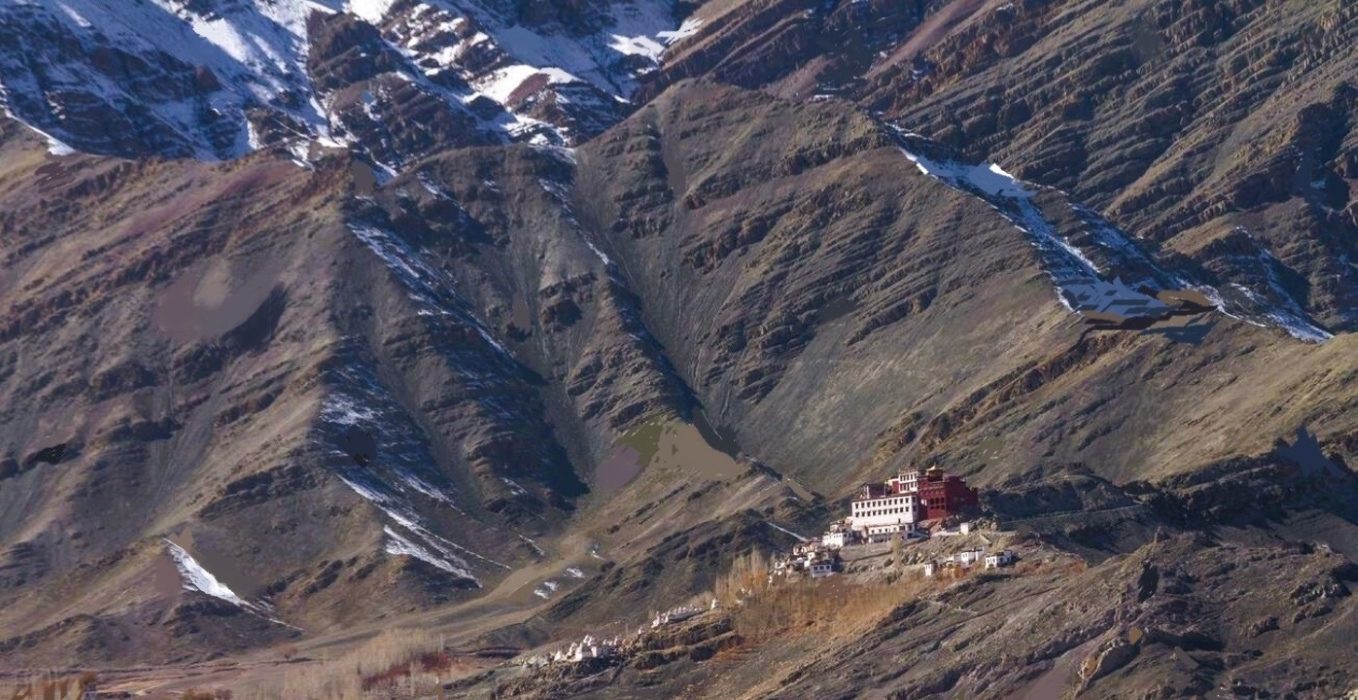
From Monastery Steps to Mountain Pass
Just beyond Leh, the Spituk–Matho route offers another accessible introduction. It begins near the Spituk Monastery, where morning chants carry across the Indus Valley. The path climbs gradually into Hemis National Park landscapes—wide, ochre slopes with sparse vegetation and the occasional blue sheep moving along distant ridgelines.
The pass on this route does not require technical skill. It requires steadiness. The ascent is continuous but manageable. At the top, the view is expansive rather than vertiginous: folds of earth stretching toward Matho village. Descending into Matho, the trail narrows briefly before widening again near cultivated fields. You cross small wooden bridges and irrigation channels. The contrast between monastery silence and village activity is immediate.
For travelers with limited time, these short treks near Leh serve a dual purpose. They aid acclimatization and build confidence. A first Himalayan pass—without ice, without exposure—can recalibrate expectations. It proves that high-altitude trekking in India is not reserved for mountaineers.
A First Pass, A First View
Stok La, often paired with Spituk, has a reputation for being a stepping stone. The trail climbs through dusty gullies and scattered rock before reaching the saddle. Prayer flags, weathered and frayed, mark the crest. On clear days, the Stok range reveals sharp ridgelines, but the pass itself remains approachable.
There is no summit register, no ceremonial plaque. Walkers pause, drink water, adjust backpacks. The simplicity is instructive. For those considering longer routes such as the Markha Valley trek, Stok La can function as rehearsal. It teaches how to manage breath on sustained climbs and how to descend carefully on loose ground.
Monasteries and Moonland: Lamayuru Routes for the Curious Walker
Lamayuru to Alchi: The Old Monastery Trail
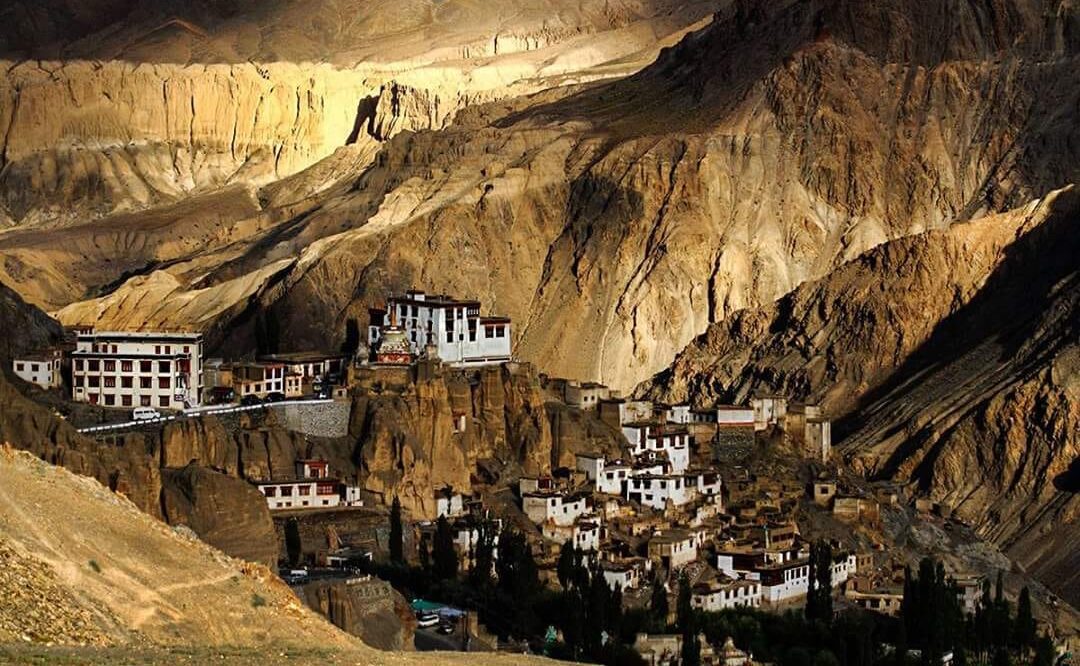
Lamayuru appears almost suddenly, its monastery perched above eroded formations often described as “moonland.” The soil here is pale and crumbling, shaped into ridges and gullies by centuries of wind. Beginning a trek from this point feels like stepping into a geological archive.
The Lamayuru to Alchi route threads through small settlements and crosses moderate passes such as Tar La. Days are longer than in Sham, and the terrain more varied. You may encounter shepherd camps, their black tents anchored by stones. Water sources are less frequent; refilling bottles at clear streams becomes a measured routine.
In Alchi, the monastery’s ancient murals offer a quiet counterpoint to the open trail. European visitors often recognize stylistic echoes of Central Asian art, a reminder of historic trade routes. As a moderate trek in Ladakh, this route suits beginners who have already adjusted to altitude and seek deeper immersion.
Lamayuru to Chilling: Where the Trail Narrows and Opens
The Lamayuru–Chilling variant leads toward the Zanskar River. Canyon walls rise higher, casting shade in the late afternoon. Footpaths narrow briefly before expanding onto terraces near villages. In Chilling, metalwork remains a local craft; the sound of hammer on metal carries across courtyards.
This route is often described as easy to moderate. The description is accurate if approached with preparation. Pass heights remain manageable, yet the sense of remoteness increases. For those researching beginner-friendly treks in Ladakh, this is often the point where the word “beginner” becomes relative. With adequate acclimatization and guidance, it remains accessible.
Markha Valley: When a Beginner Trek Becomes a Quiet Test
Rivers, Bridges, and the Patience of Distance
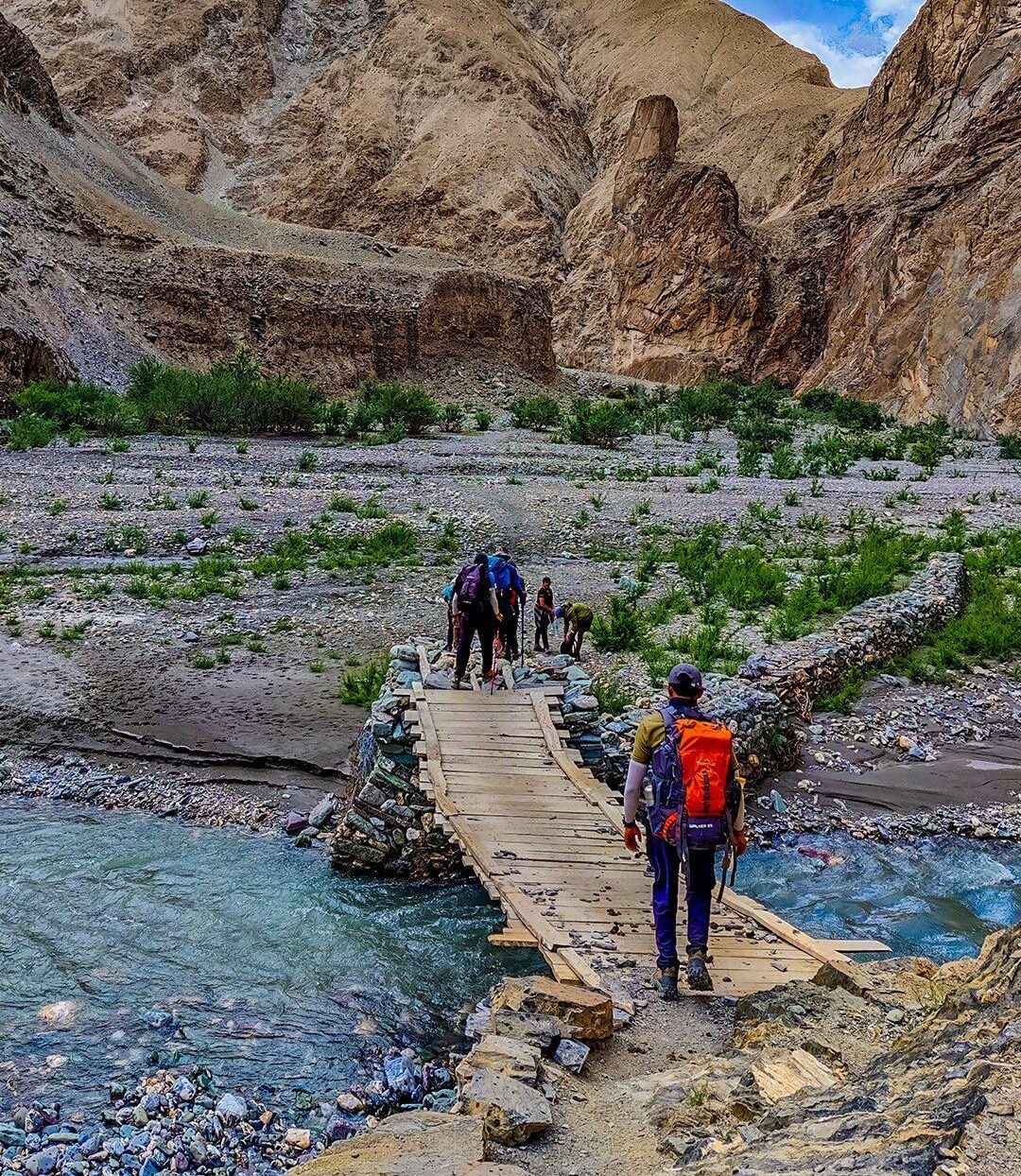
The Markha Valley Trek is frequently labeled non-technical and therefore suitable for first-time trekkers. The label is correct, but incomplete. The route stretches over several days, crossing wooden bridges, shallow rivers, and high passes such as Kongmaru La. Altitude rises gradually yet steadily.
Villages like Umlung and Hankar punctuate the journey. Children run ahead on the path. Donkeys carry supplies between settlements. Homestays offer thick mattresses and bowls of thukpa. The landscape shifts from wide, open plains to tighter gorges where cliffs narrow around the trail.
River crossings require attention rather than bravery. Water can be icy in early summer, stronger after rain. Guides often advise crossing early in the day when levels are lower. The practicalities matter: secure sandals, dry socks, patience. Over the course of the trek, walkers begin to understand that endurance in the Himalayas is cumulative. The challenge lies in repetition—daily ascents, daily descents—rather than singular obstacles.
What the Body Learns in the Markha Wind
By the fourth or fifth day, the body adjusts to routine. You wake before sunrise. Tea arrives in metal cups. Backpacks are lighter than on the first morning, though nothing has been removed; it is the carrying that has changed. The Markha Valley trek for beginners is feasible precisely because it demands no specialized skills. What it demands instead is consistency.
Blisters are treated with tape. Sunscreen is applied in careful layers. Conversations with fellow trekkers become quieter, less performative. The valley widens again near the end, revealing distant snowfields. It is here that many first-time visitors realize they have crossed a threshold—not into mastery, but into familiarity.
Nubra and the Ancient Trade Paths
Across Lasermo La Toward Hunder
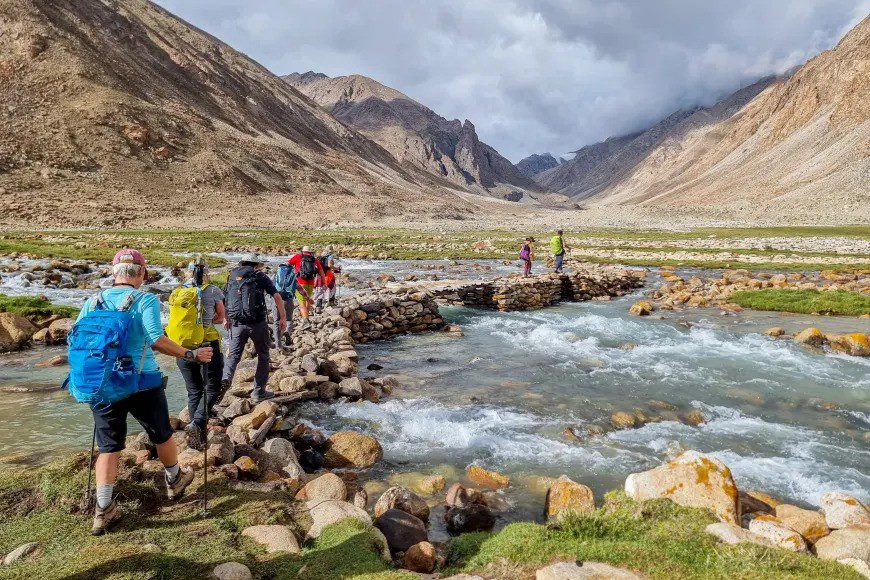
The Nubra Valley trek, crossing Lasermo La toward Hunder, extends farther from Leh and deeper into high-altitude terrain. The pass rises above 5,000 meters, placing it beyond the simplest routes. Yet it remains non-technical in summer, accessible to well-acclimatized beginners accompanied by experienced guides.
The approach is gradual, passing through Phyang and smaller settlements where irrigation channels cut narrow lines through dry earth. As altitude increases, vegetation thins. Snow patches may linger near the pass even in July. The descent toward Nubra reveals a different landscape—sand dunes near Hunder, Bactrian camels resting in the distance, braided rivers reflecting afternoon light.
This is no longer a short acclimatization walk. It is a commitment of days. Yet for European trekkers who have built confidence on Sham or Spituk routes, Nubra offers continuity. The trade routes that once linked Ladakh to Central Asia remain visible in fragments: stone cairns, old footpaths, stories carried in village conversation.
Choosing the Right First Step
Distance, Altitude, and Season
Not all beginner-friendly treks in Ladakh are equal. Duration ranges from three to eight days. Maximum altitude varies significantly. The best time for trekking in Ladakh typically falls between June and September, when high passes are snow-free and homestays open their doors.
For those newly arrived from Europe, the decision often depends on time and preparation. A three- or four-day route such as Sham or Spituk–Matho allows space to understand altitude. Longer itineraries like Markha or Nubra require a more deliberate acclimatization schedule in Leh—two or three days at minimum before departure.
Local guides and porters are not luxuries; they are part of the region’s trekking culture. Their knowledge of water sources, weather shifts, and village networks reduces uncertainty. The practical structure—arranged homestays, packed lunches, transport to trailheads—enables visitors to focus on walking rather than logistics.
On the final evening of a first trek, whether in Temisgam or Hankar or Hunder, there is usually a courtyard, a low table, and a sky that darkens quickly after sunset. The air cools without warning. Someone brings tea. Boots are set aside near the door. The mountains remain unchanged, but the walker has altered pace. That, more than any statistic, defines a first step into the Himalaya.
Sidonie Morel is the narrative voice behind Life on the Planet Ladakh,
a storytelling collective exploring the silence, culture, and resilience of Himalayan life.