
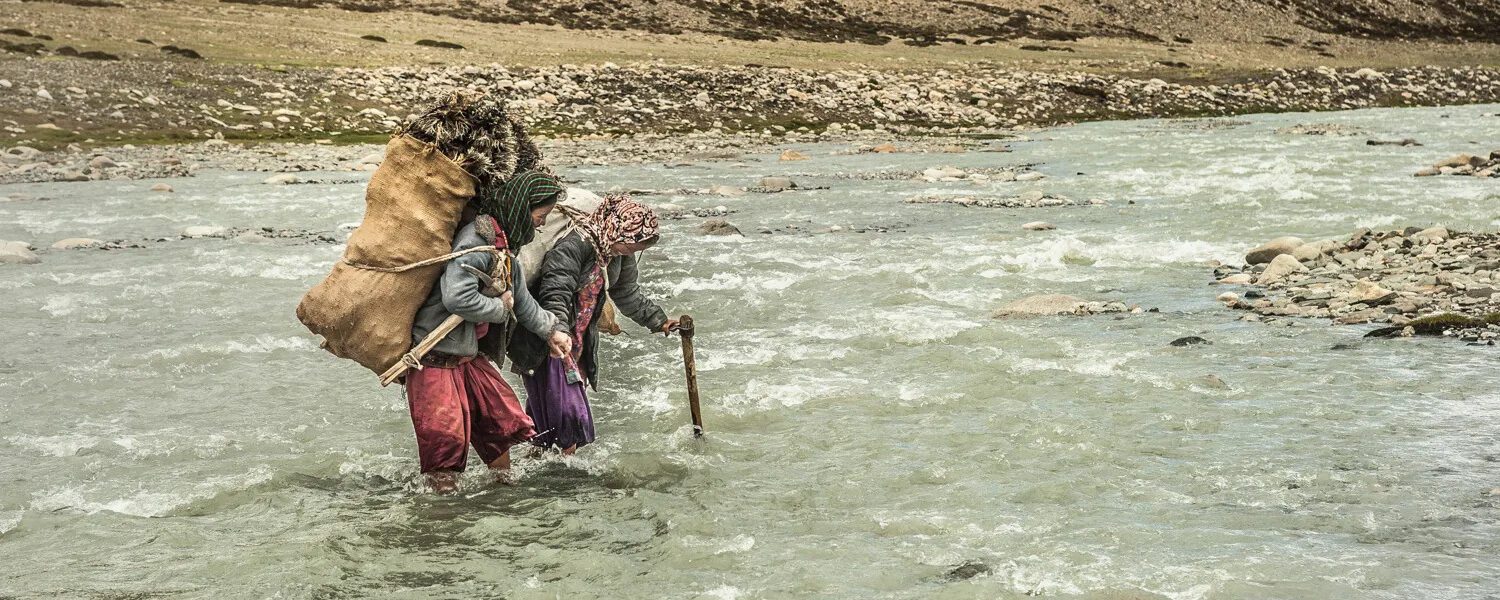
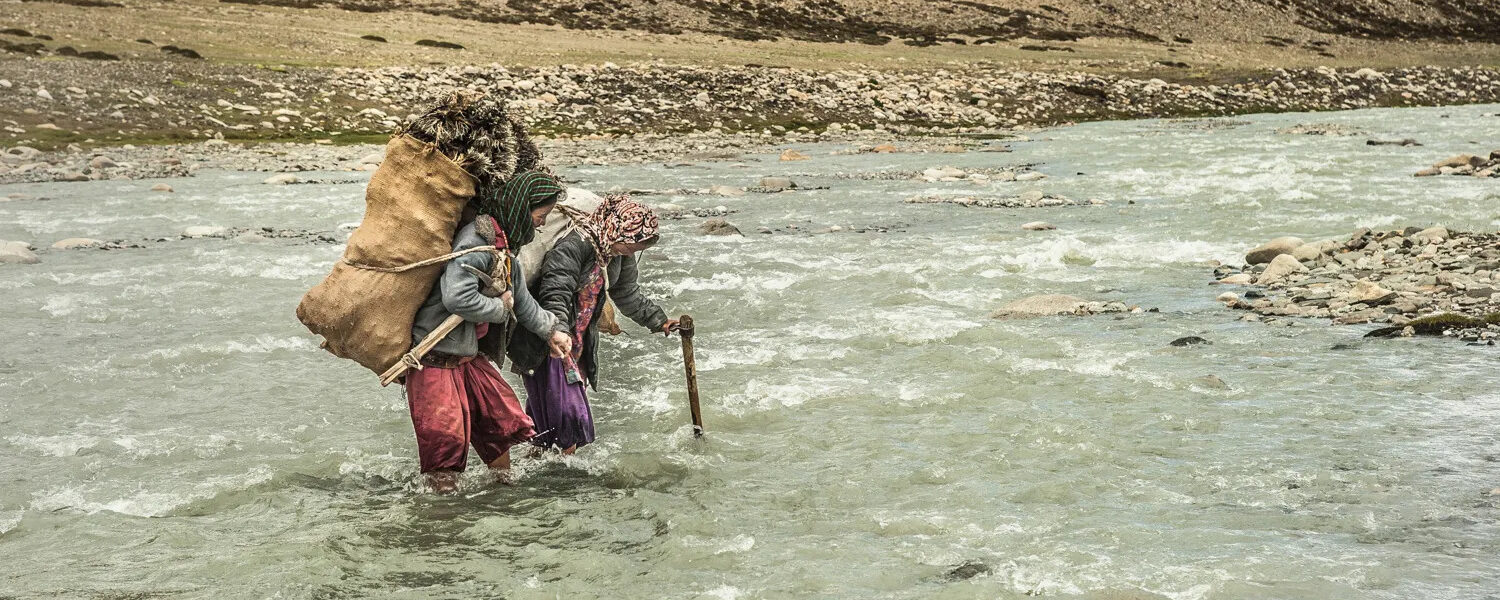
Photo Series on Shepherdess Nomads: Damn Tough
Few people live at such high altitudes as the Changpa. The Tibetan shepherd nomads traverse a barren high plateau with their animals. A photo series captures their harsh yet romantically wild everyday life.
They live permanently at elevations over 4,000 meters and endure long, icy winters. The Changpa are Tibetan shepherd nomads who live in the Changthang plateau, which stretches from Tibet to Ladakh in northern India. In search of grass, they roam the lonely and barren steppes with their flocks of sheep, goats, and yaks.
Since 2015, Ritayan Mukherjee has been photographing a group of these resilient people living in a valley near the village of Hanle in Ladakh, close to the India-China border. The area is off-limits to outsiders for security reasons; even Mukherjee, as an Indian, had to obtain a special permit.
In his series “Women Shepherdess of Changthang,” the photographer focuses on the women and their daily lives. They are equal to men, which means they also perform equally demanding tasks. He captured their everyday life in the barren, endlessly surreal landscape: setting up tents, gathering firewood, or making wool.
About 40 to 50 Changpa families live in tents in the Hanle Valley and move around with their animals. Goats, sheep, and yaks provide meat, milk, fur, and leather. Many of these products are traded for other goods. Additionally, the Changpa earn money from selling cashmere wool, which comes from the soft undercoat of the Changthangi or cashmere goat.
Mukherjee first visited the people in winter: “I wanted to build a strong relationship with a Changpa family. I chose the cold season because they lead a semi-settled life then.” The downside: Mukherjee had to work in temperatures as low as minus 15 degrees.
To capture more aspects of their lives, he returned twice more in different seasons, staying two to three weeks each time. He was quickly accepted by the people: “I mostly lived with them. I ate what they ate and tried to adapt my lifestyle accordingly,” says Mukherjee.
His photos depict a way of life far removed from urban lifestyles. City dwellers are much more dependent on material things and are never satisfied, says the photographer. “The nomads follow simple philosophies like ‘Less is more.’ Their lives are very hard, but they never complain about anything.”
The series is part of a larger project called “Sans Terre,” in which Mukherjee explores other shepherd nomad communities. He aims not only to show their daily lives but also to highlight the dangers they face: “Urbanization and industrialization are consuming their grazing lands, new government laws restrict their freedom of movement, and climate change is affecting the ecology of the areas where they live.”
In the Changthang Plateau, which stretches from Tibet to Ladakh, the Changpa live. Photographer Ritayan Mukherjee has accompanied a group of these nomadic shepherds and focuses on the women with his photo series “Women Shepherdess of Changthang.” Photo: Ritayan Mukherjee

Mukherjee spent several weeks with a group living in the Hanle Valley in northern Ladakh, India. At over 4,000 meters above sea level, even the summers in this area are not particularly warm. It can rain or even snow at any time of day or night. Photo: Ritayan Mukherjee

The Changpa use so-called Rebos as their shelters. To make these tents, yak wool is spun into yarn, woven, and sewn together. The material protects the nomads from the extremely cold and icy winds. Each family unit has its own Rebo. Photo: Ritayan Mukherjee

In search of suitable pastures, the Changpa move four to five times a year. The tents need to be rebuilt repeatedly, which is not easy at such high altitudes. Photo: Ritayan Mukherjee

The Changpa are major suppliers of cashmere wool, which comes from the soft undercoat of the cashmere and Changthangi goats. This wool reaches its maximum length in winter and is sheared from the animals in spring. Photo: Ritayan Mukherjee

For most of the year, the animals graze on pastures at elevations of over 4,500 meters. Photo: Ritayan Mukherjee

One of the women’s tasks is to produce wool. They are also experienced shepherds and perform equally strenuous tasks as the men. Photo: Ritayan Mukherjee

Milk and dairy products like cheese are an important source of income and trade for the Changpa families. Each shepherd spends five to six hours daily with the animals, with whom they have a strong bond. Photo: Ritayan Mukherjee

Older women usually do not go to the pasture but stay in their shelters. They only help their families when necessary, which is mostly the case in summer. Photo: Ritayan Mukherjee

When the herd returns from grazing, it is important to count the animals and milk the female goats. In summer, this can occur up to three times a day. Photo: Ritayan Mukherjee

Normally, the women are busy with milking and other tasks in the mornings and evenings, leaving them time for the children in the afternoons. Photo: Ritayan Mukherjee

In the past, the Changpa practiced fraternal polyandry—several brothers married the same woman. However, this practice has almost completely disappeared. Photo: Ritayan Mukherjee

At noon, the Changpa usually eat fruits, dried yak meat, and grains. Photo: Ritayan Mukherjee

In her makeshift tent, this woman prepares butter tea, known as Po Cha, which contains tea, yak butter, and salt. It is one of the main foods of the Changpa. Photo: Ritayan Mukherjee

Under cramped conditions, these two women are trying to set up a kitchen that serves not only for cooking but also for providing warmth. “Their life is very hard, but they never complain about anything,” says Mukherjee. Photo: Ritayan Mukherjee
The Reference Article Verdammt zäh