
Vanishing Nomads : The World Through the Lens
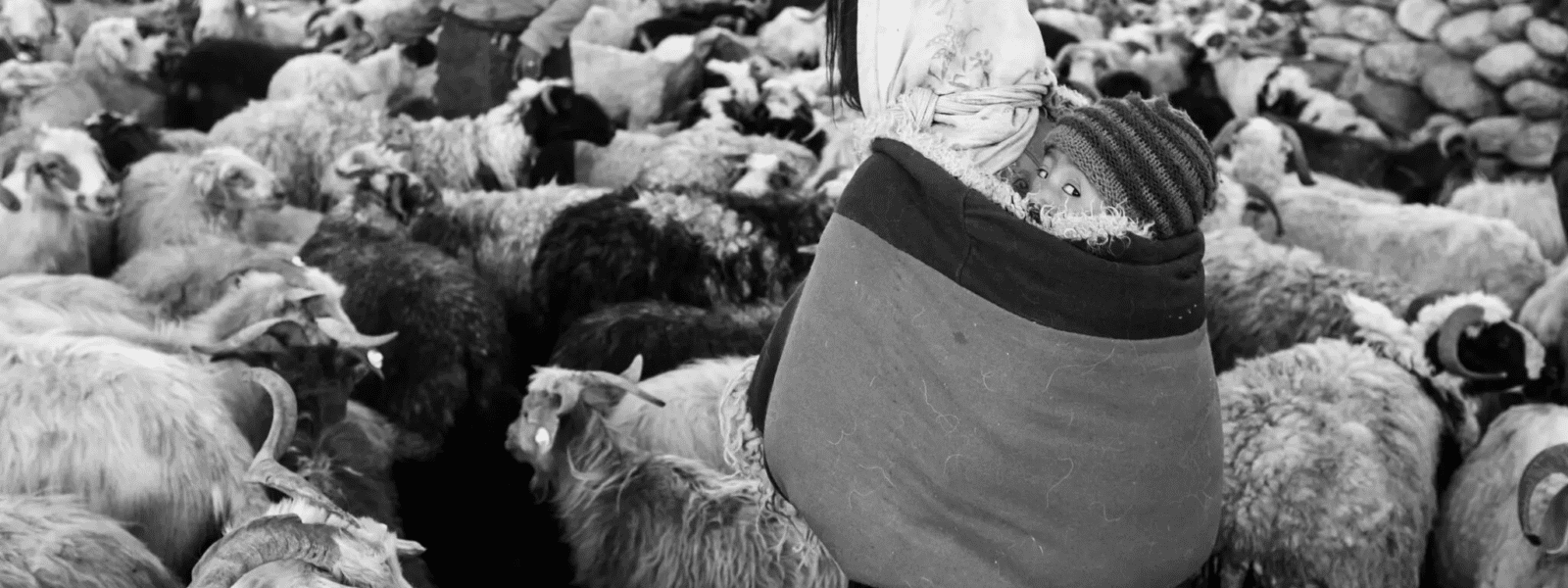
For centuries, the nomads of Karnak have navigated some of the planet’s most awe-inspiring yet unforgiving landscapes while tending to their herds. Will their time-honored traditions endure through the sweeping migrations that define their way of life?
Tsering Stobdan demonstrated the art of using a yak-hair sling by placing pebbles inside and propelling them through the air with a deft flick of his wrist. He explained that this technique is crucial for safeguarding his livestock from predators and retrieving stray goats. It’s just one of the many skills he has perfected to thrive in this challenging environment.
In contrast, at an elevation of about 15,000 feet on the Changthang Plateau in the Indian Himalayas, I struggled simply to breathe. The high altitude left me breathless and unsteady, highlighting the rugged nature of this remote location.

Nestled far from Ladakh’s bustling capital, Leh, lies the tranquil settlement of Karnakling. In the past two decades, approximately 120 families from the Karnak nomads have settled here.
Among them is Tsering Stobdan, a representative of a nomadic tradition that has thrived for centuries on the rugged Ladakh Plateau in northern India. This region, renowned for its awe-inspiring beauty and harsh conditions, presents a formidable challenge for those who call it home.
My journey to this extraordinary land began in 2016, during an overland expedition from Cambodia to Berlin. While traversing Nagaland in northeastern India, I encountered a man from Himachal Pradesh, a neighboring state of Ladakh. His vivid descriptions of the Himalayan beauty and the nomadic way of life ignited my curiosity. Motivated by his stories, I decided to rent a motorcycle and make my way to Leh.
Upon arriving in Leh, I connected with the younger members of the Karnak community, who graciously invited me to visit their families on the Changthang Plateau. I shared my fascination with their culture and my desire to document their everyday experiences. Over the course of a month, they embraced me as one of their own, integrating me into their daily routines.
In 2019, I returned to Ladakh to reconnect with the families I had met previously. This visit extended over six weeks, during which I alternated between the nomadic camps and a small town near Leh, deepening my understanding of their unique lifestyle.

Rinchen, a young Karnak rider, glances back at the vibrant horse festival taking place near the village of Yagan.
Once a robust and flourishing tribe, the Karnak community now faces a steep decline. In search of improved medical and educational prospects, many younger members have migrated to nearby cities. Though the pashmina wool from Himalayan goats offers financial gain, life in the mountains remains harsh, particularly during the winter months.
Today, fewer than twenty families remain, tending to nearly 7,000 sheep and goats alongside several hundred yaks. Those who stay, like Tsering Stobdan, are aging and increasingly struggling to manage the demanding daily tasks required to sustain their way of life.

At his home in the nomadic settlement of Yagan, 61-year-old Mipham Shakya brews a pot of butter tea.
The traditional Karnak lifestyle is under severe strain due to climate change. Forecasting the weather has become increasingly challenging, with predicting rainfall patterns proving particularly elusive. Soaring temperatures and the excessive grazing of certain pastures have transformed previously lush landscapes into arid expanses. Long-reliable glaciers that once guaranteed a steady water supply are now retreating.
Consequently, Karnak herders must now relocate their flocks with greater frequency and unpredictability.

In the Karnak nomadic settlement of Yagan, Jigmet Lamo cradles her newborn, who arrived a month ahead of schedule. With the baby being born at high altitude rather than in a hospital in Leh, the birth took place under the challenging conditions of their remote home.

A young Karnak resident sits quietly on the grounds of a Buddhist monastery, gazing out over Karnakling.
In these nomadic communities, life hinges on a delicate balance between families and their animals. The milk from sheep, goats, and yaks is transformed into cheese, yogurt, and butter, which are essential staples of their diet.
Year-round, the Karnak people face demanding conditions. Throughout the extended spring and summer days, herders rise early to milk their animals, shear their wool, and then let them graze. At these high altitudes, they might cover over 12 miles (19 kilometers) in a single day. The evening brings another round of milking and shearing.
Their responsibilities extend beyond animal care. They also need to prepare meals, upkeep the barns, weave carpets, make ropes, and collect dung for fuel.
Winter presents its own severe challenges. With temperatures plunging below -30 degrees Celsius, roads often become impassable and food supplies dwindle. From November to April, livestock are kept in shelters and fed with government-provided feed, as the harsh winter conditions make for a grueling period.

Tashi Namgyal, aged 30, arranges stacks of dung and goat manure to be used for heating and cooking during the winter months.
During this harsh season, many Karnak families relocate temporarily to Karnakling, a town situated on the outskirts of Leh, roughly 90 miles from their high-altitude grazing lands. They leave their livestock in the care of a few local families or hired herders, entrusting them with their animals through the most severe part of the year.
In Karnakling, the nomads face new challenges. Many have been compelled to sell their livestock and abandon their traditional stone houses and tents in the mountains to make ends meet. As a result, more and more members of the community are forsaking their traditional nomadic lifestyle and choosing to settle in Karnakling throughout the entire year.

In the nomadic settlement of Zara, Gattak Sonam, the revered Buddhist storyteller known as “Manipa,” meticulously tunes his horse-head fiddle, readying himself for an upcoming ritual.
During a visit to Karnakling, I spoke with an elder, Dawa Tundup, and his grandchild. At 83, Dawa Tundup had relocated to a more comfortable and accessible city, leaving behind his nomadic existence. He reminisced fondly about his life in the highlands and harbored dreams of returning. However, he acknowledged that for many young people, the nomadic way of life had become untenable due to the absence of suitable educational facilities.
His grandchild, Karma Tsering, who studies in Chandigarh, about 250 miles to the south, noted that while his life was easier in many respects, he also faced new pressures unknown to his grandfather. “In this city, everything revolves around money,” he remarked, lamenting the stark contrast between the values of a consumer-driven urban environment and the traditional principles his ancestors instilled in him.
A young boy observes through a camera lens during a Buddhist ritual in Zara.
Later, I attended a series of traditional mountain festivals where young people demonstrated ancient herding techniques. Events such as stone throwing from horseback were showcased, and the enthusiasm of the younger generation for their ancestral culture was evident. Many had traveled from the city specifically for this occasion.
The festival did not focus on competition; instead, participants were rewarded with Ladakhi local beer, known as “chang,” and traditional Tibetan scarves, “kata,” each time they accomplished their tasks.
The younger Karnak generation now attends schools in nearby cities, adapting to a modern lifestyle. Yet, the touching scene of tribal elders passing on their hard-earned knowledge to eager younger members is increasingly common.
However, a major concern for the Karnak community is the potential loss of extensive herding knowledge. There is a real fear that crucial details—such as the types of grasses essential for animal survival, methods for meat preservation, and techniques for building makeshift shelters—may vanish.
With the combined threats of generational change and climate change, the rich cultural heritage accumulated over centuries faces the risk of disappearing swiftly.
Beneath the Milky Way, Karnak family tents dot the landscape in the nomadic settlement of Zara.