


In the high-altitude valleys of Ladakh, where the air is thin and the landscape seems to stretch endlessly into barren beauty, the people of Ladakh are jovial by nature and live lives that pulse with a quiet, enduring rhythm. Here, at 11,000 feet above sea level, communities have crafted a way of life that is both ancient and surprisingly modern, deeply rooted in tradition yet constantly adapting to the challenges of mountain existence.
A Community United by Land and Spirit
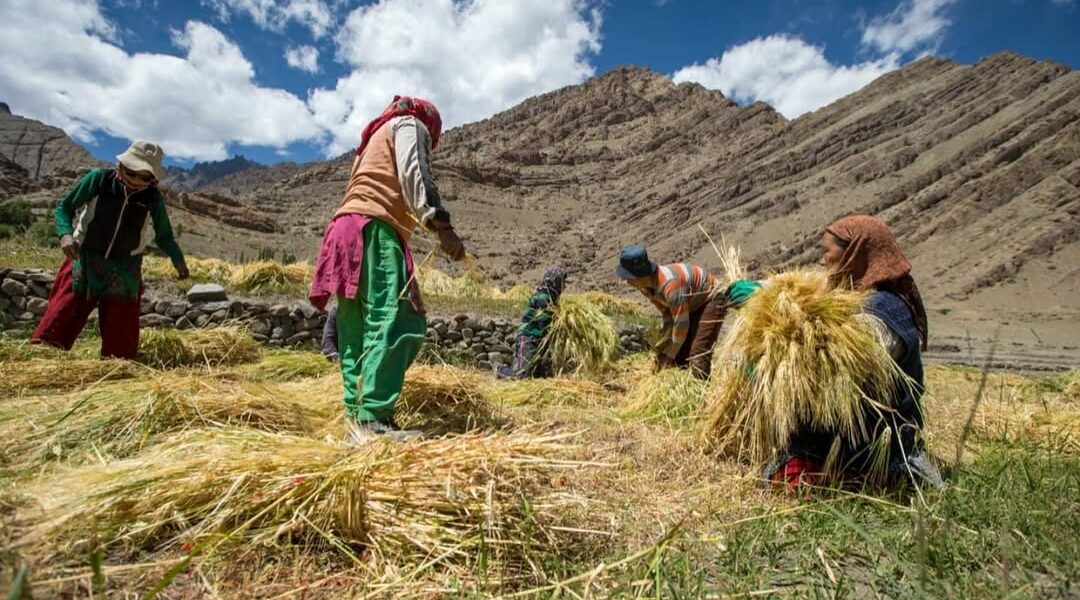
Walk through any Ladakhi village during harvest season and you’ll witness something remarkable. During sowing and harvesting, neighbors come together to help each other. Meals are shared. Work is shared. This isn’t just about agricultural necessity—it’s about the soul of Ladakhi society. The people of Ladakh have a close bond with each other. During the harvest season, everyone from the community cultivates each other’s fields.
In Gya village, one of the oldest Ladakhi villages, farmers like Urgain Phuntsog embody this spirit. Phuntsog’s relationship to the soil is so profound that the villagers lovingly call him ‘Mitti Ka Aadmi’ (man of the earth). His story reflects that of many Ladakhis who have transformed coarse and sandy soil into a cradle of sustainable, high-altitude agriculture through generations of indigenous knowledge.
Women: The Pillars of Ladakhi Society
Women enjoy a particularly high status in Ladakh, compared to the other parts of India. This elevated position isn’t just cultural—it’s practical. In remote villages like Kesar on the Changthang Plateau, where men often migrate for work, the women stay back, raising children, growing crops, and keeping the village alive.
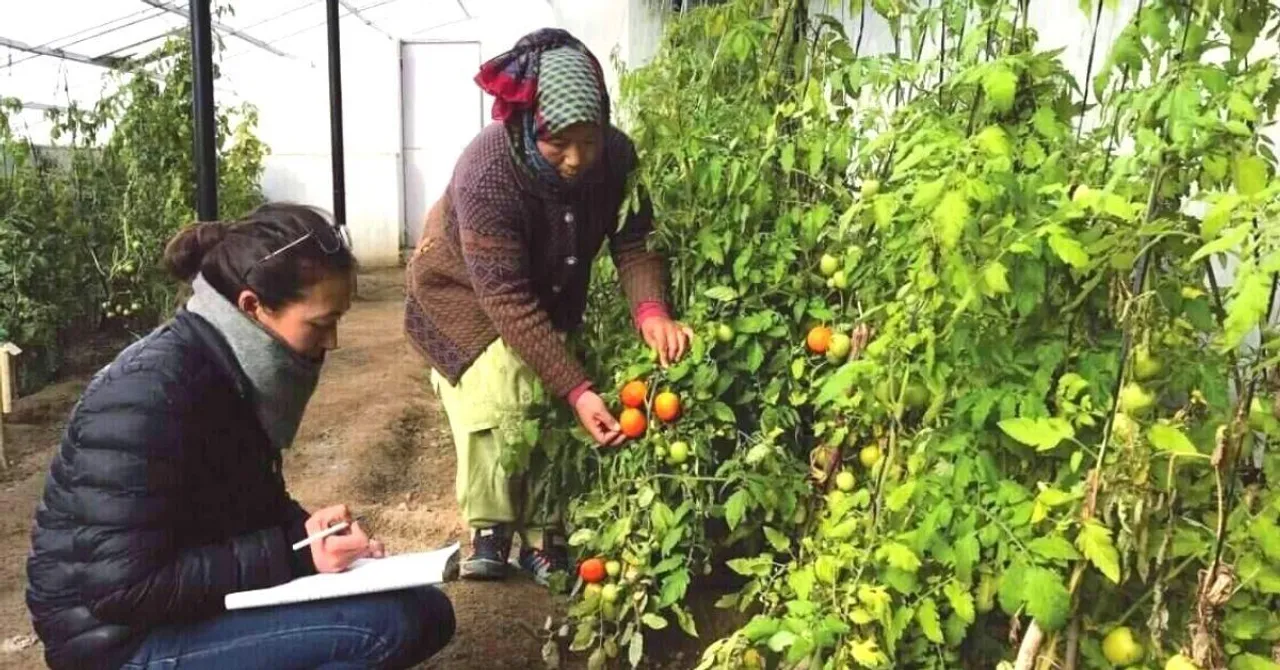
These remarkable women have embraced innovation while preserving tradition. In 2023, the Sher-e-Kashmir University of Agricultural Sciences and Technology introduced polyhouse farming to the region and trained the village women in controlled-environment agriculture. Now they grow not only traditional crops but also experiment with new varieties, turning their isolation into innovation.
The sense of sisterhood is palpable. A sisterhood has come alive—one that grows food together, cooks together, and eats together. At night, they break off into smaller groups, eating dinner and sleeping over at each other’s houses—living life in an ongoing, alternating sleepover.
Daily Life: Where Ancient Meets Modern
Ladakhi daily life flows with the seasons and the demands of high-altitude survival. Most of the people are farmers and rely on agriculture for their income. The agricultural calendar is intense but brief: harvesting starts only during April and ends till September before the advent of snowfall. Natives grow vegetables and grains during these 6 months and store vegetables like potatoes, carrots underground for the next 6 months, for consumption.
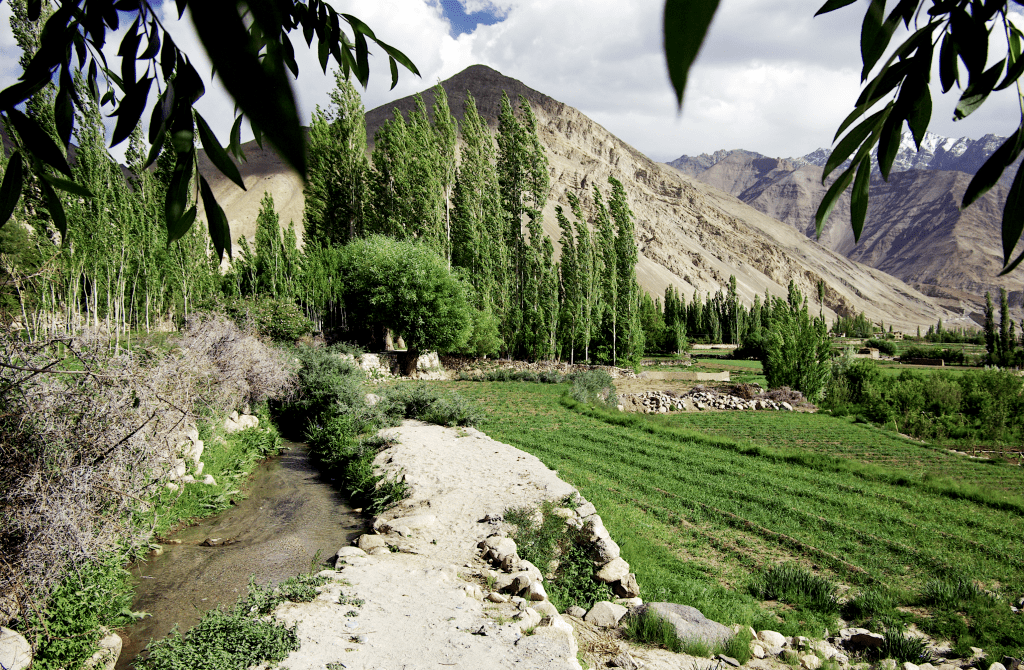
Water, precious and scarce, is managed with ingenious systems passed down through generations. Ladakhis have mastered the art of glacier-fed irrigation. They build small reservoirs called zings and connect them to yuras — handmade canals that channel meltwater precisely where it’s needed. Every farm gets its share, decided by time-honored community rules.
Language and Social Fabric
The people of Ladakh commonly speak Ladakhi, Balti, Tibetan and Urdu. This linguistic diversity reflects the region’s position as a cultural crossroads. Ladakhi & Tibetan are used by the locals in their everyday life, creating a rich tapestry of communication that bonds communities together.
The social structure maintains fascinating traditions. A popular custom known as khang-bu, or little house, is practiced, whereby the elders of a family, as soon as the eldest son has married, withdraw from everyday participation in household affairs. This system ensures smooth transition of responsibility while maintaining family harmony.
Food: Sustenance and Culture Combined
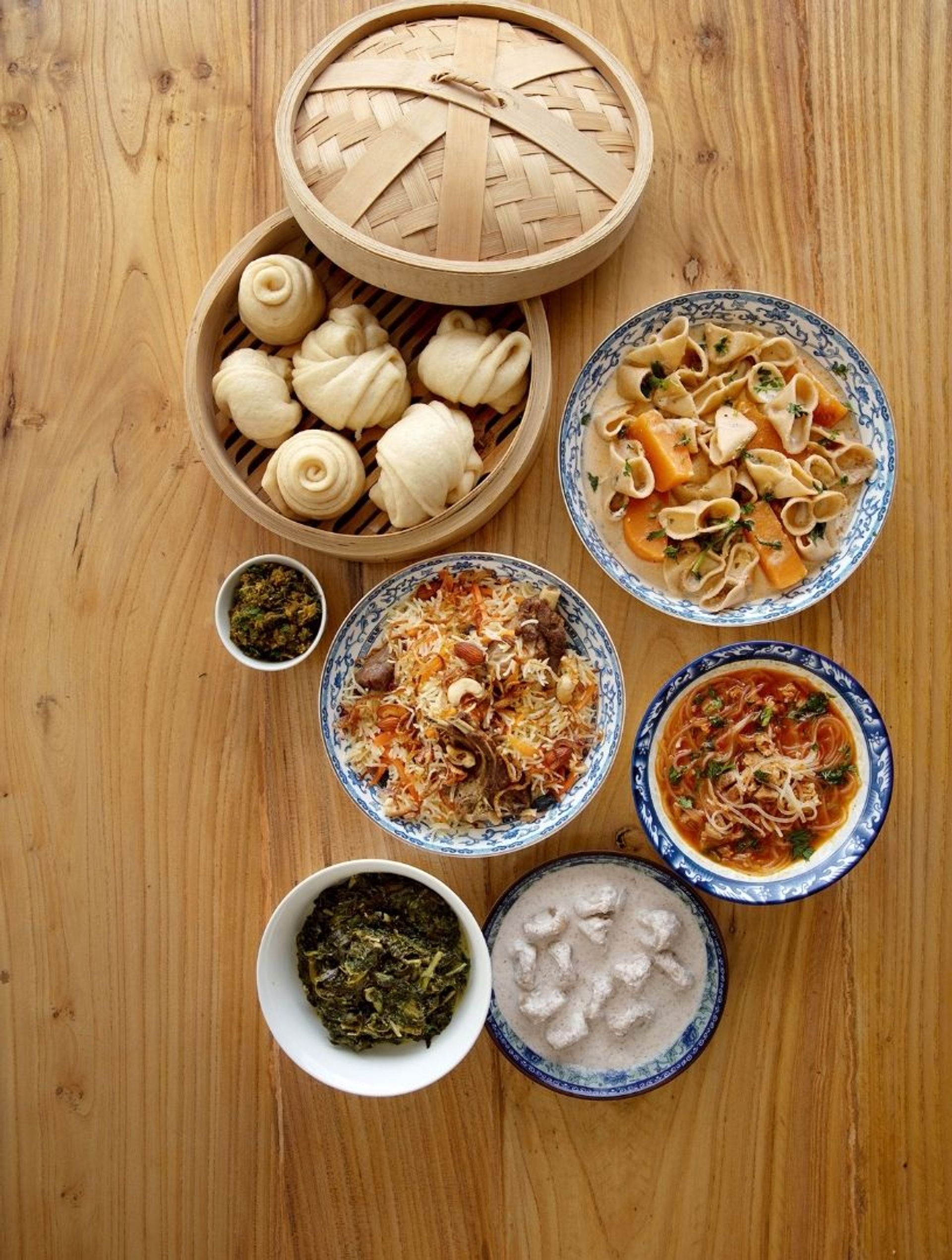
Ladakhi cuisine tells the story of survival and adaptation. Ladakh’s harsh climate and rugged terrain have shaped its culinary traditions. Food in Ladakh is simple yet nutritious, reflecting the region’s reliance on local ingredients like barley, wheat, and yak meat. Thukpa, a hearty noodle soup, and momos, steamed dumplings, are staple dishes in every Ladakhi household.
The traditional drink culture is equally significant. Butter tea, made with yak butter and salt, is not only warming but also hydrating, making it essential for those venturing into the high-altitude regions of Ladakh. Chang, a local barley beer, is often enjoyed during festivals and community gatherings, adding a sense of joy and camaraderie to any occasion.
Festivals and Celebrations
The people of Ladakh are jovial by nature. They love celebrating their culture and history. Much of the everyday life of the Ladakhi people revolves around the gompa or monasteries. The people of Ladakh also celebrate several festivals throughout the year, some of the most famous ones being Losar, Hemis Tsechu & Saka Dawa.
These celebrations aren’t mere entertainment—they’re the threads that weave the social fabric together. Socio-religious festivals, including the annual festivals held in the monasteries, provide the excuse for convivial gatherings.
Traditional Sports and Recreation
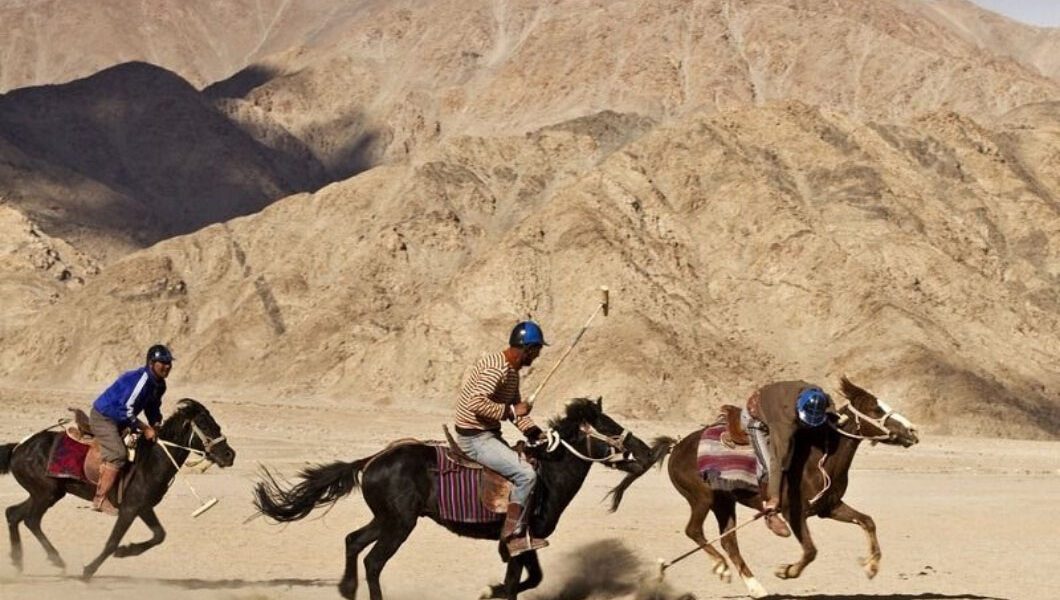
Recreation in Ladakh maintains strong connections to tradition. Archery is a pastime for all in summer. Among the Buddhists this sport often takes the form of open-air parties accompanied by dance and song. Unlike the international game, polo in Ladakh is not exclusively for the rich. The hardy local ponies scarcely seem to suffer, though play can be fast and furious. Each goal is greeted by a burst of music from surna and daman, and the players often show extraordinary skill.
Challenges and Adaptations
Modern Ladakh faces the delicate balance between preserving tradition and embracing change. Modernization and climate change pose new threats to the traditional way of life. As Ladakh becomes more accessible and interconnected with the rest of the world, the younger generation faces a choice between preserving their heritage and embracing the conveniences of the modern world.
Yet, the resilience that has sustained these communities for centuries continues to shine through. The people of Ladakh are also close to the earth. They cultivate their land in an eco-friendly manner and strive to recycle the things they use.
Looking Forward
Today’s Ladakh represents a unique synthesis of ancient wisdom and modern adaptation. Ladakh’s people, known for their warmth and hospitality, add to the richness of the experience. Villages like Sumda Chun and the legendary Nubra Valley introduce travelers to a way of life that is intricately connected to nature and spirituality.
The story of Ladakhi people is ultimately one of remarkable resilience—communities that have learned not just to survive but to thrive in one of the world’s most challenging environments. Their laughter echoes across mountain valleys, their traditions bridge past and future, and their spirit offers lessons in community, sustainability, and the art of finding joy in simplicity.
In Ladakh, life moves with the rhythm of seasons, the wisdom of ancestors, and the unshakeable bonds of community. It’s a reminder that in our increasingly connected world, some of the most profound truths about human nature and happiness can still be found in the high-altitude villages where people gather to share work, meals, and stories under the vast Himalayan sky.