


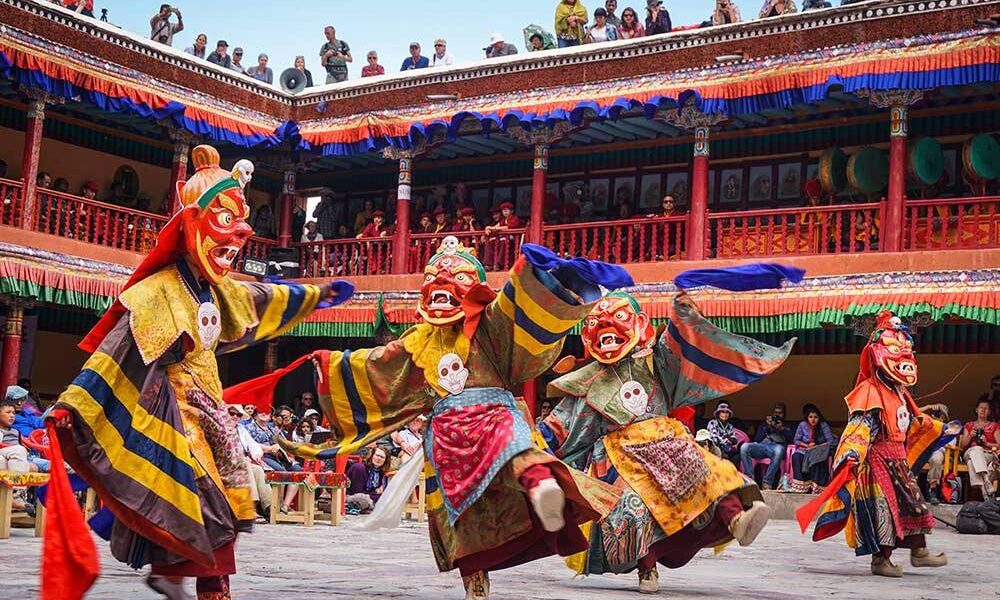
Deep in the heart of the Himalayas, where ancient traditions dance with towering peaks and cerulean skies, Ladakh’s festivals are celebrated with great fervor in the courtyards of Buddhist monasteries. These aren’t just tourist attractions – they’re living, breathing celebrations that pulse through the veins of one of the world’s most spiritual landscapes.
Picture this: Monks wearing colorful robes and frightful masks perform cham (sacred mask dances), their movements hypnotic against the backdrop of ancient monastery walls. These cham represent the purification of mind and also the triumph of good over evil – themes that resonate deeply in this land where Buddhism has flourished for over a millennium.
A Calendar of Sacred Celebrations
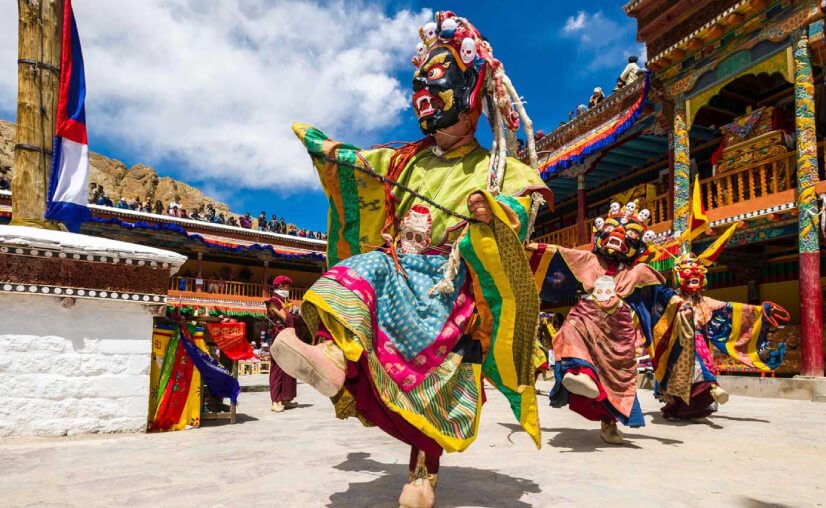
Ladakh’s festival calendar is like a spiritual heartbeat that echoes through the entire year. The monastic festivals are an integral part of the Ladakhi calendar since time immemorial. So much so that in the olden days they served the locals in keeping track of the seasons. Each celebration serves as both a religious observance and a vital social gathering for communities spread across this vast, high-altitude desert.
The festival season begins early with Spituk Gustor, the first festival celebrated in Ladakh after Losar (the New Year). People brave the chilly weather and attend this festival. What makes this particularly special is the large thangka of Je Tsongkhapa, the founder of the Gelugpa sect, which is put on display for the public.
But perhaps the most famous of all is the Hemis Tsechu, one of Ladakh’s largest and most famous festivals, held at Hemis Monastery, to honor Guru Padmasambhava. Thousands of tourists from all over the world assemble at the monastery to celebrate Hemis Tsechu, creating an incredible fusion of local devotion and international curiosity.
The Cultural Tourism Experience
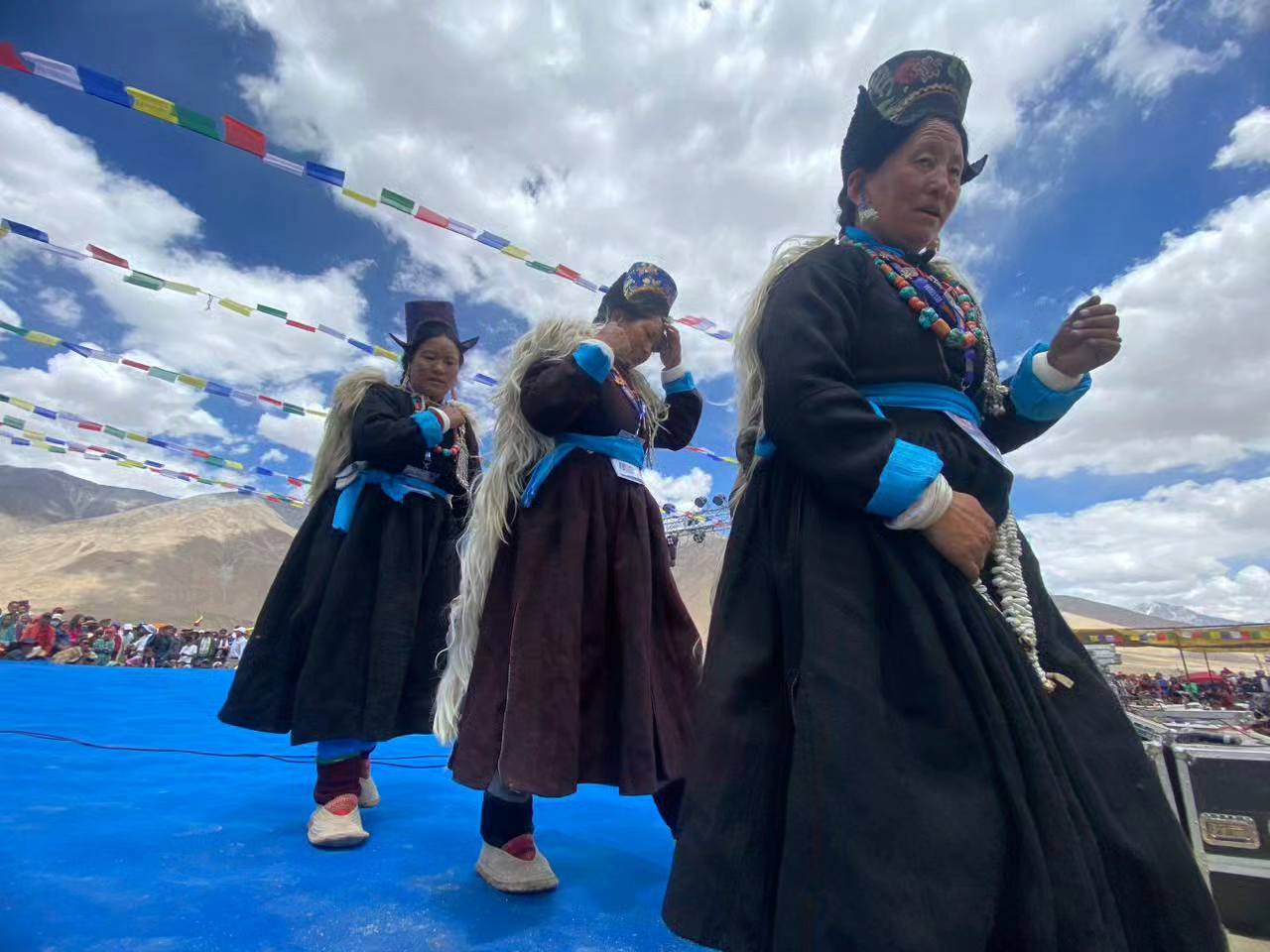
The government-sponsored Ladakh Festival in September represents a different but equally vibrant celebration. Set to take place on September, 2026, the festival will be hosted in Leh town and its surrounding areas, offering traditional Ladakhi music and folk dances, which are integral to the festival.
What makes this festival particularly engaging is its diverse programming. You’ll find authentic Ladakhi food and a variety of traditional dishes that showcase the unique flavors of the region, plus stalls featuring Ladakhi handicrafts and art. Watch exciting archery competitions and polo matches, which are popular traditional sports in Ladakh.
The festival’s crown jewel remains the mesmerizing mask dances. One of the festival’s most captivating features, mask dances involve performers wearing intricate masks and costumes, enacting stories from Ladakhi folklore and Buddhist traditions.
Beyond the Main Events
While the big festivals grab headlines, Ladakh’s cultural calendar is rich with smaller, more intimate celebrations. The 4th edition of the Nomadic Festival in Chibra, Kargyam Changthang concluded on July 28th, following two vibrant days of celebration. This event showcases the age old traditions of the nomadic communities, offering visitors a chance to experience a lifestyle that has remained largely unchanged for centuries.
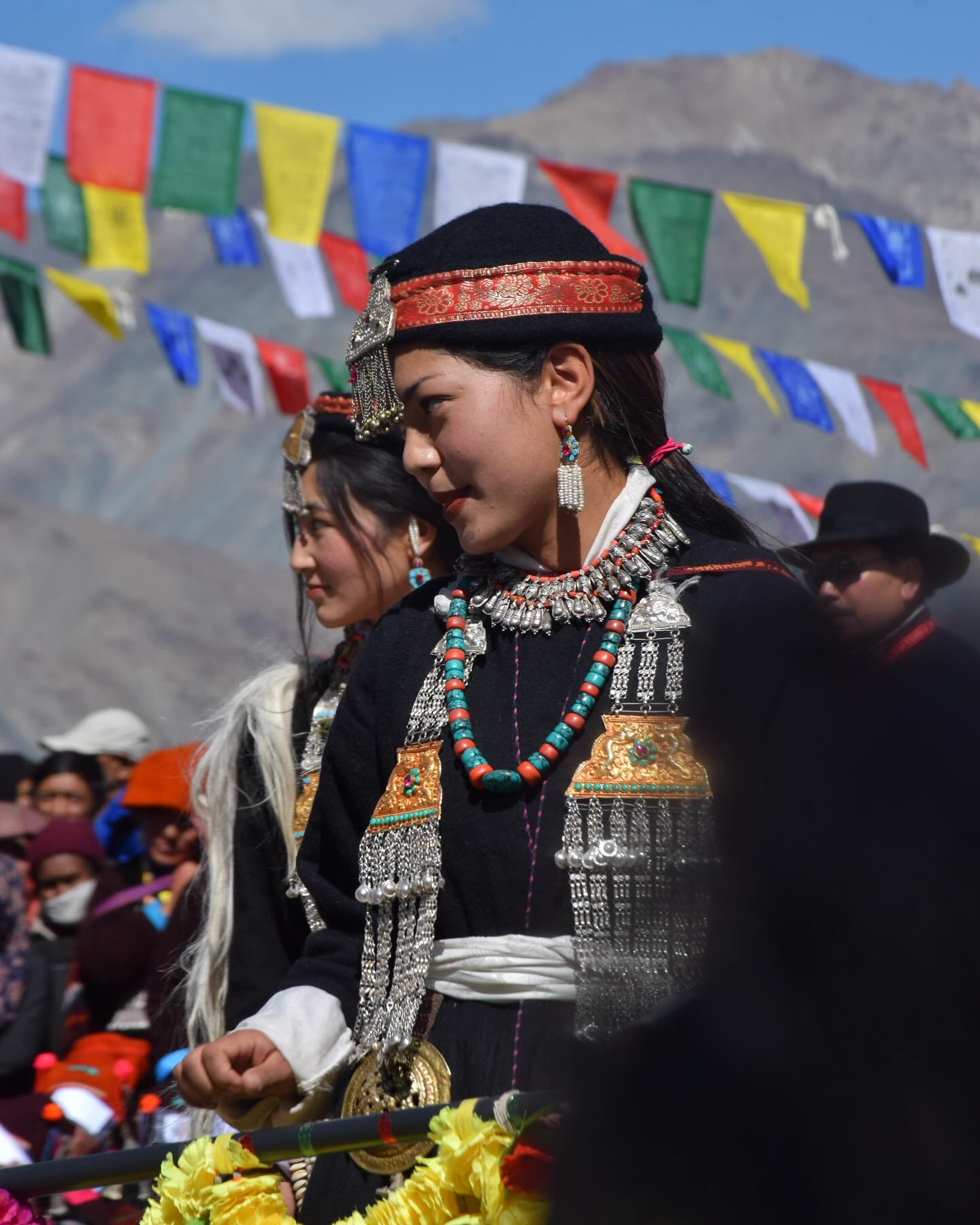
The Zanskar Festival presents another unique dimension. This vibrant culture breathes life each year during the Ladakh Zanskar Festival, a two-day extravaganza dedicated to honoring the region’s rich traditions. The festival featured troupes from Purgi tribes from Kargil, Sheena from Drass, Dard-Aryan from Aryan Valley, Changpa Tribe from Changthang, demonstrating the incredible diversity within Ladakh’s cultural tapestry.
The Monastery Experience
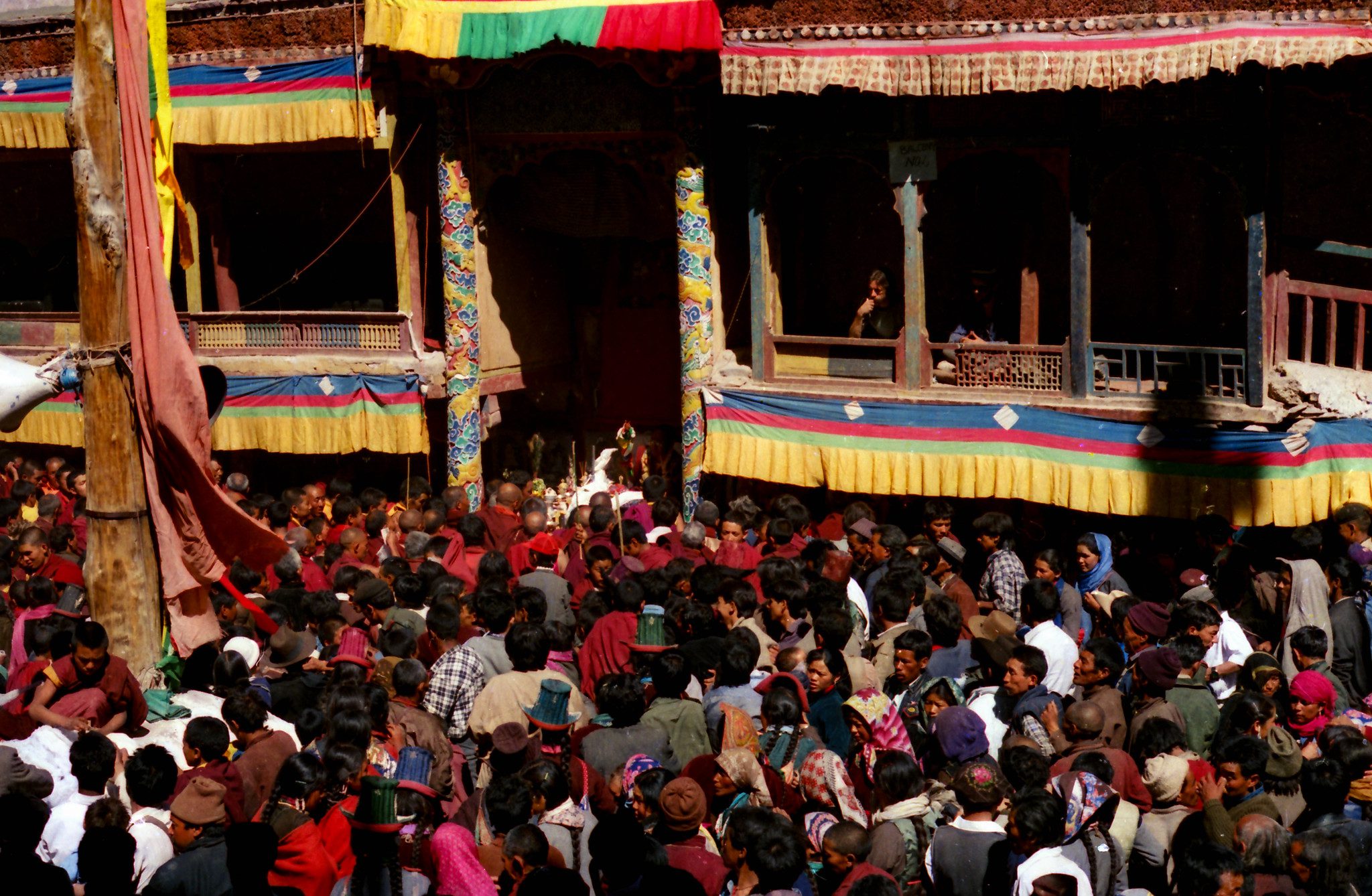
To truly understand these festivals, one must appreciate the monasteries where most of them unfold. Ladakh is home to more than 30 monasteries, each with its own rich history, distinctive rituals, and stunning architecture. The Ladakh Monasteries form an inseparable part of the region’s identity.
The Ladakh Monasteries are not just places of prayer and worship but centers of learning, meditation, and community life. They play a pivotal role in preserving ancient Buddhist teachings, such as meditation techniques, tantric rituals, and moral philosophies.
What’s particularly fascinating is how Monastery festivals are important highlights in the life of the sociable Ladakhis. People get together, chat, exchange ideas, meet each other, possibly make marriage plans while the children run around and beg for sweets at the stalls in front of the monastery walls.
A Living Culture in Modern Times
These festivals represent something precious in our rapidly changing world – they’re authentic cultural expressions that have survived for centuries. The festival is organized with the help of local communities, which means you’ll have the chance to engage with residents and gain insights into their daily lives and cultural practices. It’s an event that not only promotes tourism but also celebrates and preserves the rich heritage of the region.
The economic impact is significant too. The main aim of organizing this festival in the month of September is to extend the lean tourist season in the region. The grand success of the festival and the tremendous response from both foreign and home tourists is due to the rich cultural heritage and variety of other attractive programmes.
Planning Your Festival Experience
For travelers seeking authentic cultural immersion, timing is everything. Ladakh Festival, which is celebrated in September month, witnesses maximum participation of the tourists. Ladakh Festival is celebrated to boost tourists during lean tourist season of September.
However, monastery festivals occur throughout the year, each offering its unique character. Festivals are traditionally celebrated to commemorate the birth anniversary of religious figures (Buddha, Padmasambhava, etc.) and other significant dates in the Buddhist calendar.
What makes attending these festivals so rewarding is the genuine warmth of the Ladakhi people. The festivals are an important part of Ladakh’s cultural life. People, young and old, from all parts of Ladakh attend these monastic festivals.
The Deeper Significance
Beyond the colorful spectacle and tourist appeal lies something profound. These festivals represent an unbroken chain of cultural transmission stretching back centuries. Ladakh is home to monasteries representing two major schools of Tibetan Buddhism: the Yellow Hat (Gelugpa) tradition and the Red Hat (Kagyu and Nyingma) tradition. These two schools are represented through various Ladakh Monasteries, each with its own distinct traditions.
In our age of digital distraction and urban isolation, Ladakh’s festivals offer something increasingly rare – genuine community celebration rooted in ancient wisdom. They remind us that some of humanity’s most beautiful expressions arise not from entertainment designed for consumption, but from communities celebrating what they hold most sacred.
When you witness a festival in Ladakh, you’re not just seeing a performance – you’re glimpsing a living tradition that continues to nourish the souls of mountain communities, just as it has for over a thousand years.
About the Author: Junichiro Honjo is the founder of LIFE on the PLANET LADAKH, a sustainable tourism initiative dedicated to promoting responsible travel in the Himalayas. A passionate advocate for cultural preservation and environmental conservation, Junichiro has spent over a decade working with local communities across Ladakh to develop tourism models that benefit both visitors and residents while protecting the region’s unique heritage and fragile ecosystem.