


Where Ladakh Keeps Its Water: Salt, Wind, and a Few Quiet Rules
By Sidonie Morel
Salt first, then the breath
The body notices altitude before the mind finds a view
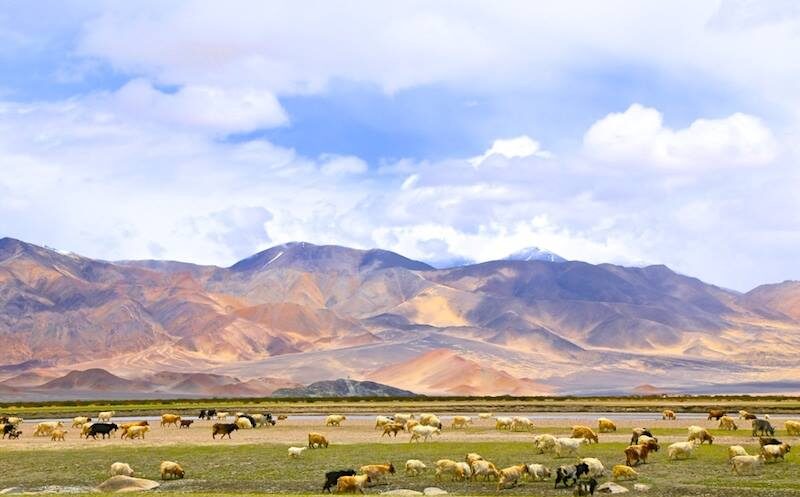
In Ladakh, water is never simply “there.” It sits at height, it waits in basins of stone, it gathers under a sky that offers little softness. Even before a lake appears, the body begins to register the conditions that will shape it: the dryness that settles in the throat, the powder-fine dust that clings to seams and shoelaces, the way a metal bottle warms quickly in the sun and cools quickly in shade. People arrive with cameras and conversations; the plateau receives them with a kind of spare arithmetic—altitude, wind, distance, light.
The approach to most lakes is a lesson in surfaces. Road gravel rattles under tyres; slate and sand trade places in the cuttings; prayer flags, when they appear, are less decoration than weather report—showing direction, speed, impatience. The air does not smell lush. It smells of sun-warmed rock, of dry grass near a stream, of diesel at the edge of a settlement, of cooking smoke that disperses almost instantly. When a lake finally comes into view, it does so without flourish: a plane of colour laid into a pale bowl, an interruption in a landscape that often looks unfinished until you learn how to read it.
For European readers used to water as background—rivers through towns, damp mornings, green banks—high-altitude lakes can feel oddly deliberate. They appear as if placed. They are held by lines: the line of a shoreline crusted with salt, the line of a road permission that must be obtained, the line of a village boundary, the line of a protected wetland where birds are not decoration but residents. Those lines are not always visible, yet they organise everything: where you can stop, where you can camp, where you must keep distance, how you should move, what you must carry out again.
Why lakes in Ladakh feel “held” rather than simply “seen”
Some of the world’s most photographed lakes are also the most regulated, not because they are fragile in a sentimental way, but because they sit inside overlapping realities: wildlife corridors, grazing ground, pilgrimage routes, military roads, and borders that shift in conversation even when the mountains do not. A lake in Ladakh is rarely a single story. It is a wetland where migratory birds feed, a salt basin that records drought and wind, a mirror used by travellers to measure the sky, a source of drinking water for herders, a destination that can be both sanctuary and stage.
This is why the language of “10 lakes” can mislead if it suggests a checklist. These waters do not want to be collected. They reward attention more than accumulation. You notice how the colour changes with a thin cloud passing; how the shore makes a faint crunch when you shift your weight; how the wind pushes small waves to one corner as if the lake has a preferred direction. You notice the practical details too: the moment a driver turns the engine off because idling at altitude is wasteful; the way a thermos cap slips from cold fingers; the sharp brightness that makes you squint even when the temperature feels mild.
The best way to travel between Ladakh’s lakes is to accept that you are not moving through attractions, but through conditions—salt, altitude, wind, permission, water scarcity, and the simple fact that roads here are built with effort. The lakes are part of that effort, not separate from it.
Pangong Tso — blue that behaves like a mood
Color shifts, wind shifts: the same shore, a different hour
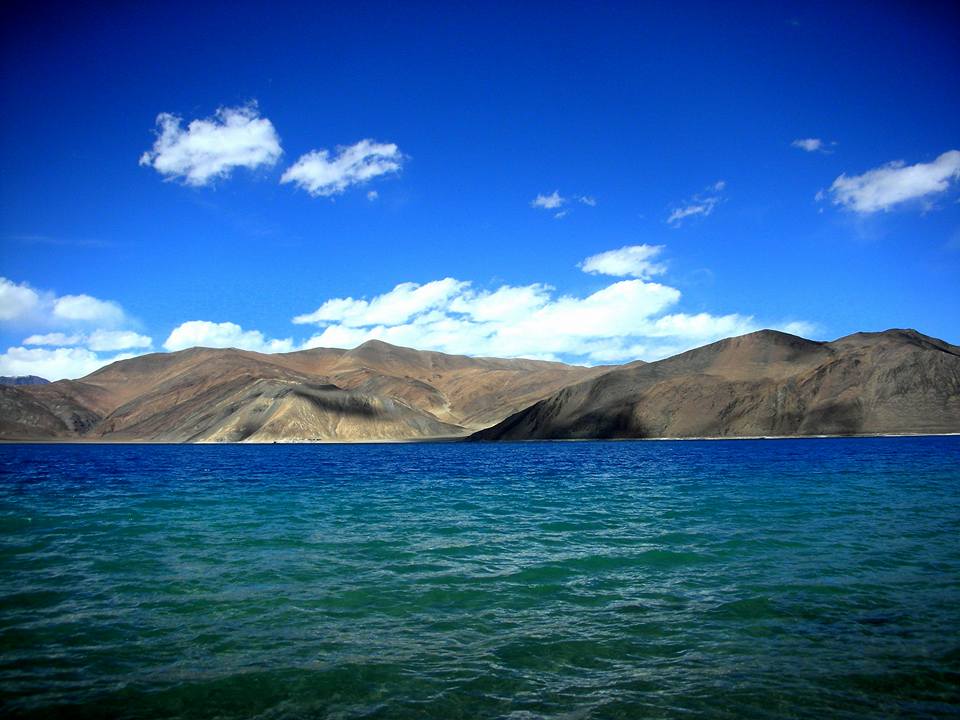
Pangong Tso is often introduced as a colour: blue, turquoise, sometimes a hard steel under late cloud. Yet what stays with you is not the adjective but the way the surface keeps changing its agreement with the sky. In early light, it can appear almost flat, the water pressed down by cold. Later, when wind arrives from the open plateau, the lake becomes textured, each ripple catching glare, turning the surface into scattered fragments. A photograph freezes one version; the body remembers that there were many.
The shore itself is a lesson in material. Pebbles give way to sand, then to wider stones. You find lines of dried foam, a fine white seam where water once sat. If you crouch, you see tiny flecks of salt or mineral residue along the edge. There is no gentle fringe of reeds like a European lake; the margins feel exposed, the water meeting rock without compromise. When people walk down to the shore, you can hear it: the crunch of small stones, the squeak of sand under soles, the brief laughter that rises and then vanishes in wind.
Pangong is also a lake you often reach with a crowd. That changes the soundscape—doors closing, engines starting, drones whining, vendors calling. And yet the lake is large enough to absorb human noise without returning it. If you step away from the busiest point, you can still find the plain quiet: a place where you hear mostly wind and the soft slap of waves against stones. In those pockets of stillness, the lake feels less like a landmark and more like a measure of scale. You notice how quickly the light hardens, how shadows under stones look almost black, how the air tastes faintly metallic when the wind picks up dust.
A serene surface with a hard edge: the lake near a contested line
There is no honest way to write Pangong Tso without acknowledging that it sits near a border whose tension has shaped recent headlines and roadside realities. That presence is not theatrical; it appears in small cues: a checkpoint, a reminder about permits, a road widened with strategic purpose, a convoy passing with the briskness of routine. For some travellers, this is unsettling; for others, it becomes background. For locals, it is simply part of the geography of living and working here.
This context changes the ethics of looking. You are not only a visitor in a landscape; you are a visitor in a lived space where access is negotiated. The lake’s stillness does not erase those negotiations—it sits beside them. If you travel here, practical respect is the first form of elegance: carry your identification, follow guidance, do not wander into restricted areas, do not treat a sensitive road as a theatre. Even small acts matter: not flying drones where they are discouraged; not leaving litter that will not decay quickly in cold; not demanding “the best spot” as if you have paid for a private shore.
On a long afternoon, Pangong’s most telling detail may be the simplest: the way the wind lifts dust from the road and carries it across the water’s edge, a thin veil over the stones. It is a reminder that the lake is not a separate world; it shares its air with everything around it—roads, people, politics, birds, and the slow, unglamorous work of maintaining presence in a high place.
Chagar Tso — the overlooked pause on the way to somewhere else
A small high-altitude oasis that appears, then disappears behind speed
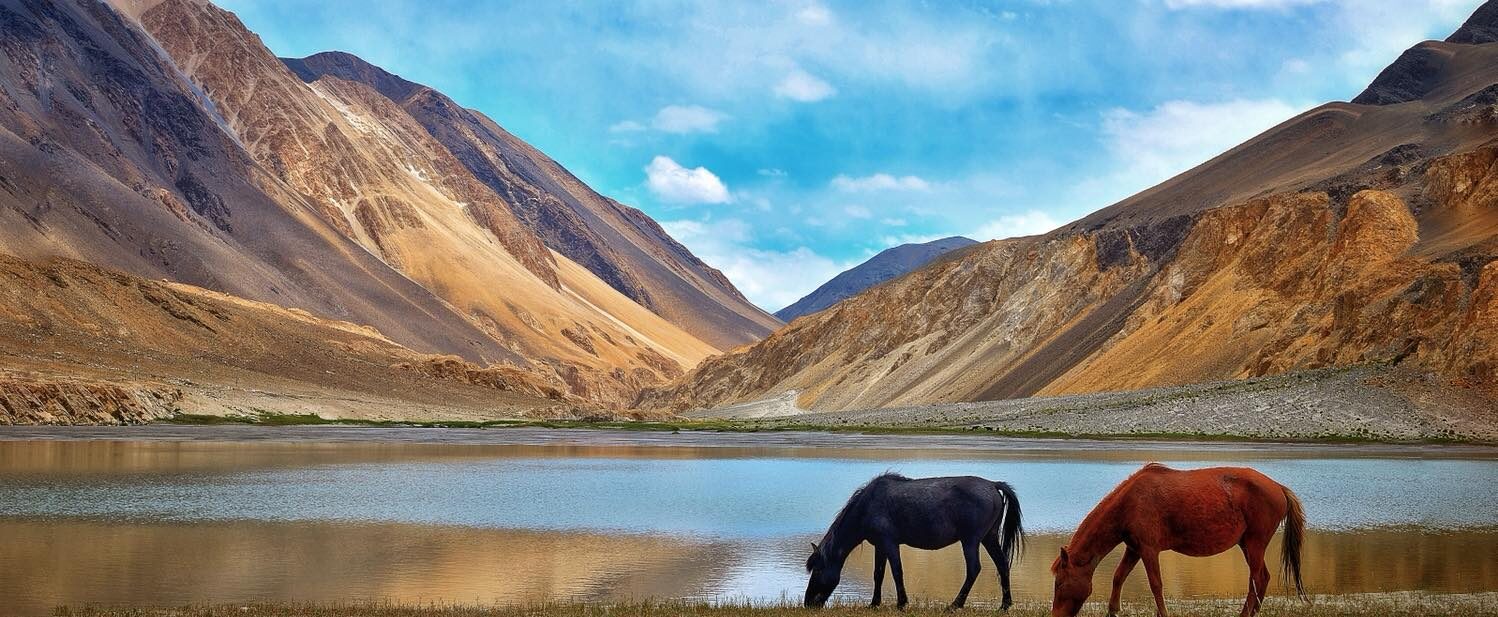
Chagar Tso is not a lake most travellers can name. That, in its favour, is part of the experience. It tends to appear as a quiet interruption along routes that are otherwise focused on reaching a more famous destination. You are in a vehicle, you are watching the road and the sky, and then a sheet of water arrives on one side—smaller, calmer, almost shy compared to the scale of the plateau. If you blink, you can miss it. If you stop, you realise how many lakes in Ladakh function like this: not as a “place” but as a pause that changes the whole rhythm of the drive.
The difference, when you step out, is immediate. The car falls silent. The ears start to notice the thinness of air. The wind has more room to move here than in valleys; it is often direct, with little buffering. The lake, even when small, gathers light in a way that makes nearby stone look paler. There may be no obvious infrastructure—no line of stalls, no crowded photo spot—only water, gravel, and the occasional trace of tyre marks where others briefly stopped before moving on.
Chagar Tso is where you learn the pleasure of unclaimed water. Without the pressure of an iconic photograph, you notice subtler things: the way the shore is arranged into bands of texture, from coarse stones at the edge to finer sediment further in; the way small waves collect in one corner, suggesting the wind’s habit; the way a bird’s silhouette briefly cuts across the surface and then is gone. In a travel column, this is valuable: it allows the reader to sense Ladakh’s lakes not only as famous names, but as a repeating element of the landscape—quiet, functional, and often unannounced.
When the best view is the one you almost miss
There is a temptation in Ladakh to hurry—distances look manageable on a map, days are short, permits and plans compress the schedule. But the plateau has its own pacing. Roads can be interrupted by weather or repairs. A simple stop can become the moment you remember most clearly. Chagar Tso encourages this without preaching. It offers a lake that does not demand a story; it gives you space to notice your own travel habits.
One practical suggestion, slipped into the rhythm of travel: keep your warm layer and water accessible even on short stops. Wind at altitude can cut quickly, and thirst is easy to ignore until it becomes a headache. A short, respectful pause—engine off, litter checked, footsteps kept light—can be enough. You leave with nothing more than the memory of a small lake and the sound of stones underfoot, and that can be precisely what the larger itinerary needs.
Stat Tso & Lang Tso — twin mirrors, two different answers
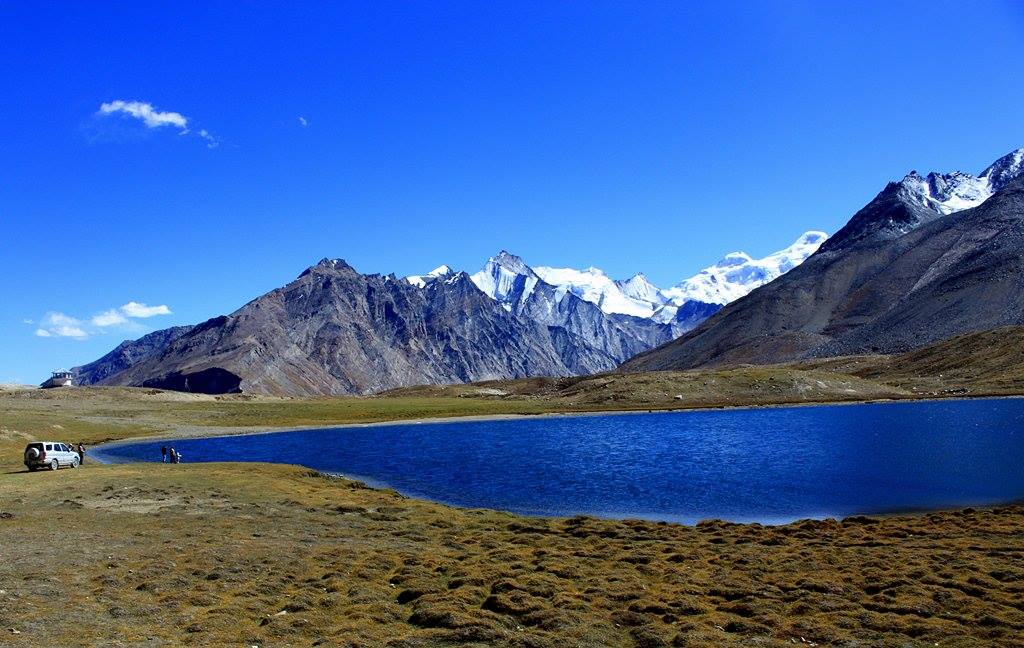
Two lakes under one sky: reflection as a kind of argument
Stat Tso and Lang Tso are often spoken of together, as twins—paired waters on the plateau. “Twin lakes” can sound like a tourism phrase, but here the pairing is genuinely instructive. Two surfaces, close in region, can still behave differently under the same sky. One may catch light with a sharper glare; the other may hold darker tones. One may show more ripples; the other may appear glassy, depending on wind direction and the shape of the basin. When you see them as a pair, you stop expecting the landscape to repeat itself neatly.
Travel writing often leans too quickly on the word “mirror.” In Ladakh, reflection is not a metaphor so much as a fact with conditions. The sky is high and clear; the light is strong; water, when still, becomes a surface that records everything above it. But the recording is never stable. A cloud can tear the reflection in half. A gust can turn the mirror into shards. Stones on the shore can create a narrow band of calm where you can see the sky precisely, while the centre remains restless.
Standing at these lakes, you begin to notice the practical choreography of looking: where people stand for a photograph, where they move away to avoid footprints in wet sand, where they hesitate because the edge drops quickly. You also notice how sound changes. In open plateau, voices travel; yet wind can also swallow them. The lakes sit between those effects, creating a space that feels both exposed and oddly intimate.
Why a “pair” changes the way the landscape is remembered
In a sequence of “10 lakes of Ladakh,” a pair is a useful rhythm. It breaks the pattern of single-named destinations and reminds the reader that the plateau is not a set of isolated jewels. It is a system: basins, runoff, salt, grazing routes, human travel lines. Twin lakes, by existing together, encourage a different kind of attention—comparative rather than acquisitive.
For European travellers, this can be a quiet revelation. We are used to lakes anchored by towns, by promenades, by seasonal rituals. Here, water is anchored by landforms and the decisions that allow access. You may have to choose between staying longer at one and rushing to a “bigger” name. The pair suggests another choice: linger, observe, accept that what looks similar will never feel identical once you pay attention.
Tso Kar & Startsapuk Tso — the white basin and its fresh-water neighbour
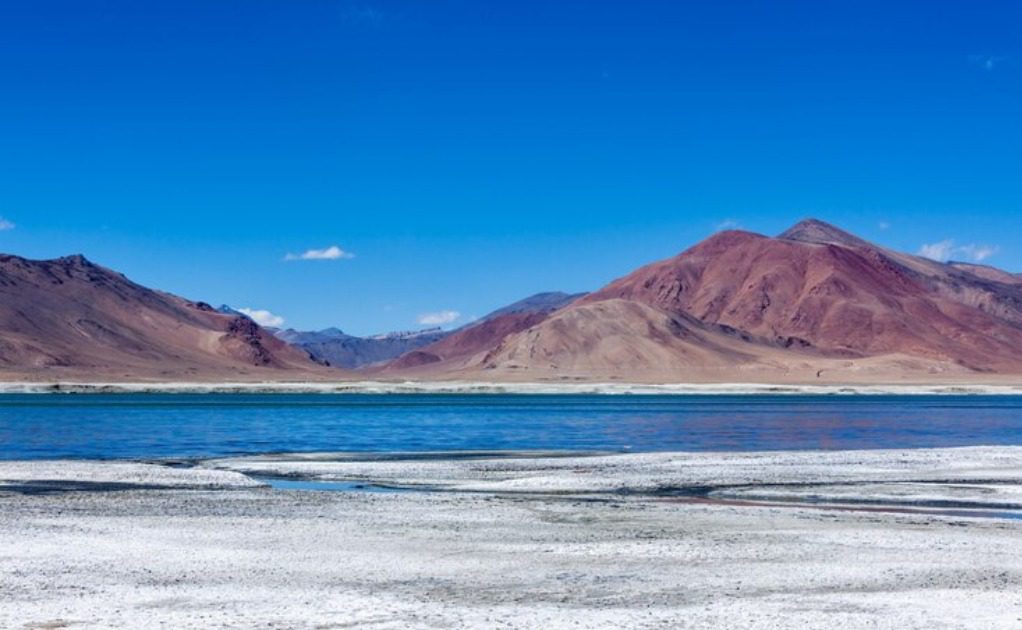
Salt crust, dry wind, and the light that refuses softness
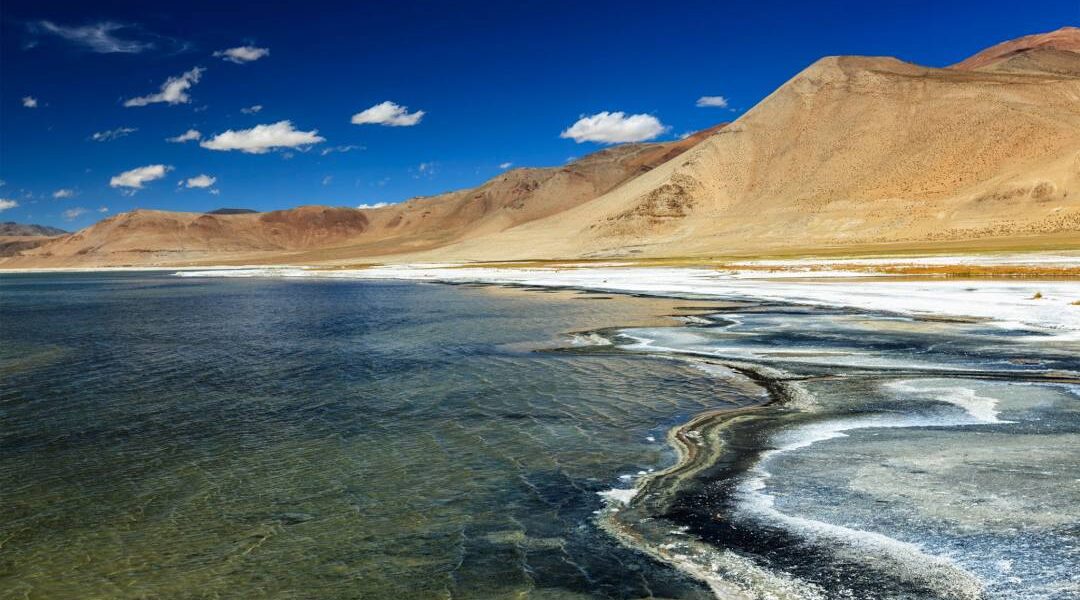
Tso Kar announces itself through its name—white. The whiteness is not poetic; it is physical. Salt deposits on the shore and across parts of the basin give the ground a pale crust that crunches faintly when you step on it. The light here is severe. It bounces off salt and sand and makes even distant ridges look sharper. If you are used to lakes where vegetation frames the water, Tso Kar can feel stripped to essentials: water, salt, wind, sky, and the occasional movement of birds.
This area is recognised for its wetland importance, and that status is more than a badge. It changes how you should behave: keep distance from nesting or feeding birds, avoid loud disturbances, and remember that what feels empty to a visitor is often busy for wildlife. On certain days, you may see flocks moving with intent across the shallows. Their presence gives the landscape a different scale of time—migration, season, route—far older than the road that brought you here.
Tso Kar’s story is also a story of dryness. Not the dryness of comfort, but of scarcity. The basin holds evidence of water levels, of seasonal patterns, of change. You see it in the lines on the shore, in the way salt forms bands. You see it in the sparse vegetation, in the dust that rises easily when vehicles pass. In such a place, even small human traces feel disproportionate: a plastic wrapper caught in a stone, a tyre rut that will remain for a long time, a pile of ash where someone camped without care. This is not moralising; it is simple physics in a cold desert.
Fresh water beside brine: Startsapuk Tso and the drama of contrast
Near Tso Kar, Startsapuk Tso sits as a counterpoint—fresh water beside a high-salinity neighbour. The proximity is part of the fascination. Ladakh often teaches through contrast rather than abundance: a small green patch near a stream, a warm spring beside icy air, a village of poplars in an otherwise treeless plain. Here, the contrast is in water itself. Freshness and salinity are not abstract chemical categories; they shape what can live near the shore, how birds use the area, and how the landscape feels underfoot.
Standing between these waters, you sense that “lake” is too simple a word. It implies a uniform thing. In reality, the basin is a complex of conditions—different waters, different edges, different uses. The traveller who understands this tends to travel more gently. You don’t need to approach every shoreline. You don’t need to collect every angle. Sometimes it is enough to see the relationship: white and blue, crust and ripple, dryness and the suggestion of drinkable water, all within a single high plateau.
For anyone writing or reading a European-facing travel column, this is also a way to avoid the tired language of “surreal landscapes.” Nothing is surreal here. It is exact. Salt behaves like salt. Wind behaves like wind. The basin tells you what it is, if you give it time.
Tso Moriri — where a village lives at the lake’s edge
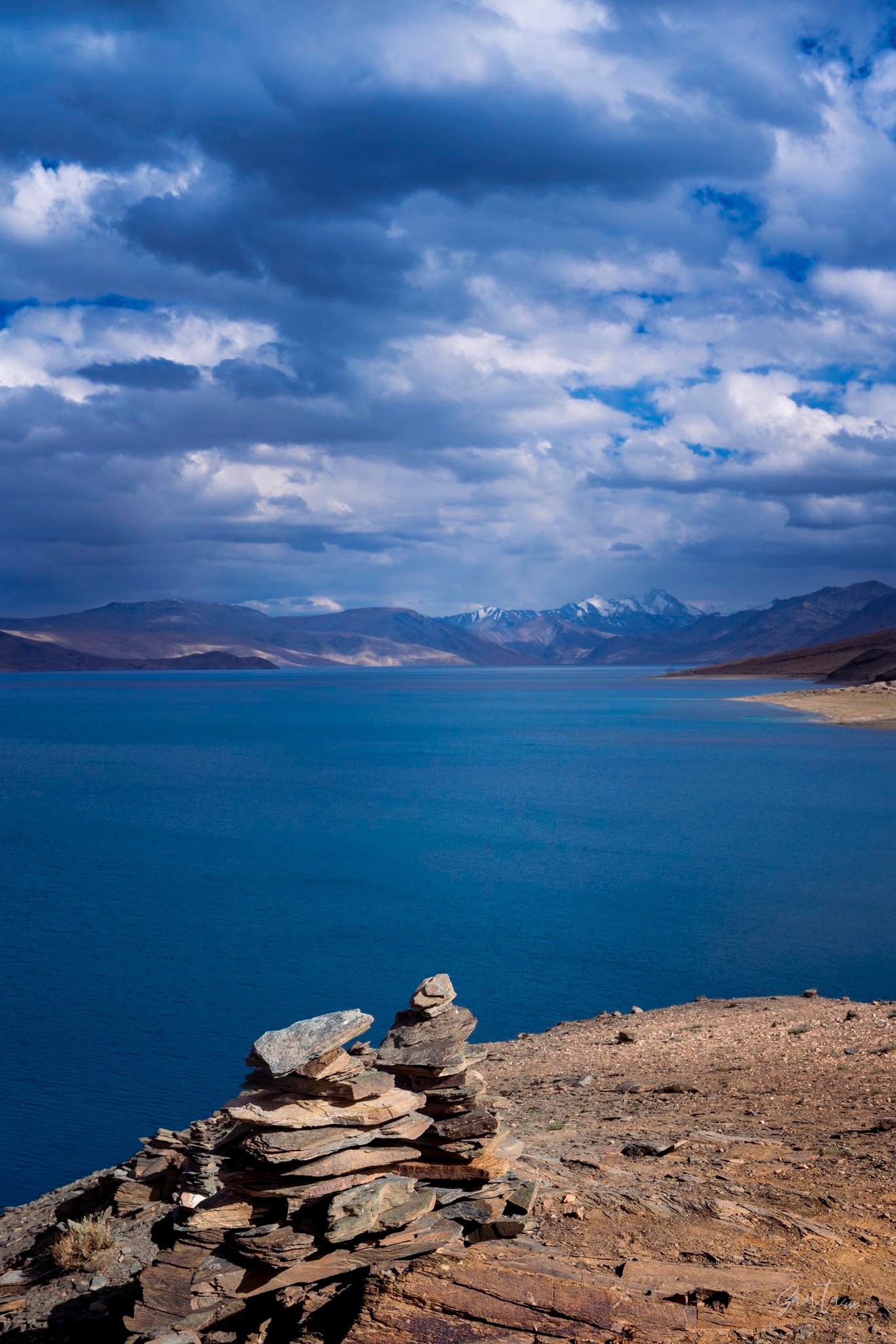
Korzhok and the everyday: prayer flags, chores, and shoreline wind
Tso Moriri changes the tone because it is a lake with a village—Korzhok—living beside it. The presence of daily life is not a “cultural add-on”; it is the lake’s human shoreline. You notice it in practical ways: the way houses sit low against wind; the way paths are worn into the ground; the way animals move with familiarity near certain areas. If you arrive early, you may see someone carrying something ordinary—a bundle, a bucket, a bag—moving with the steady pace of someone who knows the air will not become kinder later in the day.
The lake itself is wide and calm in certain conditions, but it is never inert. Light runs across it quickly. Wind can shift without warning. From the shore, you may see the water changing colour in sections, not as a dramatic performance but as a response to the sky. The wetland aspect matters here too. This is not just “a lake to visit,” but a high-altitude ecosystem, and the rules of respect are practical: keep noise low, avoid approaching wildlife, and leave space where animals and birds need it.
Unlike Pangong’s border-adjacent fame, Tso Moriri’s gravity comes from a quieter intersection: water and community. A lake that sits beside a village forces the traveller to see themselves not as an explorer but as a guest. This changes small behaviours: where you park, how you photograph people, what you buy, how you greet. It also changes what you write. Instead of describing emptiness, you describe a landscape inhabited in the most ordinary way—by work, weather, and long familiarity.
A high wetland with a wide sky: birds, reeds, and quiet obligations
The wetlands around Tso Moriri are recognised for their ecological importance, and that recognition is not a distant bureaucratic label. It is visible in the lake’s edges: areas where water becomes shallow, where reeds or wet ground appears, where birds gather or move along the shoreline. If you are fortunate, you may see birds standing in shallows with the unhurried stillness of animals that do not waste energy. The scene is not “wildlife spectacle.” It is routine, and that routine is what makes it moving without needing any rhetorical emphasis.
In practical terms, the lake asks for a slow form of travel. Stay an extra hour rather than driving the entire region in a single breathless loop. If you are staying in or near Korzhok, remember that resources are limited—water, fuel, waste disposal. Carry your trash out. Keep your soap and detergents away from natural water sources. If you bathe, do it in a way that does not treat the landscape as a convenience. These are not grand gestures; they are small obligations that keep a fragile system from being overloaded by visitors who arrive in seasonal waves.
Tso Moriri is often included in itineraries alongside Tso Kar and Pangong under the broad label of “high-altitude lakes.” But Moriri’s difference is precisely that it holds both openness and settlement. It is a lake where you can see the line between human need and ecological limit, not as an argument but as a daily negotiation.
Kyagar Tso & Yarab Tso — small waters, intimate scale
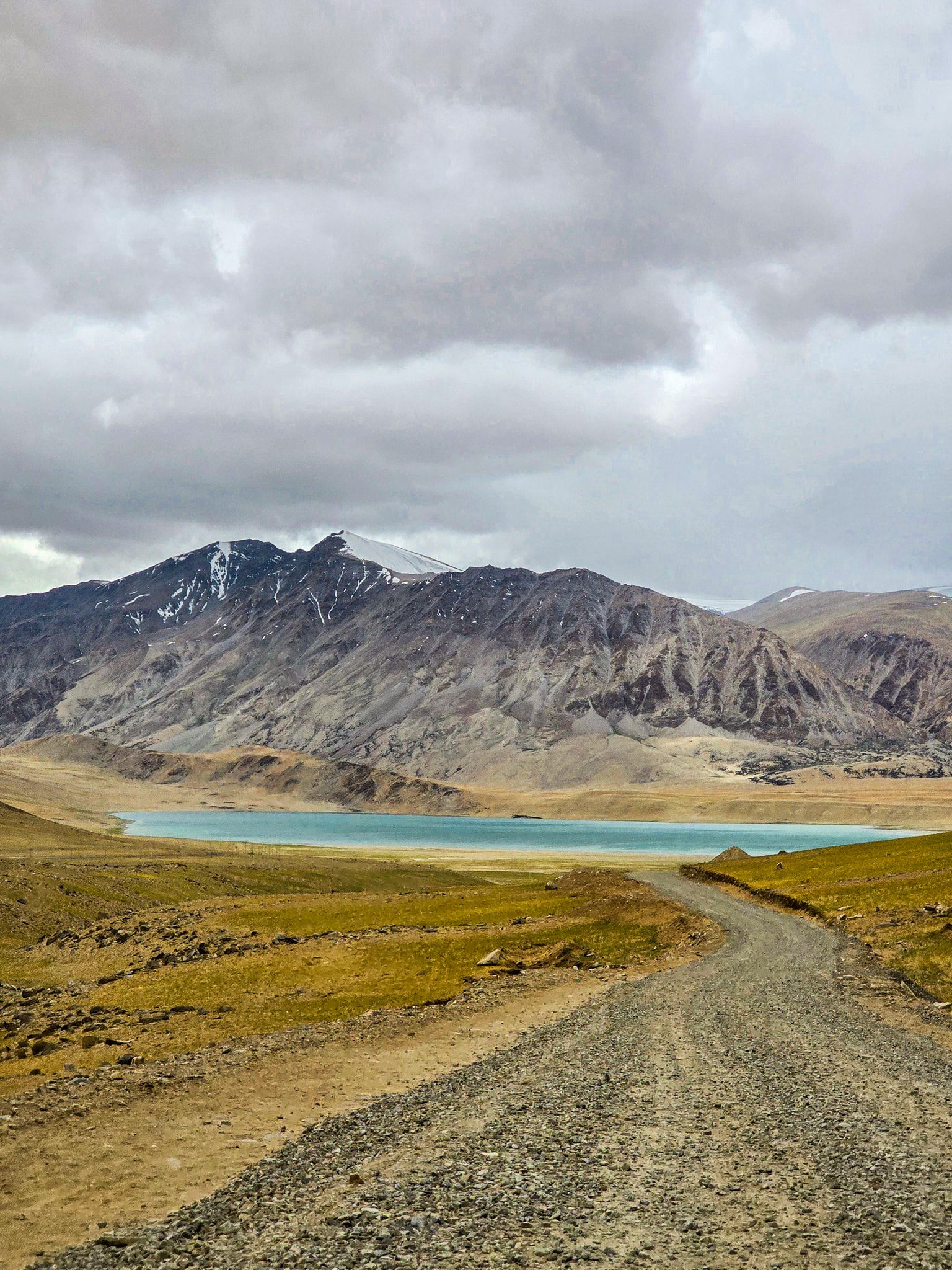
Kyagar Tso: a turquoise aside in a harsher palette
Not every lake in Ladakh announces itself with grandeur. Kyagar Tso is one of those that can feel like an aside—turquoise water in a landscape that often prefers beige, slate, and salt-white. The value of such a lake, in a set of 10, is its scale. It allows the reader to understand that Ladakh’s lakes are not only grand basins and famous shores, but also smaller waters that appear like punctuation on the route.
At Kyagar, you may find the shore less crowded, the stop more casual. This can produce better observation. You can see how the colour sits in the water, how it changes near the edges, how sediment affects clarity. You can notice the way the wind draws a line of small waves, pushing debris or foam to one side. You can also notice how quickly a place becomes marked by visitors—even here. Footprints in damp sand. A small pile of wrappers. A few stones rearranged into a casual “photo prop.” These are minor acts, yet in a cold desert they remain visible longer than people expect.
Kyagar’s lesson is not that it is “lesser-known,” but that smallness can be an advantage. It invites a quieter kind of seeing, the kind that does not require superlatives.
Yarab Tso: a hidden water you meet on foot
Yarab Tso, in Nubra, offers another kind of intimacy. It is not a lake you simply drive up to and circle. You approach it by walking. The path is part of the experience: stones, dust, a gradual change in temperature depending on shade, a sense of leaving the road behind. When water finally appears, it can feel sudden—not because it is dramatic, but because it is contained, tucked away from the open plateau. The scale is smaller; the atmosphere is different. The air can carry a faint dampness near the water that is rare in this region.
Yarab is often described as sacred, and you do not need to argue that point. You can observe how people behave there. Voices soften. Movements slow. Some visitors step carefully, as if the ground itself requires permission. Others sit without speaking. The lake becomes a place not for “doing” but for pausing. This is where a travel columnist can let detail carry meaning: a scarf adjusted against a breeze, the squeak of a shoe on stone, the way sunlight catches a thin line of algae or mineral deposit at the edge.
If you visit, the practical etiquette is simple: treat it like a small room rather than an open playground. Do not shout. Do not throw stones. Do not try to turn the quiet into entertainment. The lake will not reward spectacle; it will reward restraint.
Mirpal Tso — the lake that is mostly distance
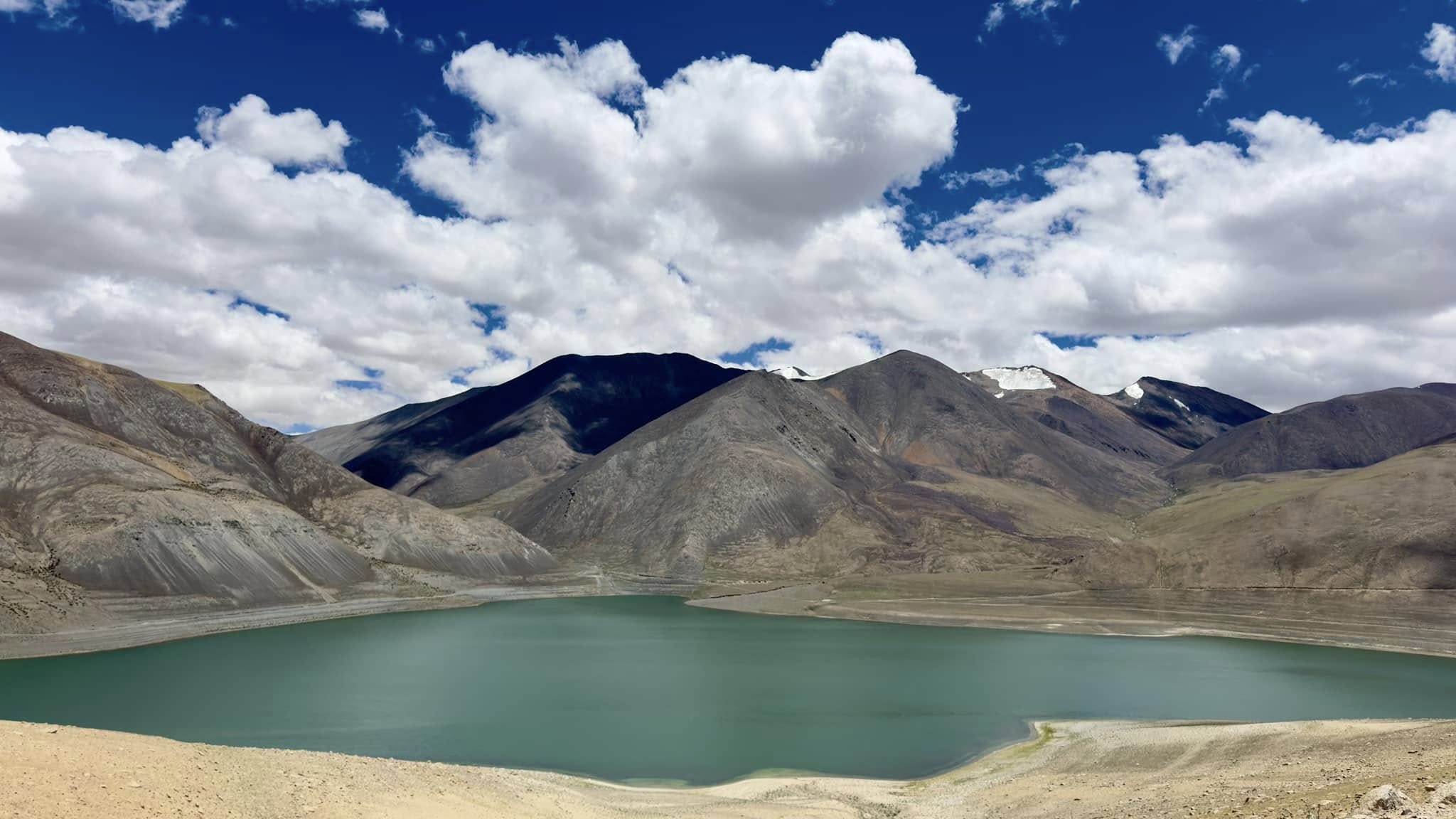
Approach as story: uncertainty, pace, and the cost of remoteness
Some lakes in Ladakh are defined less by what they look like than by what it takes to reach them. Mirpal Tso belongs to that category. For many travellers, it exists as a name on a list of lesser-known waters—something to mention as proof of having gone “beyond the usual.” That is the wrong impulse. If Mirpal is worth writing about, it is because remoteness changes behaviour. It makes you consider time, fuel, weather, and the simple fact that help is not immediate.
Distance has texture here. It is not measured only in kilometres but in the way the road behaves—smooth for a stretch, then broken, then diverted, then slowed by an unexpected water crossing or a patch of loose gravel. It is measured in the hours of light. It is measured in the temperature drop when the sun slips behind a ridge. It is measured in how often you stop to drink and how quickly your lips dry in wind.
In travel writing, there is a temptation to turn remoteness into drama. But the most accurate account is usually quieter: the driver checking the sky; the passenger counting water bottles; the map consulted not with panic but with calm; the small decision to turn back because weather is shifting. These are not failures. They are part of travelling in a high desert responsibly.
Arriving without triumph: water, wind, and nothing to prove
If you do reach Mirpal Tso, the lake is not obliged to be theatrical. It may be still or wind-scored. The shore may be plain. The colours may be subdued. And that, precisely, is the point: you have come for the reality of a place, not for a reward. In such moments, “10 Lakes of Ladakh” stops being a headline and becomes a practice—of patience, of decision-making, of knowing when to stop and when to leave.
The most practical detail, perhaps, is also the most revealing: remoteness increases the cost of your mistakes. Waste left behind will remain. A careless tyre track can scar soft ground. An unnecessary fire can spread damage in a landscape that recovers slowly. The lake does not need your mark. It only needs you to pass through without adding pressure.
What the lakes share — lines that hold water in place
Salt lines, shoreline lines, and the invisible lines people draw
Across Ladakh, the lakes share a family resemblance: the clarity of air, the sharpness of light, the strictness of weather. But what ties them together more subtly are the lines—some natural, some human—that hold them in place. Salt lines record retreating water. Shoreline lines show where wind pushes waves to the same corner day after day. Animal paths trace reliable routes to drinking spots. And then there are the lines drawn by people: protected wetland boundaries, grazing agreements, village territories, permit zones, military restrictions. These lines are not always visible on the ground, but they shape the experience more than any photograph does.
In the lakes we have moved through—Pangong’s border-adjacent fame, Chagar’s quiet pause, Stat and Lang’s paired reflections, Tso Kar’s salt basin, Startsapuk’s contrast, Tso Moriri’s village shoreline, Kyagar’s modest colour, Yarab’s tucked-away stillness, Mirpal’s remoteness—you can see how Ladakh refuses a single story. Even within the same category of “high-altitude lakes,” each water asks for a different posture: sometimes distance, sometimes patience, sometimes quiet, sometimes the humility of following local guidance without debate.
For European readers planning a journey, the practical thread is simple but not simplistic. Travel slowly when you can. Carry your waste out. Respect wildlife as more than a photo opportunity. Accept that permits and restrictions are part of the region’s reality, not an inconvenience to be resented. Dress for wind and sun as much as for cold. And, perhaps most importantly, allow at least one lake to be unproductive—no perfect frame, no checklist satisfaction—only a short stretch of time where you stand still and watch how water behaves at 4,000 metres.
That is how the title becomes true. “10 Lakes of Ladakh” is not a claim to completeness. It is a way of paying attention to salt, silence, and the lines—seen and unseen—that keep water gathered in a place where nothing is easy to hold.
Sidonie Morel is the narrative voice behind Life on the Planet Ladakh,
a storytelling collective exploring the silence, culture, and resilience of Himalayan life.