


When Water Sets the Rules: Permaculture Days in Ladakh
By Sidonie Morel
A place where water arrives as a schedule, not a background
Morning errands measured in kilograms
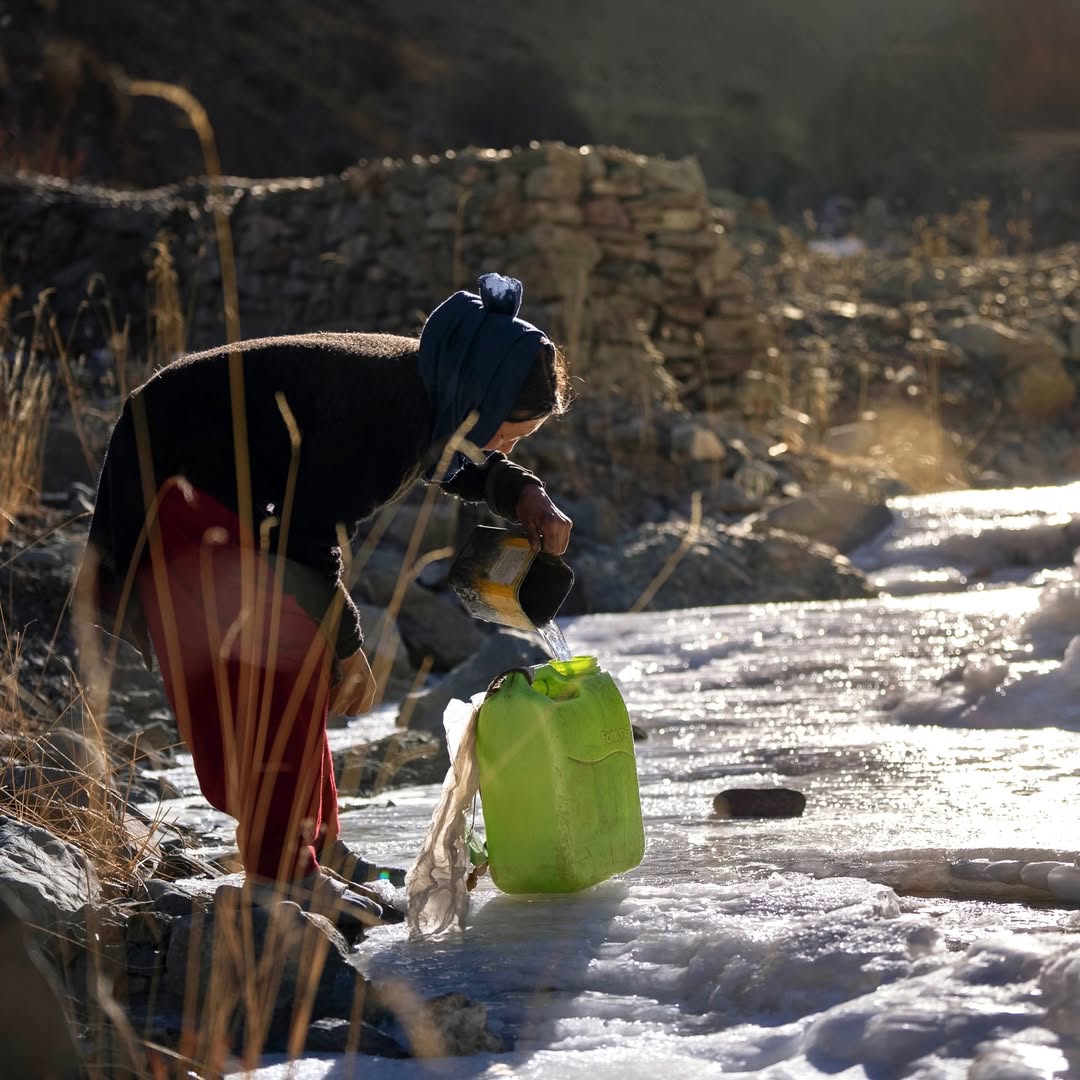
In Ladakh, water announces itself by weight. A jerrycan is not an abstract unit; it is twenty litres held close to the body, the plastic biting into the palm where the handle narrows. The day begins with containers—metal buckets with dented rims, a kettle reserved for drinking water, a smaller bottle kept separate because someone in the house insists it “stays clean.” The domestic order is visible: one corner for vessels that touch cooking, another for those that touch washing, a third for those that travel outdoors and return with dust along their seams.
The first movement is always the same: a door unlatched, shoes slid on without ceremony, the shortest path traced to a tap or a shared point. In some places the source is close enough to make trips frequent; in others it demands planning, and the yard becomes a staging area where containers wait in a row. The queue, if there is one, is quiet and brisk. People arrive with the exact number of vessels they intend to fill. No one comes empty-handed “just to see.” When the flow falters, there is no drama, only recalculation: a second trip later, less washing today, a pot of tea made after the cooking water has been secured.
This is where the topic begins, without the ornament of a manifesto. Permaculture in Ladakh starts at the threshold, with a household deciding what water is for, and in what order. The design question is not philosophical. It is the same question repeated in small forms: what must happen today, what can wait, what can be done with half the amount, what can be done with water that has already served once.
Freeze pockets, sun-traps, and the first lesson of observation
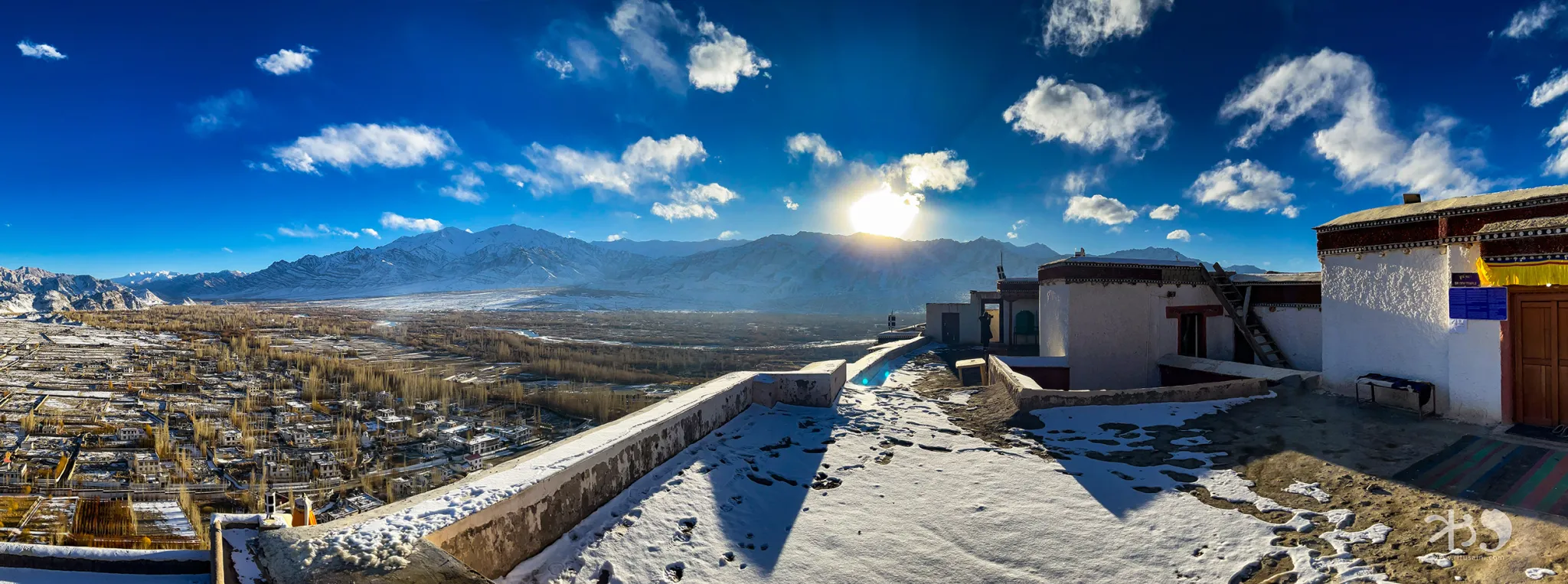
The cold desert is not uniform. You can walk twenty steps and find a different truth. A strip of shade beside a wall keeps a patch of ice long after the rest of the courtyard has softened. A low corner collects meltwater for a few hours, then turns to mud, then to dust. A line of poplars breaks the wind and changes how quickly clothes dry. A dark stone slab warms earlier than bare soil. These are not anecdotes; they are the raw material of design.
What permaculture calls “observe and interact” is not a slogan here but a discipline that fits the climate. You watch where frost persists, because that is where pipes crack and where greywater can become a hazard. You notice how the wind arrives—midday gusts that lift grit, evening drafts that slip under doors—because evaporation is relentless and any open basin is a loss. You learn the logic of sunlight in winter, when the sun sits low and long shadows cut the village into narrow bands of use: this side of the lane warms, that side stays brittle.
People in Ladakh do this watching without naming it. Permaculture gives the watching a structure. The first week in a new house can be treated like a survey: mark the places where snow drifts, where the roof sheds meltwater, where runoff cuts a small channel into the yard, where livestock paths have already chosen the most efficient line. Before buying materials, before building a tank, before digging anything, the land offers a map. The map is drawn in melt patterns, footprints, and the thin residue of silt where water briefly rested.
From patterns to details: designing with zones and sectors
The courtyard as Zone 1
European readers often imagine permaculture as a “garden method.” In Ladakh it reads more plainly as household organisation. Zone 1 is not romantic; it is the daily radius of work—the courtyard, the kitchen, the storage corner where fuel is stacked, the place where buckets are rinsed. If a system fails here, it fails in the most expensive currency: time and back strength.
So the first decisions are modest. Where do you set down wet containers so they can drip without turning the walkway into ice? Where does the dishwater go in winter, when dumping it outside can create a frozen slick by morning? Where can you store a small amount of water so it does not freeze overnight, yet stays away from the stove and soot? These questions pull design toward proximity, shade, shelter, and routine.
Permaculture’s emphasis on “small and slow solutions” becomes practical architecture. A covered shelf for water vessels matters more than a grand earthwork. A lid on a basin reduces dust and evaporation. A simple rack keeps containers off the ground so the bottoms do not crack in the cold. If you are tempted by an imported solution, the courtyard corrects you quickly: anything that requires constant replacement, specialised parts, or delicate maintenance will not last through winter’s bluntness.
Sector thinking: sun, wind, livestock, and the path of melt
Sectors are the forces that cross a place whether you want them or not. In Ladakh, the most persuasive sectors are sunlight, wind, and the seasonal movement of water itself. The sun can be treated as an ally when it is captured—dark surfaces near walls, south-facing corners that warm early, windows that let light reach the floor where people sit. The wind, on the other hand, is a thief. It takes heat, it takes moisture, it brings dust. A hedge, a low wall, or a line of trees changes everything without announcing itself.
Then there are the sectors that belong to animals and people. Livestock do not respect diagrams; they respect habit. Their paths are consistent because they conserve energy, and they become compacted lines that shed water rather than absorbing it. Human shortcuts do the same. A new water point placed without acknowledging these routes will be ignored, or it will become a daily irritation that people silently work around. In permaculture, integration matters: you design so movement supports the system instead of constantly fighting it.
The melt season adds another sector: the brief rush of water when snow releases. Roofs shed meltwater in particular places; the ground accepts it unevenly. A small lip at the roof edge can direct the flow into a basin rather than a random puddle. A shallow trench can slow it enough to sink into soil instead of racing away. In wetter climates, these adjustments can feel optional. In Ladakh, where the year offers only short windows of generosity, the details are not decorative—they are the difference between soil that holds moisture and soil that turns to powder.
Catch and store: making water linger without forcing it
Roof runoff, jars, and the quiet dignity of storage

To “catch and store energy” sounds grand until you translate it into what a household can actually build. In Ladakh, roofs are often the first catchment because they are already there. When meltwater or rain arrives, it arrives quickly; a roof can collect it before it disappears into dust. A simple gutter, if it can withstand cold and debris, can guide water into a barrel, a covered pit, or a tank that stays shaded. The key is not scale. The key is reliability and cleanliness.
Storage is not only about volume; it is also about separation. Drinking water needs a different path than washing water. Water for animals can be stored in sturdier containers that tolerate grit. Cooking water benefits from a lid and a clean dipper that does not travel outdoors. These distinctions are already part of Ladakhi domestic life. Permaculture validates them as design choices rather than “fussy habits.” It also encourages a question that matters in a cold desert: can the same storage serve more than one season, or does it become a problem when it freezes?
A tank that freezes and cracks is not a solution. A tank that stays usable through careful placement—slightly insulated, partly sheltered, protected from direct wind—becomes an asset that reduces daily labour. The best systems here often look humble: covered vessels, small cisterns, and protected basins that can be cleaned without drama. Their success is measured in fewer emergency trips and less water spilled across thresholds.
Infiltration before accumulation
In many permaculture examples from elsewhere, ponds and large water bodies are celebrated. Ladakh asks for a different emphasis: infiltration and distribution. If you can get water into soil—slowly, safely, without erosion—you are creating a reservoir that does not freeze into an unusable block and does not evaporate as quickly as an open surface.
This is where terraces, micro-catchments, and careful grading matter. A small berm or a shallow basin around a tree can catch a brief flow and let it sink near roots. A stone-lined channel can guide water without cutting the path into a gully. A layer of mulch—straw, leaves, even coarse organic matter—reduces evaporation and protects soil structure. Windbreaks do similar work: they slow the air and keep moisture from being stripped away as soon as it arrives.
None of this requires a dramatic transformation. It requires the principle that permaculture repeats in different forms: get the function first, then refine the form. In a Ladakh orchard, you can often see the story in the ground itself: where a basin held water long enough for a sapling to survive, where a poorly directed flow undercut a path, where a strip of compacted soil refused to absorb anything. The land keeps records. The design task is to read them and respond.
Ethics on the ground: Earth care, People care, Fair share
Soil as a protected asset, not a backdrop
Earth care becomes very literal when soil is scarce and easily damaged. In Ladakh, soil is often a thin, made thing—carried, composted, amended, and guarded from wind. A yard left bare can lose its fine layer in a single season of gusts. A field overwatered at the wrong time can crust, crack, and shed water rather than accept it. A small mistake repeats across seasons.
Permaculture in Ladakh therefore looks like protection: ground covered where possible, slopes stabilised, channels maintained so they do not erode their own banks. Composting is part of the story, but it is not the lush compost fantasy of milder climates. Cold slows decomposition. Materials arrive in pulses: animal bedding, kitchen scraps, plant residues at harvest. The system must handle interruptions—frozen weeks, sudden storms, times when labour is fully consumed by other obligations.
When the ground is treated as an ally rather than a surface, design shifts. You stop asking, “What can I plant?” and begin asking, “What will keep moisture in place?” The answer often includes unglamorous measures: mulch, shelter, careful watering, and the patience to accept that soil-building is the slowest project in the house.
People care: designing for the hands that will maintain it
People care is not sentimental. It is an engineering requirement. A system that exhausts the household will be abandoned, no matter how correct it looks on paper. In Ladakh, the daily workload is already full: fuel, cooking, animal care, repairs, and the simple fact of moving through cold. If a water system adds complexity without reducing labour or risk, it will be resented.
This is why the best designs here fit the rhythm of the day. If water is collected in the morning, storage needs to be accessible then, not hidden behind locked sheds. If the courtyard becomes icy at night, greywater needs a route that avoids footpaths. If older family members do much of the carrying, the heaviest containers must be placed where they can be lifted safely. These are not “nice-to-have” details; they are the difference between a system that becomes part of life and a system that becomes a burden.
Permaculture’s principle of “integrate rather than segregate” applies socially as well. Water work is often shared. Maintenance days—clearing a channel, fixing a leak, checking a valve—require coordination. A design that respects existing cooperation has a better chance of lasting than a design that assumes a single heroic caretaker.
Fair share: water as an agreement, not a private possession
Fair share is easiest to understand in places where scarcity is visible. In Ladakh, water distribution often follows schedules that resemble quiet contracts. Turn-taking, shared repairs, and collective attention to infrastructure are part of how the village continues. When someone hoards water, the impact is not theoretical; it shows up down the line, in a field that goes dry, in a neighbour’s delay, in a dispute that wastes time.
Permaculture does not romanticise fairness; it formalises it. It suggests limits and feedback. If one part of the system consumes too much, the system responds—through social pressure, through reduced yields, through the simple impossibility of carrying enough. Designing with fair share in mind means asking: can surplus water serve the next need rather than disappearing? Can a storage system be shared in a way that reduces conflict? Can maintenance knowledge be spread so repairs do not depend on one person?
In a dry place, the simplest form of wealth is water that stays useful twice.
Loops instead of lines: making household water serve more than once
Greywater with winter in mind
Greywater reuse is often presented as a straightforward ecological virtue. In Ladakh, it is also a safety question. Water poured outside in the evening can become ice by morning, and ice in a courtyard is not a picturesque detail; it is a broken wrist waiting. So the first step is not a filter—it is a route.
A household can separate water types by habit: relatively clean rinse water from vegetables; washing water with soap; water from cleaning greasy pots. Some of this can be directed to plants in warmer months if the soaps and residues are mild. Some needs a small treatment path—gravel and sand, a planted bed, or a settling container—before it touches soil. The aim is not perfection but appropriateness: a system that can be maintained, cleaned, and protected from freezing.
In practice, this often becomes a small, contained feature near the courtyard: a covered bucket for collecting rinse water, a short pipe that directs it to a sheltered planting basin, a simple gravel trench that keeps the surface dry. In winter, the routine changes. The household might keep greywater inside until it can be disposed of safely in daylight, or direct it to a place designed to freeze without creating hazard. This is the permaculture principle of “apply self-regulation and accept feedback” expressed as daily habit, not as theory.
The courtyard cycle: animals, manure, heat, soil
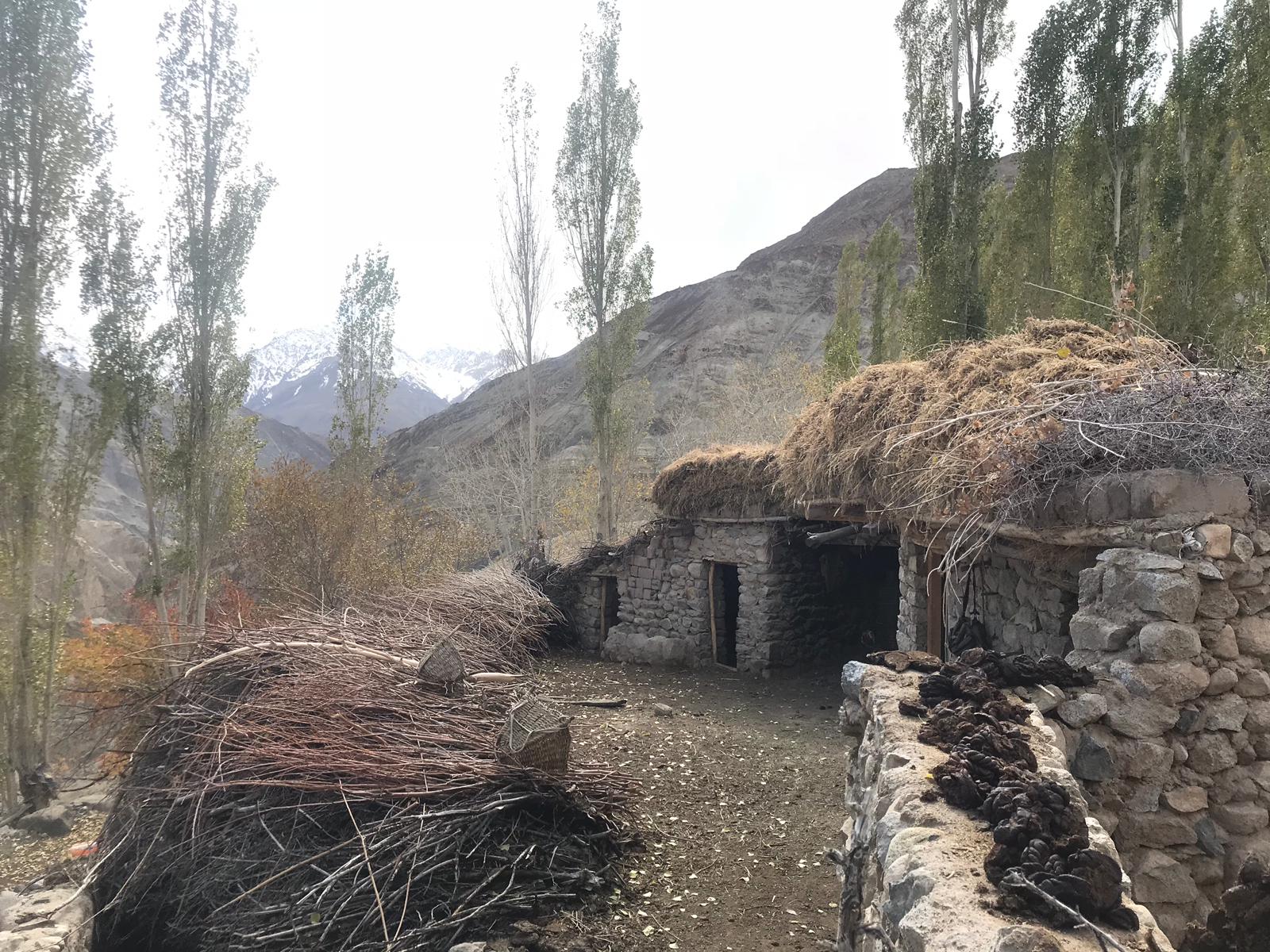
Integration in Ladakh often begins with animals because animals are already part of the system. Manure and bedding material are not waste; they are fertility in transit. The courtyard is where the loop closes: animal bedding becomes compost material; compost becomes soil amendment; soil holds more moisture; moisture supports fodder and crops; fodder supports animals. It is a cycle with obvious links, but it is also delicate. If the compost is left exposed to wind, it dries and loses its fine material. If it is left too wet in the wrong season, it becomes a frozen lump that cannot be managed.
So the design choices are protective and timed. A compost area sheltered from wind reduces loss. A simple cover—tarpaulin, woven material, even a roofed corner—keeps moisture where it matters. Layering materials helps: dry plant matter, manure, kitchen scraps, more dry matter. In colder periods, activity slows, but the pile can still store nutrients and moisture if it is not left to be stripped by weather.
For a European reader, the notable thing is how domestic objects and land design meet in the same place: the shovel leaning against the wall, the broom used to clear a channel, the bucket rinsed and set upside down so dust cannot settle inside. This is not “garden work” as a hobby; it is housekeeping expanded to include soil and water, with permaculture providing a coherent language for what is already being done.
Learning from other drylands—without importing a blueprint
What “swales” and earthworks mean when rainfall is brief
Dryland permaculture is full of attractive techniques: swales, basins, contour earthworks. The danger is copying a shape without copying the reasoning. In Ladakh, where precipitation is limited and the timing of water is narrow, earthworks must be cautious. A trench in the wrong place can collect water and then freeze into a barrier. A berm built without proper spillways can cause erosion when a sudden melt rushes through. The land does not forgive sloppy enthusiasm.
So the lesson from global case studies is not “do this exact thing,” but “ask this kind of question.” Where does water travel during melt? Can you slow it without trapping it dangerously? Can you guide it toward infiltration in soil rather than toward a pond that will evaporate or freeze? Are you protecting the edges from collapse? Can the system be repaired with local materials and local skills?
The most useful earthworks in Ladakh are often small: micro-basins around trees, shallow channels lined with stones, terraces that already exist and can be improved with better distribution. These are interventions that respect the scale of available labour. They also respect the principle of “use and value renewable resources and services”: shade, wind protection, ground cover, and gravity do more work than pumps and imported parts ever will.
Accepting feedback: the design continues after the build
Permaculture is sometimes sold as a finished system, a kind of ecological permanence. Ladakh makes it clear that permanence is earned through revision. Winter provides the most honest feedback: what froze, what cracked, what became a hazard, what was impossible to access. Summer provides another verdict: what evaporated too quickly, what attracted dust, what failed under the pressure of daily use.
A practical approach is seasonal auditing. In melt season, you watch runoff and adjust paths. In dry season, you observe evaporation and improve covers and shade. In repair season—often a brief window—you fix channels, reinforce edges, and clean storage. The notebook is not a romantic accessory; it is a maintenance tool. Mark the date when a pipe froze. Record which corner stayed icy. Note how many trips were needed when the tap slowed. These observations are the foundation of the next iteration.
The essay ends where it began: at the household scale. In the late afternoon, when light drops behind the ridge and the yard cools fast, someone checks the lids on containers and shifts a bucket into a sheltered corner. A channel is cleared with a stick so the next melt does not cut a new groove. Water is not background. It is design in motion, revised by the season and maintained by ordinary hands. Permaculture in Ladakh does not announce itself with grand gestures. It shows up as systems that survive winter and still make sense on a tired day.
Sidonie Morel is the narrative voice behind Life on the Planet Ladakh,
a storytelling collective exploring the silence, culture, and resilience of Himalayan life.