


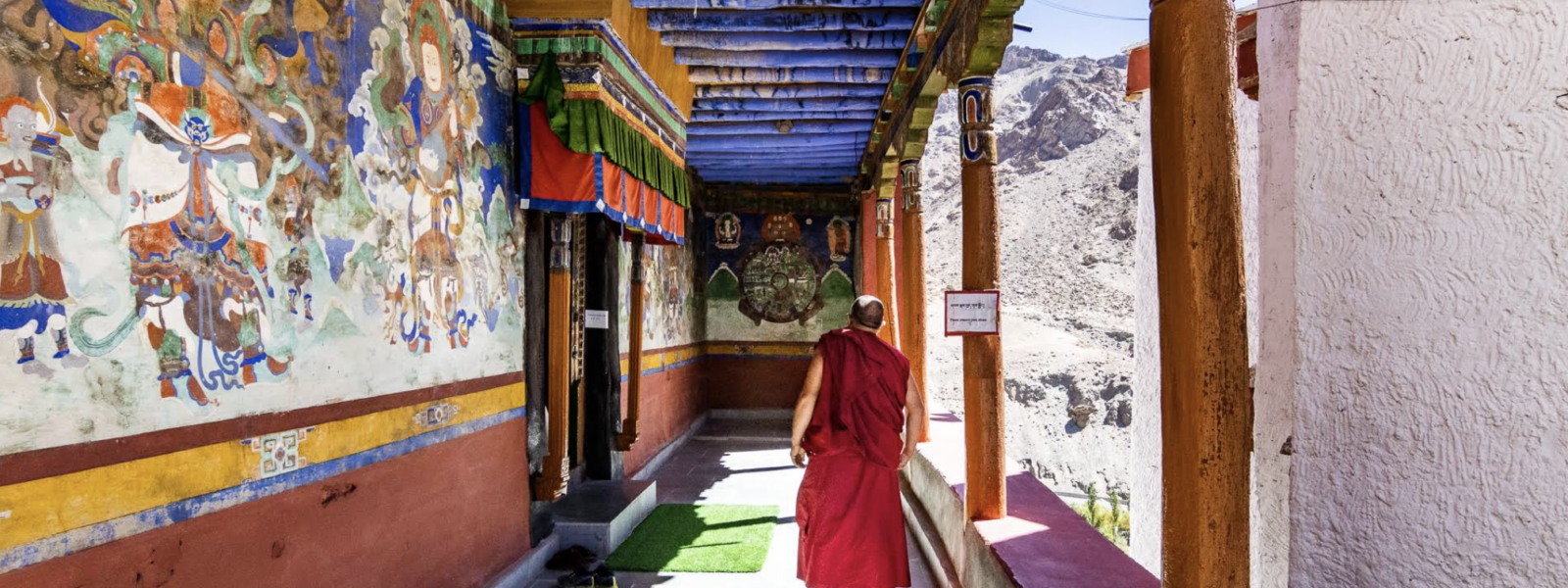
From First Tea to Final Latch: A Ladakh Monastery Day by Time
By Sidonie Morel
04:58
The first sound is not a bell but a small clearing of the throat in the corridor, the kind made on purpose so no one is startled. A match scratches, then another. Someone has already decided the stove will be persuaded today. I sit up, reach for my sweater, and fold the blanket back with both hands.
05:07
Water begins to move in a pot that was rinsed last night and left upside down on the shelf. The kettle is set on the flame with a calm that suggests repetition rather than devotion. A novice passes me a tin cup without looking at me, not unkindly, simply efficiently. I hold it in my palms until the metal warms.
05:18
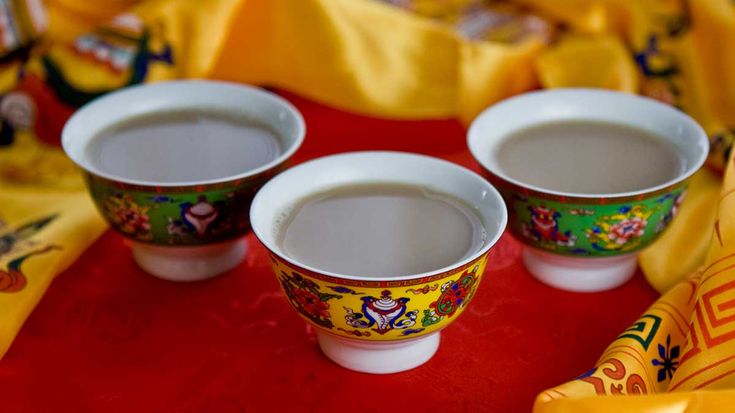
Tea arrives thickened with butter and salt, a taste that belongs to altitude and labor more than to preference. There is no discussion of whether one is hungry. Bread is torn, not sliced. Someone counts cups by memory, then by sight, then is satisfied. I drink, then wipe the rim with my thumb.
05:33
The prayer hall does not announce itself as “beautiful”; it does not need to. Before anything sacred happens, the floor is checked for dust, wax, and the stray twig that rode in on a sandal. A broom is dragged in long strokes that stop short of the painted threshold. The broom’s straw bends and springs back, and the corner is cleared.
05:49
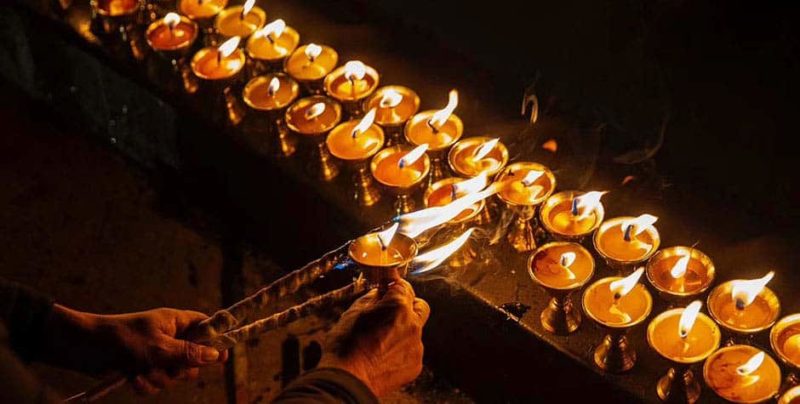
Butter lamps are not lit as symbols; they are lit because someone must do it, and because the lamps exist to be kept alive. A small cup of oil is poured, then topped, then corrected. The wick is nudged upright with a fingernail. The flame catches, steadies, and stays.
06:02
A bell rings with a firmness that feels administrative. Robes are adjusted, not performed. A man near the door checks the line of cushions, straightens one by a finger’s width, then sits. The first chant begins before everyone has fully settled, and the latecomers slip into rhythm.
06:27
Chanting is a form of work: breath measured, syllables hauled forward, tempo maintained even when the mind wanders. The prayer books are not precious objects; they are used objects, opened wide, pressed flat, closed again. The pages carry faint grease marks from hands that have been warm. I follow the sound rather than the script.
06:51
A pause. Someone pours tea again—less ceremony than refueling. The cups are collected and returned without clatter. A monk coughs once, apologizing to no one. A window is cracked open for air, then closed when the cold proves itself. The room resumes.
07:16
The kitchen becomes the center because it must. Rice is rinsed until the water runs less cloudy. Lentils are sorted with quick fingertips, stones removed without comment. The stove is fed with wood set aside yesterday in lengths that will fit. The fire is coaxed until it agrees.
07:44
Breakfast is not announced, it happens. Bowls appear, then fill, then empty. Someone offers me a second portion as if my appetite is a fact to be managed. I take it because refusing feels like adding friction to a smooth system. I eat, then rinse my bowl at the basin.
08:09
A ledger is placed on a low table, its cover softened by years of handling. A pen is tested on the margin, then used decisively. Donations are recorded in the same neat script whether they come from a village elder, a tourist, or a driver passing through. Numbers are spoken under the breath, then written down.
08:32
A phone rings—an ordinary, modern ring that does not fit the murals but fits the day. The call is taken on the step outside, where the voice can travel without disturbing the hall. A delivery is confirmed, a request is refused politely, a time is agreed upon. The phone is slipped back into a pocket.
08:57
Visitors arrive in small waves, always more hopeful than prepared. Shoes are left by the door in uneven pairs. One man asks if photography is allowed, and the answer is not “yes” or “no” but a short explanation of where not to stand. A novice guides them with the patience of someone who has done it many times. The tourists follow.
09:21
A routine cleaning continues regardless of who is watching. Cloths dampened in cold water wipe down wooden rails, then the metal of a lock, then the edge of a cabinet. Incense ash is gathered carefully so it doesn’t bloom into the air again. A bucket is carried out and emptied behind the wall. The cloth is wrung dry.
09:46
A senior monk sits with a visitor who has come with a question that is not easily summarized. They speak quietly, in a cadence that allows pauses. There is no advice offered like a slogan; instead there are small clarifications, a reframing, a reminder of the obvious things. The visitor leaves with less certainty and, perhaps, more direction.
10:13
In the courtyard, a dog sleeps with its paws tucked, unbothered by the monastery’s purpose. Someone steps around it without shooing it away. A pot is set in the sun, lid tilted to let steam escape. A sack of barley is moved to a drier corner. The day is rearranged.
10:41
Tea again, because altitude turns thirst into a quiet danger. The butter has separated slightly; it is stirred back with the handle of a spoon. Cups are refilled without anyone asking for a refill. A boy who is too young to be a monk but old enough to carry things walks in with a tray. He sets it down carefully and goes.
11:08
A short teaching begins, not staged, not amplified. People shift closer on the floor. The teacher’s hands move when they need to, then rest. The talk is less about distant enlightenment than about the ordinary traps of the mind—resentment, hurry, pride—named plainly, like household pests. When it ends, no one applauds.
11:37
Lunch is assembled from what is available, and availability is respected. A pot lid is lifted, checked, and replaced. Salt is pinched and scattered. Someone tastes the broth, adds a little more spice, then stops. The meal is carried to the hall and set down.
12:02
The eating is quick, not because it is joyless, but because time has other uses. Conversation stays light: a supply truck, a cousin’s health, the price of gas, the condition of the road. When the last bowl is scraped clean, the bowls are stacked. The floor is swept again.
12:36
After lunch, there is a pocket of quiet that looks like rest but is closer to recovery. Some lie down; others sit and read; a few simply stare at a wall without embarrassment. A monk mends a robe with thread pulled from a small tin. He knots it, clips it with his teeth, and continues.
13:11
A generator is started for a short time, enough to charge phones, run a small printer, bring light to a room that needs it. The sound is practical, a reminder that spiritual places are still places with bills, repairs, and logistics. A paper jam is cleared with a patient tug. The printer hums again.
13:48
A delivery arrives: vegetables, oil, sacks of flour, something wrapped in cardboard that might be spare parts. The items are checked against a list held down by a stone. Payments are counted and handed over. The driver drinks a cup of tea, accepts a second, then rises. The supplies are carried inside.
14:22
The afternoon prayers begin with less formality but no less attention. The rhythm is familiar now, like a path you can walk in the dark. A young monk’s voice cracks on a low note; he swallows and finds the pitch again. A prayer drum turns once, then twice, then keeps turning. The chant continues.
14:57
Outside, wind tests the prayer flags the way wind always does, but the day inside stays procedural. Someone checks a latch on the storeroom, tightens a screw, and tries it again. A candle is moved away from a draft. A cup is set upright rather than left on its side. Small preventions are made.
15:33
A few guests are invited for tea in a side room where the conversation can be unhurried. One asks about meditation as if it is an exotic technique. A monk answers by describing posture, breath, and the discipline of returning when the mind runs off. There is no mysticism offered to impress anyone. The guest nods and tries to sit still.
16:08
The kitchen wakes up again. Dough is mixed with hands that know exactly how much water the flour will accept today. The surface is dusted, the ball is pressed and turned, then pressed again. A pan heats while someone watches it without staring. The first bread is laid down.
16:44
A boy carries a bucket to the tap and waits as it fills slowly, because the pressure is never a certainty. He does not scroll on a phone while he waits; he watches the water rise, then stops it at the right point. He lifts the bucket with both arms, pauses to adjust his grip, and walks back steadily.
17:19
Evening prayer does not feel like closure; it feels like maintenance. Lamps are checked, wicks trimmed, oil topped up. The cushions are arranged again. The chant is shorter, the pace more compact, as if the day is being folded into itself. When it ends, the silence is allowed to stay.
17:58
Dinner is quieter than lunch. People eat without telling stories, not because they have nothing to say, but because the body is tired and the mind is already moving toward sleep. A few jokes pass softly down the line, then fade. Bowls are rinsed immediately. The stove is fed one last time.
18:36
The accounts are put away. Keys are gathered. A list is checked for tomorrow: rice, kerosene, a call to someone in Leh, a visit from a family, a repair in the roof before snow. Someone marks a small circle next to an item to mean “not done yet.” The book is closed.
19:12
The corridors dim. The last cup of tea is poured, less buttery now, more like hot water with comfort in it. A monk reminds a novice to put his shoes in the right place, a correction so mild it barely counts as instruction. The novice shifts them without complaint. The cup is set down.
19:47
The final round is not romantic: doors checked, windows tested, a stray candle pinched out, the dog nudged gently toward the sheltered corner. Someone listens for a moment to make sure the generator is truly off. A latch that catches halfway is lifted and tried again until it catches properly. The latch holds.
20:06
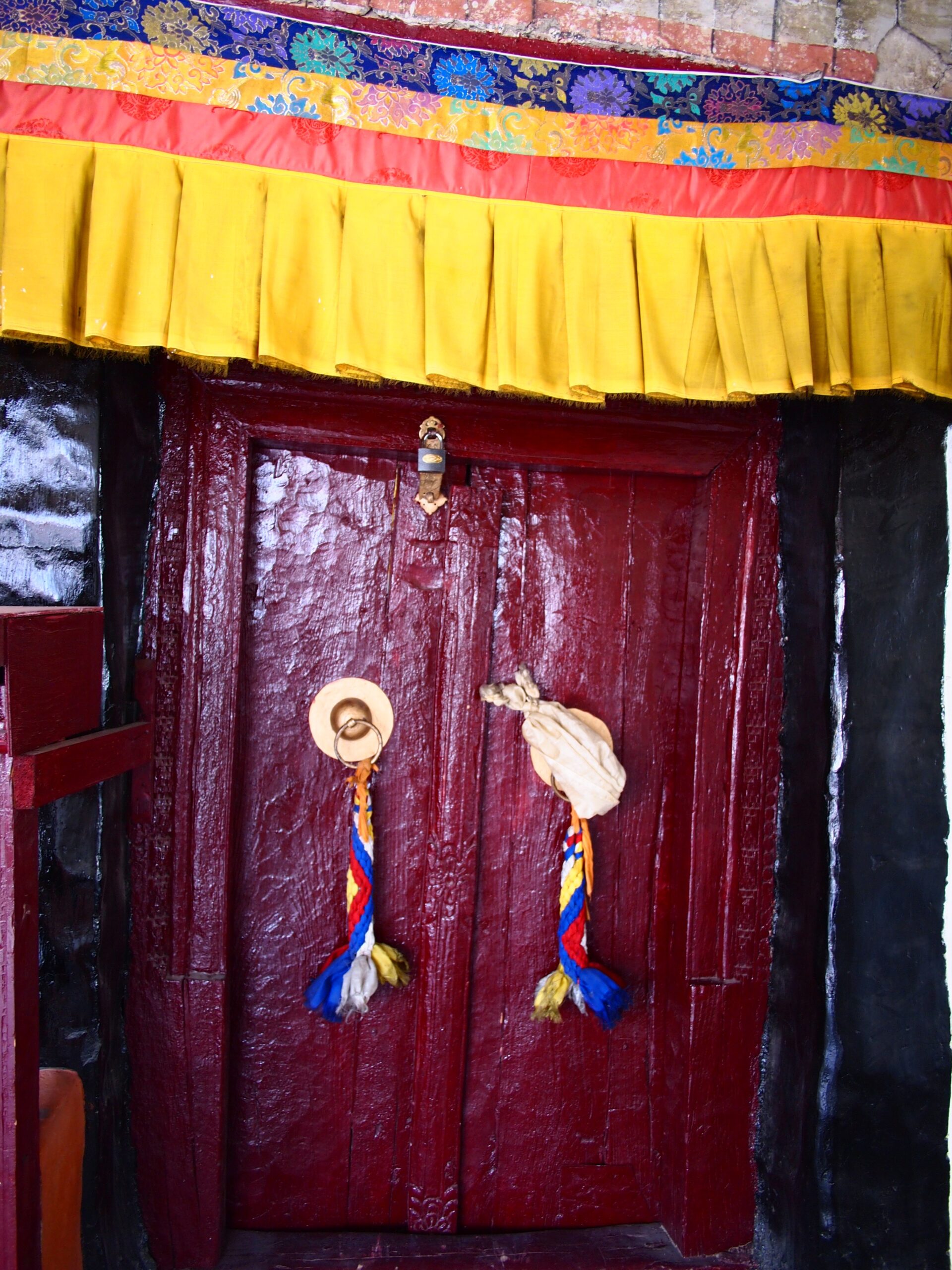
At the main door, there is no ceremony, only the familiar sequence of hands. The wooden bar is set into its brackets. The metal hook is brought over, then down. I pull the door to, lift the latch, and lock