


Where the Day Is Kept
04:38
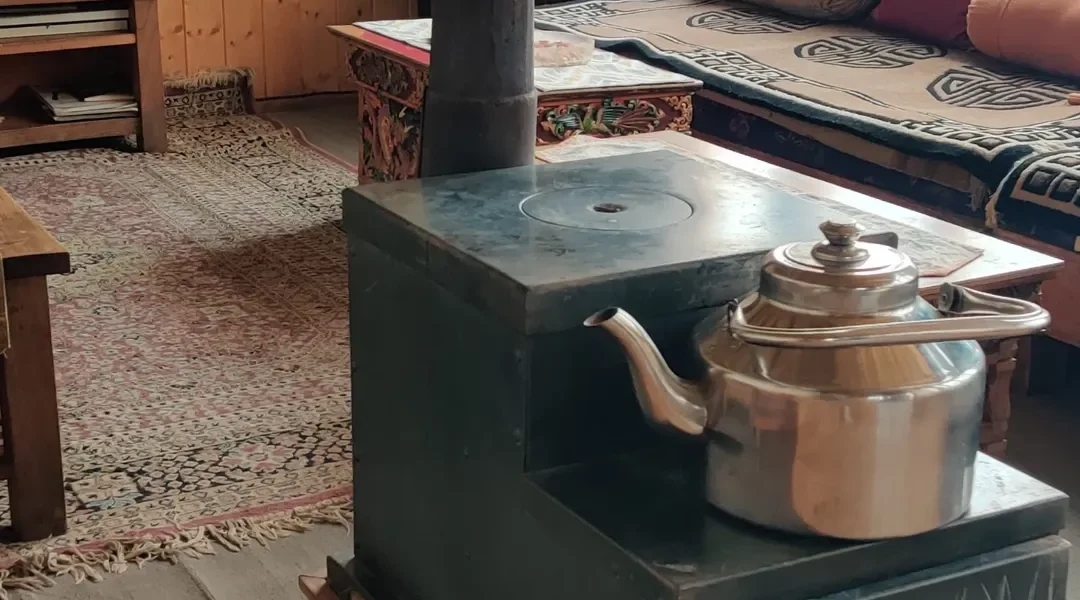
The stove has its own patience. Before light arrives, there is the small choreography that makes light possible: a hand feeling for the matchbox, a tin lid lifted without waking the whole room, the first scratch that fails, the second that catches. In winter the flame looks almost blue. In summer it is simply quick, as if it has been waiting.
04:54
Water goes into the kettle. Not much. Just enough for tea, enough to warm the mouth into speech. Outside, the courtyard is a darker shape inside darkness. Somewhere a dog turns and resettles. Somewhere a roof shifts under cold.
05:07
The first cup is not a pleasure so much as a calibration. Salt, butter, a little strength. The day begins inside the body before it begins outside the door.
05:23
A shawl is pulled tight, then loosened, then pulled tight again. The habit is as old as the valley: you adjust, you accept, you go on. A radio murmurs in a corner—weather, a song, a voice naming places you will not see today. The room smells faintly of last night’s smoke.
05:41
Footsteps on packed earth. The latch lifts. The first air is sharp. You do not look at the mountains yet. You look at what needs doing.
05:52
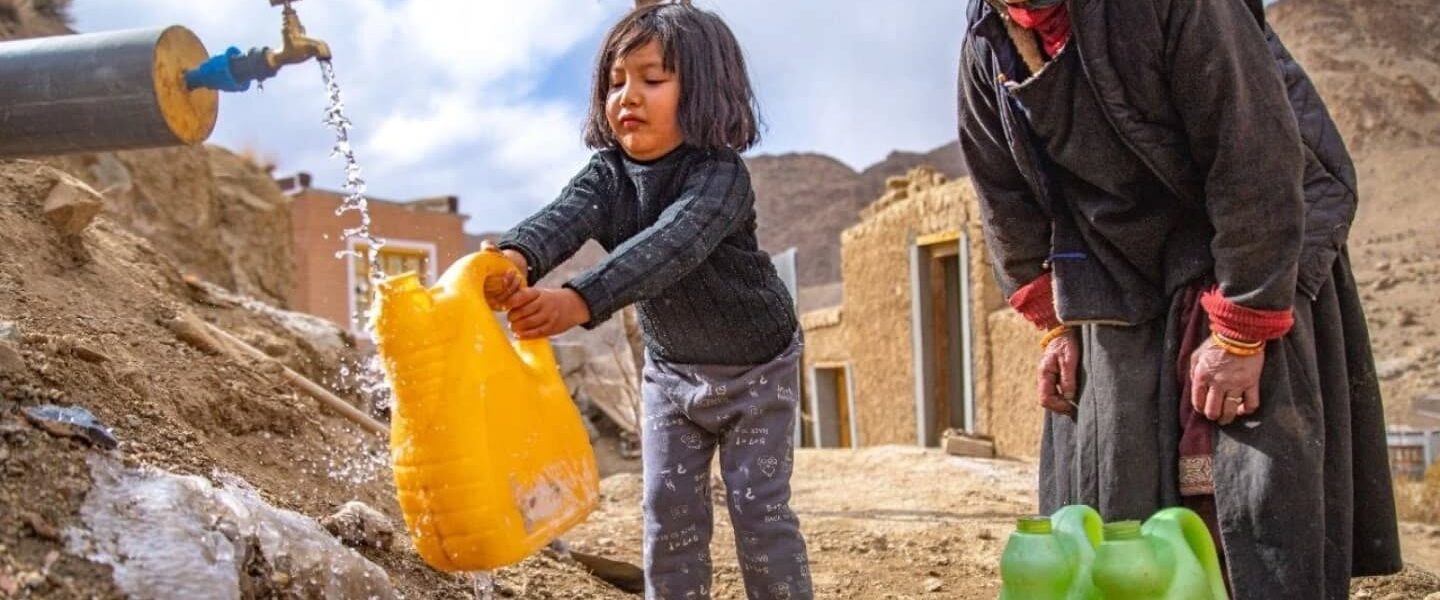
The tap in the courtyard gives nothing at first, then a thin thread that grows stronger, then stops again. In Ladakh, water is not a background detail; it is a schedule. A bucket is filled when it can be filled, not when it is convenient.
06:08
A basin is set on the ground. A cloth is dipped, wrung, dipped again. Face, hands, the back of the neck. The cold is an honesty. It clears the leftover softness from sleep.
06:21
The kettle is coaxed again. Tea becomes a hinge between before and after. The second cup tastes more like tea, less like necessity.
06:37
The door to the storage room sticks. It always sticks. A shoulder leans into it. A sack is dragged forward. Flour dust rises, then settles, then rises again as the scoop goes in.
06:52
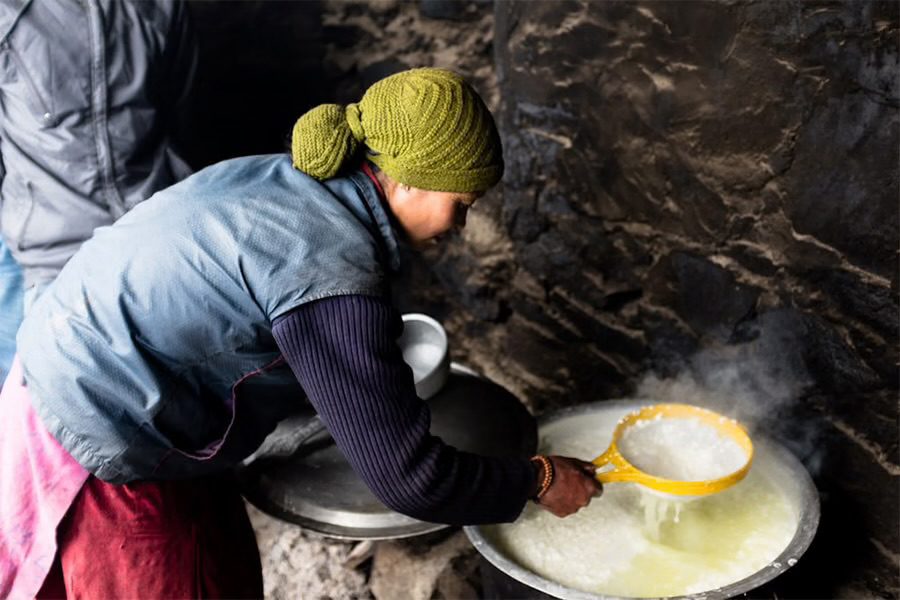
Dough is made with the kind of attention that has no time for romance. Water, flour, salt. A firm push of the heel of the hand. A turn. Another push. The dough becomes smooth because it must.
07:11
A child coughs. A child turns over. A child pretends not to be awake, waiting to be called properly into the day. The adults do not hurry them; hurry is for roads, not for rooms.
07:26
The flat pan heats. The first bread is never perfect. It is a sacrifice to the temperature of metal, to the mood of fire. The next one is better. The third is the one you serve without apology.
07:49
Boots are found, then the other boot. A sock is pulled up, then rolled down, then pulled up again. The body negotiates with the morning. A jacket is zipped. A scarf is looped. The face you will show outside is assembled.
08:03
A bag is packed: notebook, charger, a small packet of biscuits, a thermos that still remembers heat. Keys are checked in the pocket, then checked again. Even in villages where doors are left open, keys have their own comfort.
08:17
The courtyard gate opens onto a lane that has already begun. A neighbor carries fodder. A man pushes a bicycle too old to trust downhill. Two women walk fast without looking fast, their conversation folded neatly into their pace.
08:31
The shop shutters lift with a squeal. The first customers are not customers; they are people collecting what the day requires before it becomes crowded with other demands. Lentils. Matchsticks. A packet of tea. A bar of soap that smells like lemon.
08:47
A vehicle starts with a rough insistence. The driver does not rev; he listens. He waits for the engine to decide it agrees. When it does, he pulls out slowly, as if the road might still be sleeping.
09:02
Work begins without ceremony: a ledger opened, a phone answered, a kettle refilled. In Ladakh, official hours exist, but the real hours are stitched to weather, weddings, sickness, roadblocks, and the strange logic of supply trucks.
09:24
A message comes in: the road is slow today. Somewhere beyond the bend, stones have slid. Somewhere beyond that, a convoy has paused. The message is not drama; it is information. Plans do not shatter here. They soften and reshape.
10:08
A break for tea arrives not because anyone asks for it but because the body knows. A cup is poured. A biscuit is split. Someone mentions a cousin in Kargil, a niece in Delhi, a son in the army. The valley is full of people who are elsewhere, and full of people who are waiting.
10:36
The sun reaches the window properly. Dust becomes visible. A broom appears. The floor is swept in wide arcs that make the room feel larger, if only for a while.
11:12
A call is returned. A small apology is offered for the delay, even when delay is the normal shape of life. The voice on the other end accepts it because they live inside the same weather, the same roads, the same quiet negotiations.
11:49
Lunch is planned in fragments: what is already cooked, what can be made quickly, what will stretch. A pot is set on the stove. Onions are cut. The knife hits the board with a steady rhythm that becomes a kind of reassurance.
12:23
Steam rises. Lentils thicken. A handful of greens is rinsed and added. The meal is not complicated. It is good because it exists.
12:58
Food is served. Plates are passed. Someone eats standing, someone sits on a cushion, someone feeds a smaller someone who refuses at first, then accepts. The table is not a table; it is the space between people.
13:36
A brief lull. Not a nap, not exactly. More like a pause where the body resets its ledger. A shawl is pulled over the knees. Eyes close for three minutes. They open again. The day continues.
14:09
A walk to the fields, or the orchard, or the place where irrigation channels can be coaxed into fairness. The water has to be persuaded. Stones are moved. A small dam of earth is shaped by hand. The flow changes direction, obedient for now.
14:47
Hands smell of wet soil. Nails collect the valley. A cloth wipes palms but does not erase the work. In Ladakh, clean hands are temporary, and that is fine.
15:18
A child returns from school with the particular exhaustion of learning. Shoes are kicked off. A complaint appears—too much homework, too much cold, too much of a teacher’s scolding. The complaint is listened to, not solved.
15:44
Tea again. Always tea. The thermos is opened. The heat inside it feels like an argument won.
16:07
An errand that cannot be delayed: a visit to an elder, a check on a neighbor’s roof, a quick stop at the pharmacy for tablets that taste of metal. The village runs on these small threads of responsibility, tied and retied.
16:53
Light begins to turn. The mountains finally insist on being seen, but even then they are not the main event. They are the walls of the room you live in. You admire them the way you admire a house that has held you for years.
17:26
Back home, the stove is woken again. Firewood is arranged. A pot is washed. Rice is measured by eye. No one consults a recipe. Everyone consults memory.
18:02
The evening meal comes together with practiced economy. Someone chops garlic. Someone rinses lentils. Someone checks the pressure cooker and turns the flame down because you only learn that sound once.
18:41
Dinner is eaten. The room grows warmer from bodies and steam. Conversation loosens. A joke lands. Someone laughs into their sleeve. For a moment the day feels generous.
19:18
Dishes are washed in hot water that cools too quickly. A towel is wrung hard. Cups are turned upside down to dry. The kitchen is reset for the morning that will come whether you prepare or not.
19:57
A phone is checked. Messages are read. A short reply is sent. The outside world presses in through a screen, then is put back into the pocket like a tool.
20:26
The floor is swept again, lighter this time, more symbolic than necessary. Blankets are shaken out. A small pile of clothes is folded. The day is gathered up and put away.
21:03
The last cup of tea is poured, weaker, more for the hands than for the mouth. Someone stands at the doorway. The sky is full of stars not because the place is magical but because there is less to interrupt it.
21:37
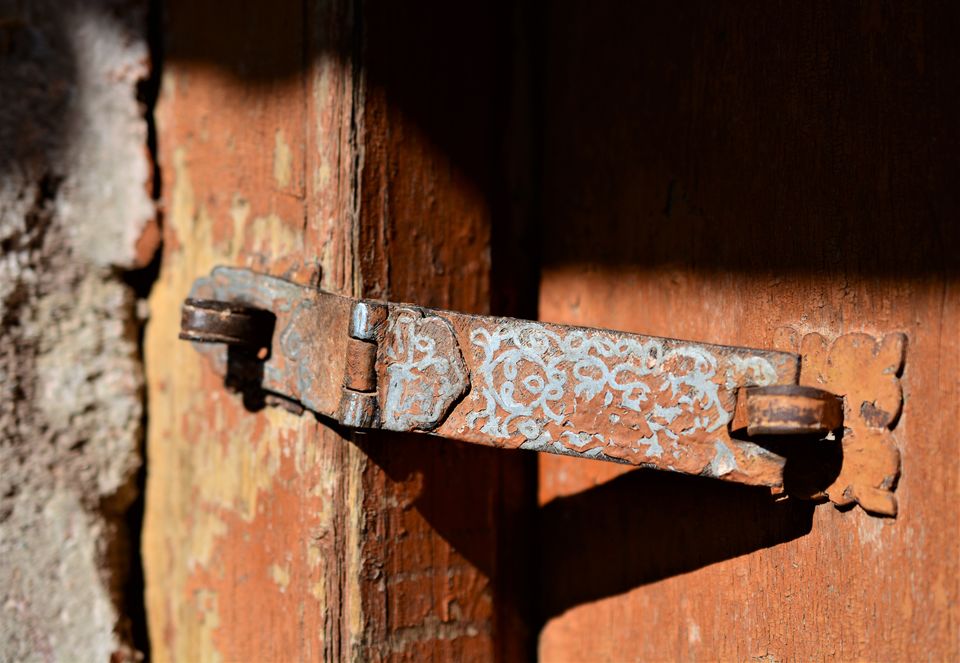
The door is latched. A shawl is placed where it can be found without looking. A child is checked once more, as if reassurance can be delivered by eyesight alone.
22:11
Light is turned off. Darkness arrives in full, the way it always does here: not as an ending, but as another kind of shelter. Tomorrow’s tasks are not listed; they are simply known.
22:26
You do not summarize the day. You do not make it mean something larger. You close your eyes, shift your weight into comfort, and reach for sleep the way you reach for a match in the morning.