


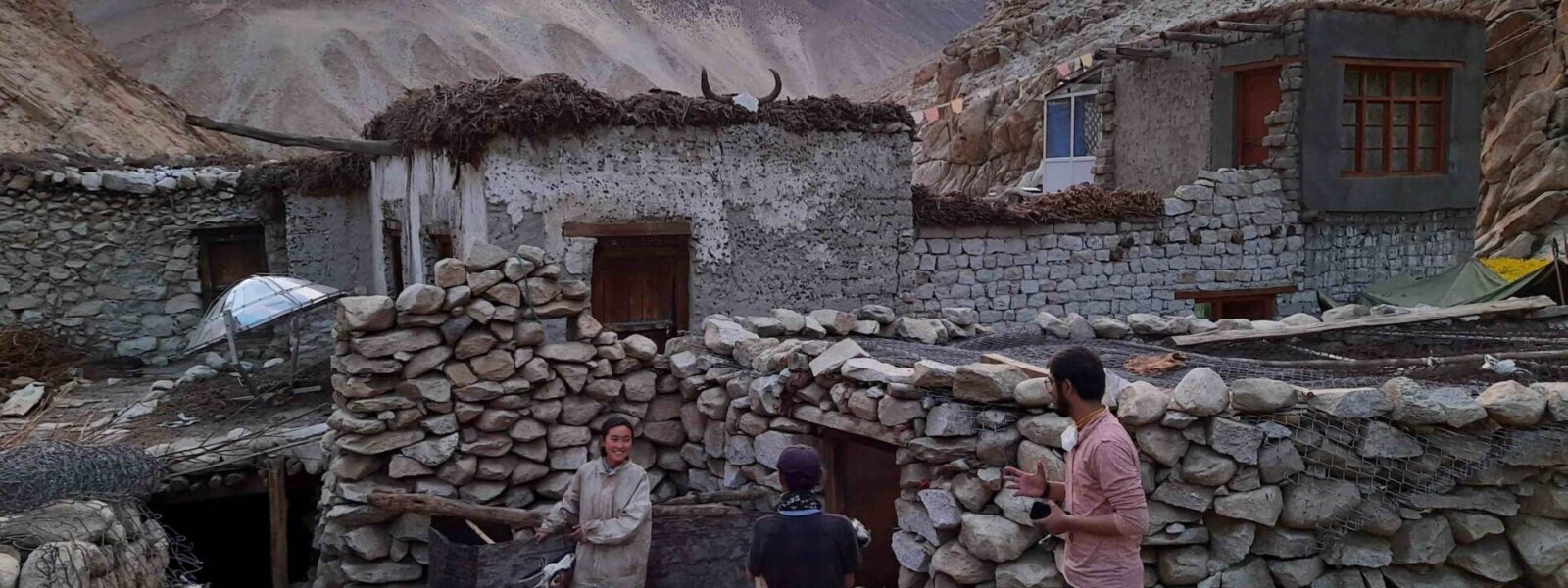
Before the Sun Finds the Courtyard
By Sidonie Morel
The Hour When Work Begins Without Witness
Darkness as a Practical Condition, Not a Metaphor
In the high villages of Ladakh, morning does not announce itself. There is no decisive moment when night gives way to day. Instead, the work begins in a dim interval when the sky still holds its color, neither black nor blue, and the ground offers only a partial outline of itself. This is not treated as a special hour. It is simply the first usable one.
Doors open quietly. Courtyards receive movement before light. The temperature is read by touch—stone underfoot, metal at the latch—rather than by any instrument. In winter the cold fixes the sequence more strictly; in summer it allows a small margin. Either way, the schedule is not dictated by sunrise but by the tasks that must be finished before the day loosens its grip.
In this early hour, no one pauses to look outward. There is nothing to check yet. Animals are already awake. Water, when it is needed, has been drawn earlier or will be drawn later, once the light improves. The darkness is not remarked upon because it does not delay the hands. It is simply one of the working conditions of mountain life.
Hands That Move Before Words Appear
Conversation comes later. In these first movements, speech would only slow the sequence. Hands reach for familiar objects without searching: a rope, a bucket, a low stool, the rim of a container smoothed by years of contact. The body knows where to stand. The animals know where to wait.
Children, if they are awake, sit without instruction. Older family members move through the same small spaces without collision. The coordination is not deliberate; it has been absorbed over time. There is no signal given to begin. Each person enters the routine when ready, and the routine adjusts without comment.
This lack of verbal direction is often mistaken, from outside, for silence as a value. It is not that. Speech is simply unnecessary here. The work itself establishes order. Once the first task is completed, words return naturally, attached to practical matters: quantities, timing, weather.
Milk Is Not a Product Here
Milking as Repetition, Not Heritage
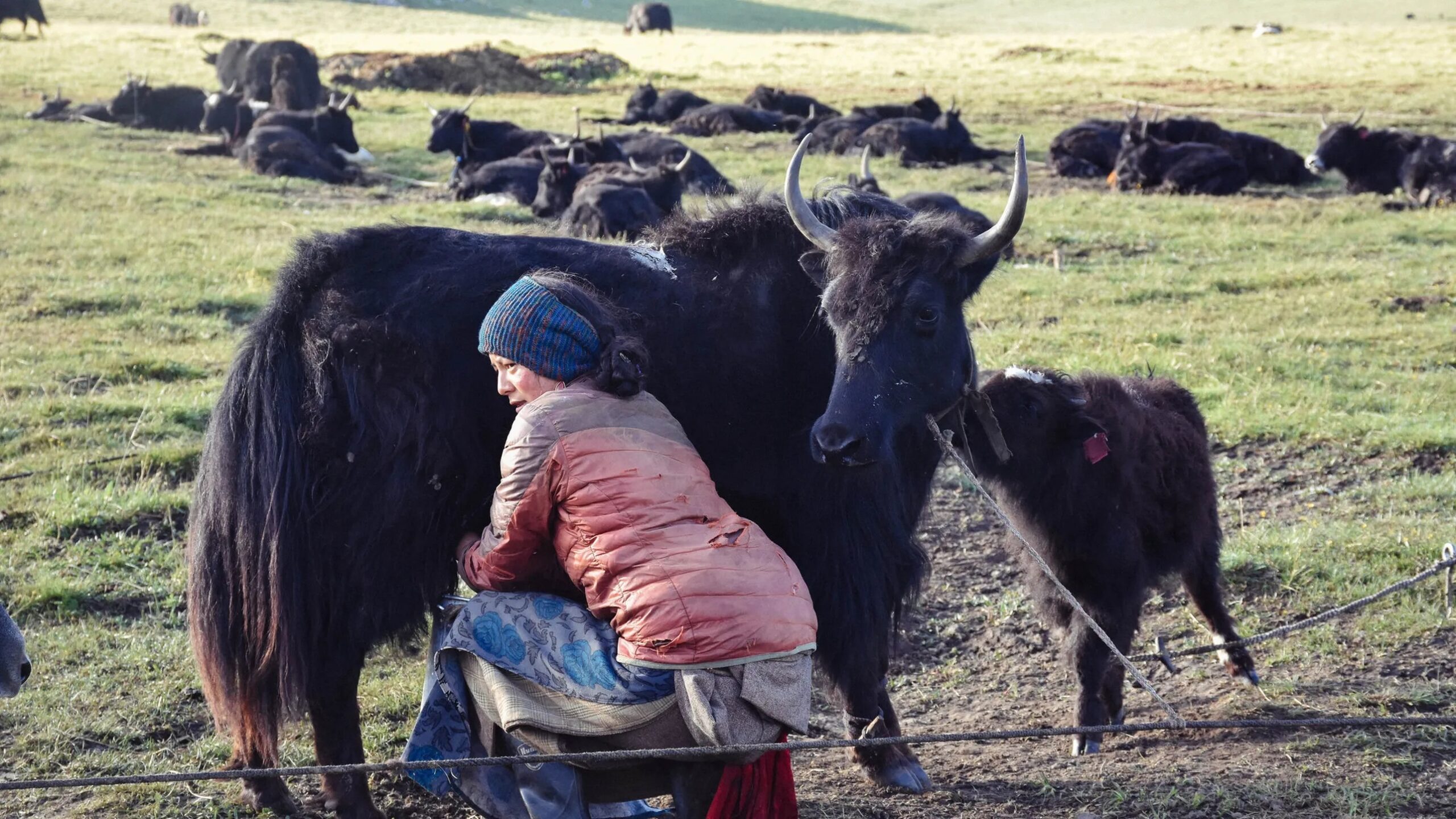
The animal is tethered in the same place it was yesterday. The position is chosen for stability, not comfort. Milking begins without ceremony. There is no emphasis placed on skill, though the work requires it. The rhythm is steady and economical, developed through repetition rather than instruction.
Milk, in this context, is not discussed as nourishment or livelihood. It is not framed as tradition. It is an immediate material that must be handled correctly. Too fast, and it spills. Too slow, and the temperature drops. The container must be clean, the timing consistent.
There is no sense of producing something for later admiration. The goal is simply to complete the task so the next one can begin. Any deviation—a restless animal, an uneven surface—requires adjustment. These adjustments are made without comment, absorbed into the sequence.
Warmth Comes After the Task
Only once the milk has been collected does fire become relevant. The hearth is prepared quickly. Fuel is selected for availability, not efficiency. Smoke gathers where it always does, curling toward the low ceiling before finding its way out.
Heat is not sought for comfort. It is applied for transformation. The pot is placed, the milk poured, and attention shifts to temperature control. Too much heat will spoil the batch. Too little will delay everything that follows.
The order is fixed: milking first, fire second, cooking third. This sequence is not flexible. It has been tested over years in a climate where mistakes are costly. The body follows it without needing to be reminded.
The Kitchen as a Working Space
Fire, Smoke, and Timing
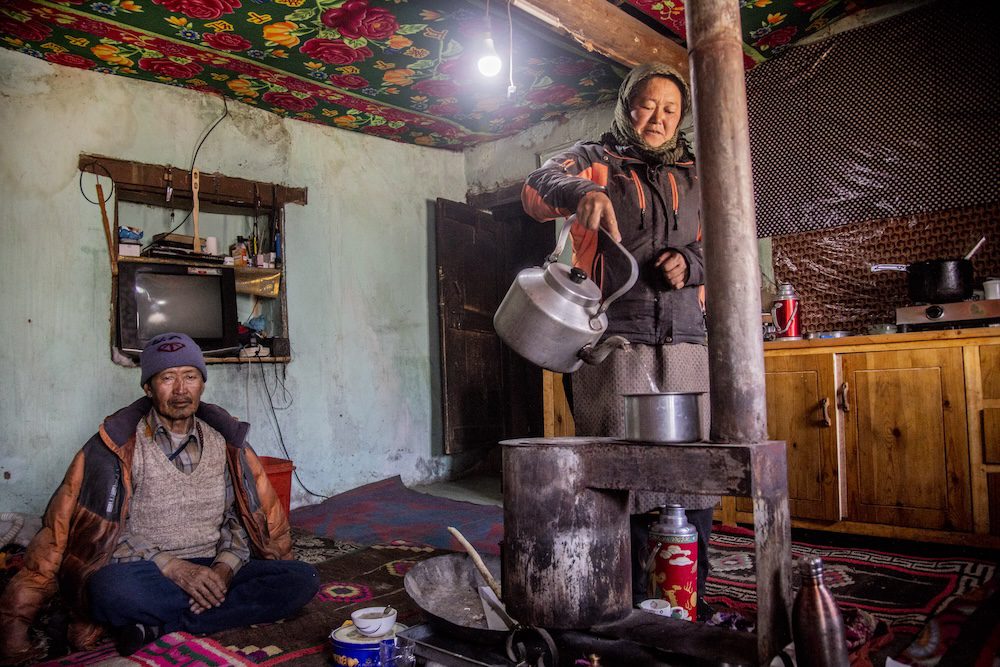
The kitchen in a Ladakhi home is not a separate room of leisure. It is a workshop. Surfaces are arranged for reach, not appearance. Utensils remain where they are most often used. The floor carries traces of ash and grain.
Smoke is accepted as part of the process. Ventilation is limited, and no effort is made to eliminate it entirely. Instead, timing is adjusted so that the most smoke-intensive tasks are finished early, before the rest of the household activity increases.
Fire management is precise. Fuel is added in measured amounts. The sound of the flame provides feedback as much as its appearance. Experience replaces measurement. The pot remains uncovered or covered depending on the desired result, and this decision is made without hesitation.
The Pot That Decides the Morning
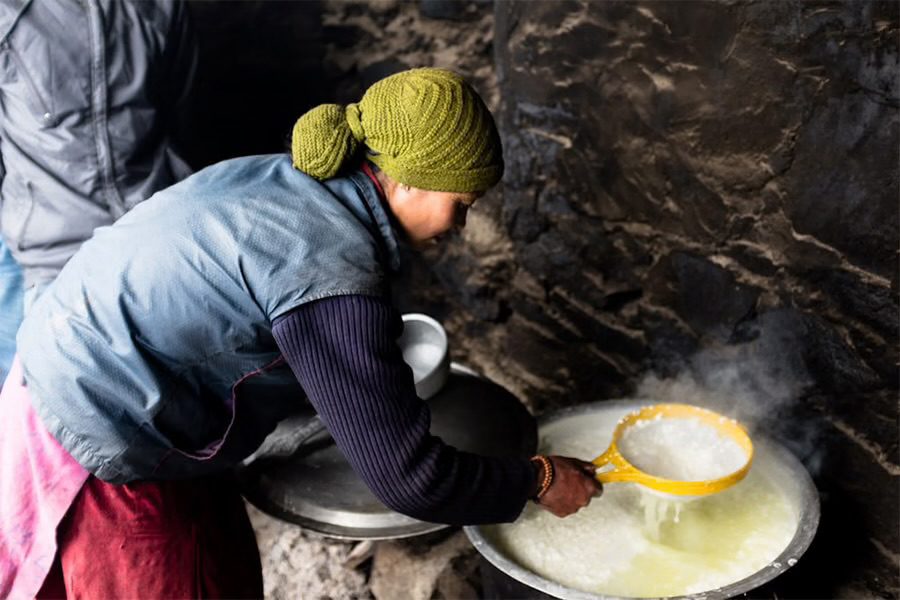
What happens in the pot determines the shape of the day. If the milk is to be consumed quickly, the process remains short. If it is meant for storage, more time is required. This choice affects when other tasks can begin.
Storage is not an abstract idea here. It is a calculation based on current supply, expected demand, and weather patterns that may disrupt access. The pot becomes a point of decision-making, not through discussion but through action.
Once the contents are set aside, the morning opens slightly. Other tasks—repairing tools, preparing animals for grazing, organizing supplies—can proceed. Until then, attention remains fixed on the pot.
Nothing Is Rushed, Nothing Is Delayed
Why Efficiency Is the Wrong Word
From the outside, the pace of work in Ladakh is often described as slow. This is inaccurate. Tasks are completed as quickly as conditions allow, no faster and no slower. Efficiency, as it is commonly understood, assumes flexibility in time. Here, time is constrained by temperature, altitude, and daylight.
There is no benefit in haste. Moving faster does not increase output if it compromises the process. Moving slower risks spoilage. The correct pace is discovered through experience, not calculation.
This rhythm resists comparison. It does not align with urban notions of productivity, nor does it lend itself to romantic interpretation. It is simply the pace at which the work holds together.
Weather as a Silent Supervisor
Weather is not discussed at length. It is observed and accounted for. A shift in wind direction alters drying times. A drop in temperature changes cooking duration. These adjustments are made without announcement.
Looking at the sky is a functional act. It informs decisions about grazing, travel, and storage. There is no attempt to predict beyond what is immediately relevant. Long-term planning exists, but it is grounded in accumulated observation rather than forecast.
The weather supervises without intervening. It sets limits that are respected without complaint.
What Remains After the Morning Is Finished
Stored Milk, Stored Time
Once the milk has been processed and stored, it represents more than food. It holds time. It reduces pressure on future mornings. It allows for flexibility when conditions change unexpectedly.
Storage spaces are modest but carefully maintained. Containers are checked regularly. Any sign of spoilage prompts immediate action. Waste is avoided not as a moral stance but as a practical necessity.
The stored milk does not draw attention to itself. It waits, quietly extending the usefulness of earlier labor.
A Day That Does Not Call Itself a Story
By mid-morning, the courtyard fills with light. The tasks completed before dawn are no longer visible. What remains are ordinary movements: walking, lifting, sorting. The earlier work has already done its job.
There is nothing here that presents itself as narrative. No single moment stands out. Yet the day proceeds smoothly because its foundation was laid early, without witnesses.
This is how most days unfold. They do not seek recognition. They simply accumulate, shaping a way of living that persists through repetition.
Why This Way of Living Does Not Ask to Be Admired
Seen From Outside, Lived From Inside
From a distance, such mornings are often framed as austere or admirable. From within, they are neither. They are necessary. The work does not aim to demonstrate resilience or simplicity. It aims to meet needs under specific conditions.
The gap between these perspectives is wide. Labels applied from outside fail to account for the constant adjustment required. Admiration, when offered, tends to flatten what is in fact highly responsive and precise.
Living inside this rhythm leaves little room for reflection during the work itself. Reflection comes later, if at all.
Hands Remember What Words Forget
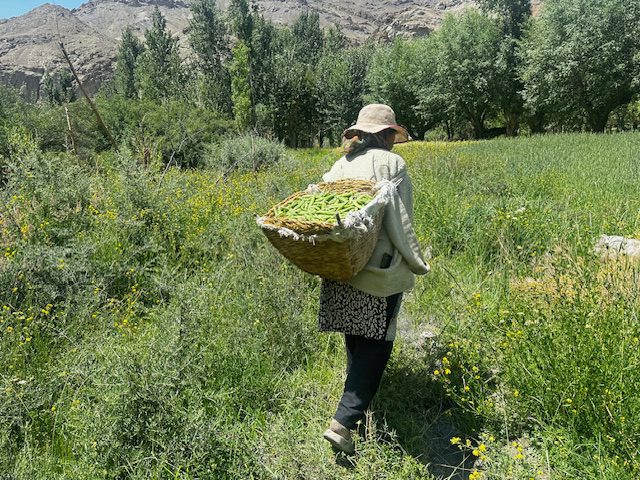
The knowledge that sustains this routine is not recorded. It is carried in hands that know how much pressure to apply, when to add fuel, when to wait. Words are insufficient to transmit these details.
Over time, the landscape reflects this accumulation of labor. Paths form where people walk. Walls rise where materials are repeatedly handled. The environment bears the imprint of daily decisions.
Nothing about this process demands attention. It continues because it works.
a storytelling collective exploring the silence, culture, and resilience of Himalayan life.