
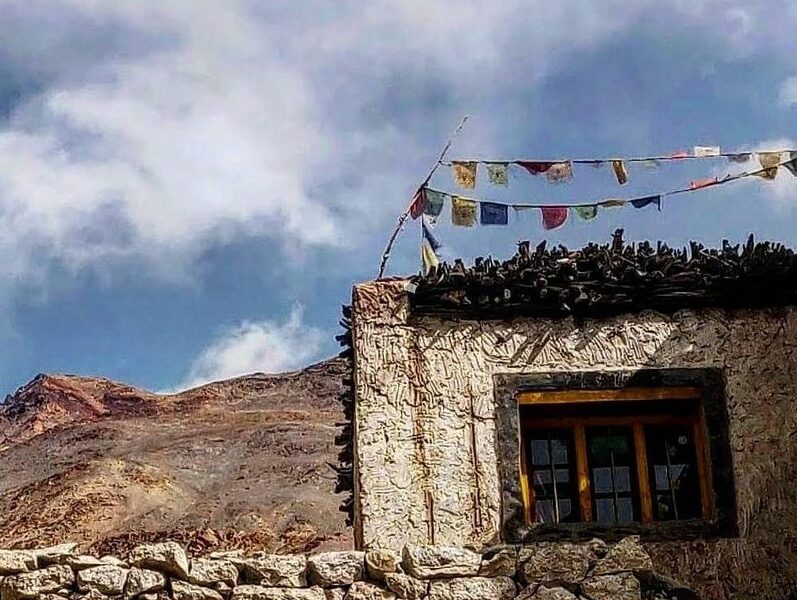
In a world where people live in air-conditioned towers and rarely see stars, there exists a land where humans still wake with the sun and sleep with the mountains. This is Ladakh – a high-altitude desert where the ancient rhythms of life continue, offering us a mirror to see how far modern society has drifted from its natural foundations.
The people of Ladakh have a unique relationship with nature, deeply rooted in their culture and traditions. For generations, they have coexisted with the environment, relying on its resources for sustenance and livelihoods. Here, in the cold desert of the Trans-Himalayas, we witness something increasingly rare: humans living as part of nature rather than separate from it.
About occupation of people in Ladakh, 90% of them depend on agriculture based on the Indus River for their livelihood. Unlike the disconnected urban dweller who sees food as something that appears on supermarket shelves, Ladakhis understand their dependence on every drop of glacier meltwater, every handful of barley, every season’s careful balance. Traditional irrigation techniques, such as the use of glacier meltwater, ensure that farming remains possible even in this arid landscape.
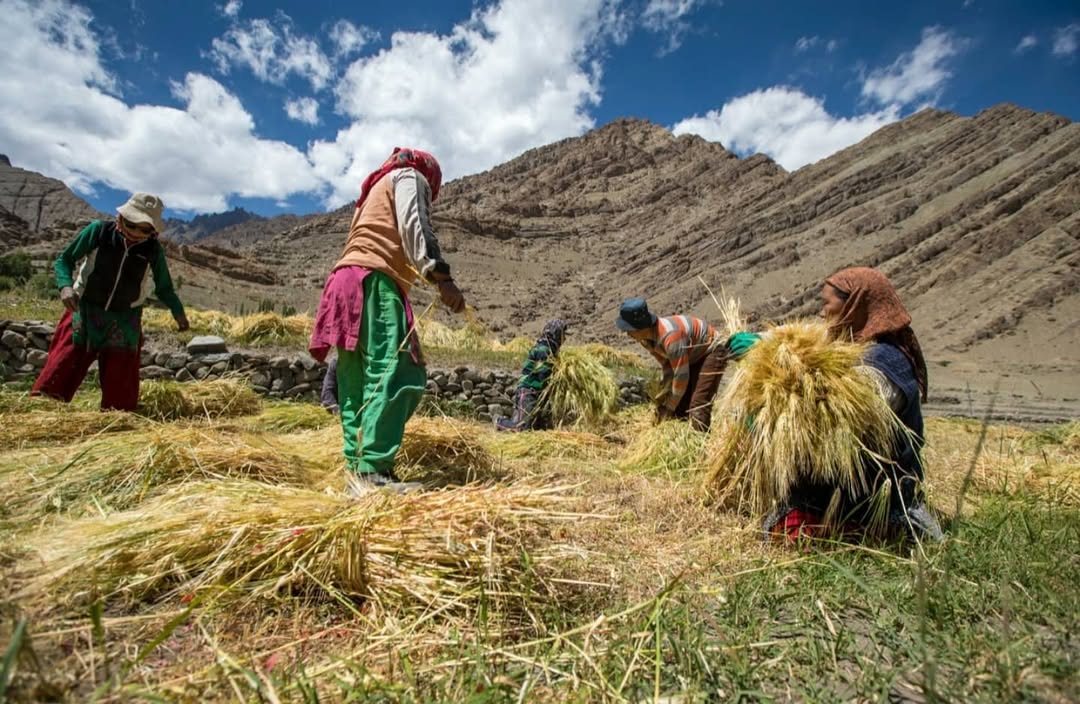
But this traditional way of life faces unprecedented pressure. In Ladakh, Himalayan India, mass tourism and recent political changes have triggered a particularly rapid transition from traditional subsistence farming to market-oriented production, raising concerns about the sustainability of changing land management practices, cultural identity, and growing dependence on external inputs. The irony is striking: as city dwellers worldwide seek ‘digital detoxes’ and ‘nature retreats,’ one of the world’s last authentically nature-connected societies is being pulled toward urbanization.
Walk through Leh today and you’ll see the transformation happening in real time. Rapid urbanization, infrastructure development, and tourism have brought both opportunities and challenges to the region, testing the resilience of its cultural heritage. Young Ladakhis, once content to follow seasonal rhythms that had sustained their ancestors for millennia, now migrate to towns seeking modern opportunities. Many younger Ladakhis are moving to urban areas like Leh, leaving older generations in rural locations, leading to changes in family structures and community interactions.
What makes this shift particularly poignant is what Ladakh represents. This is a place where For generations, the Ladakhis and the natural ecosystem have coexisted on almost every level. Additionally, human settlement patterns, seasonal migrations, and grazing methods are all influenced by Ladakh’s animals, all of which promote harmony between humans and the environment. It’s a living example of what anthropologists call ’embedded’ existence – life where human needs and natural cycles are so intertwined they cannot be separated.
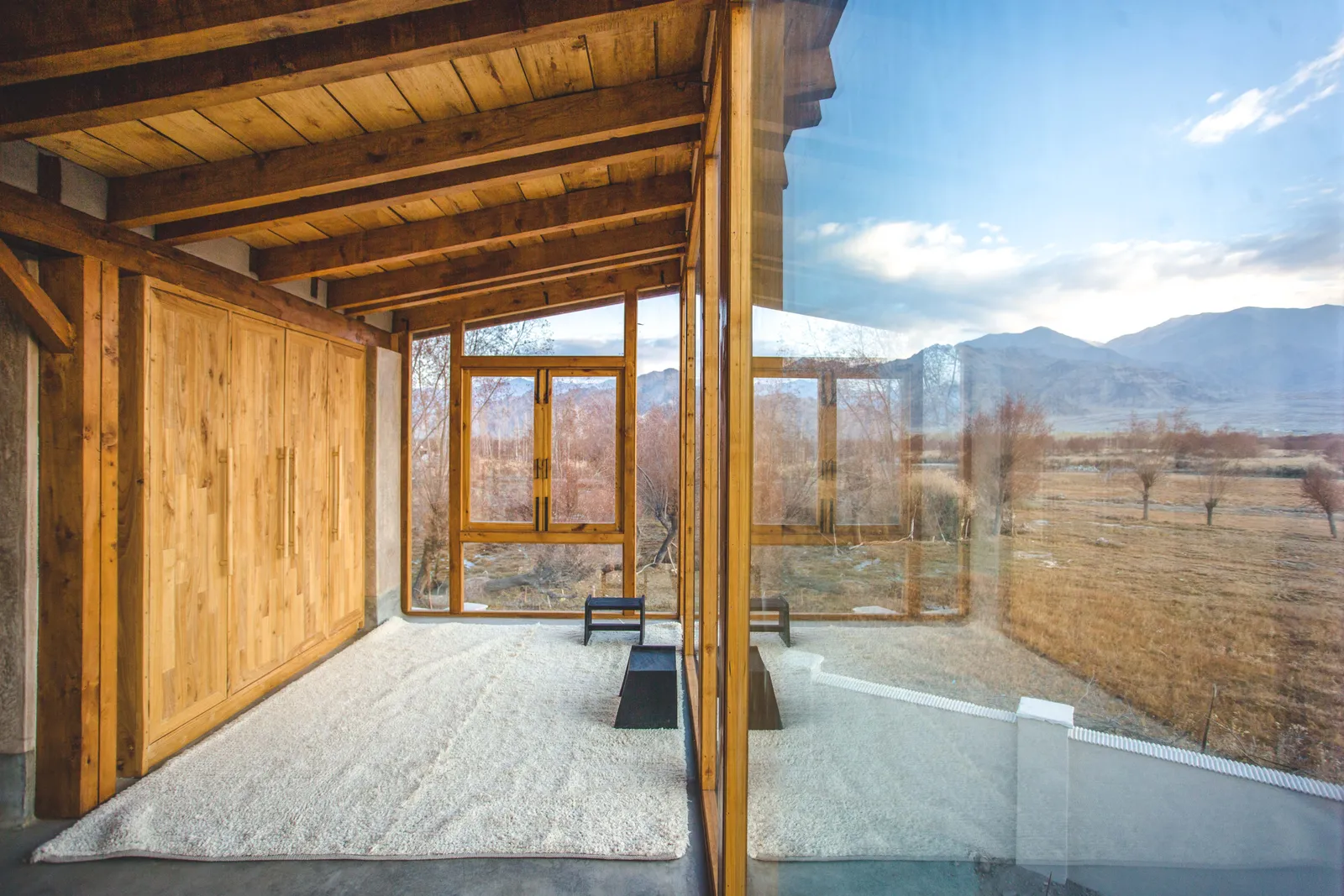
Consider the traditional Ladakhi house, built from local materials and designed to work with, not against, the harsh environment. A great sensitivity of the environment is evident in the homes in the neighbourhood, which are built to retain as much heat and sunlight as possible. Compare this to modern urban buildings that require massive energy inputs to maintain comfortable temperatures, sealed off from natural light and air.
The high-altitude environment of Ladakh has shaped not just architecture, but entire ways of thinking. Long winters and few supplies have encouraged cooperation, patience, and resilience. In the past, villages were close-knit communities where survival depended on collaboration. Contrast this with urban environments where neighbors often don’t know each other’s names, where individual consumption takes precedence over community resilience.
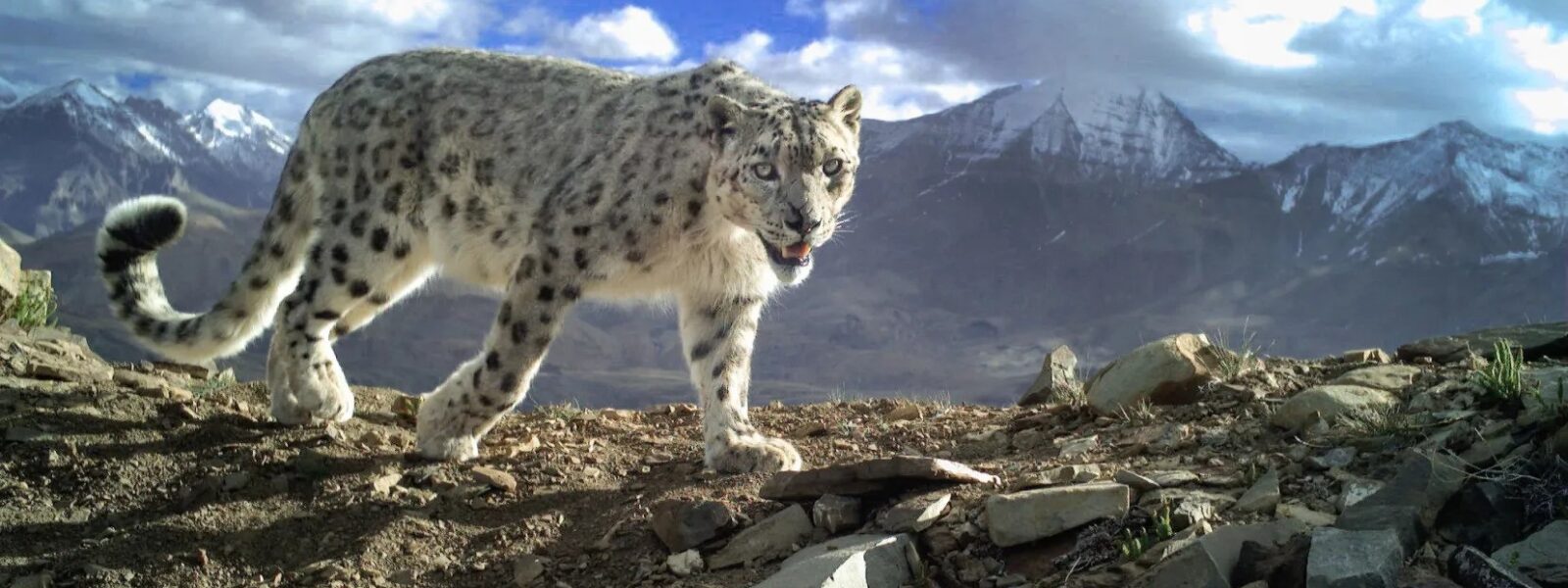
Perhaps nowhere is the difference more stark than in humanity’s relationship with other species. Instead of being viewed as pests, species like the Himalayan ibex and snow leopard are believed to survive with humans. Such cohabitation reflects a long-standing, multigenerational understanding of the environment. Meanwhile, in most modern cities, wildlife is either completely absent or seen as a nuisance to be controlled.
Ladakh’s festivals and daily rhythms remain tied to natural cycles. Festivals celebrated in Ladakh are either harvest related or socio-religious by nature. People celebrate when barley is ready, when animals return from high pastures, when the harsh winter finally breaks. In contrast, modern urban life has created its own artificial rhythms – fiscal quarters, shopping seasons, vacation periods – disconnected from the natural world that ultimately sustains all human life.
The region’s wildlife tells a similar story of adaptation and connection. For such an elevated, arid area, Ladakh has great diversity of birds — 318 species have been recorded (including 30 species, in the 21st century, not seen since 1960). These creatures have evolved remarkable adaptations to thrive in extreme conditions, much like the traditional Ladakhi culture itself.
Yet even here, change accelerates. As Ladakh moves toward a cash-based economy, foods from the plains of India are becoming more common. The shift from Local dairy, barley, and preserved vegetables are essential components of sustainable eating habits to imported foods parallels the global trend toward long supply chains and processed foods.
What can the rest of the world learn from Ladakh before this knowledge is lost? The traditional Ladakhi way of life offers more than romantic nostalgia – it provides practical wisdom for an increasingly unstable world. From innovative water management techniques to traditional farming that promote agroecology, there is a growing move towards sustainability that is deeply rooted in Ladakhi culture.
The distance between modern urban life and nature isn’t just physical – it’s psychological, spiritual, and practical. We’ve created systems that make us forget our fundamental dependence on clean air, fresh water, healthy soil, and stable climate. Ladakh reminds us that humans can live differently, that we can be participants in natural systems rather than their dominators.
As tourists flock to Ladakh seeking the ‘authentic’ experience their own lives lack, they bring both opportunity and threat. By observing foreign tourists on vacation, the Ladakhis – the young Ladakhis in particular – easily come to believe that all Westerners are rich, that they work very little, and that the West is a paradise of consumer goods. Young people begin to despise the thinking of their parents and rush to embrace whatever is seen as modern.
The question facing Ladakh – and the world – is whether we can find balance. Can modern development occur without severing the deep connections between humans and nature? Can Ladakhis maintain their environmental wisdom while accessing modern healthcare and education? Can the rest of us learn from their example before it’s too late?
Yet, amidst these changes, the people of Leh Ladakh remain steadfast in their commitment to preserving their way of life. Community initiatives, such as the Ladakh Autonomous Hill Development Council’s efforts to promote sustainable tourism, aim to strike a balance between economic progress and cultural preservation.
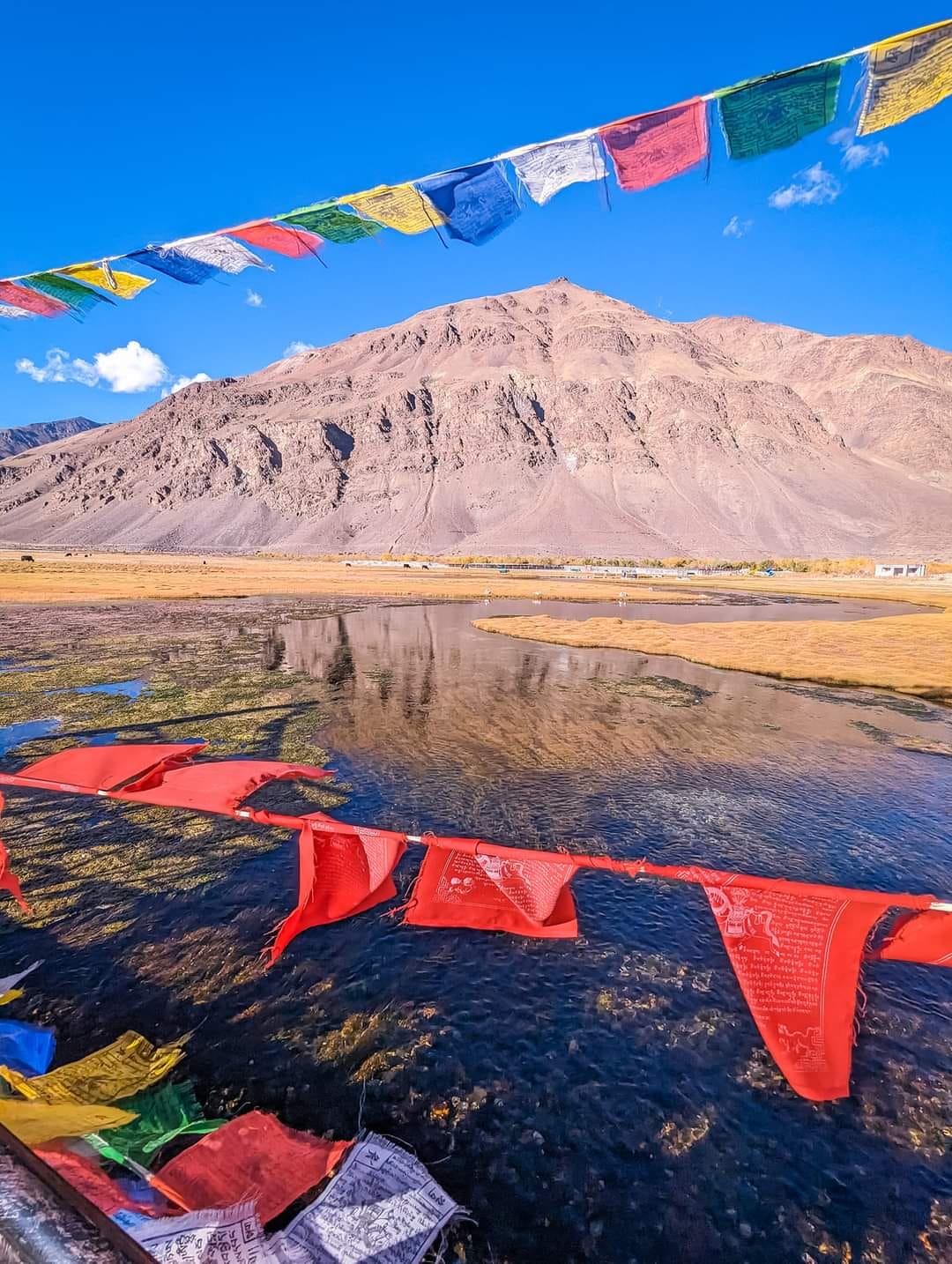
Ladakh stands at a crossroads, and so do we all. In this high-altitude desert where humans still live in rhythm with natural cycles, we can see both what we’ve lost and what might still be possible. The distance between modern life and nature is not inevitable – it’s a choice. Ladakh shows us there’s another way to live, if we’re wise enough to listen before the mountains’ ancient wisdom is drowned out by the noise of our disconnected world.