
Along the Road Where Mountains Remember Us
By Declan P. O’Connor
Opening: A Corridor Shaped by Wind, Faith, and the Simple Motion of Travel
Where the First Bend Changes the Way You See Distance
The Lamayuru–Pashkum Heritage Corridor does not ask for devotion, yet it quietly earns it. This stretch of NH-1, connecting one ancient horizon to another, is a place where the wind cuts clean across exposed ridges and tiny chortens whisper toward you from the roadside. The journey begins where the Himalayan spine folds into ochre cliffs, and villages reveal themselves one by one as if performing a sequence. Even at speed, the landscape requests a slower gaze: sun-worn monasteries, barley terraces, and lone houses leaning toward the road. The primary keyword flows gently here, as naturally as the way villages along this heritage corridor look outward toward passing travellers.
The Encounter Between Movement and Stillness
Long before engineers carved the present highway, this corridor carried monks, merchants, and families who moved between Leh and the western lowlands. Their footpaths stitched the same line we now drive. To travel this route thoughtfully is to join that lineage, acknowledging the rhythm of Buddhist devotion that radiates from cliffside monasteries or from a single doorway shaded by apricot trees. It is a corridor that grants perspective without insisting on revelation, holding you between constancy and flux as the kilometers unfurl.
Why This Road Is More Than a Road
The villages along this corridor—Lamayuru, Heniskot, BudhKharbu, Wakha, Mulbekh, Shargole, and Pashkum—form a continuous chain not because they resemble each other but because they speak to the traveller with the same open, linear grace. Each faces the roadside directly, as though in conversation with every truck, pilgrim, and wanderer who passes. Their placement is no accident: water flows near just long enough for life to root itself, and devotion follows, shaping gompas into the folds of cliff pillars and caves.
The Geography of Connection: How Villages Grow Along a Single Thread
A Ribbon of Human Settlement
The Lamayuru–Pashkum Heritage Corridor stretches across a transitional zone between the harsher plateau and the softer river-worn valleys beyond it. Villages rarely hide here. Instead, they align themselves with the road, houses and fields arranged in long, visible lines. This transparency allows travellers to watch daily life unfold—children walking home from class, elders threshing barley, monks carrying water pots from streams that drop through narrow ravines.
The Road as a Binding Force
NH-1 does not merely pass through these settlements; it shapes them. The corridor functions as a shared spine, enabling trade, pilgrimage, education, and healthcare. Yet it also preserves the isolation that lends Ladakhi culture its resilience. The primary keyword works quietly here: the heritage corridor is not constructed for spectacle but for endurance, allowing one generation after another to remain rooted while being connected to the broader region.
Landscape as a Participant
Steep mountains close in tightly near Lamayuru, then open into calmer horizons approaching Mulbekh and Pashkum. The land performs a subtle choreography—cliffs rising like organ pipes, caves revealing religious murals, footpaths climbing toward hermitages. Each change in terrain signals how the next village will live: pressed against slopes, stretched along open terraces, or tucked beneath a monastery perched above cracks of vertical stone.
Village Portraits: Seven Lives Woven Into One Corridor
Lamayuru: A Village Rising Out of Moon-Carved Earth
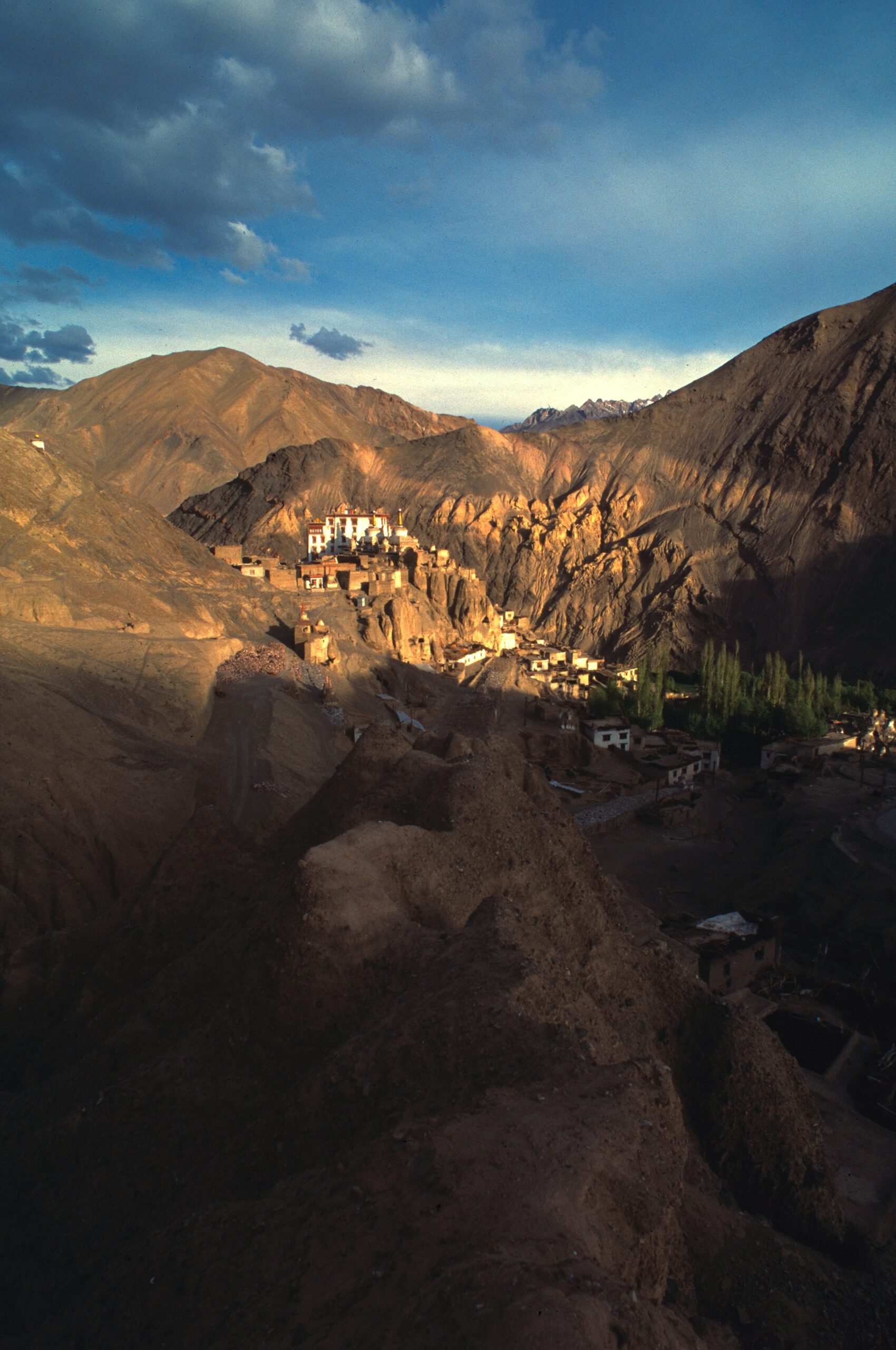
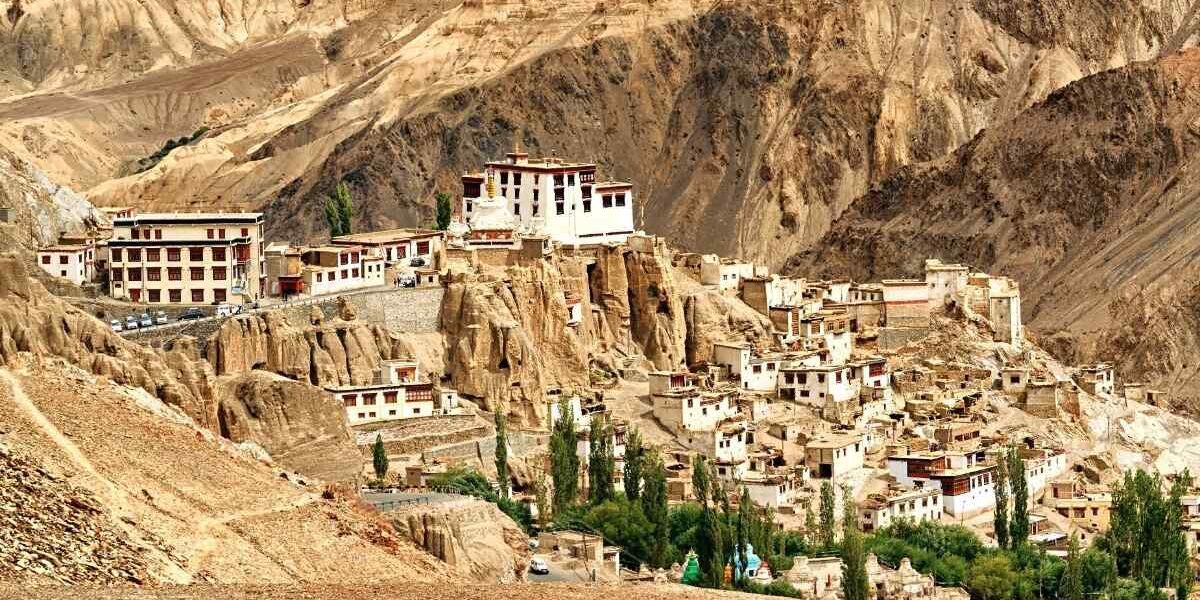
Lamayuru sits at the western threshold, its Moonland formations sculpted into improbable folds that appear almost molten in afternoon light. The monastery hovers above the highway like a guardian. Houses cling to ridges, and the road cuts directly through the village center, letting travellers watch villagers tending to roof beams or carrying hay bundles. This beginning sets the emotional register for the entire heritage corridor: ancient, open, and quietly dramatic.
Heniskot: A Settlement Leaning into the Mountain’s Shoulder
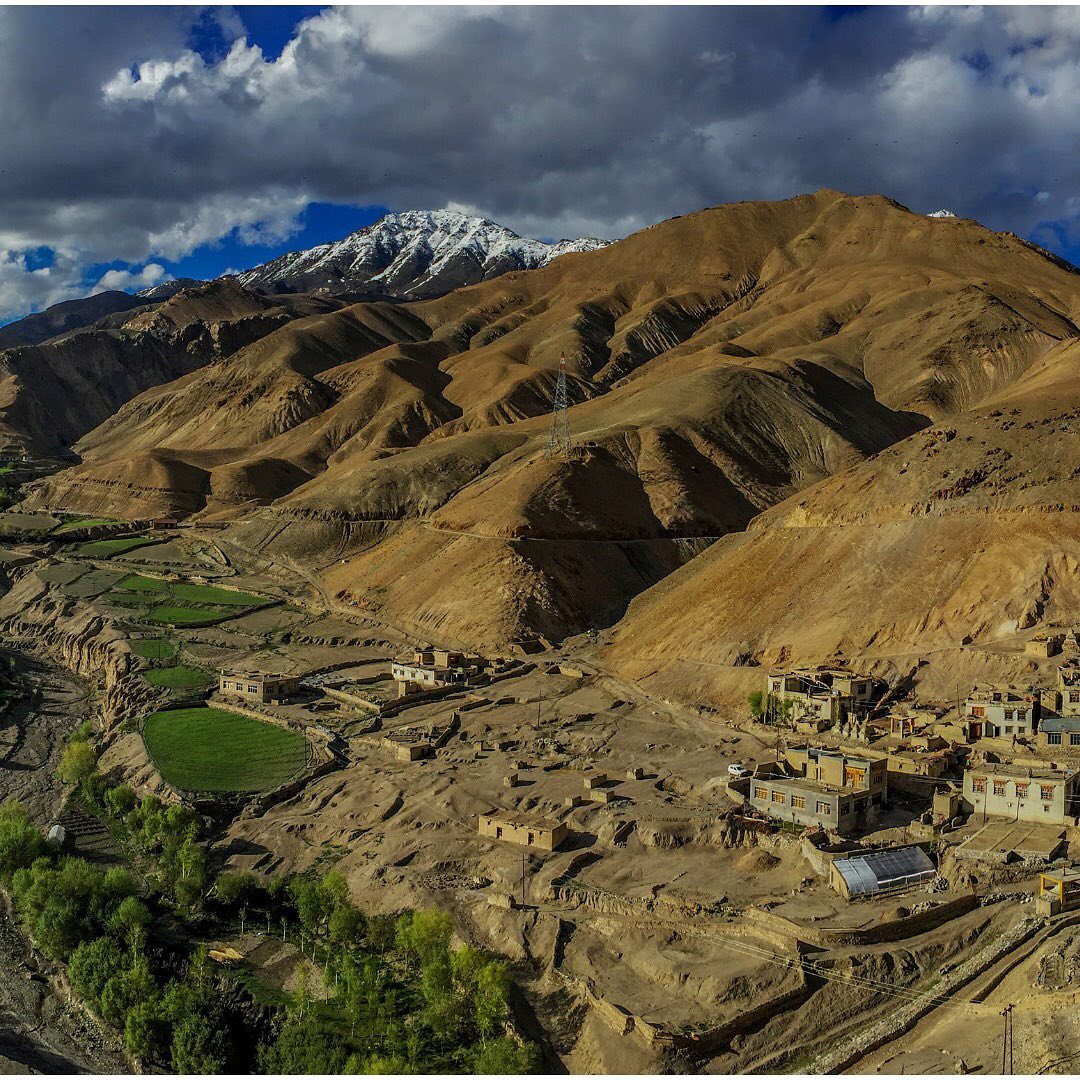
Descending the pass from Lamayuru, the village of Heniskot reveals itself abruptly. Here, NH-1 runs beside fields that shimmer in summer winds. Homes sit close to the road, allowing the rhythm of village life to meet the traveller without pretense. The intimacy of this settlement marks the first reminder that the corridor is not a sequence of attractions but of lived spaces, shaped by altitude, agriculture, and faith.
BudhKharbu: A Roadside Hub Watched Over by an Old Monastery
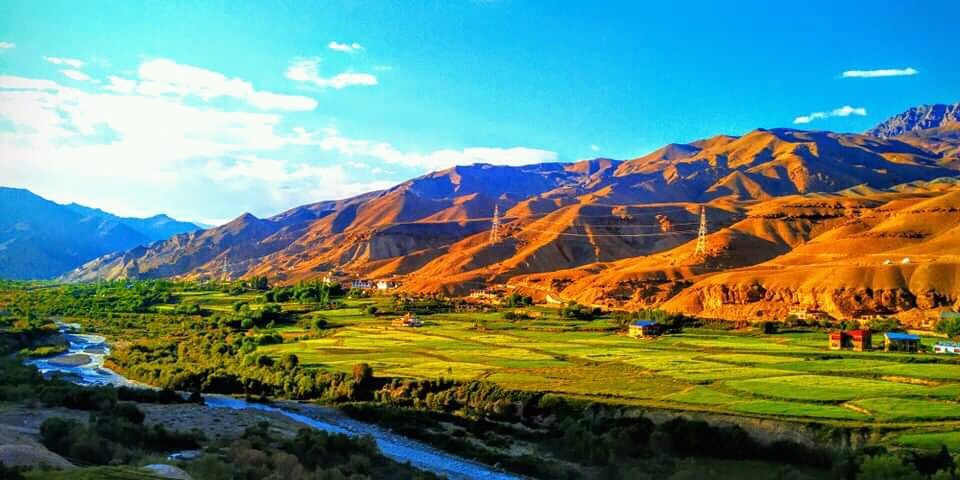
BudhKharbu is modest but essential. From its gentle slopes rises a small, timeworn monastery—an emblem of village spirituality rather than monumental grandeur. Its murals and relics, touched by centuries of devotion, represent the quieter side of Buddhist life here. This settlement often becomes a pause point for those crossing between valleys, making the village a soft hinge in the corridor’s arc.
Wakha: A Long Valley Softening the Corridor’s Tone
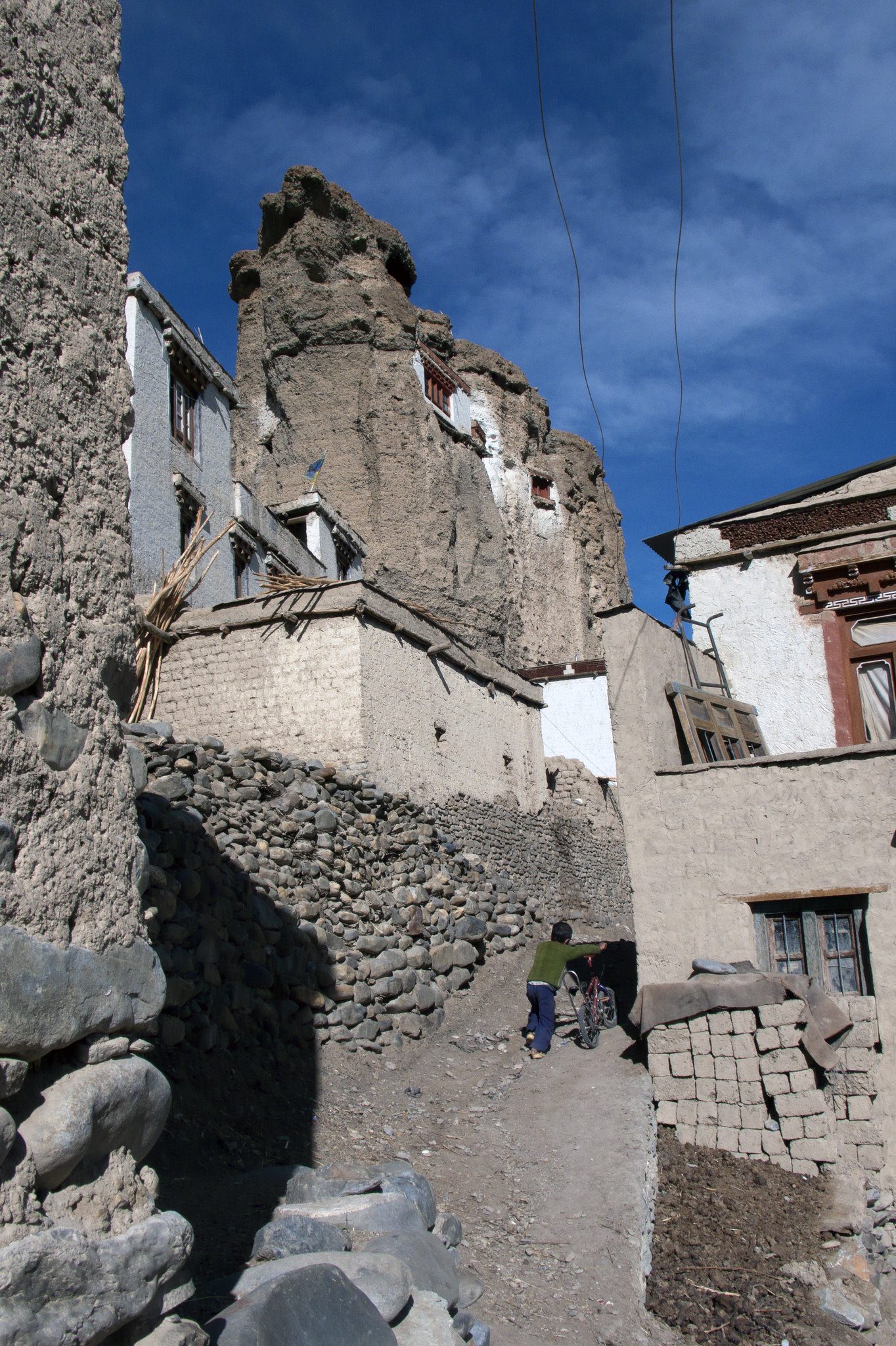
Just east of Mulbekh, Wakha stretches along a light-filled valley where the land opens after narrower sections of the road. Above the village stands a monastery perched on columnar cliffs—pillars shaped by erosion that lift the structure high into a ceremonial sky. It is a gesture of verticality in a place otherwise defined by horizontal grace. Travellers often remember Wakha not for its scale but for its gentleness.
Mulbekh: Where the Stone Maitreya Greets Every Traveller
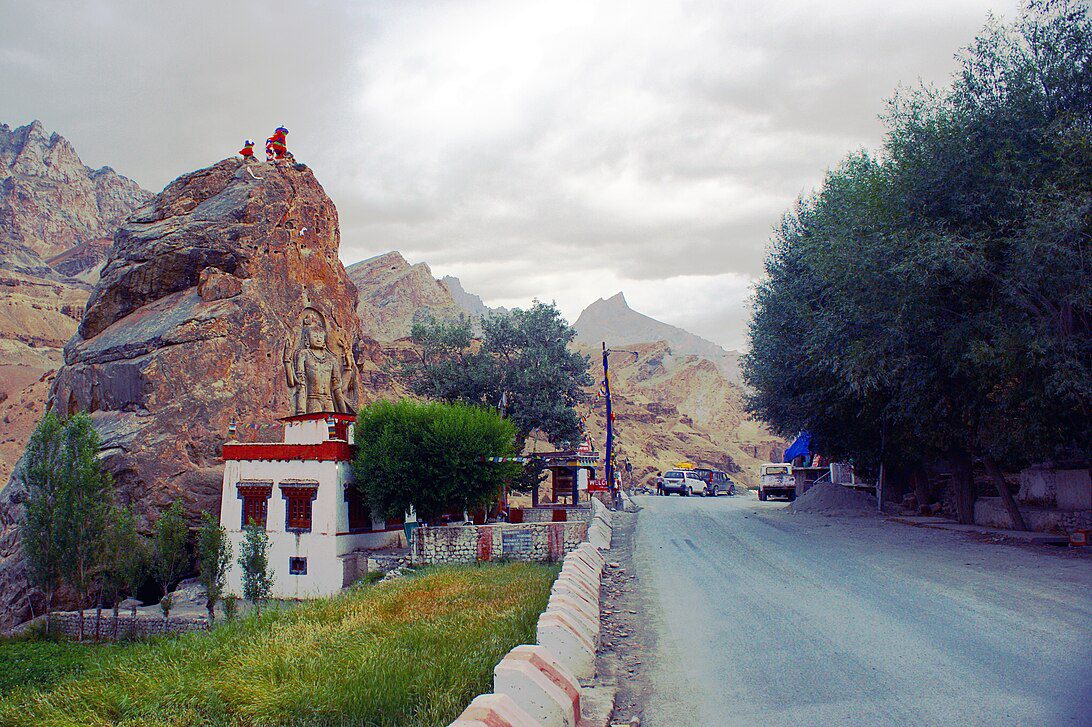
Mulbekh anchors the corridor. The colossal rock-carved Maitreya, standing solemnly beside the highway, symbolizes a thousand-year conversation between landscape and faith. Shops, cafés, and homes line the road, making the village a crossroads for pilgrims, soldiers, and visitors moving between directions. The heritage corridor feels most concentrated here, where devotion and daily life intertwine seamlessly.
Shargole: A Village Introduced by a Cave Temple in the Cliff

Shargole is famous for its cave monastery—a small sanctum suspended on a vertical wall of ochre stone. From NH-1, the temple appears almost mythical, tucked into a cleft with improbable balance. The village itself sits just beyond, with houses and fields easily visible from the road. It is one of the corridor’s most striking encounters between human presence and dramatic geology.
Pashkum: A Fortress of Ruins Opening the Eastern Gate
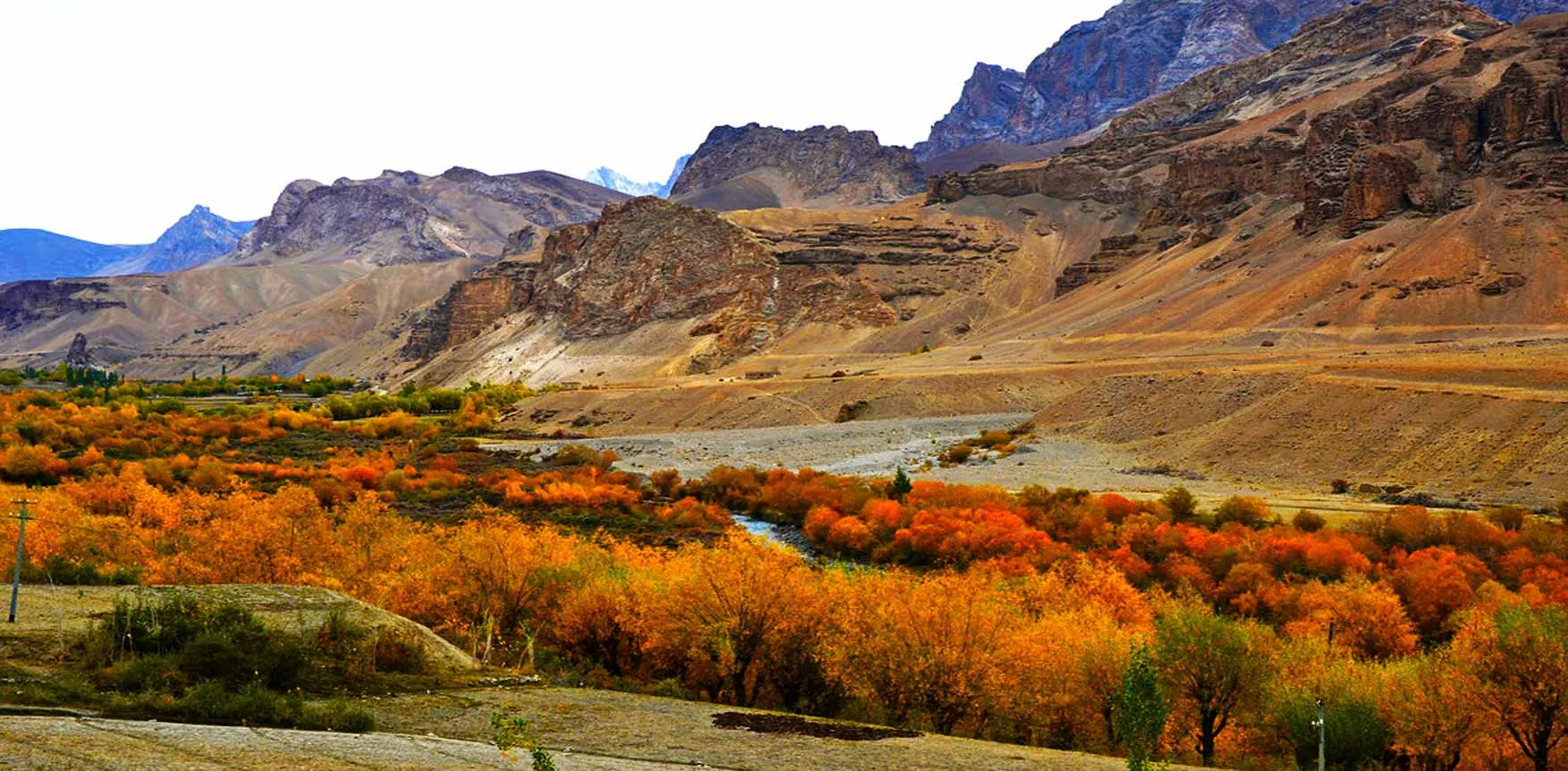
Pashkum closes the corridor with theatrical force. Crumbled fort walls rise above jagged rock towers, overlooking the village stretched along the road. These ruins do not dominate so much as watch—quietly observing travellers heading toward Kargil. The mixture of desolation and continuity gives Pashkum a mood unlike any other settlement in the chain.
The Cultural Weave: How Faith and Daily Life Shape the Corridor
Monasteries as Anchors
Across the corridor, gompas serve as spiritual footholds. Their placement is intentional—on cliffs, in caves, or at village edges. They form a network of devotion that has guided local life for centuries. Each monastery offers a vantage point that turns the settlement below into a living mandala.
Agriculture in Narrow Margins
Fields appear where water allows. Barley, peas, and mustard thrive in small terraces pressed against the road. Travellers passing through witness agriculture practiced at its most resilient: short growing seasons, careful irrigation, and communal harvesting that defines the corridor’s social rhythm.
Shared Rituals, Shared Landscape
Festivals and religious ceremonies do not isolate villages; they bind them. The corridor becomes a shared cultural artery, hosting foot processions, prayer gatherings, and seasonal rituals echoing from one settlement to another.
Traveling the Corridor: Beyond the Windshield
Walking Short Distances
The most revealing way to experience the corridor is to step out of the vehicle. Even a half-kilometer walk exposes layers unseen from a seat: the smell of fresh dung fuel, the chatter of children, the murmur of irrigation channels slipping under footbridges.
Visiting Small Monasteries
While large monasteries capture attention, it is the modest ones—BudhKharbu’s hilltop shrine or Wakha’s cliffside temple—that reveal the corridor’s emotional core. These places speak gently, offering intimate glimpses into village devotion.
Reading the Landscape Slowly
Every shift in terrain carries meaning. Tight valleys signal older, enclosed communities; wide terraces indicate periods of agricultural expansion. A traveller who watches these transitions gains a deeper sense of the corridor’s long evolution.
The road may move you forward, but the villages ask you—quietly—to remain still for a moment longer.
Practical Notes for a Thoughtful Visitor
Distance and Pace
Although the corridor can be crossed quickly, its essence emerges only when approached slowly. Each settlement deserves a pause—brief or extended.
Respecting Local Spaces
Monasteries and homes open toward the road, but this openness asks for discretion. Visitors should step lightly, speak softly, and observe respectfully.
Seasons and Moods
Summer brings greenery to valley floors; autumn spreads gold across fields; winter reveals the corridor’s bones. Each season changes how the heritage corridor feels and moves.
Conclusion: What the Corridor Leaves With You
The Lamayuru–Pashkum Heritage Corridor offers a journey shaped more by conversation than spectacle. Villages appear, speak briefly, and recede. Monasteries stand watch. The road binds it all together. What remains afterward is a sense that landscapes—when inhabited with devotion and humility—can tell stories more enduring than any one traveller’s memory.
FAQ
What is the best way to travel the corridor?
On the road with frequent stops in villages and monasteries.
How long does the route take?
A few hours, longer if travelled slowly and thoughtfully.
Is the corridor suitable for first-time visitors?
Yes, its scenery and culture are accessible and welcoming.
Are monasteries open to visitors?
Most are open, though quiet respect is expected.
When is the best season to visit?
Late spring to early autumn offers the most comfortable conditions.
Final Note: Travel here with patience. The corridor responds best to those who let each village speak in its own time.
Declan P. O’Connor is the narrative voice behind Life on the Planet Ladakh, a storytelling collective exploring the silence, culture, and resilience of Himalayan life.