
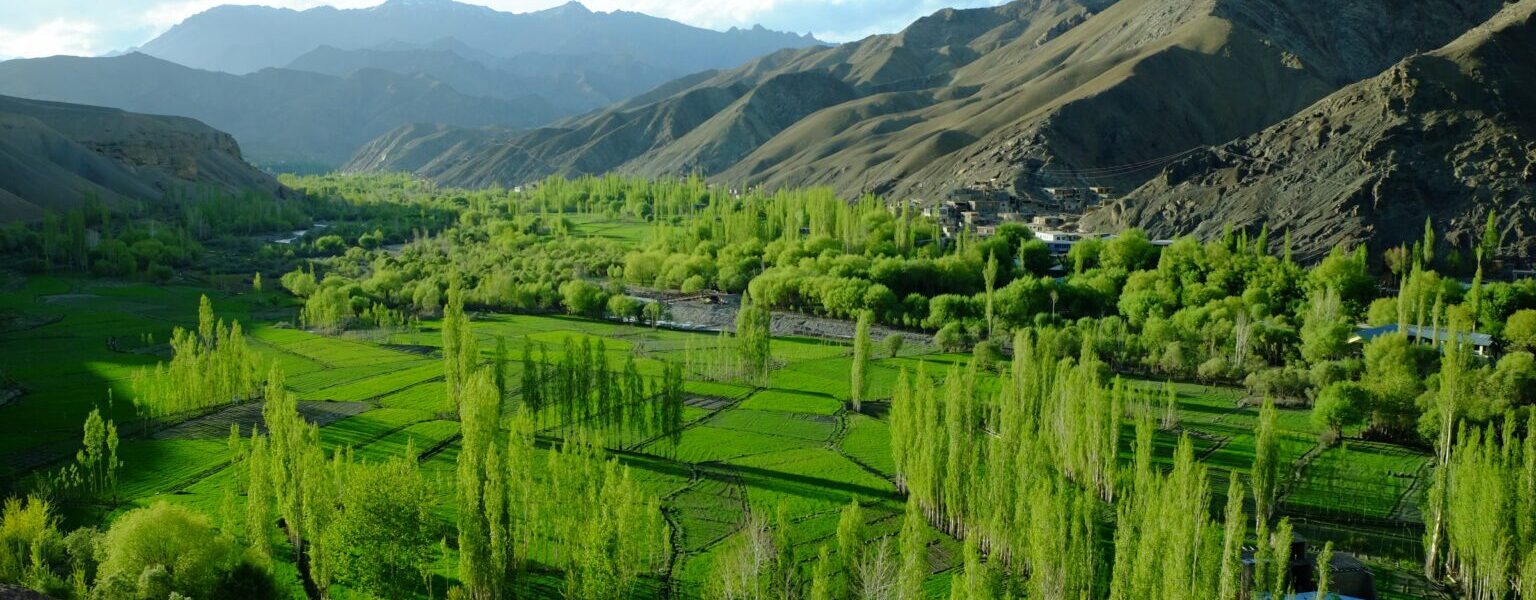
In Ladakh, enough is not a compromise. It is a way of seeing.
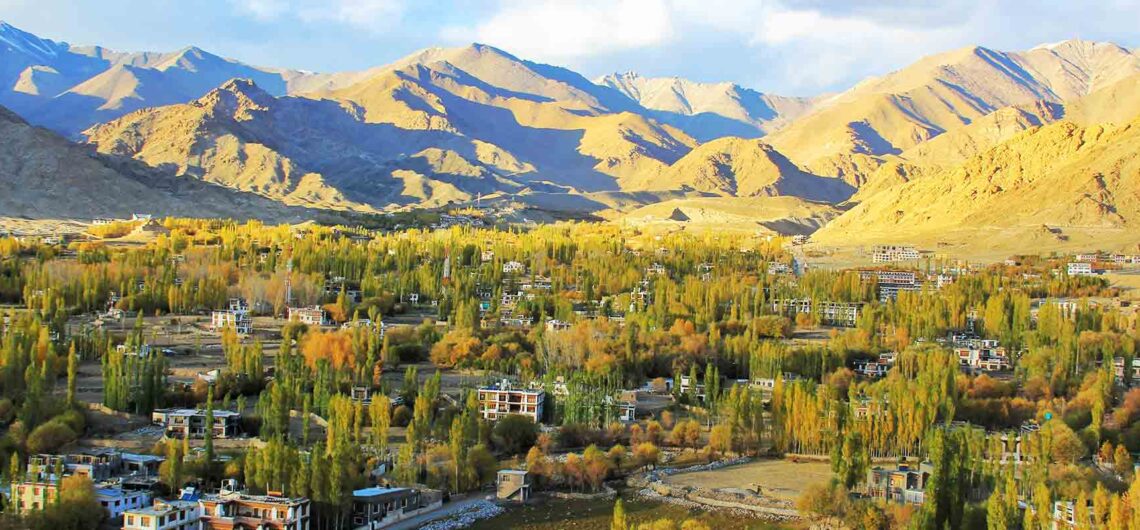
Visitors often arrive with a familiar habit of hunger: hunger for altitude, for silence, for the next dramatic pass, the next monastery, the next perfect photograph of stone against sky. Ladakh does not deny these desires. It offers them generously. But it also gently questions them. Here, in a land where the air is thin and the margins are exacting, the idea of “more” quickly loses its glamour. A longer road may be more beautiful, but it is also more exposed. A larger appetite may be more ambitious, but it is also more difficult to satisfy. In Ladakh, one learns that sufficiency is not lack. It is intelligence.
The landscape itself teaches this lesson with a kind of quiet force. The mountains are stripped to essentials: rock, wind, light, shadow, a ribbon of river, a patch of barley, a row of poplars trembling in a village courtyard. Nothing is wasted in the visual grammar of this place. The eye rests because the land rests. Even the villages seem arranged around the principle that life must fit the terrain rather than conquer it. Houses are built to hold warmth, fields are carved only where water can be led, and paths follow the logic of slope and stone. Ladakh has always rewarded those who know how much is enough to live well.
The Discipline of Limited Water
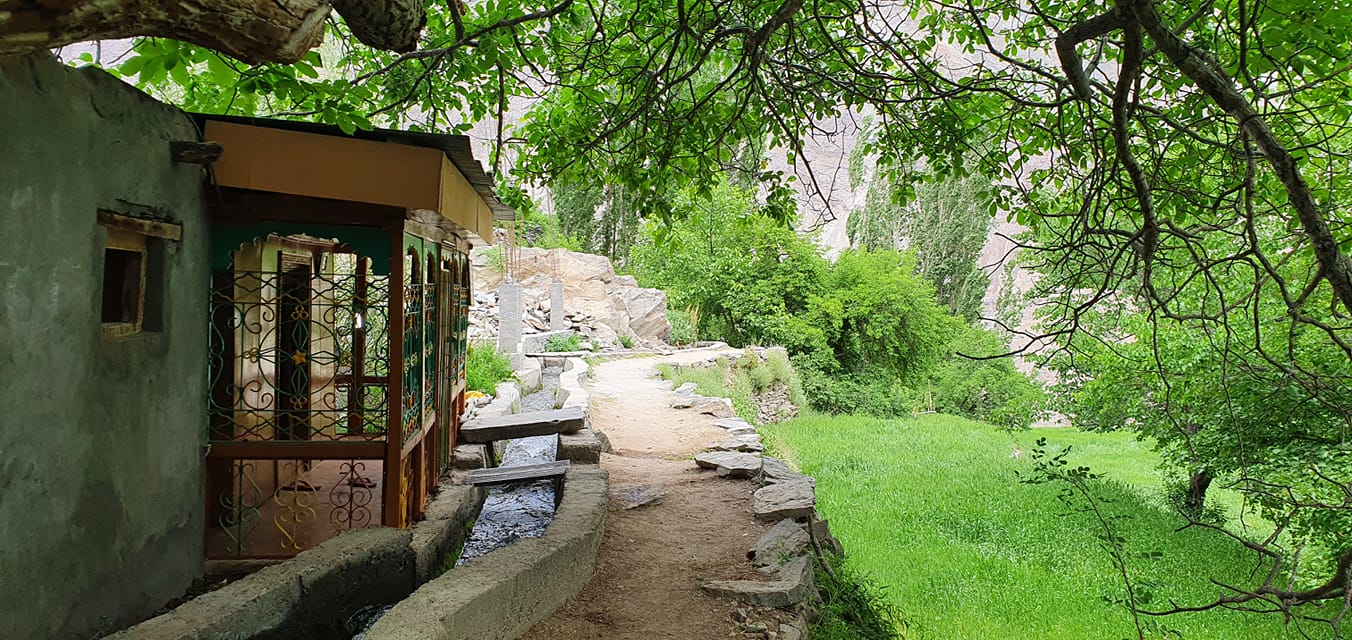
In many places, abundance is measured by excess. In Ladakh, abundance begins with water, and water is never taken for granted. Meltwater from snow and glaciers feeds streams, irrigates fields, and keeps villages alive through the short growing season. Every channel matters. Every turn in the flow matters. A small miscalculation can affect a family, a field, a season.
This is why community life here has long been shaped by careful sharing. In the traditional agricultural villages of Ladakh, water is not merely a resource; it is a relationship. It asks for coordination, patience, and restraint. The wisdom of sufficiency becomes practical knowledge: take what is needed, pass it on, waste nothing, and remember that survival depends on balance more than accumulation. To live in Ladakh is to understand that the river is not an abstract symbol. It is a schedule, a promise, and a responsibility.
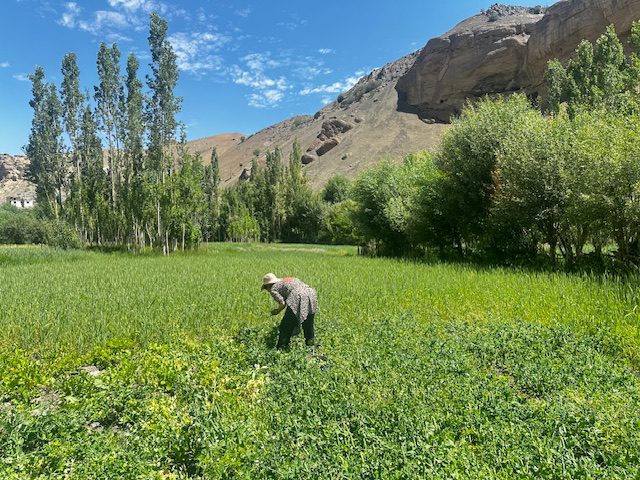
That ethic is visible in the fields themselves. Barely green in early summer, then golden later in the season, they do not stretch endlessly. They are modest, precise, and surprisingly generous. Barley, one of the region’s enduring staples, grows not as a statement of wealth but as proof that the land and its people have found a workable agreement. The harvest is not spectacular in the loud sense. It is sustaining. And sustaining is often more valuable than spectacular.
Enough Food, Enough Warmth, Enough Time
There is another kind of sufficiency in Ladakh, one less visible but deeply felt: the sufficiency of rhythm. Life here has always been seasonal. Winter narrows activity. Summer widens it. Travel, cultivation, trade, repair, celebration—all are shaped by weather, altitude, and the practical demands of mountain living. Such a rhythm discourages wasteful urgency. It suggests that not everything needs to happen at once, and not everything can be forced.
Meals reflect this same grounded intelligence. Ladakhi food is often plain to the outsider’s eye, but its plainness is the result of wisdom, not deprivation. Dishes built around barley, dairy, greens, potatoes, and tea speak to a culinary culture that understands climate. Food should nourish, warm, and travel well in the body. It does not need ornament to prove its worth. In a cold desert, warmth is a form of luxury. Simplicity can be an achievement.
Even hospitality, which Ladakh offers with grace, carries this sense of measured generosity. A guest is welcomed with sincerity, but not with waste. Tea is poured, bread is shared, a seat is made available, conversation unfolds. The gesture is not “we have everything,” but “we have enough to include you.” That difference matters. It is one of the quiet glories of the region: generosity without performance.

Monasteries, Silence, and the Art of Restraint
Ladakh’s monasteries, perched on ridges and folded into valleys, are often admired for their striking forms. Yet what lingers after the initial visual impact is their atmosphere of restraint. The prayer flags, the butter lamps, the worn steps, the murals darkened by time—these do not shout. They settle the mind. In such places, sufficiency is not only a material principle but a spiritual one. There is a kind of insight that arrives when the world is not overloaded, when silence is permitted to remain unbroken long enough to become meaningful.
This is perhaps why Ladakh affects so many travelers so deeply. It does not merely impress. It simplifies. The sky is vast, but the human scale remains intimate. The road can be arduous, but the mind becomes less crowded. One sees that endurance does not require constant expansion. Sometimes endurance is the ability to stay where you are, to work with what is present, to accept the beauty of limits without turning them into defeat.
In a culture shaped by Buddhist influence and by the discipline of high-altitude survival, there is often an unspoken understanding that attachment to excess creates suffering. This idea is philosophical, but in Ladakh it also feels agricultural, architectural, and social. A house needs thick walls, not unnecessary grandeur. A village needs cooperation, not competition. A traveler needs awareness, not indulgence. The teaching is repeated in many forms: know what is enough, and you may begin to live more lightly.
Modern Pressure and Old Intelligence
Of course, Ladakh today is not sealed from the world. Roads have improved. Connectivity has altered how people work, learn, and move. Tourism has brought opportunity, but also pressure. The same landscapes that once demanded patience now attract speed. The same villages that once lived within carefully balanced systems now face new demands on water, waste, transport, and land. The conversation about sufficiency is therefore not nostalgic. It is urgent.
What Ladakh offers is not a rejection of modern life, but a reminder that modern life still needs limits. More visitors can mean more income, yet it can also mean more strain on fragile systems. More construction can mean comfort, yet it can also mean deeper dependence on imported materials, energy, and water. More consumption can feel like progress, yet progress without restraint often leaves a harsher landscape behind. Ladakh asks a difficult but necessary question: how much is enough for a place to remain itself?
That question matters to anyone who cares about travel, especially in regions where ecology is delicate and culture is closely tied to land. Sustainable tourism in Ladakh should not be a slogan pasted onto scenery. It should be an ethic rooted in respect for scale. Travel more slowly. Stay longer in one place. Learn the names of the valleys, the crops, the winds. Buy locally. Use less water. Leave quieter footprints. These are not sacrifices made for authenticity; they are forms of good manners toward a living place.
The Beauty of Not Overreaching
There is a moral elegance to sufficiency. It allows beauty to remain intact because it resists the impulse to exhaust what is beautiful. Ladakh, with its high passes, mineral colors, apricot orchards, whitewashed stupas, and broad, luminous silence, is not asking to be consumed. It is asking to be understood. Understanding begins when desire grows attentive enough to recognize limits.
To know enough is to stop confusing intensity with depth. A traveler who rushes from viewpoint to viewpoint may collect images, but a traveler who pauses in a village lane at dusk may begin to notice how smoke rises from a kitchen chimney, how a child’s voice carries across a field, how the last light touches a ridge before disappearing. These small moments are not secondary to Ladakh. They are the place. The grandeur is real, but so is the modest scale of daily life. The wisdom of sufficiency lives in that balance.
Perhaps this is why Ladakh remains unforgettable to those who approach it with humility. The region does not teach abundance in the manner of plenty. It teaches abundance in the manner of clarity. Enough water to grow food. Enough shelter to hold warmth. Enough kindness to bind communities. Enough silence to hear the self more honestly. Enough road to travel, but not enough to forget the mountain. Enough, in other words, to live.
And in a world that often mistakes accumulation for security, Ladakh’s older intelligence feels precious. It reminds us that a life built on limits can still be rich, graceful, and open. It reminds us that restraint is not absence but form. It reminds us that sufficiency, far from being a diminished ideal, may be one of the highest forms of wisdom available to a human community.
Junichiro Honjo is the founder of LIFE on the PLANET LADAKH and an advocate of sustainable tourism rooted in respect for place, culture, and the delicate balance of mountain life.