
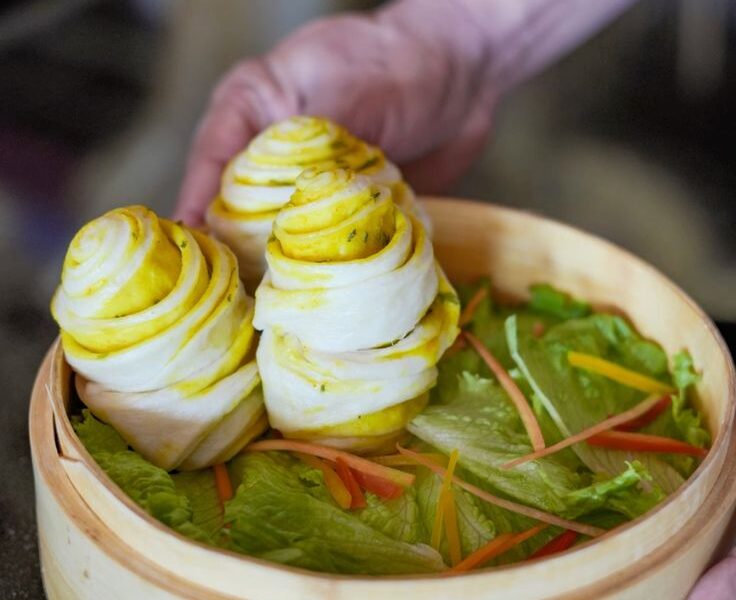
Eating in Thin Air: The Everyday Genius of Ladakh’s Table
By Declan P. O’Connor
Introduction — When Food Is Not a Lifestyle Choice
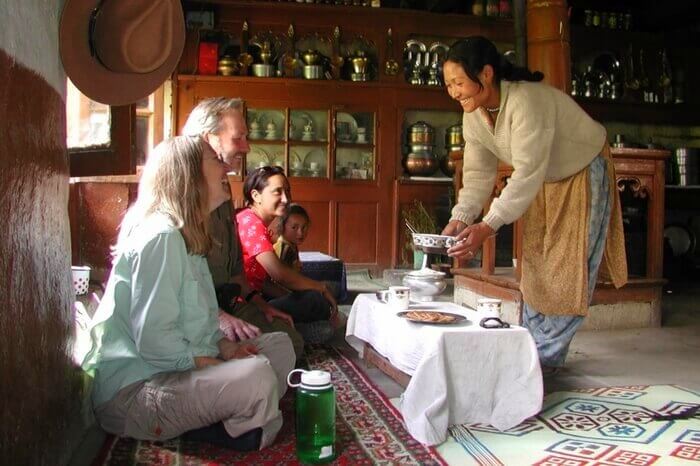
Not a Trend, Not a Trophy: The First Lesson You Learn at Altitude
In Europe, food is often framed as preference: a private map of likes and dislikes, a set of rules we build around ourselves. We decide what counts as “clean,” what counts as “comfort,” what counts as virtue. Travel adds another layer of performance—markets photographed, tasting menus narrated, plates turned into proof that we were there. But gastronomy in Ladakh begins from a different premise. Here, food is less a statement than a settlement: an agreement with elevation, cold, and a calendar that still matters.
At high altitude, the body becomes direct. It asks for warmth and water before it asks for novelty. It asks for steadiness before it asks for indulgence. That blunt physiology shapes Ladakhi food culture in ways that can feel almost startling to visitors. Meals are not auditions. They are solutions. A bowl of soup is not a “starter”; it is a strategy for hydration. Dough is not a rustic aesthetic; it is reliable energy when fuel is limited and the day can be longer than expected. Dairy is not a culinary flourish; it is stored warmth you can carry.
This is why the phrase “gastronomy tourism” needs careful handling here. Gastronomy in Ladakh is not about chasing the rare or the dramatic. It is about learning how a community feeds itself when winter has authority and the growing season is brief. The most revealing dishes are not secret. They are the ones that return. They repeat because they work—because the landscape has already tested them.
If you arrive expecting a conventional “food destination,” you may initially misread the simplicity. But simplicity here is not lack; it is refinement under pressure. Ladakh’s table has been edited by necessity until only the useful remains—and the useful, repeated over years, becomes a kind of quiet elegance. This column is an attempt to name that elegance without turning it into spectacle: to approach gastronomy in Ladakh as a lived culture, not a branded experience.
The Taste of Restraint: Why Ladakhi Food Feels So Honest
There is a particular honesty in food that comes from places where waste is not merely frowned upon but dangerous. In many European cities, we live inside a system designed to reassure us: shelves are full, seasons are softened, and scarcity is something we read about rather than manage. Ladakh does not offer that reassurance. Its food culture is built around memory of shortage and respect for what the land can actually provide. That respect shows up in portioning, in storage, in the gentle refusal to throw away what can still serve.
This does not mean Ladakhi food is austere in a joyless sense. It means joy is quieter. It is found in warmth arriving at the right moment, in the steady comfort of what the body recognizes as sustaining. To travel through Ladakh with attention is to see that food is one of the primary ways the community holds itself together. Hospitality is real here precisely because it is not theatrical. A visitor is fed not because it is charming, but because feeding a guest is a moral practice—one of the habits that keeps dignity intact in a harsh environment.
For the European reader, the deeper invitation is to reconsider what counts as “good.” In this landscape, good food is food that carries you. Food that keeps you warm. Food that can be shared without complication. Food that can be repeated without boredom because it is tethered to place and season. Gastronomy in Ladakh, at its core, is the taste of restraint—restraint not as deprivation, but as intelligence.
In Ladakh, the most meaningful question at the table is not “What do you feel like?” It is “What will carry you—today, and when the season turns?”
Beyond Cuisine: Defining Gastronomy in a High-Altitude Context
Gastronomy Without the Usual Glamour: When “Fine” Means Functional
Across Europe, gastronomy often implies elevation: technique refined into artistry, ingredients curated into rarity, a dining room shaped into an experience. Ladakh unsettles those assumptions. Here, gastronomy in Ladakh is not the art of embellishment; it is the art of enduring. The finest food is often the food that seems least interested in impressing you, because it is designed for the realities you can feel in your lungs.
This shift is not just semantic; it changes how you should travel. If you come to Ladakh seeking a string of highlights, you may end up collecting a thin story. But if you come seeking understanding—how food aligns with climate, how households plan for winter, how communities preserve without waste—then gastronomy in Ladakh becomes one of the most revealing paths into local life. The cuisine is inseparable from the conditions that made it. Remove those conditions, and the dishes lose their logic. Keep them, and you begin to see why the ordinary is so important.
It also helps to separate “cuisine” from “food culture.” Cuisine, in the modern sense, can be exported, stylized, and sold. Food culture is harder to export because it lives in timing, etiquette, household rhythm, and shared assumptions about what is sensible. Ladakh’s culinary heritage is not merely a list of dishes; it is a system of decisions: when to eat, what to store, what to offer a guest, what to save for tomorrow. In that system, the most consistent ingredient is consideration—consideration for weather, for fuel, for neighbours, for the future.
To define gastronomy in Ladakh properly is to let go of the fantasy that gastronomy must be dramatic. Here, “fine” often means functional. It means warm enough, nourishing enough, repeatable enough. That standard can feel modest until you realize how demanding the environment is. Then modesty starts to look like mastery.
Keywords That Actually Mean Something: Culinary Heritage as a Living System
It is easy to treat phrases like “culinary heritage” and “traditional food systems” as polite language for tourists. In Ladakh, these phrases have weight because the traditions are not decorative. They are infrastructure. Preservation practices, seasonal routines, and household recipes are not preserved for nostalgia; they are preserved because they still work. They are still needed.
This is where gastronomy in Ladakh quietly intersects with what many travellers now call “sustainable travel,” though Ladakh arrived at sustainability long before it became a slogan. When ingredients are scarce, you do not waste them. When fuel is precious, you cook efficiently. When the road can close, you store what you can. The result is a food culture that offers a practical education in limits—limits that modern life often hides from us.
For the visitor, the most honest approach is to treat gastronomy in Ladakh as a study of everyday practice. Pay attention to how meals are structured, not just to what is served. Notice how often warmth and hydration are central. Notice how preservation is respected. Notice how hospitality avoids spectacle. These details form a vocabulary more valuable than any checklist of “must-try” items, because they explain the why behind the what.
And once you start listening for that vocabulary, you realize Ladakh’s food culture is not “simple” in the way outsiders sometimes imply. It is simple in surface form, but complex in purpose. It is the product of generations of careful living. That is what makes gastronomy in Ladakh worth writing about: it is not a trend. It is an ethic expressed through food.
Altitude, Climate, and the Logic of the Plate
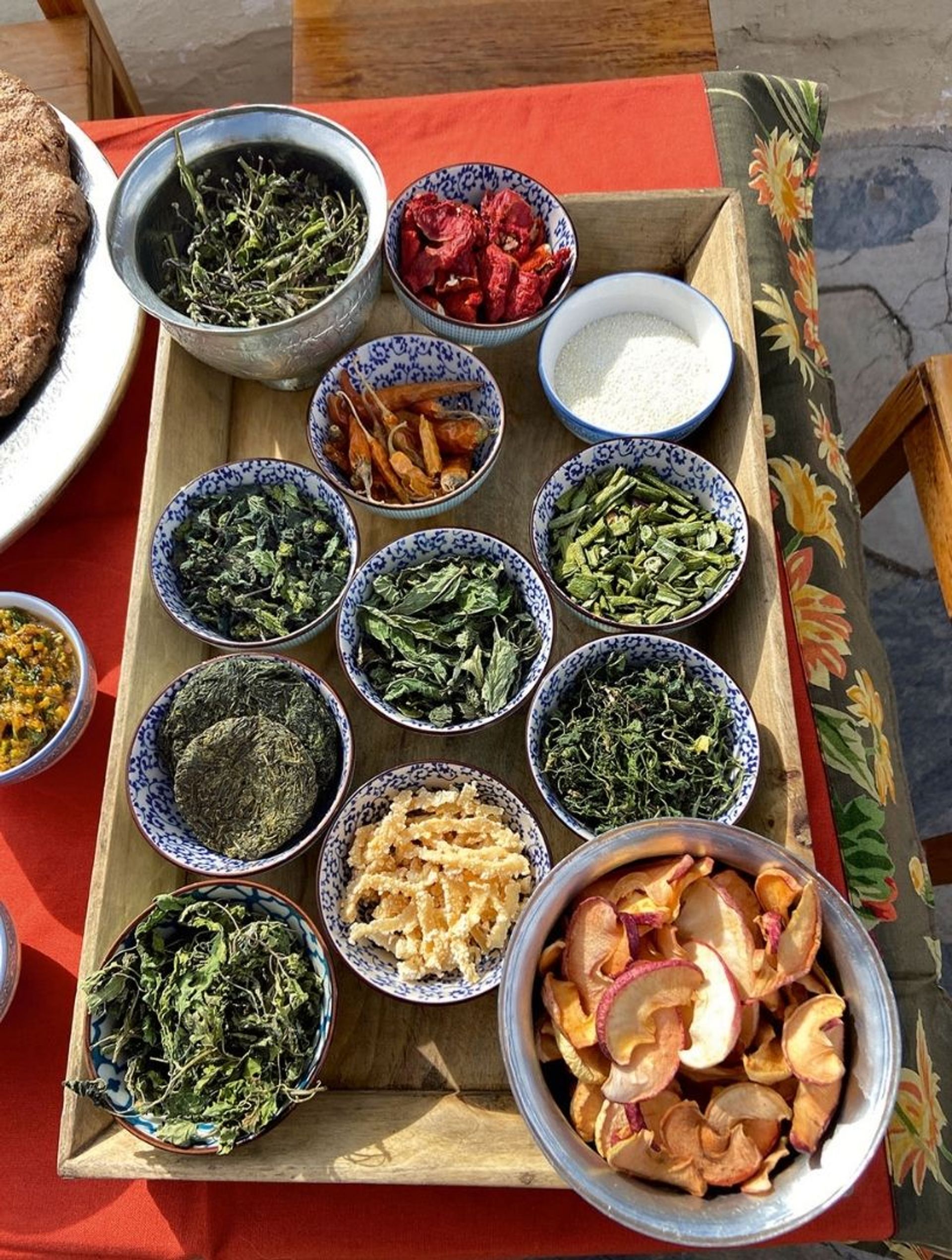
Seasonality as Law: Short Summers, Serious Planning
In Ladakh, the seasons are not mood music. They are governance. Summer arrives with a brief generosity—markets brighten, gardens produce, roads reopen—and yet even in warmth, winter is already a presence. The household thinks ahead. The community thinks ahead. Ladakhi food culture is shaped by this forward-looking discipline, and the discipline becomes visible the moment you ask what people do with abundance: they convert it into security.
This is the first principle of gastronomy in Ladakh: eat with the calendar. Seasonality is not a choice here. It is the framework. A visitor used to year-round produce may find this both disorienting and clarifying. Disorienting because options narrow. Clarifying because the narrowing reveals what matters. When you cannot have everything, you stop pretending that everything is equally important. You eat what the land allows, and you treat what appears in season with attention.
That attention shapes the cuisine. Foods that store well, reheat well, and share well become central. Stews and soups become architecture—flexible enough to absorb what is available, dependable enough to nourish without drama. Dough-based dishes appear not as quaint tradition but as practical technology. The logic is consistent: foods must be warm, filling, adaptable, and efficient to prepare. Gastronomy in Ladakh is full of these quiet efficiencies, and the efficiencies create a style. Not style as fashion, but style as survival made graceful.
For travellers, this has a practical implication: the best way to experience Ladakh’s food culture is to accept its tempo. Do not arrive demanding a curated variety. Arrive ready to learn how the season shapes what you are offered. The point is not to collect tastes like souvenirs; it is to understand the relationship between place and plate.
What the Body Teaches You: Warmth, Hydration, and the Everyday Meal
Altitude changes appetite, thirst, and fatigue. It exposes the gap between what we think we need and what we actually need. Ladakh’s everyday food practices respond to this bodily truth with remarkable clarity. Warm liquids appear repeatedly—not as ceremony, but as care. Soups and broths are treated as essential, a foundation rather than an optional course. Even the rhythm of eating often aims at steadiness rather than excitement.
In the European imagination, gastronomy often begins with flavour and ends with a story we tell ourselves about flavour. Gastronomy in Ladakh frequently begins with the body and ends with the body: warm enough, hydrated enough, steady enough to face wind, sun, and thin air. That might sound unromantic until you realize how intimate it is. A cuisine that listens to the body is a cuisine that respects reality.
This is also why Ladakh’s food culture can feel deeply comforting without being rich in the usual sense. Comfort comes from appropriateness. A warm, sustaining meal at the right time has a quiet perfection. It does not need decoration. It does not need novelty. It meets you where the landscape has placed you.
For a visitor, the lesson is practical: you travel better when you eat as the place eats. You adapt faster when you accept the local logic. Gastronomy in Ladakh, approached this way, becomes a form of orientation—one of the most reliable ways to understand how people live with altitude rather than against it.
Winter as the True Architect of Ladakhi Gastronomy
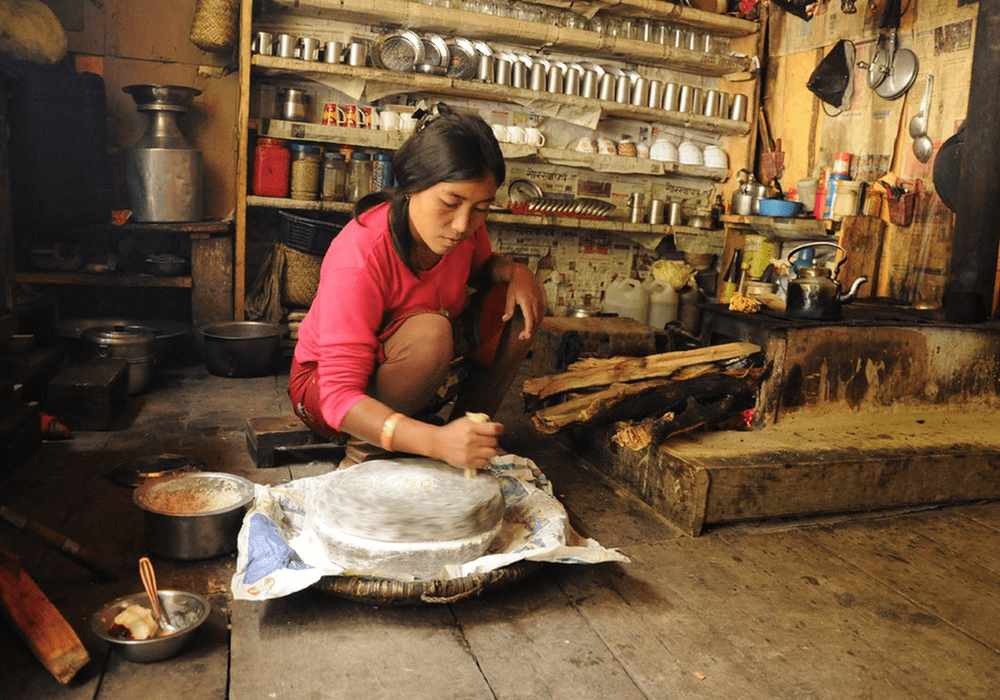
Preservation as Intelligence: Drying, Storing, and the Ethics of Not Wasting
If summer provides ingredients, winter provides meaning. Winter is the true architect of gastronomy in Ladakh because it forces the community to plan beyond desire. In a landscape where cold can close routes and delay supplies, preservation is not quaint; it is a foundational skill. Drying, storing, and saving are not niche practices. They are household knowledge, carried with calm competence.
This preservation culture shapes taste in subtle ways. Dried greens and stored staples are not merely substitutes; they are continuity. They carry summer into the season when the world narrows. They allow meals to remain nourishing when fresh options disappear. More importantly, they embed an ethic into daily life: use what you have, waste as little as possible, and treat food as something earned rather than assumed.
For travellers who speak easily about sustainability, Ladakh offers a bracing reminder: sustainability becomes real when it is not optional. Gastronomy in Ladakh teaches that the most effective environmental habits are often born from necessity rather than ideology. When resources are limited, you become careful by default. You measure. You reuse. You stretch. You learn to value what can last.
The practical beauty here is that restraint becomes generous. When you do not waste, you can share. When you plan, you can host. When you preserve well, you can offer a guest warmth even when the outside world has turned hard. This is one of the quiet miracles of Ladakh’s food culture: winter does not only reduce; it concentrates.
The Winter Kitchen: Routine, Community, and Quiet Hospitality
In winter, the home becomes a kind of refuge not only from cold but from uncertainty. Food, in this setting, is structure. It marks the day, steadies the body, and maintains community. The winter kitchen is where gastronomy in Ladakh becomes most clearly social: meals are shared, tasks are coordinated, hospitality is practiced without theatrics.
This is also where the visitor learns the difference between “authentic” as a marketing term and authenticity as a lived atmosphere. In a home, you see the real rhythm: people moving through daily work, conversation rising and falling, bowls refilled without announcement. The food is part of this rhythm, not a separate attraction. It is cooked to serve the household first, and the guest is welcomed into that reality rather than into a staged experience.
For the traveller, the lesson is humility. You cannot demand winter. You cannot perform winter. You can only enter it with respect. Gastronomy in Ladakh, especially in the cold season, asks you to accept repetition as wisdom. To value the reliable. To understand that a simple meal can be profound when it is offered with care and when it carries the weight of planning.
If modern travel sometimes encourages us to treat places as providers, the winter kitchen reverses that relationship. It reminds you that the community feeds itself first—and that being invited to eat alongside that self-sufficiency is a privilege, not a product.
Homes, Not Restaurants: Where Ladakhi Food Actually Lives
The Domestic Table: Why Authenticity Is a Relationship, Not a Recipe
Visitors often arrive looking for the “real dish,” as if authenticity were an object you could locate, order, and possess. But gastronomy in Ladakh does not live comfortably inside that mindset. The food here is deeply domestic. It belongs to households, to seasonal routines, to the unspoken etiquette of sharing. Authenticity is not a recipe; it is a relationship—between cook and climate, between family and future, between host and guest.
At the domestic table, you begin to see that food culture is not merely about ingredients. It is about timing, tone, and trust. A meal may be simple, but it is offered with a steadiness that feels almost rare in modern life. Hospitality is not embellished; it is enacted. The guest is given warmth without ceremony, as if warmth were the most obvious gift you can give in a cold land.
This is one reason restaurants, even good ones, can only translate part of the story. They can serve flavours, but they struggle to serve context. Gastronomy in Ladakh is context-rich: it is shaped by the household’s decisions, by the ethics of not wasting, by the quiet pride of feeding someone well with what is available. In that setting, you understand why food is so central to social life. It is one of the primary ways community confirms itself.
For European readers, the practical implication is clear: if you want to understand Ladakh’s food culture, do not approach it as entertainment. Approach it as education. Listen to the rhythm of the home. Notice what is valued: warmth, steadiness, sharing, modesty. These are culinary qualities as much as moral ones.
What Food Tourism Can Distort—and How to Protect What Matters
The global rise of food-focused travel has created opportunities and risks. The opportunity is real: visitors can support households, learn respectfully, and bring attention to cultural knowledge that deserves protection. The risk is equally real: travellers can turn food into spectacle, reward imitation over integrity, and pressure communities to perform “tradition” on demand. Gastronomy in Ladakh is especially vulnerable to this distortion because its strength lies in domestic coherence, not in showmanship.
Fine dining can be admirable in its own world, but in Ladakh it can easily become a costume—imported expectations layered on a cuisine that never asked for them. When visitors demand constant variety, out-of-season ingredients, or curated “experiences” that ignore household rhythm, they push Ladakh’s food culture toward waste and strain. The irony is painful: travellers seek authenticity and then create the conditions that erode it.
A better model of gastronomy in Ladakh is slow and consent-based. Small group encounters. Seasonal meals. Respect for what is available rather than insistence on what is fashionable. A willingness to learn rather than to judge. In this model, the visitor’s role is not consumer but witness—someone who receives hospitality without turning hospitality into a transaction.
The practical takeaway is straightforward: travel with limits in mind. If Ladakh’s culinary heritage teaches restraint, then the respectful traveller should practice restraint too. Accept the season. Accept the household’s pace. Let the food remain what it is: a living system, not a souvenir.
Pastoral Routes and Dairy Knowledge on the Plateau
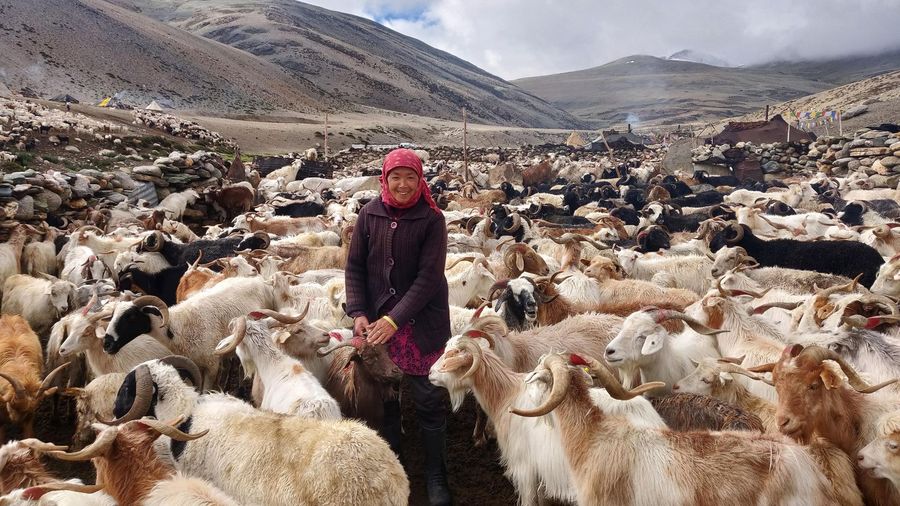
Milk, Butter, and Stored Warmth: The Plateau’s Quiet Calculus
To understand gastronomy in Ladakh, you have to understand energy. In cold and thin air, energy is not an abstract nutrition concept. It is warmth, movement, resilience. This is why dairy knowledge, shaped by pastoral life, sits near the centre of Ladakh’s food culture. It is not only about taste. It is about survival made practical.
Pastoral routes across the plateau have long created a food system that values portability, density, and durability. Herding knowledge is landscape knowledge: where grazing holds, where water persists, where wind becomes dangerous. That knowledge feeds directly into culinary practice. Milk becomes butter. Butter becomes stored calories. Dairy becomes a way of carrying warmth through seasons that can be severe.
For the visitor, it is tempting to label these foods as exotic. But the better question is: what do these foods do? In gastronomy in Ladakh, the answer is simple and profound—they make life possible. They support bodies that work outdoors. They support households that plan for winter. They support a culture that understands the environment not as scenery but as authority.
This is why pastoral foods can be one of the most instructive entry points for a traveller who cares about culinary heritage. They reveal the relationship between movement and meals, between animals and seasonality, between storage and security. They show that Ladakh’s food culture is not static. It moves with the land, and it adapts with the land.
Food and Mobility: When “Local” Is Not Fixed to a Single Place
In much of Europe, “local food” implies a stable geography—a village, a region, a protected origin. The plateau complicates that. Pastoral life teaches that locality can be mobile. Routes matter as much as coordinates. Seasonal movement shapes what is produced, what is preserved, what is shared, and what becomes culturally central.
This mobility influences gastronomy in Ladakh in subtle ways. It encourages foods that can be carried and stored. It values techniques that transform perishable ingredients into lasting ones. It also shapes social meaning. Food becomes part of mutual support among households. Sharing is not only kindness; it is continuity. The community survives because relationships survive, and food is one of the most tangible ways relationships are maintained.
For travellers, this reframes the entire idea of food tourism. If you want to understand Ladakh’s food culture, you cannot reduce it to a restaurant list. You have to consider systems: how pastoral routes contribute to household resilience, how dairy knowledge preserves warmth, how seasonal movement writes itself into what people consider normal. Gastronomy in Ladakh is, in this sense, a geography—one that includes movement as a central feature.
The practical takeaway is gentle but firm: stop treating “local” as a label. Treat it as a relationship. Ask what makes a food sensible here. Ask what makes it endure. Let the answers move you closer to the real story of the plateau.
Conclusion — To Eat Here Is to Accept Limits
Clear Takeaways: What Gastronomy in Ladakh Teaches a European Traveller
Gastronomy in Ladakh is not about abundance, and that is precisely its value. It shows how a community can turn limitation into coherence. The food culture here is shaped by altitude, seasonality, preservation, and a moral economy that treats waste as failure and hospitality as duty. If you arrive expecting spectacle, you may leave with photographs. If you arrive expecting understanding, you may leave with something rarer: a clearer sense of what food is for.
The first takeaway is practical: eat with the season, and you travel better. Accept what is available. Respect the local rhythm. Do not demand constant variety or imported comforts. Ladakh’s food culture is an education in steadiness, and the visitor who learns that steadiness will feel more at home in the landscape.
The second takeaway is cultural: the most authentic experiences are domestic, not commercial. Restaurants can be enjoyable, but the deepest meaning often lives in households, where food is braided into routine, memory, and community. Gastronomy in Ladakh is not a performance; it is a way of holding life together.
And the third takeaway is ethical: the best form of food-focused travel here is modest. Small. Consent-based. Rooted in respect for limits. If Ladakh teaches restraint at the table, it also teaches restraint in the traveller’s expectations.
A Closing Note: The Kind of Abundance You Can Carry Home
You may remember Ladakh for its silence, its clear light, and the way distance feels more honest than it does elsewhere. But you might also remember a simpler moment: warmth offered without theatre, food shared without negotiation, a meal that did not try to impress you and therefore stayed with you longer. Gastronomy in Ladakh, at its best, is not a destination to consume. It is a lesson in attention.
In a restless world that encourages us to want more than we need, Ladakh’s table offers a counter-invitation: to want what fits, to value what lasts, and to recognize that the most meaningful hospitality is often quiet. If you leave with that sensibility—if you learn to taste restraint as a form of wisdom—then the journey has fed you in the deepest sense.
FAQ
Q: What does “gastronomy in Ladakh” really mean, beyond trying local dishes?
A: Gastronomy in Ladakh means understanding how food is shaped by altitude, winter, short growing seasons, and household planning. It is less about novelty and more about context: preservation, warm meals, shared routines, and the moral value of not wasting what the land cannot easily replace.
Q: Is Ladakh suitable for gastronomy tourism without turning homes into performances?
A: Yes—if experiences are invitation-based, small-scale, and seasonal. The most respectful approach is slow and consent-driven, with attention to household rhythm. Gastronomy in Ladakh stays authentic when visitors arrive as learners, accept what is available, and avoid demanding curated variety.
Q: When is the best time to experience Ladakh’s food culture?
A: Summer and early autumn offer more fresh produce and market life, while colder months reveal the deeper structure of gastronomy in Ladakh—storage, dried foods, soups, and routines built around winter. The best season depends on whether you want breadth of ingredients or depth of understanding.
Q: How can travellers support Ladakh’s culinary heritage responsibly?
A: Choose seasonal meals, locally available ingredients, and small group encounters that do not overwhelm households. Avoid pressuring hosts for out-of-season foods or constant variety. Responsible travel protects gastronomy in Ladakh by respecting limits, reducing waste, and treating food culture as a living system.
Declan P. O’Connor is the narrative voice behind Life on the Planet Ladakh,
a storytelling collective exploring the silence, culture, and resilience of Himalayan life.