
Where Quiet Valleys Shape the Lives of Eastern Kargil
By Declan P. O’Connor
I. Prologue: Entering the Quiet Corridors of Chiktan Valley
Arriving at the Edge of a Lesser-Known Himalayan Valley
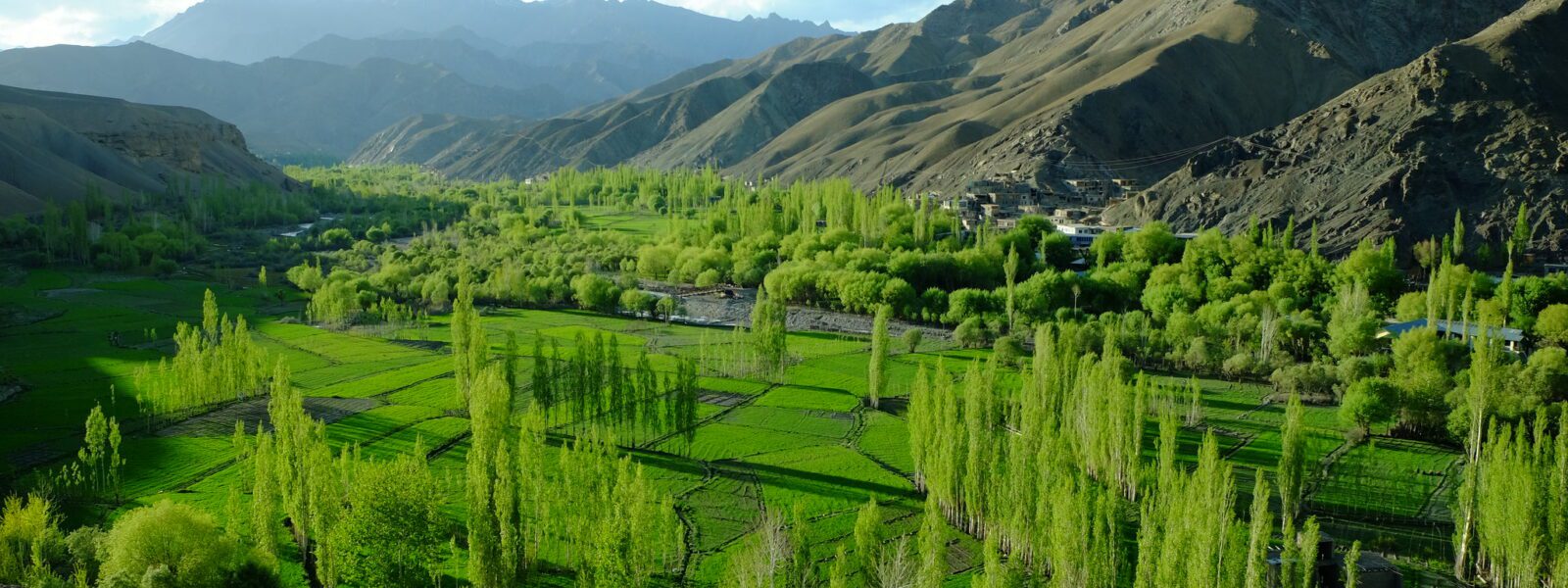
There is a particular silence that greets you as you turn off the main Kargil road toward Chiktan Valley. It is not the silence of emptiness, but the quieter register of places that have never needed to impress anyone. The traffic thins, the asphalt feels more intimate, and the mountains close in, not as a threat but as a kind of stone audience watching the road wind toward smaller lives. Terraced fields appear in patient steps, low stone houses tuck themselves into the slopes, and apricot trees mark the changing seasons with a softness that surprises you in such a dramatic landscape. Chiktan Valley does not announce itself with a single spectacular viewpoint; instead, it arrives slowly through Sanjak, Yogmakharbu, Shakar, Hagnis, Chiktan, Pargive, and Khangral, each village offering a slightly different angle on the same long conversation between rock, water, and people. As you move further into eastern Kargil, you begin to understand that this valley is not really a destination in the conventional sense. It is a corridor of everyday life, a lived archive of Purig culture, and a reminder that the Himalaya is still full of corners where the outside world appears as a faint echo rather than a constant shout.
First Impressions on the Road Through Eastern Kargil
Your first full day in Chiktan Valley often begins with a drive that feels less like a transfer and more like a slow reading of a long, handwritten letter. The Indus lies far behind, but its memory lingers in the shapes of side valleys and in the irrigation channels that bring glacial water to narrow fields. Village names like Sanjak and Yogmakharbu appear on weathered signboards, the paint fading but the hospitality behind them entirely intact. Children wave at the car from the edges of dirt lanes, women carry bundles of fodder along paths that cut across the slope, and men gather near small shops to exchange news that rarely travels beyond the next bend. The air is thinner than in the lowlands yet somehow full: full of smoke from kitchen fires, full of voices in Purig and Urdu, full of the unhurried rhythms of a rural Himalayan valley that has learned to live with both isolation and connection. Already, Chiktan Valley begins to separate itself from the more photographed routes of Ladakh. It offers not the promise of ticking off a list of highlights, but the slower, deeper satisfaction of seeing how seven small villages hold together an entire landscape of meaning in eastern Kargil.
II. Chiktan Valley’s Cultural Arc and Historical Echoes
A Tapestry of Purig Culture Between Rock and Sky

Chiktan Valley belongs to a cultural belt often labelled “Purig,” a term that does not fit neatly into simple religious or linguistic categories. It is a place where languages mingle, where architectural styles shift gently between districts, and where histories have been passed down as stories rather than as museum exhibits. In the courtyards of Sanjak or Shakar, you may hear elders recalling winters when the road remained closed for weeks, or seasons when the apricot harvest failed and families lived more carefully than usual. Across Chiktan Valley, mosque loudspeakers and small shrines coexist with quiet household rituals that make sense only if you have grown up on these slopes. The valley sits at a historical crossroads between Baltistan, central Ladakh, and Kashmir, and for centuries it has taken in influences from all three while still insisting on its own rhythm. The result, for a visitor, is a cultural landscape that feels at once familiar and slightly off the map. You recognise gestures of hospitality, the offering of salted tea, the way guests are guided to the warmest corner of the room, yet the details of language, architecture, and dress remind you that Chiktan Valley has its own story to tell.
Fortresses, Legends, and the Memory of Older Routes
If you look up as you travel through Hagnis or approach Chiktan itself, you notice ruins and rocky outcrops that seem too deliberate to be natural. This valley carries the remains of fortresses and watchtowers that once guarded routes between regions long before modern borders and asphalt roads. Today, the stones of these structures are weathered, sometimes half-collapsed, but they continue to dominate the imagination of the people who live beneath them. Stories circulate about kings and rival chieftains, about alliances sealed by marriage, and about shadows seen on moonlit nights near the old walls. The historical record of Chiktan Valley is fragmentary, but its narrative life is surprisingly strong. For travellers, the important thing is not to catalogue every date or dynasty but to notice how the presence of these ruins shapes daily life. Children play in their shadow, shepherds glance up at them while moving their flocks, and village elders point toward them as they explain how trade once passed through eastern Kargil. In this way, the valley’s forts and legends act as a quiet commentary on the present, reminding visitors that Chiktan Valley has been connected to wider worlds for far longer than modern maps suggest.
III. The Villages Along the Chiktan Valley Road
Sanjak – The Gateway of Apricot Winds

Sanjak often feels like a hinge between the more travelled routes of Kargil and the more intimate interior of Chiktan Valley. As you approach, the landscape begins to loosen; there is a little more green, a few more trees, and the reassuring geometry of terraced fields climbing the hillside. Apricot and willow trees frame the village, and in late spring and early summer the air can carry a faint sweetness that makes you slow down without realising why. Sanjak’s houses tend to sit close to one another, as if drawing warmth from neighbours through the long winter nights. Narrow alleys thread between mud-brick walls, and wooden balconies catch the afternoon light in quietly beautiful ways. For visitors, Sanjak offers a first encounter with the valley’s particular way of organising space: fields below, houses clustered along the slope, and paths that know the quickest way between home, mosque, field, and water channel. The village is not a sight to be consumed, but a lived environment that repays patient walking, careful listening, and the kind of travel that does not rush. In that sense, Sanjak sets the tone for the rest of Chiktan Valley, suggesting that the best way to experience eastern Kargil is one slow village at a time.
Yogmakharbu – Where the Mountain Walls Lean Closer

Further along the road, Yogmakharbu announces itself not with a landmark, but with the sudden tightening of the valley walls. Here, the mountains lean in as if curious about the lives unfolding at their feet. Houses cling to the slope in compact clusters, their whitewashed walls catching sunlight that has already travelled a long way across the sky. Pathways are steeper, corners sharper, and every turn seems to frame a new composition of rock and roof. Yogmakharbu is where you begin to feel how carefully space is negotiated in Chiktan Valley. Fields are carved from every workable patch of soil, irrigation channels are protected with care, and livestock shelters are integrated into the architecture rather than relegated to some distant corner. For travellers, the appeal of Yogmakharbu lies in its everydayness: the sound of hand-tools in a field, the laughter of children weaving through lanes, the smell of bread baking behind thick walls. Spend an afternoon here and the phrase “remote Himalayan village” starts to lose its romance and gain something more valuable: a sense of grounded, practical life in eastern Kargil, where Chiktan Valley is not a postcard but a complex, resilient home.
Shakar – White Stones, Slow Afternoons, and Long Horizons

Shakar carries its name lightly. You may notice it first in the pale tone of the local stone, in walls and paths that seem to echo the light even on overcast days. The village spreads more gently across the slope than its neighbours, giving it a slightly open, contemplative feel. In the afternoons, when fieldwork slows and the sun softens, Shakar becomes a village of long glances: toward the horizon, toward the next ridge, toward a sky that always seems to be thinking about weather. Chiktan Valley’s character is particularly legible here in small details. Women sit together to sort grain, voices low but steady; men repair tools and talk about the coming season; children shuttle between houses with errands that blend play and responsibility. Shakar is not a place of grand views alone, though there are plenty of those. It is a place where the architecture of daily life matters just as much as the mountains, and where visitors who are willing to sit quietly for a while can feel the gentle, persistent tempo of eastern Kargil settling into their own bodies. In this way, Shakar offers both a pause in the road and a window into the deeper pace of Chiktan Valley.
Hagnis – Living Beneath the Memory of Walls

In Hagnis, the relationship between village and fortress becomes impossible to ignore. Look up from almost any lane and you find your eyes drawn to the higher slopes, where remnants of defensive walls and old structures hold their ground against time and gravity. The people of Hagnis live in the shadow of these stones, yet not under their weight. Instead, the ruins serve as a kind of elevated memory, a reminder that this part of Chiktan Valley has always been worth watching and protecting. Daily life continues at the base of the slope: water is collected, animals are tended, and tea is poured for guests with a hospitality that is neither performative nor hurried. For visitors, the contrast between the looming, silent fortifications and the warm, active village is striking. You can stand in a courtyard and hear stories that link the two, tales of raids and alliances, of nights when lights were seen where no one lived. Hagnis invites you to consider how history lives on in the spatial arrangement of a village, in the way houses face the slope, in the way people walk certain paths without thinking. It is here that Chiktan Valley feels most clearly like a place where the past is not over, but folded quietly into the present.
Chiktan – The Beating Heart of the Valley

Chiktan itself is the name most travellers recognise, and for good reason. The village occupies a central place in the valley’s geography and in its imaginative landscape. As you approach, the settlement appears more layered, more vertically complex, as if generations have been steadily building upon one another. The ruins of Chiktan Fort dominate the view from many angles, its weathered walls emerging from the rock like the bones of some long-resting animal. Below, the village hums with an energy that feels more concentrated than in the smaller hamlets. Shops carry a slightly wider range of goods, conversations spill more easily into the road, and news from the outside world tends to arrive here first before radiating outward to Sanjak, Yogmakharbu, or Pargive. Yet Chiktan Valley’s core village is not urban in any meaningful sense. It remains anchored in fields, in the timing of irrigation, in the seasonal cycles that structure life across eastern Kargil. Walking through its alleys, you sense how power, memory, and ordinary domestic life intersect. At some corners, children play directly beneath sightlines once used to monitor approaching riders, a small but powerful reminder of how thoroughly the valley’s history has been integrated into the routines of the present.
Pargive – A Quiet Bend Where Water Lingers

Pargive does not try to compete with the drama of Chiktan’s fort or the compressed energy of Hagnis. Its gift is something gentler: a certain softness in the way the river bends, a generosity in the curve of the cultivated land. Here, Chiktan Valley seems to exhale for a moment before continuing toward Khangral and the wider world. The village rests close to the water, its fields spreading out in a patchwork of greens and golds that change with the season. Willow trees lean over the channels, and the sound of moving water accompanies almost every conversation. For visitors, Pargive can feel like a place where the valley offers you a chance to simply be present. There is less spectacle and more continuity: a woman washing clothes at the stream, a shepherd guiding animals along the bank, a child staring curiously at the passing vehicle. It is easy to imagine staying here for several days, learning the timings of light and shadow, understanding how the river’s behaviour informs the mood of the entire village. In this quiet bend of eastern Kargil, Chiktan Valley reveals its capacity for stillness, inviting you to slow your own narrative down to match the pace of the water.
Khangral – Threshold Between Valley and Road
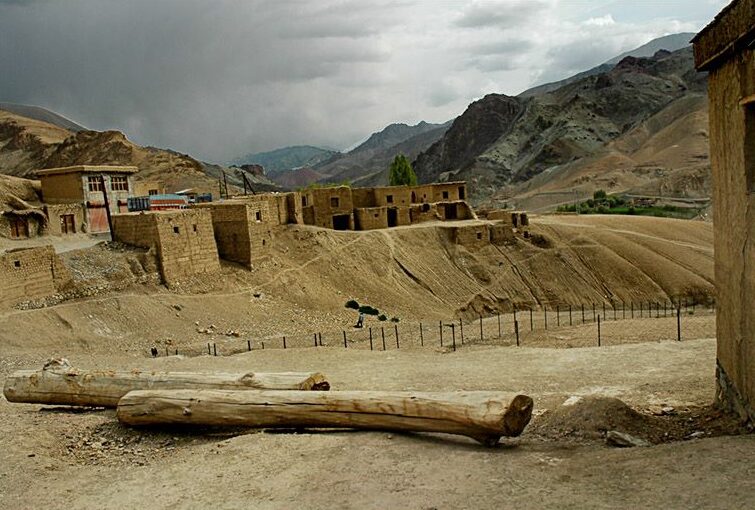
Khangral stands at the edge of Chiktan Valley like a doorkeeper, a place where the intimate corridor of villages begins to open out toward larger routes and other districts. The road widens, traffic becomes a touch more frequent, and small roadside shops cater to passing drivers as well as local residents. For travellers leaving the valley, Khangral is often the last chance to look back and register what Chiktan Valley has offered: layered histories, patient agriculture, and a series of villages that collectively form a cultural landscape rather than an isolated attraction. Within the village, life is organised around both the passing road and the enduring routines of home and field. You might see a truck driver sharing tea with a local shopkeeper, or a visiting relative boarding a vehicle while elders offer blessings for the journey. Khangral embodies the tension and opportunity of threshold places. It is connected enough to feel the pull of the outside world, yet rooted enough to anchor the stories that flow out from Sanjak, Yogmakharbu, Shakar, Hagnis, Chiktan, and Pargive. Leaving through Khangral, you realise that Chiktan Valley is not just somewhere you visited, but a corridor that will continue to shape how you think about eastern Kargil long after the road has carried you away.
IV. Water, Rock, and Daily Routines: Shared Themes in Chiktan Valley
How Water and Stone Quietly Organise Village Life
Across all seven villages of Chiktan Valley, it becomes obvious that water and stone are the true architects of daily life. Channels carved with extraordinary care guide glacial melt to terraced fields, and their sound is often the valley’s most constant music. Stone, by contrast, provides the solid language of structure: in retaining walls that keep soil in place, in pathways that grip the hillside, and in houses built to survive both winter cold and occasional summer heat. In eastern Kargil, grand theories about sustainability feel unnecessary when you watch people move through environments that have forced them to live within clear limits for centuries. When the water arrives late, conversations shift around how to adapt planting schedules; when a wall collapses, neighbours appear with tools rather than sympathy alone. Chiktan Valley’s beauty is inseparable from this practical intimacy with the landscape, from the way villagers know how far they can push a slope, how much weight a roof can carry, and how cold air moves through the valley at night. For visitors, paying attention to these details can be more instructive than any formal lesson on Himalayan ecology. The valley teaches, gently but firmly, that survival here is a shared project between people, water, and rock.
Hospitality, Work, and the Rhythm of Slow Travel
Another common thread running through Chiktan Valley is the quiet choreography of work and welcome. In Sanjak or Pargive, you might be invited in for tea at a moment when your host is clearly in the middle of a task. The invitation does not cancel the work; instead, your presence is woven into it. Tea is poured while dough is kneaded, stories are exchanged while the animals are checked, and questions about your journey are asked as someone repairs a tool or sorts dried apricots. For travellers used to separating leisure from labour, this can be both disorienting and deeply moving. It suggests that visitors to eastern Kargil are not expected to be entertained, but simply to share in the ongoing rhythm of life. Slow travel in Chiktan Valley means aligning yourself with this rhythm rather than imposing your own. It means accepting that the best conversations may happen in doorways, that the most memorable views might appear while you are waiting for someone to finish a chore, and that your schedule will sometimes bend around the needs of animals, weather, and water. In return, the valley offers a kind of hospitality that is neither curated nor transactional, but grounded in the ordinary generosity of people who take their time seriously and are willing, now and then, to share some of it with you.
V. What Chiktan Valley Leaves With You
Reflections on Leaving a Small but Expansive Valley
Leaving Chiktan Valley can feel strangely heavier than arriving. On the map, you have only travelled through a short side corridor of eastern Kargil, a modest string of villages between rock walls. Yet in the quieter register of memory, the valley occupies far more space than its physical size would suggest. It lingers in the details: the way light fell on mud-brick in Yogmakharbu at dusk, the particular taste of tea in a kitchen in Shakar, the rough warmth of a handshake in Khangral before boarding a vehicle. You may struggle to recount your time here as a series of standard highlights, because Chiktan Valley does not arrange itself into neat, marketable episodes. Instead, it leaves you with a different sense of distance and scale. Journeys between villages become as significant as border crossings, short walks acquire the weight of small pilgrimages, and the patience required to understand a single farming season feels as demanding as any high-altitude trek. The valley does not teach lessons in the didactic sense, but it changes your internal pacing. After you leave, other places may seem too loud, too eager to be noticed. You carry Chiktan Valley with you as a reminder that some of the most meaningful landscapes are the ones content to remain on the margins of attention.
Frequently Asked Questions About Visiting Chiktan Valley
Is Chiktan Valley suitable for first-time visitors to Ladakh and eastern Kargil?
Yes, Chiktan Valley can be a gentle introduction to this part of the Himalaya, provided travellers are prepared for basic infrastructure and a slower pace. Roads are narrower and services more limited than in major townships, but that is precisely what makes the experience valuable. For first-time visitors, the valley offers a chance to understand rural life without the distractions of large hotels or crowded viewpoints. Homestays or small guesthouses, arranged through responsible operators, allow you to experience daily routines with support that respects both local capacity and your own comfort.
How much time should I plan to spend in the villages of Chiktan Valley?
While it is technically possible to drive in and out within a single day, doing so would miss the essence of Chiktan Valley. A more honest approach is to plan at least two or three nights, ideally staying in different villages or making unhurried day visits from a single base. This allows you to see how mornings differ from evenings, how work shifts with the weather, and how conversation deepens after the second or third cup of tea. The valley rewards repeat encounters with the same people and places, turning a brief visit into something closer to a relationship rather than a checklist.
What does respectful travel look like in the context of Chiktan Valley?
Respectful travel in Chiktan Valley begins with the assumption that you are entering a living community rather than a backdrop for your stories or photographs. It means asking before taking pictures, accepting that some spaces are private even if they appear visually appealing, and dressing in ways that do not draw unnecessary attention. It involves listening more than speaking, paying fairly for services, and understanding that your visit inevitably has an impact, however small. Perhaps most importantly, it means leaving room for slowness: allowing conversations to unfold, choosing locally run accommodation where possible, and remembering that the people of eastern Kargil are not props in your journey but hosts whose lives continue long after you have moved on.
Closing Thoughts and a Quiet Invitation
In the end, Chiktan Valley does not shout for visitors. It will never compete with more famous names in glossy brochures, and that may be its greatest strength. For those willing to make the small detour into eastern Kargil, the valley offers something increasingly rare: the chance to inhabit, however briefly, a landscape that still organises itself primarily around its own needs. Sanjak, Yogmakharbu, Shakar, Hagnis, Chiktan, Pargive, and Khangral are not themed experiences; they are villages living their lives with quiet determination beneath watchful mountains. Visiting them is less about discovery and more about learning how to see again, slowly and without urgency. If there is a takeaway, it is this: the most meaningful journeys may not be the ones with the most dramatic statistics, but the ones that gently adjust the settings of your attention. Chiktan Valley offers exactly that adjustment, and it does so without insisting. The invitation is there, waiting on a bend in the road, in the curve of a terrace wall, in the gesture of a hand offering tea. Whether you answer it is, as always, up to you.
In a world of hurried itineraries and restless scrolling, Chiktan Valley reminds us that some of the most enduring stories are written slowly, along village roads where almost nothing seems to happen and everything quietly does.