
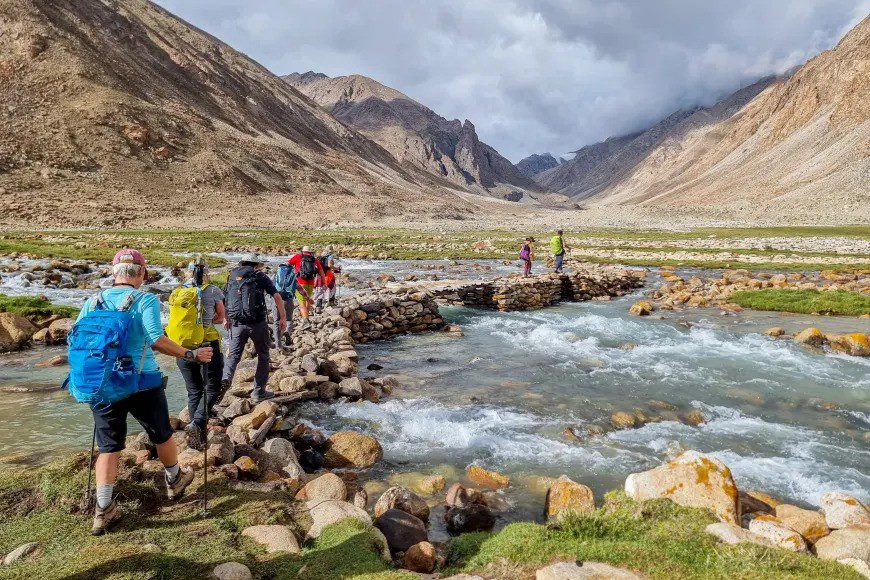
Ladakh does not reveal itself all at once. It arrives in stages: first through the silence of the high road, then through the clean shock of light on stone, and finally through the human warmth that seems to burn brighter in a place where the air is thin. Travelers often come to Ladakh for the names they already know—Leh, Pangong, Nubra—but what stays in memory is usually something smaller: a cup of butter tea in a windbreak kitchen, the rattle of prayer flags above a campsite, the dry perfume of apricot orchards after dusk. If you are planning a journey here, especially if you hope to walk rather than only drive, it helps to travel slowly, prepare well, and leave room for surprise.
This is where a Nubra trek becomes more than an itinerary. It becomes a way of reading Ladakh from the inside out.
Begin with the altitude, not the scenery
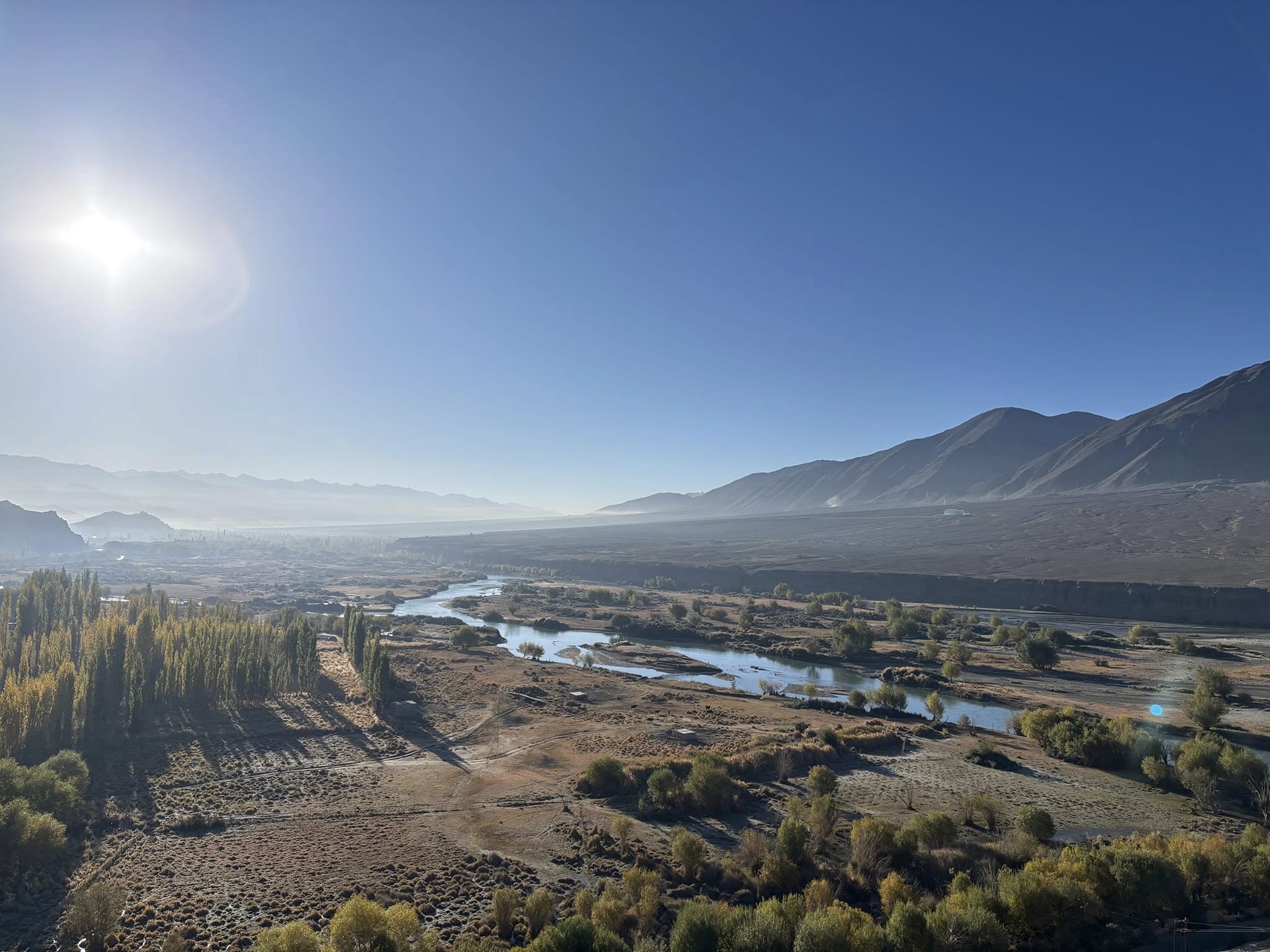
Travel tips for visiting Ladakh should begin with one truth: altitude changes everything. The landscapes are beautiful, yes, but the body notices the thinness of the air long before the heart finishes admiring the mountains. Leh sits high enough that even a gentle walk can feel like a first climb. The wisest first days are quiet days. Drink water. Sleep. Walk unhurriedly. Avoid the impulse to turn the first afternoon into a race between viewpoints. In Ladakh, patience is not a travel style; it is part of safe arrival.
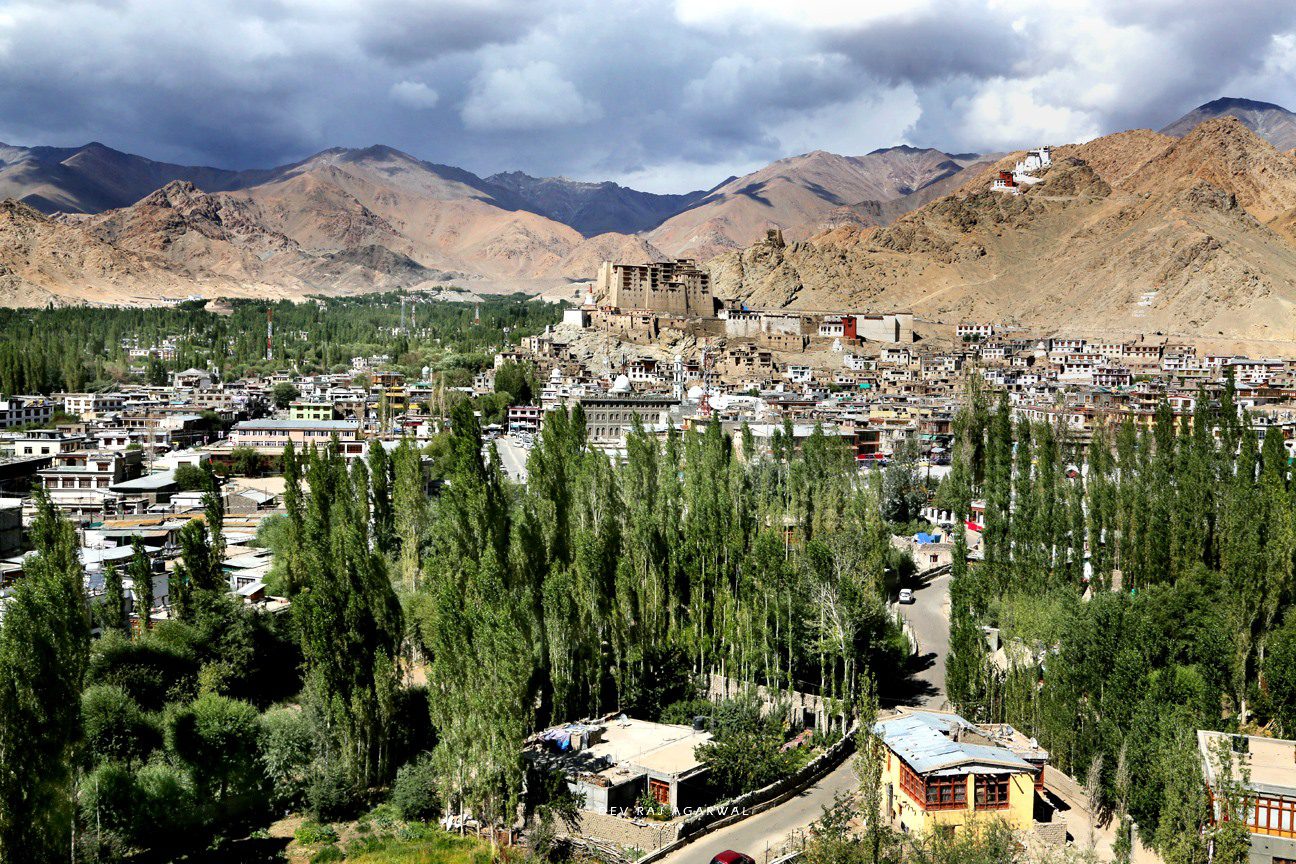
If you are planning a Nubra trek, give yourself time in Leh before starting. Not because it is fashionable to acclimatize, but because your journey will be better if your breathing has found its rhythm before you reach the trail.
The road into Nubra is already a lesson
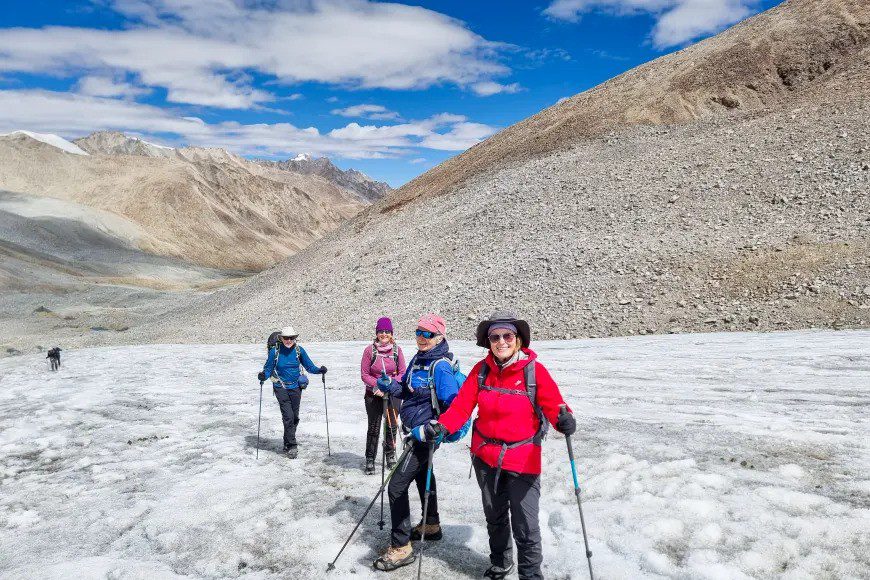
Most travelers enter Nubra by road, crossing high passes where the terrain feels stripped to its essentials. The mountains are not soft here; they are carved, folded, and exposed. The drive itself teaches an important Ladakh habit: do not rush a landscape that is asking you to look carefully. Every bend seems to change the color of the rock. Every valley opens like a dry riverbed memory.
When you finally descend into Nubra, the contrast can feel improbable. After hours of stone and altitude, the valley shows its hidden generosity: patches of green, villages arranged with quiet order, poplar trees, and the slow presence of water. It is one of the most distinctive travel experiences in Ladakh, and it becomes even richer if you continue on foot into the smaller settlements and trekking routes that branch away from the road.
A Nubra trek is a conversation with the valley
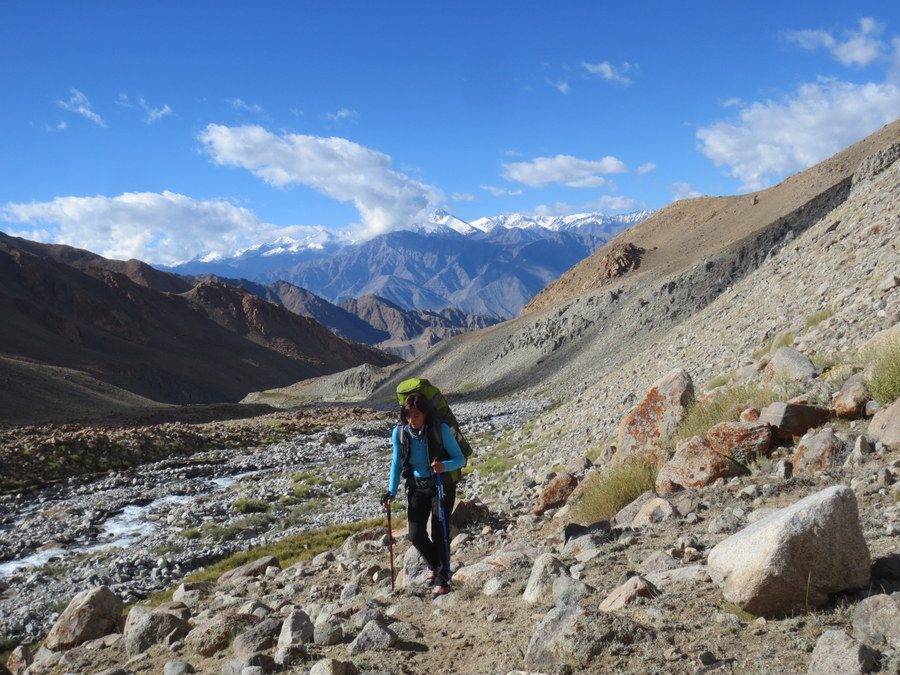
A good trek in Nubra is not about conquering terrain. It is about moving through it with enough attention to notice how the valley changes from one bend to the next. Trails may pass through dry ridges, along irrigation channels, and between village fields where barley and vegetables survive on careful water management and generations of local knowledge. In some stretches, the path feels almost discreet, as if the land is asking you to keep your footsteps modest.
The beauty of trekking here is the way the scale shifts. One moment you are crossing a broad, open expanse under a severe blue sky. The next, you are walking near a cluster of homes, hearing a dog bark, seeing smoke rise from a kitchen, or passing women working in the fields. These are the details that make a Nubra trek memorable: not dramatic heroics, but the lived texture of a valley where people have learned to thrive in a difficult climate.
If your route includes a homestay, take it as part of the trek, not as an interruption. A homestay is often where Ladakh becomes most legible. Meals are simple and sustaining. Conversations are unhurried. The room may be plain, but the experience is rich with things that cannot be packaged: local hospitality, practical wisdom about the weather, and the sense that you are a guest in a working landscape rather than a consumer of scenery.
Choose your season with care
For travel in Ladakh, timing matters. The valley is never the same twice, and the walking season depends on weather, road conditions, and what kind of journey you want. Summer usually offers the most accessible trekking conditions, with clearer trails and more open village life. Earlier in the season, some high sections may still be influenced by snow or cold nights. Later in the season, the air can become sharper and the daylight shorter. The best choice is not always the warmest month, but the period that fits your pace and your tolerance for cold mornings and changing conditions.
For anyone considering a Nubra Trek story of their own, it is wise to think less about chasing perfect weather and more about respecting the season you are entering. Ladakh rewards those who understand that mountain travel is a negotiation with climate, not a promise.
Stay camp or homestay: both have their place
One of the most practical decisions on a trek is where to sleep. A stay camp can be ideal when the route takes you beyond villages or when you want the simplicity of sleeping closer to the trail. Camp life in Nubra has its own atmosphere: the sound of wind in fabric walls, the sudden intensity of stars after sunset, the small rituals of getting warm before bed and early in the morning. A well-managed camp gives you access to remote stretches without making the journey feel harsh.
A homestay, on the other hand, brings you directly into the social life of the valley. It can be the better choice when you want a slower, more intimate experience of Ladakh. You wake to the sounds of a household beginning its day. Breakfast is often practical and homely. The evening may include stories, advice about the next day’s path, or a glimpse into how people here negotiate the seasons, the fields, and the expectations of visitors.
For many travelers, the best trek combines both: camp on the more remote sections, then rest in a village homestay where the trail meets daily life. That balance can make the journey feel complete.
Pack for dryness, cold, and simplicity
Travel tips for Ladakh are often repeated, but they remain true because the environment remains demanding. Pack layers. Even in bright sun, the air can be cool, and once the light fades, temperatures drop quickly. Good walking shoes matter more than fashionable gear. A hat, sunglasses, sunscreen, a reusable bottle, and a basic first-aid kit are not optional luxuries; they are the practical vocabulary of mountain travel.
Keep your luggage light. On a trek, every extra object becomes a negotiation. The less you carry, the more freely you can walk, observe, and adjust to the route. If your stay includes camp or homestay accommodation, remember that comfort in Ladakh often comes from preparation rather than abundance.
Walk with respect for the land and the people
Ladakh is not a backdrop. It is a living region with fragile ecology, strong cultural traditions, and a delicate relationship between tourism and daily life. Good travel here means being careful with water, carrying your waste out, and using local services whenever possible. It means asking before photographing people, dressing modestly in villages, and recognizing that your sense of adventure is taking place within someone else’s home landscape.
This matters especially on trekking routes in Nubra, where the line between natural beauty and human effort is very visible. Fields are irrigated by hand-built channels. Villages are sustained by patience and planning. Even a simple path may depend on communal labor and seasonal knowledge. To walk here respectfully is to understand that the beauty you came to see has been maintained by people who rarely have the luxury of calling it scenery.
Why the Nubra trek stays with you
Some journeys are remembered for their difficulty. Others are remembered for their views. A Nubra trek is remembered for both, but also for something quieter: the feeling that you have moved through a valley where life and landscape are tightly interwoven. The trail may be dry, the air sharp, and the distances deceptively large, yet the experience is often softened by the hospitality of the people you meet and the calm discipline of the region itself.
In Nubra, you learn that travel in Ladakh is not about collecting dramatic moments. It is about learning how to move through a high place without disturbing its rhythm. It is about waking early, walking steadily, accepting the cold, sharing tea, and noticing how the valley changes at morning, noon, and evening. If you are fortunate, the trek will leave you not with the sense that you have conquered anything, but with the humbler and more lasting feeling that Ladakh has allowed you to pass through.
That is the best travel tip of all: come prepared, stay humble, and let the place teach you how to be a guest.
Author Bio
Junichiro Honjo is the founder of LIFE on the PLANET LADAKH and an advocate of sustainable tourism, dedicated to sharing thoughtful journeys that respect the land, culture, and people of the Himalaya.