
Where the Night Becomes a Place You Can Enter
By Sidonie Morel
Leh After Dusk
Streetlight halos and the first small loss
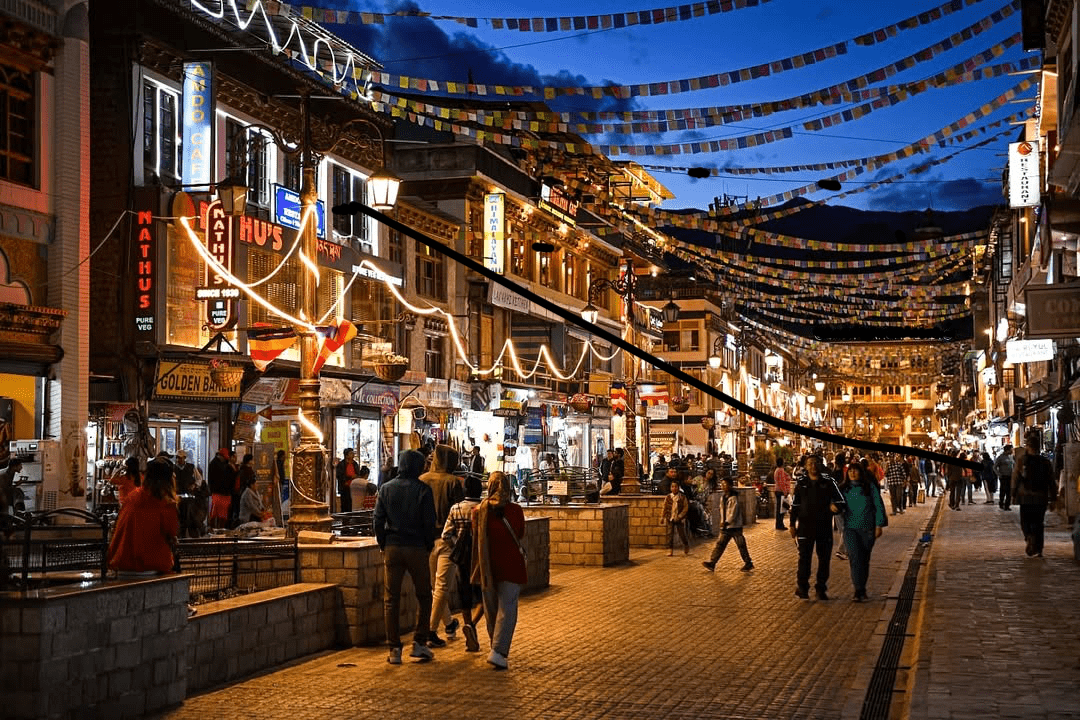
In Leh, the evening begins with ordinary negotiations: a shop shutter pulled halfway down, a scooter coughing in the cold, the last apple seller packing bruised fruit into a sack that will not soften overnight. The light changes quickly here, not with drama but with a practical swiftness, as if the day has other appointments.
From the main road you can still see the outline of the mountains—dark, matte slopes that hold their shape long after detail has disappeared. Above them, the first stars show up with hesitation. They are there, but they do not arrive cleanly. Streetlights throw a pale fog into the lower sky; hotel terraces glow; headlights sweep the dust at ground level. Even the moon, when it is present, can make the night feel crowded.
The first thing you learn, without anyone needing to teach it, is that darkness is not guaranteed. You can stand in a high desert town and still be watching a sky that has been thinned by light. It is a small loss—easy to ignore—but it changes the scale of what you think you are looking at.
The decision to chase darkness, not landmarks
Most itineraries from Leh begin by naming places: a pass, a lake, a monastery, a list of familiar nouns pinned to a map. A stargazing route asks for something less visible. You travel for an absence—the lack of glare, the lack of beams aimed at the road, the lack of screens held up like lanterns. You travel to put your eyes in a different kind of condition.
There is a practical side to this that rarely makes it into glossy descriptions. The body’s adjustment to altitude is not separate from the night you want to see. Sleep becomes a tool. Water becomes a tool. Even the timing of dinner matters, not because of romance but because a heavy meal and a cold night will not cooperate.
The simplest preparation is the least glamorous: a headlamp with a red mode, spare batteries warmed inside a pocket, a scarf that can cover nose and mouth without turning stiff, gloves thin enough to adjust a camera dial without baring skin to the air. It helps to keep clothing quiet—no crunchy shells if you plan to stand near others. The point is not comfort as luxury, but comfort as discipline. If you cannot stand still for more than a minute, you will spend your whole night moving, talking, switching lights on and off, breaking the very darkness you came for.
Crossing the Changthang
Altitude as a quiet instrument
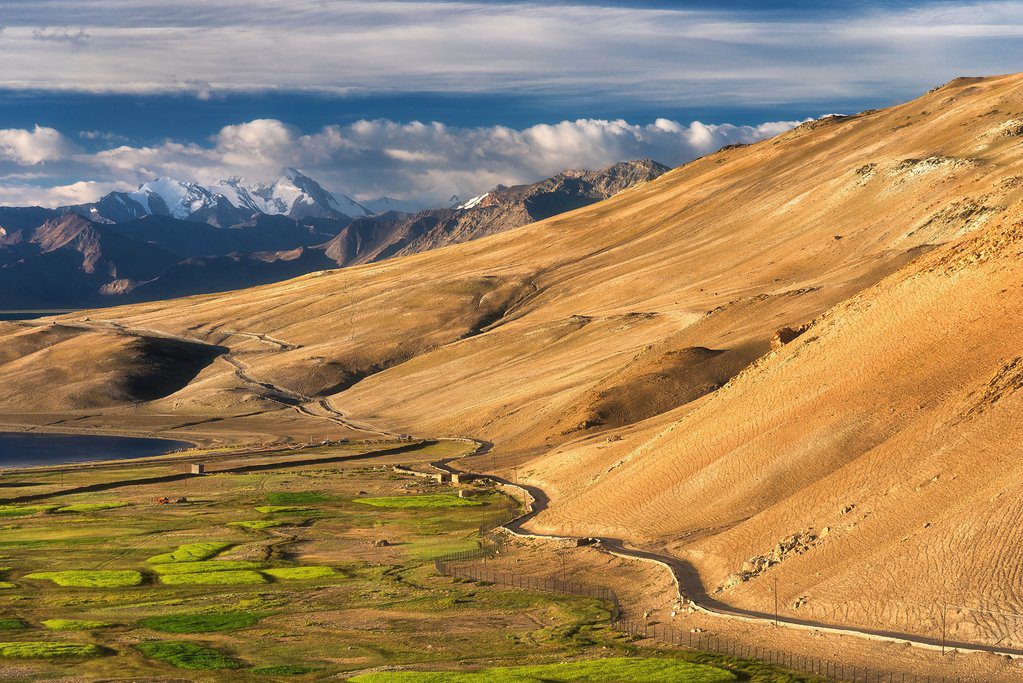
The road east of Leh teaches you to notice what the air does to edges. At certain points the landscape appears rinsed: rock faces look sharper, shadows look more exact. You stop for tea in a low building that smells of kerosene and boiled milk, and when you step out again the wind feels dry enough to pull moisture from your lips before you have finished the first breath.
On the Changthang plateau, the day carries a kind of clarity that is not scenic so much as instructive. Distant hills stand out with a hard patience. The sun is bright but not warming. If you place your hand on a stone, it is colder than you expect. Even in the afternoon, the temperature can fall quickly when clouds pass and the wind rises.
This dryness is not a poetic detail; it is part of why the night sky here can be so legible. Moisture in the air scatters light. Dust does its own version of the same thing. High, cold, dry conditions help darkness hold. The plateau does not guarantee a perfect night—weather still decides—but it sets the stage.
Small rules that make the night possible
If you are traveling specifically for stargazing in Ladakh, the road day is not simply a means to reach Pangong or Hanle. It is the day you decide how you will behave after sunset. Some of the rules are personal: hydrate early, not in frantic gulps at bedtime; keep a layer ready for when the temperature drops fast; avoid turning every roadside stop into a sprint for photographs that leaves you winded and restless at night.
Other rules are social. Darkness is shared, and it is fragile. A single white beam aimed casually across a group can reset everyone’s eyes. A phone screen held at face level is enough to put a sheen on the air. If you are moving between camps or homestays, it helps to speak about light before it becomes a conflict: agree on low brightness; use red light for walking; keep vehicle headlights pointed down when arriving late; avoid switching on floodlights “just for a minute.”
These are not fussy demands. They are the equivalent of removing shoes at a threshold, of not slamming a door in a quiet house. They also align with what some communities around Hanle have begun formalising: the idea that darkness itself can be protected, like water channels or grazing areas, with agreed limits and shared responsibility.
Pangong: A Lake That Pretends to Sleep
Evening wind, generators, and the last chatter of camps
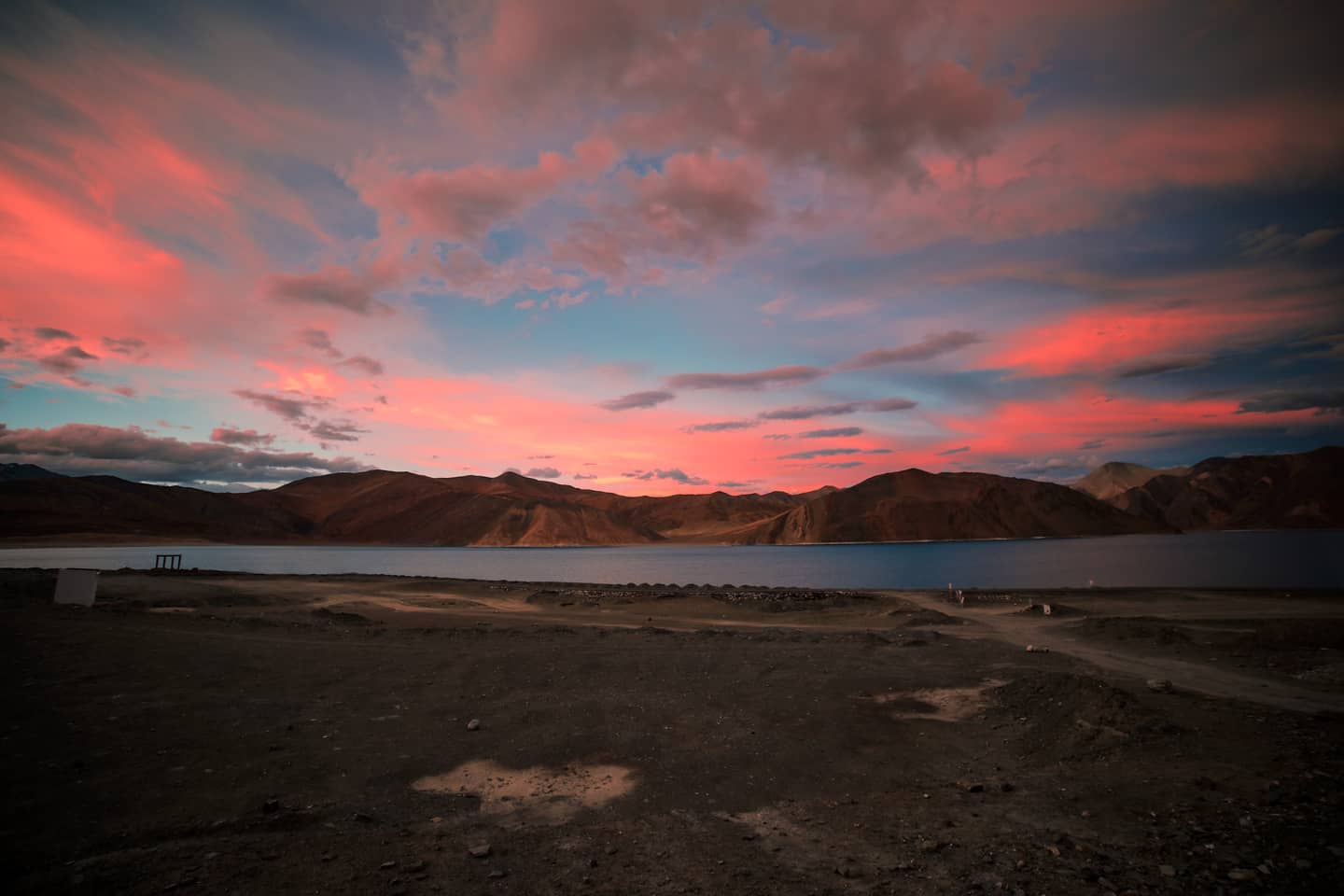
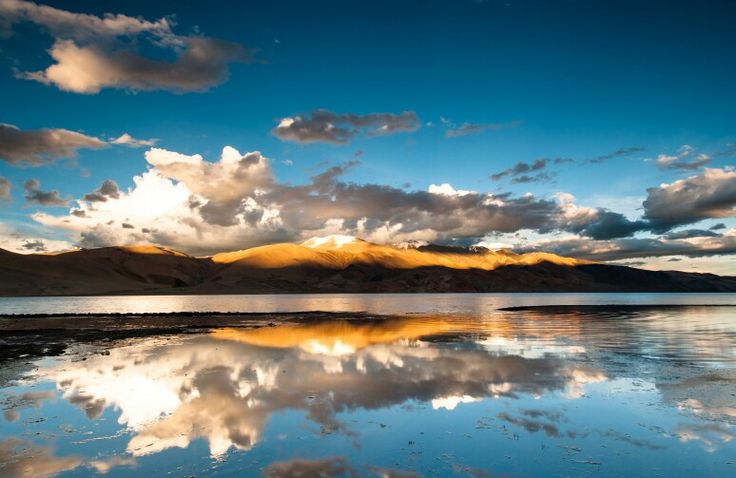
At Pangong, the lake can look like a sheet of metal in late afternoon—light hitting the surface in a way that hides depth. By evening, the colour drains. Wind moves across the water and the sound is not the romantic hush you might expect; it has a blunt insistence, a steady pressure that makes tent fabric snap and straps knock against poles.
The human sounds arrive in layers. A group returns from a short walk and laughs loudly, as if volume could keep the cold out. A generator starts with a cough and then settles into a constant throat-clearing. Someone calls to someone else across a camp path; a kettle rattles; a dog circles the edge of light and then disappears into dark again.
If you are lucky, the lights remain modest. If you are less lucky, the shore becomes a row of bright rectangles—cabins and tents lit like shopfronts—each competing with the next. This is one of the tensions in popular stargazing spots: the night is the attraction, but the infrastructure built to host the night can erase it.
In practice, you can improve your odds by choosing a quieter stay, by asking in advance about lighting, by stepping away from the densest clusters. Even a short walk—ten minutes along a darker stretch—changes the quality of the sky. The lake itself helps: it is an open surface that keeps the horizon low, making the dome above feel larger.
Milky Way over Pangong, and the temptation to collect proof
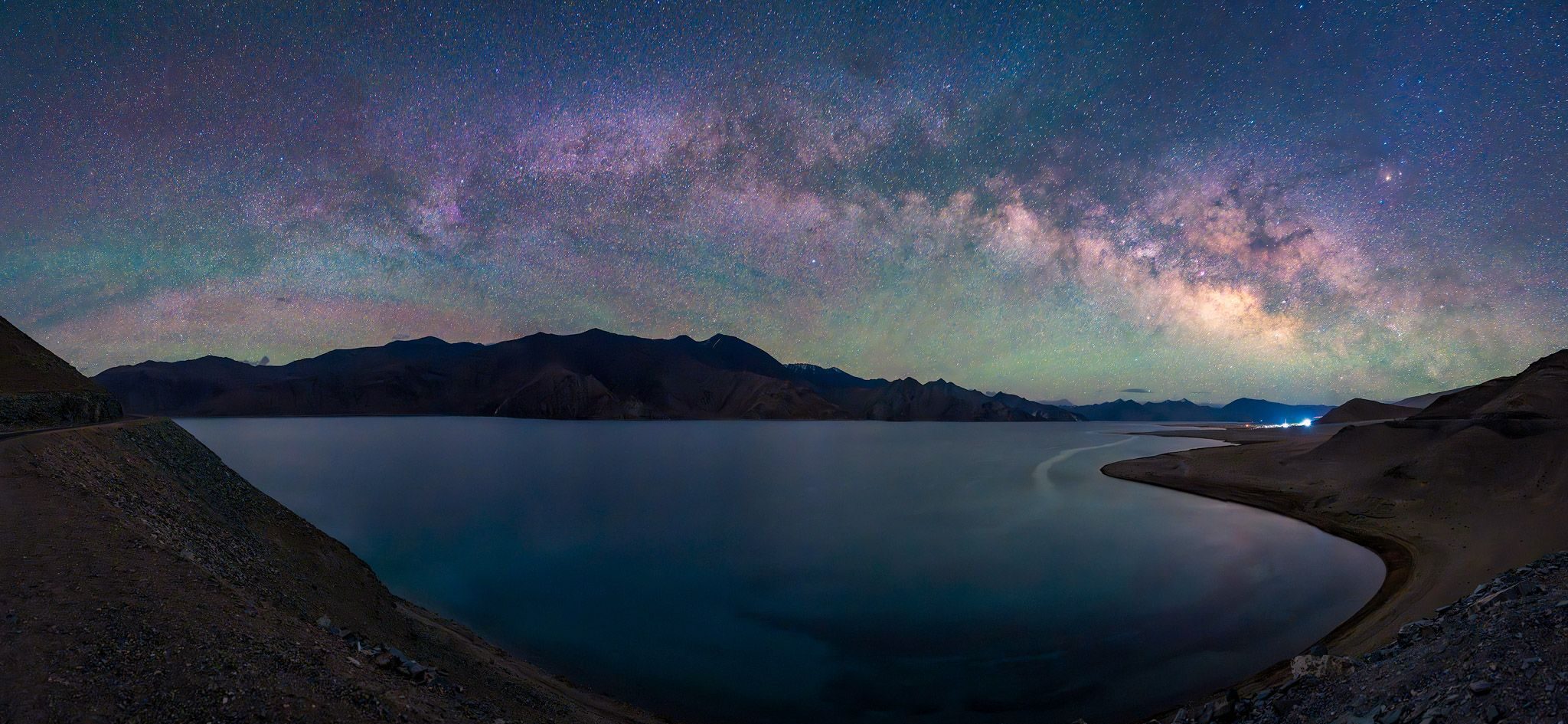
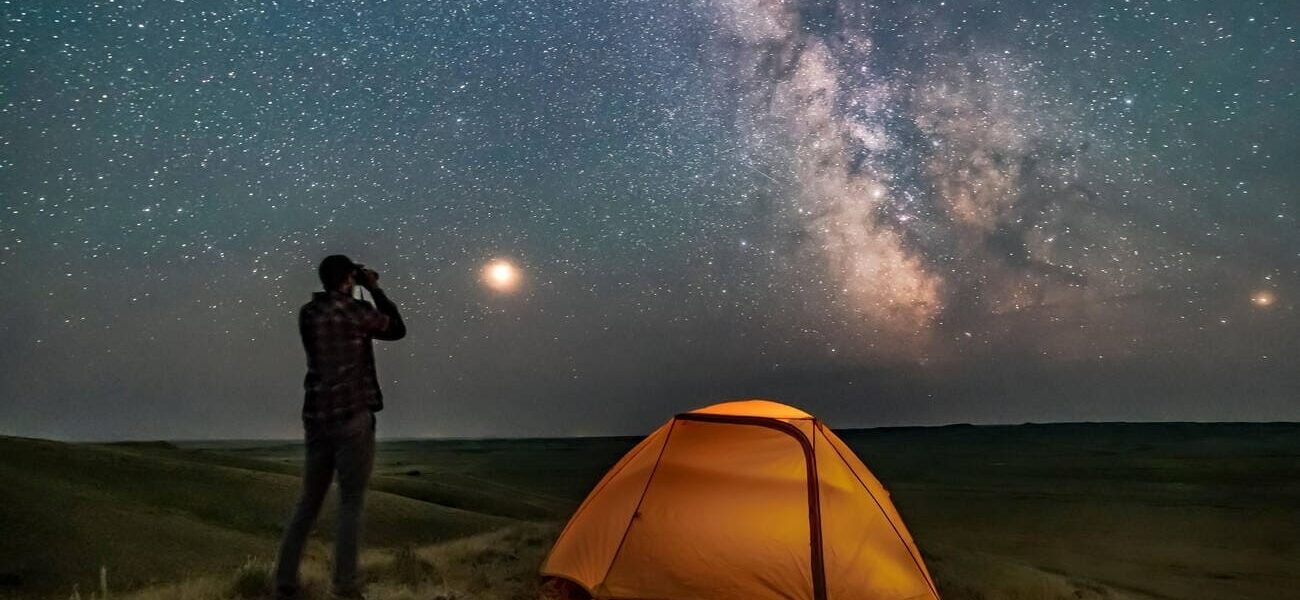
On clear nights, the Milky Way can appear as a pale band that is not immediately dramatic, but steadily insistent. It becomes more visible the longer you stand still. The eye stops scanning for “a thing” and begins to register density: more stars than you thought possible, clusters that look like dust until you realise they are structure.
The practical problem at Pangong is not only light pollution but behaviour. People arrive with the energy of a reveal, as if the sky is a performance scheduled for their benefit. Phones come out. Flashlights wave. Someone turns on a bright torch to adjust a tripod and then forgets it is on. The shore becomes a small stage, and the sky recedes.
If you are photographing, the discipline is simple: set up before it is fully dark, keep your movements minimal, and treat every light you use as something you owe an apology for. Star trails—those long arcs that show the Earth’s rotation—require time. They reward patience more than excitement. The best images at Pangong often come from the quietest corners, where a few people stand with hands in pockets and let the air cool their faces without commentary.
Night etiquette by the shore
There is an unspoken agreement that can turn a popular place into a workable one. Keep your headlamp angled down. If you must check a map, do it with the screen dimmed and facing your body. Do not shout across the dark. If you arrive late, do not flood the area with headlights while you search for your room. Let your eyes adapt, and let other people’s eyes adapt too.
These are small manners, but they decide whether a group leaves with a memory of the sky or with a memory of other people’s glare.
Maan and Merak: The Night Has Neighbors
Homestay warmth and the human scale of cold
In the villages near Pangong—Maan and Merak among them—the night begins indoors. The house is warm in a local way: not evenly heated, but warmed in the places that matter. A stove radiates from one corner. A pot simmers. Wool socks dry near the heat. The air smells of tea, smoke, and something faintly sweet from stored grain.
The domestic rhythm is not decoration. It is how you manage a cold plateau life. You eat what is available and practical. You drink something hot not for comfort as a concept, but because the body holds heat better when it is fed and hydrated. You listen to weather talk as part of logistics: wind direction, cloud movement, whether the road will be open in the morning.
For a visitor, these details do something important: they put stargazing back into proportion. The night sky is not a spectacle detached from life; it is the ceiling above a household that has to wake early, fetch water, feed animals, keep fuel stored and dry.
Local eyes on the sky
People who live here do not describe the stars as an “experience.” They describe them as part of the environment, like the temperature drop or the way sound carries over a flat surface. They know when the night will be clear because they have watched the day’s wind and dust. They know when the moon will wash out detail because they have planned work around moonlit nights for generations.
This perspective is useful if you are traveling for astrophotography. It removes impatience. A cloudy night is not a failure; it is weather. A windy night is not “bad luck”; it is the plateau doing what it does. The sky is not promised. It is offered when conditions allow.
There is also a gentler implication: if you want darkness, you have to behave like someone who respects a shared resource. In villages that have started welcoming more night visitors, that respect can translate into practical requests—keeping lights low, not shining beams at houses, not wandering into private spaces in the dark looking for a better angle.
Nyoma to Hanle: Entering a Protected Dark
When darkness becomes a commons worth defending
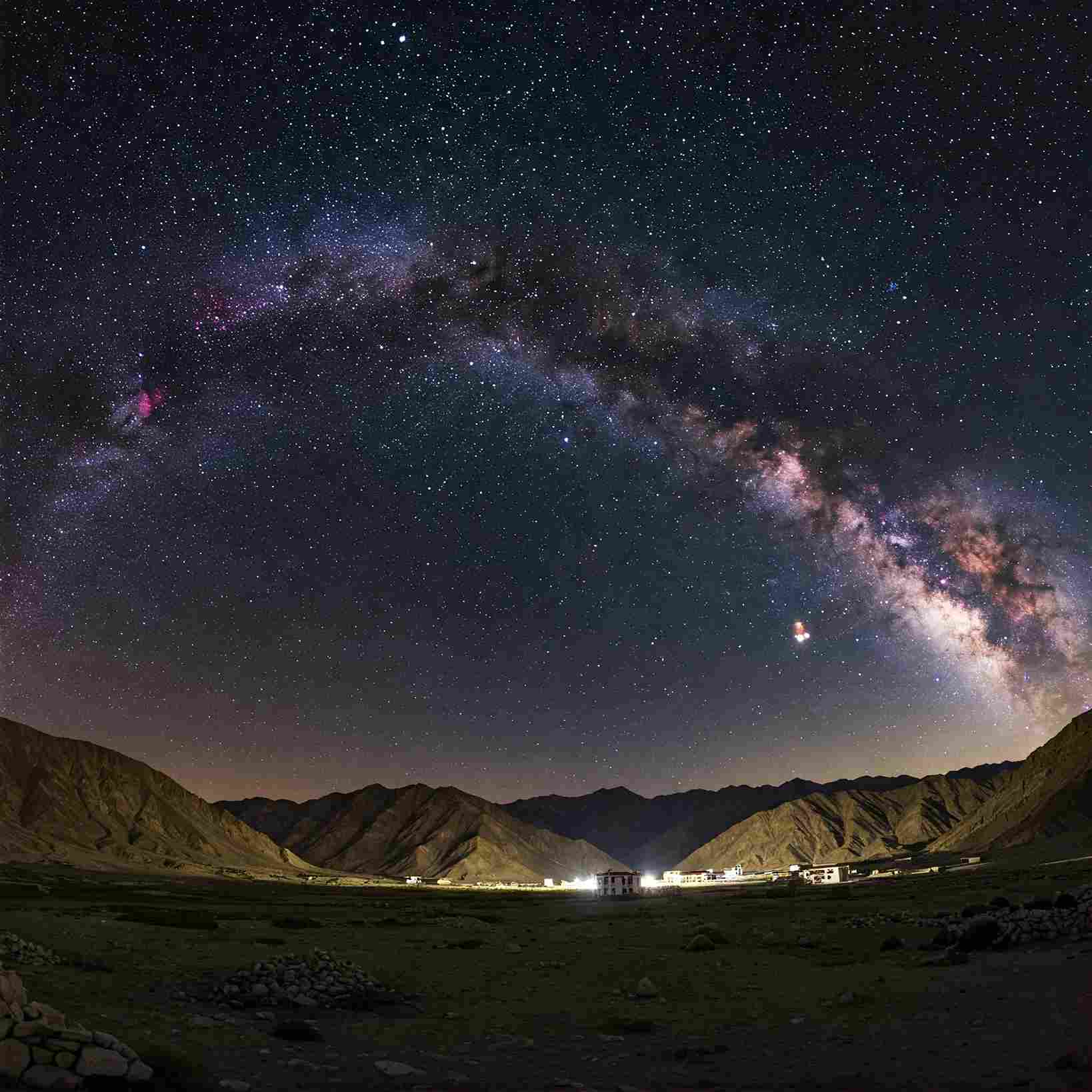
The route toward Hanle is not a dramatic climb; it is a gradual shift into a landscape that feels less interrupted. The road passes through wide, open stretches where the horizon is not cluttered by buildings. Here, the idea of a dark-sky reserve makes immediate sense. There is less to compete with the night.
In recent years, Hanle has been discussed not only as a remote village and a high-altitude observatory site, but as part of a larger effort to protect the quality of the night sky from increasing light pollution. It is a practical kind of conservation. Artificial light travels. It spreads beyond its source. Once bright lighting becomes normal in one place, it becomes harder to justify restraint in the next.
Protection, in this context, is not about turning back time. It is about setting limits early enough that the darkness remains usable—for science, for education, and for the quiet form of tourism that comes to look, not to dominate.
Astro-ambassadors and the work behind wonder
One of the most interesting developments around Hanle is not a new telescope or a flashy event, but the emergence of local people tasked with guiding visitors and encouraging good night practice. The concept is simple: if you are inviting outsiders to a place for its darkness, you need caretakers of that darkness.
The work is often small and repetitive. Reminding a group to switch off a bright phone torch. Asking someone to point a flashlight down. Explaining that headlights left on while unloading luggage can erase the visibility of the sky for everyone nearby. These reminders do not sound heroic, but they require patience and confidence—especially when the visitor believes they have paid for the right to do as they like.
In Hanle, the right framing is closer to a shared silence in a church than a private booking. Darkness is not sold; it is maintained. The presence of these guides—sometimes described as “astro-ambassadors”—is a sign that the community is not only receiving tourism but shaping it.
Hanle: The Universe Opens Like a Door
Thin villages, deep sky
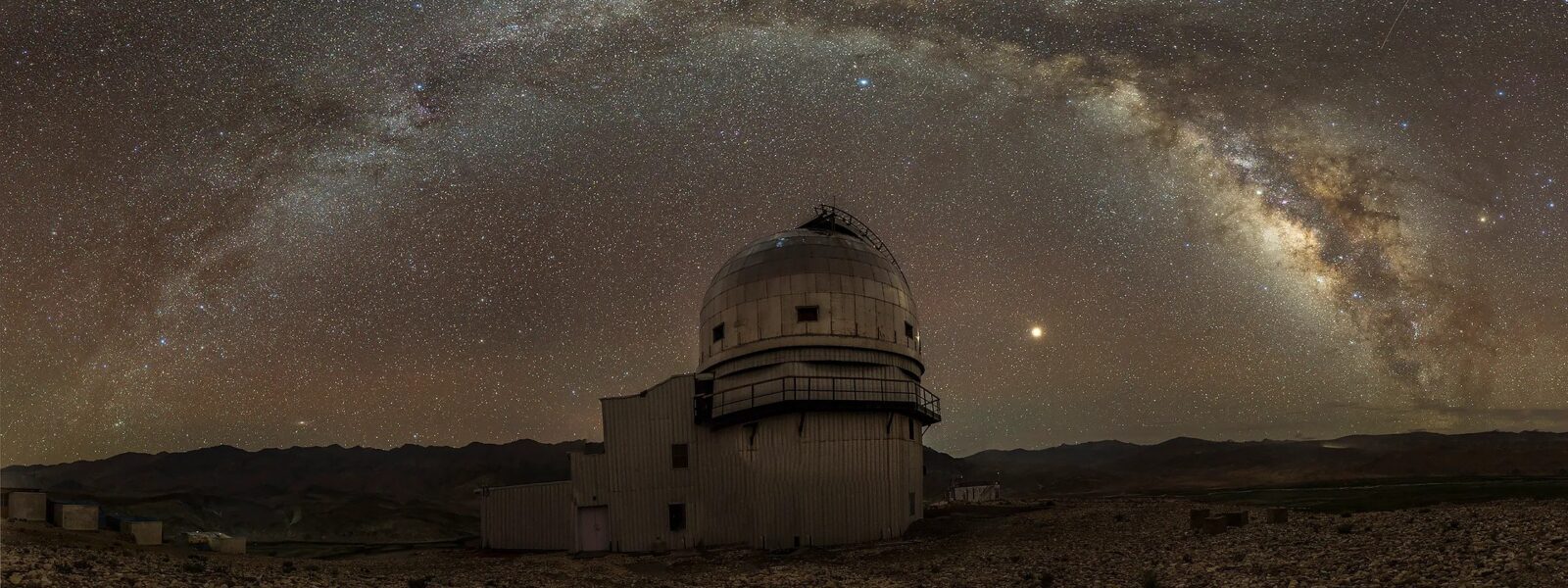
Hanle at night can feel startlingly spare. The village is small. The air is cold enough that your breath becomes visible immediately, then disappears. Footsteps on dirt sound sharper. A dog barks once and the sound travels farther than you expect, fading slowly into the dark.
When the sky is clear, the first impression is not “more stars,” though there are many. The first impression is contrast. The sky looks darker. The stars look whiter. Constellations that are often reduced to a few bright points in urban Europe become crowded with intermediate stars, the lines less like drawings and more like dense neighbourhoods of light.
You notice the horizon too. Because there are fewer lights on the ground, the boundary between land and sky is cleaner. A mountain ridge becomes a solid silhouette rather than a ragged outline softened by glow.
Star parties, telescopes, and the right kind of attention
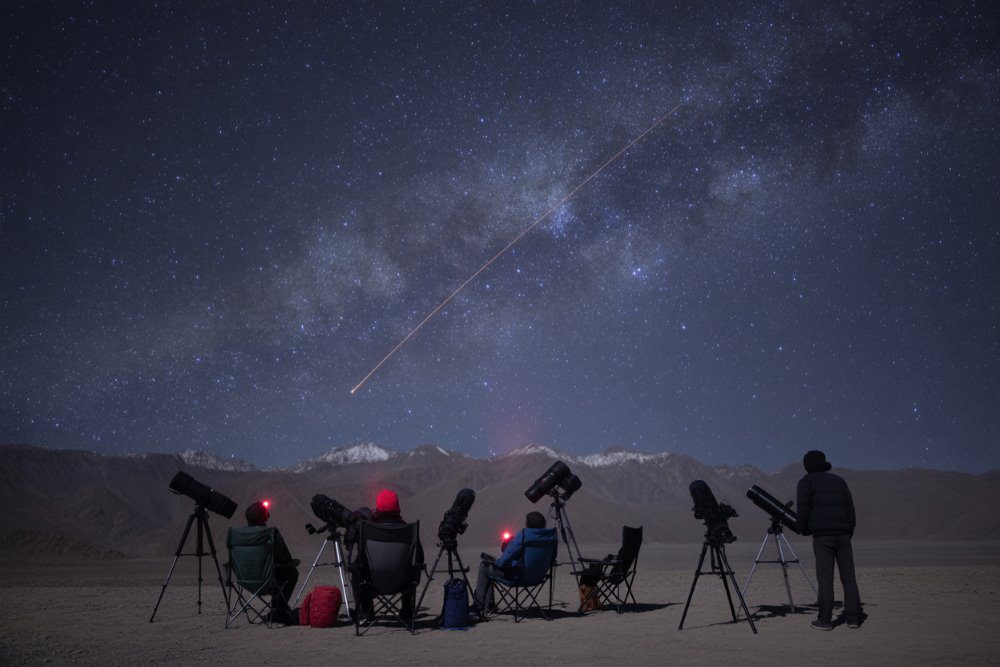
In some seasons, organised stargazing gatherings and educational nights bring visitors closer to the observational side of Hanle. Telescopes turn the sky into an object you can examine with the seriousness it deserves. People queue quietly. Someone adjusts a focus knob with gloved fingers. A guide explains what you are about to see in plain language, without theatrics.
The atmosphere differs from the lake shore. There is less pressure to perform your amazement. The equipment itself requires a slower pace. You wait for your turn, and in that waiting your eyes continue to adapt. The longer you stand under the sky without exposing yourself to bright light, the more the sky becomes structured. You begin to see faint bands, small star clouds, the irregular darkness where dust and gas block light. This is not an emotional statement; it is optical fact.
For European readers used to bright, managed nights—streetlights that turn the sky into a uniform grey—this difference can be startling in a quiet way. You are not being entertained. You are being allowed to see.
Astrophotography without greed
Hanle attracts astrophotographers for good reason. The conditions can be exceptional: high altitude, low humidity, relatively low light pollution when lighting is controlled. But good photography here depends less on expensive gear than on restraint.
Set your camera before full darkness so you are not fumbling with bright screens later. Use minimal illumination. Keep your light low and shielded. If you are with others, assume that your needs are not the only ones in the dark. A long exposure is not improved by constant movement around the tripod. A star trail sequence is not helped by repeated light bursts. Even a single bright headlamp can leave unwanted streaks across another person’s frame.
What tends to produce the most satisfying images in Hanle is not aggression but steadiness: a simple foreground—stone, dry grass, a low wall—held still against the deep sky. The result looks less like conquest and more like record. In a place where darkness is being treated as a resource, that distinction matters.
The Return to Light
Morning chores, bright roads, and what you notice afterward
The next morning in Hanle comes early and without softness. Water is cold enough to sting. Metal feels sharp to the touch. A kettle takes longer than you want it to. Someone in the house is already awake, moving quietly, making tea, doing the work that does not pause because visitors arrived to look at the sky.
On the road back toward Leh, the landscape looks almost too bright. The same dry air that helped the night hold now makes the day feel hard-edged. Dust rises behind vehicles and hangs in the light. You stop for tea again, and the shop’s fluorescent bulb looks harsher than it did before, as if your eyes have grown more sensitive to unnecessary glare.
This is one of the understated outcomes of stargazing in Ladakh from Pangong to Hanle: the change does not stay in the night. You begin to notice light as a choice. You notice when a hotel courtyard is overlit. You notice the way a single floodlight can flatten a whole street. You notice how quickly eyes adapt when you give them the chance, and how quickly that adaptation is stolen.
Back in Leh, the mountains are still there, patient as ever, and the evening still arrives with its brisk practicality. The sky will not always be as deep as it was in Hanle. But the idea that darkness can be entered—and protected—does not leave so easily.
a storytelling collective exploring the silence, culture, and resilience of Himalayan life.