
When the Valley Refuses to Perform
By Sidonie Morel
A Flight Into Thin Light
Leh, at the speed of the body
In winter, Leh receives you without ceremony. The airport is efficient, the road into town is a strip of tarmac cut through pale ground, and the first facts arrive before any romance can: altitude, dryness, cold. A car door shuts with a short, hard sound. Breath shows itself, immediately, as something you can see. Inside the hotel lobby, the heater has that faint smell of hot dust, and the carpet feels too soft after the grit outside.
Acclimatisation is not a suggestion here; it is the first etiquette. The town’s lanes are walkable, but the pace is set by physiology, not desire. A few minutes on foot is enough to notice how quickly the throat dries, how the lips chap, how a small incline asks for a pause. You learn to carry water without making a performance of it, to take small sips as if you are rationing a resource. In shops, the air is warm and thin at once—pleasant on the skin, yet oddly incomplete when you inhale.
For European readers used to arriving and beginning at once, Ladakh in winter encourages a different order. A snow leopard tour in Ladakh is often described as a “search,” but the first search is for steadiness: sleep that comes easily at altitude, appetite that returns, the calm, ordinary energy that allows you to walk ridgelines later without courting risk. The practicalities are simple and quietly strict. Avoid alcohol at first. Eat warm food. Rest. If a headache comes, treat it as information, not drama. The mountain does not reward bravado, and winter is a poor audience.
The Road That Narrows the World
Leaving the town behind
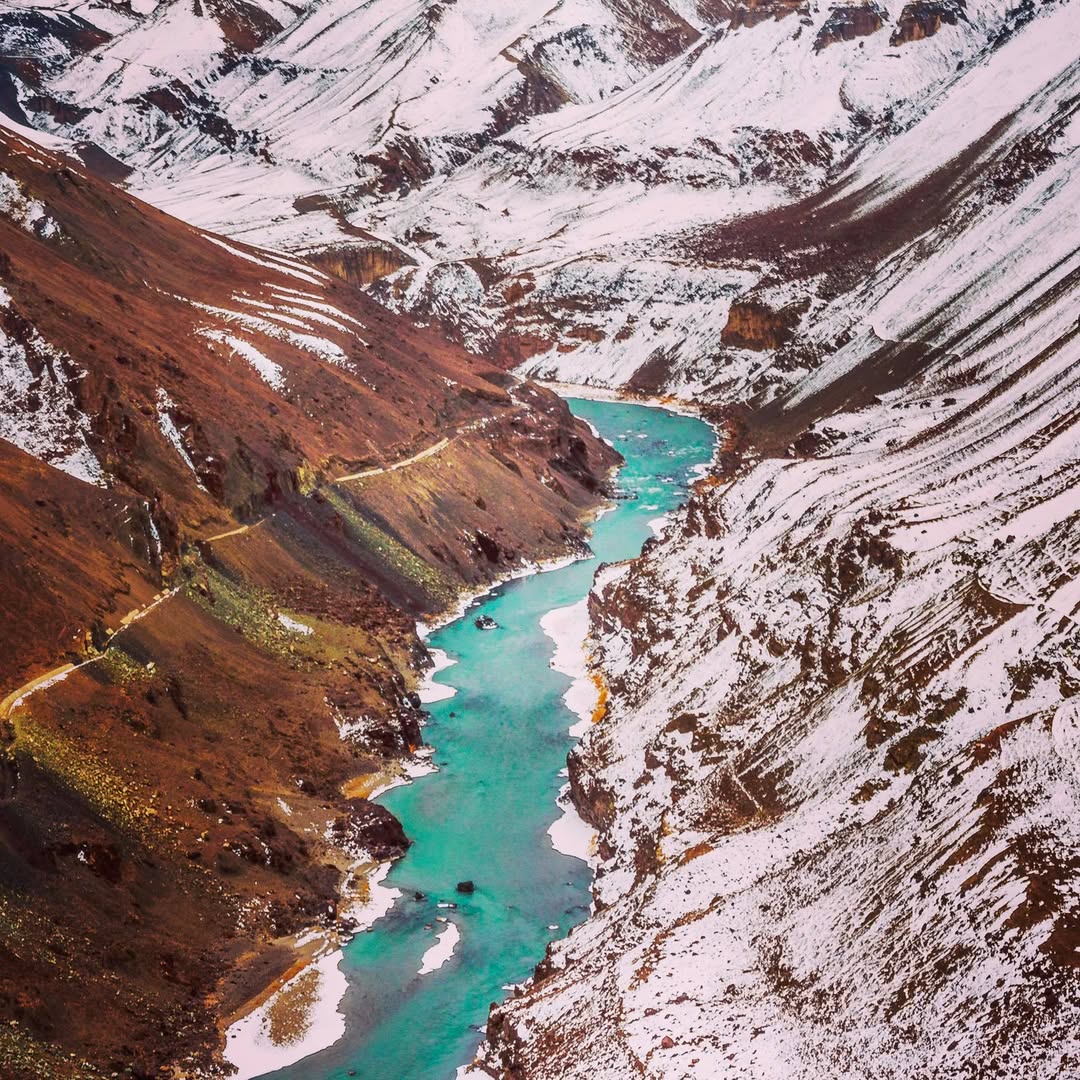
Morning in Leh has a particular clarity. The light is bright but not warm, and the edges of buildings look sharper than they do in summer. On the way out, you pass shuttered stalls and small courtyards where someone is already knocking ice from a tap. A dog sleeps in a patch of sun that has not yet reached the street, its fur dusted with frost. The river sits low in its channel, and the poplars stand bare, their branches drawn like fine lines against the sky.
For most travellers, Hemis National Park sounds like a single destination. In reality, the approach is an unhurried progression into quieter terrain: fewer vehicles, fewer voices, and a landscape that does not offer easy landmarks. Snow is not always deep; some slopes are scoured to stone by wind, while shaded gullies hold hard-packed drifts. The colour palette is restrained—grey rock, straw grass, white patches, and the occasional bright rectangle of cloth where a prayer flag has survived the season.
It is worth acknowledging, early, what winter wildlife watching in Ladakh is not. It is not a safari with predictable sightings. It is not a set of hours that can be purchased. The road takes you towards the valleys where the chances improve—towards the Hemis and Rumbak area that has become a focus for community-based tourism and conservation—but the conditions remain those of a working mountain environment. Temperatures drop fast when the sun slips behind a ridge. Fingers go numb in minutes if you remove gloves to adjust a camera dial. Batteries drain. Water bottles freeze at the mouth first, so you store them upside down or wrap them in socks inside your pack.
Rumbak: A Village Built for Cold
The homestay, the stove, the rhythm of small tasks
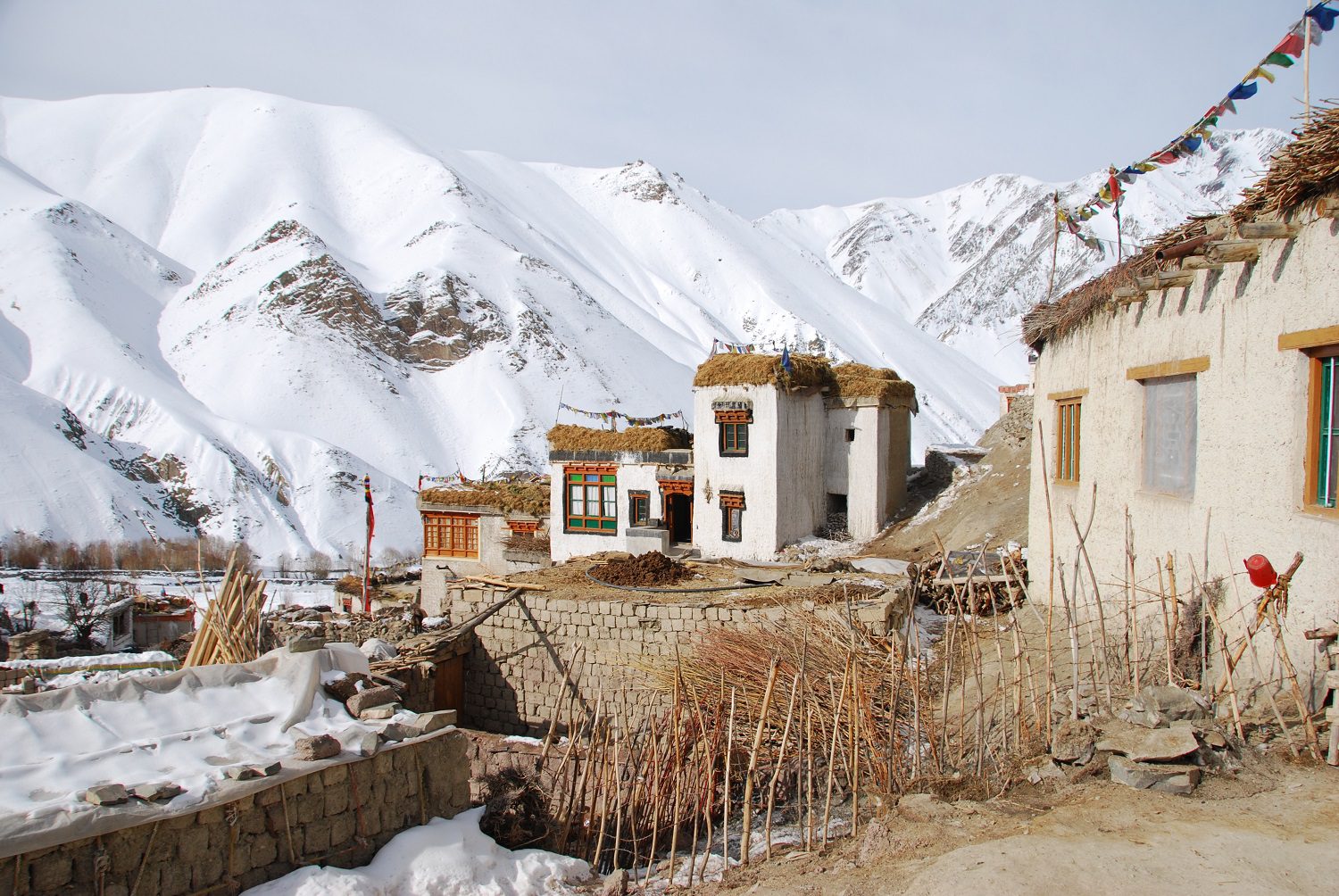
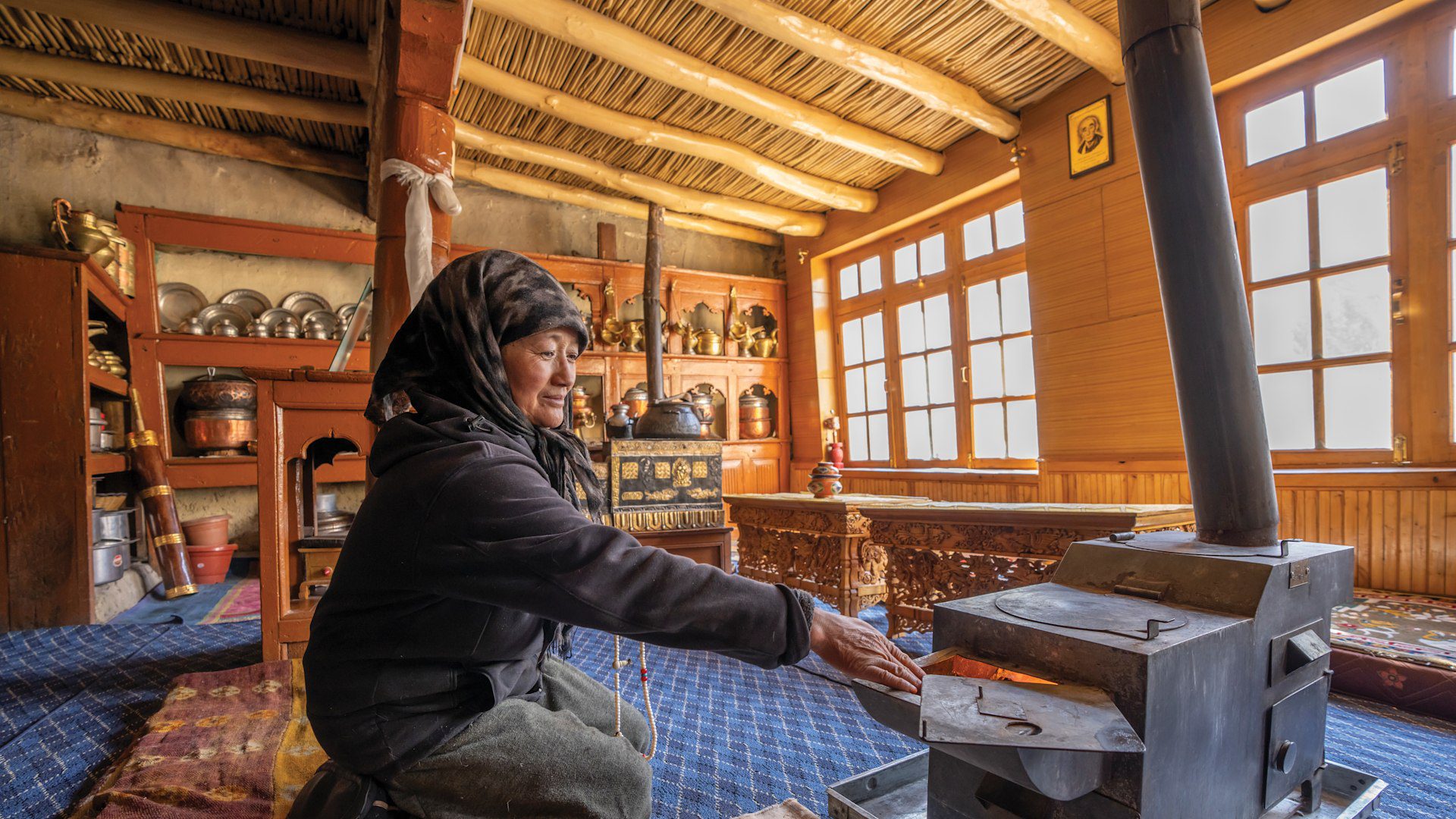
Rumbak’s appeal for visitors is often framed as proximity to snow leopard habitat, but the village itself is reason enough to slow down. Houses are compact, thick-walled, and practical. The entrance is low, the floors are covered with woven rugs that catch dust and retain warmth. A stove sits at the heart of the main room, and around it the day is arranged: tea, meals, drying socks, charging phones when the power is available. The warmth is localised and real. Move two metres away and the air cools noticeably. Sit close and your cheeks flush while your feet still feel cold.
The most memorable details tend to be domestic rather than dramatic. A metal kettle, repeatedly refilled. A stack of bowls, washed with water that must be managed sparingly because it arrives as frozen labour—ice chipped and melted, or containers carried. Butter tea with a surface sheen that clings to the lips. The smell of smoke embedded in winter clothing. The weight of a thick blanket pulled over you at night, and the way your breath condenses in the room before dawn.
In conversations, you hear a version of the same story from different angles: livestock, losses, adaptation. The relationship between snow leopards and villagers is not abstract; it has been measured in animals taken from corrals and the effort required to protect them. This is where the search for snow leopards in Ladakh becomes inseparable from the question of how tourism money moves. When the benefits land in the village—through homestays, local guiding, porters, and food supplies—the incentive to tolerate a predator becomes more tangible. The best operators do not treat this as a marketing line; they treat it as a logistical truth. Who is paid, and for what, shapes what survives.
Spotters and trackers: the work of attention
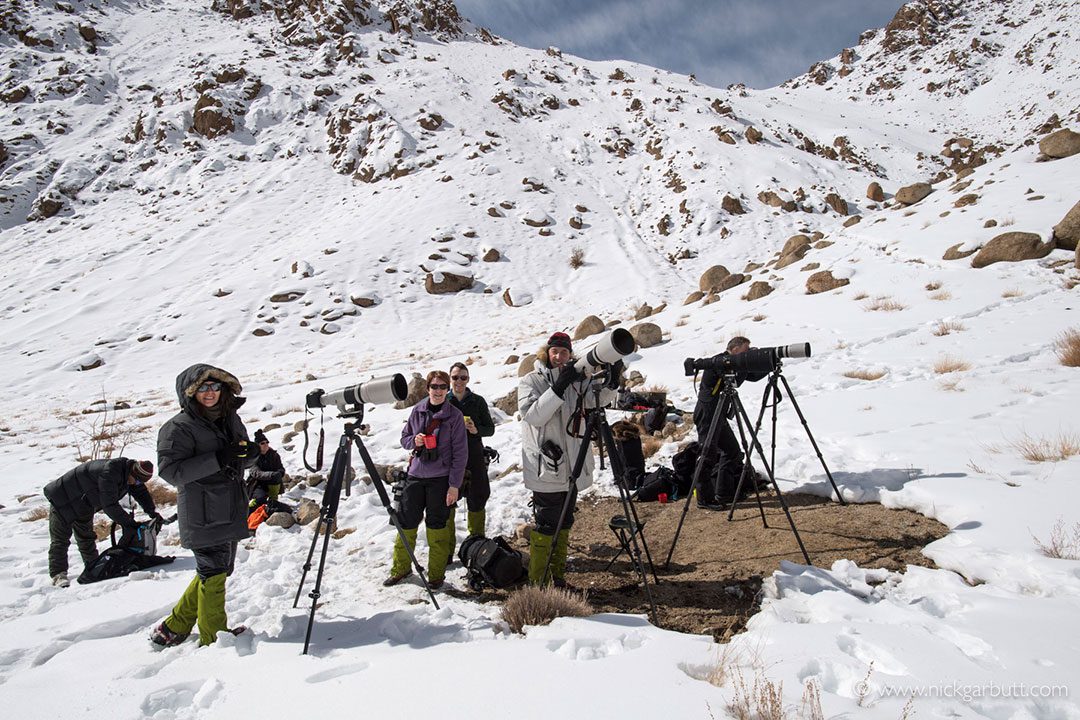
Outside, the valley is quiet in a way that feels physical. Sound does not travel far. Snow muffles footsteps; wind changes direction abruptly; a single raven call can cut across minutes of silence. The people who guide you in this terrain are often described as “spotters,” but the role is broader. They read a slope as a set of probabilities: where blue sheep feed, where they bed down, which cliffs offer escape routes, which saddles funnel movement. They notice small things quickly—an old scrape in the snow, a line of tracks that does not belong to a dog, a fresh scatter of pellets, a patch of fur on a rock.
To a visitor, these signs can feel like clues in a story. To the people who live and work here, they are simply part of the day’s information. On a ridge, a guide will pause and scan without drama, moving binoculars in a slow grid. If someone sees something, the reaction is restrained: a hand gesture, a murmur, a passing of the scope. Excitement exists, certainly, but it is controlled because the stakes are practical. Moving too quickly can spoil a sighting. Approaching too close can push an animal out of view or into dangerous terrain. A snow leopard is not a prize to be closed in on; it is an animal with its own economy of energy, and winter makes energy expensive.
Walking the Ridge, Learning to Wait
Cold as a constant, not a theme
Most days begin with layering. Base layer, fleece, down, shell. Gloves that allow you to operate a camera but still protect your fingers. A spare pair, because sweat and cold make a poor combination. The first minutes of walking are often comfortable; movement creates heat. Then you stop, and the body cools faster than expected. You learn to manage pauses: pull on an extra jacket immediately, not after you start shivering. Keep a hat in your pocket even if you began without one. Eat small amounts regularly—nuts, chocolate, dried fruit—because a large lunch break means sitting still for too long.
In Ladakh, winter light can be bright enough to burn skin even when the air feels cold. Lip balm becomes equipment. So does sunscreen. The ground is uneven: loose stone, hard snow, frozen soil that breaks underfoot. It is not technically difficult trekking, but it is steady work at altitude, and that steadiness is what makes the day possible. A snow leopard tour in Ladakh often includes long hours of scanning from ridges, and the body’s comfort determines the mind’s patience. If you are cold, you will want to move on. If you are hungry, you will make hurried decisions. If your feet hurt, you will stop paying attention to the slope and start thinking only of the homestay stove.
Optics, distance, and the ethics of looking
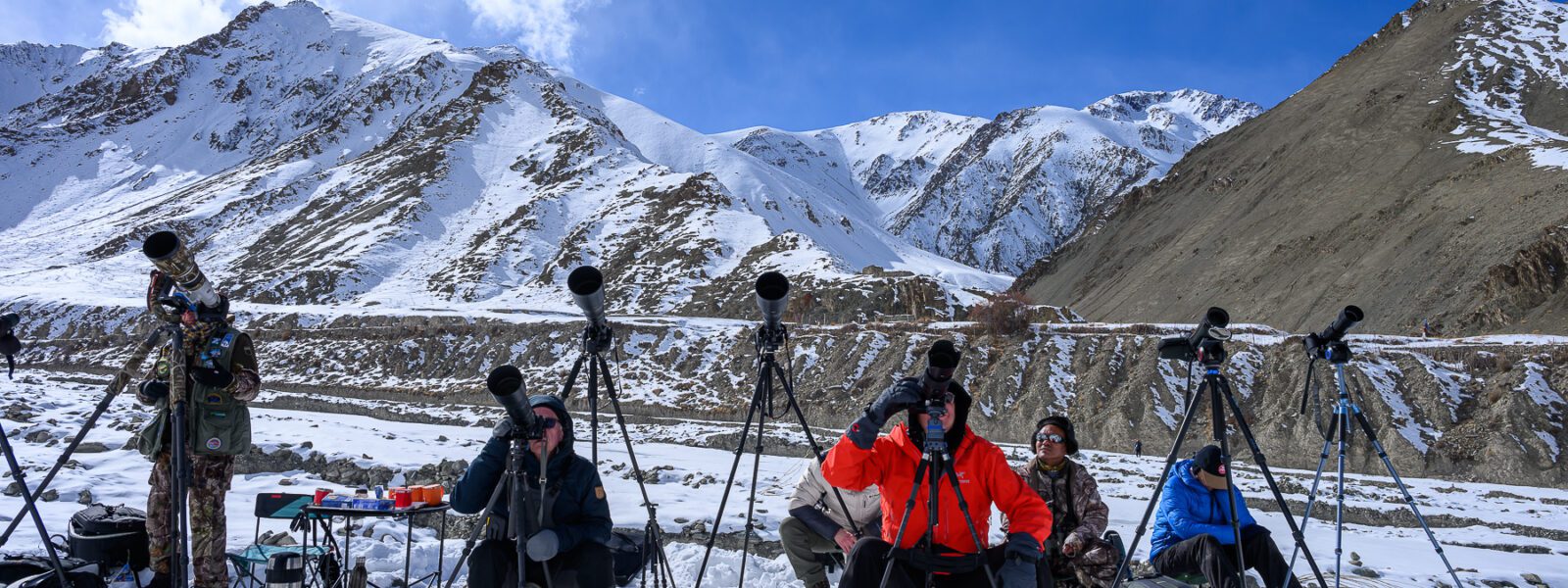
There is a particular choreography to a sighting attempt. Someone chooses a vantage point—often a ridge with a clear view into a wide bowl. Tripods are planted. A scope is adjusted. The group settles into a line that keeps movement minimal. The scan begins: rock faces, ledges, shadowed creases where a body could be folded into stone. At first, everything looks like everything else. Then, gradually, your eye improves. You start to distinguish the colours of rock. You notice where snow has drifted and where it has been swept away. You learn how quickly light shifts on a slope, creating false shapes.
Distance is not just a technical issue; it is ethical. In winter, the animals are conserving energy. Pushing them to move—by approaching too close, by crowding a line of travel, by encouraging repeated pursuit—costs them more than it costs you. Responsible wildlife watching in Ladakh is not about perfect behaviour; it is about consistent restraint. Keep your position. Accept that a good view through optics is often better than a poor view with proximity. Do not demand that guides “make it happen.” The most experienced guides tend to be firm about this, and it is a good sign when they are.
Photographers sometimes arrive with an unspoken expectation of a close portrait. The reality is more modest and, in some ways, more honest. You may see a snow leopard as a pale shape moving across a cliff, its long tail trailing like a line. You may see it pause, look back, and disappear into shadow. You may see nothing at all and still come away with a clearer understanding of the valley’s life: where prey moves, how wind dictates comfort, how quickly cold empties the landscape of unnecessary motion.
The Hours When Nothing Happens
Blue sheep, ravens, and the valley’s ordinary evidence
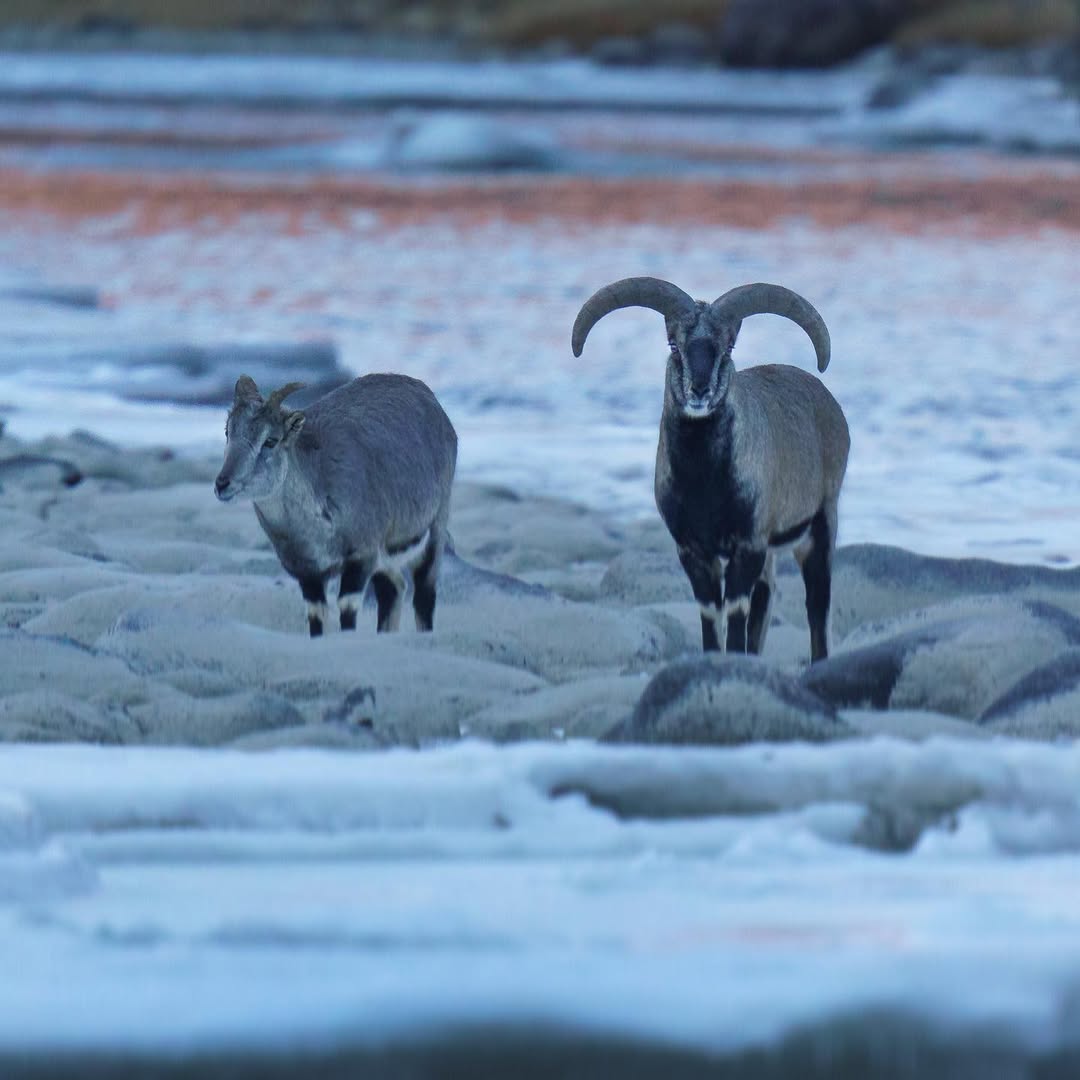
In the long waiting, attention does not stay fixed on the leopard alone. You begin to notice the supporting cast that makes a predator possible. Blue sheep move in small groups, stepping with a sure-footedness that looks casual until you try to stand where they stand. Their coats blend into winter rock, and their movements are economical: a few steps, a pause, a chew, a turn of the head. When they start to cluster tightly or stare in one direction, guides take note. Ravens arrive like punctuation. A lammergeier can appear suddenly, broad-winged, riding a current above a ridge with almost no visible effort.
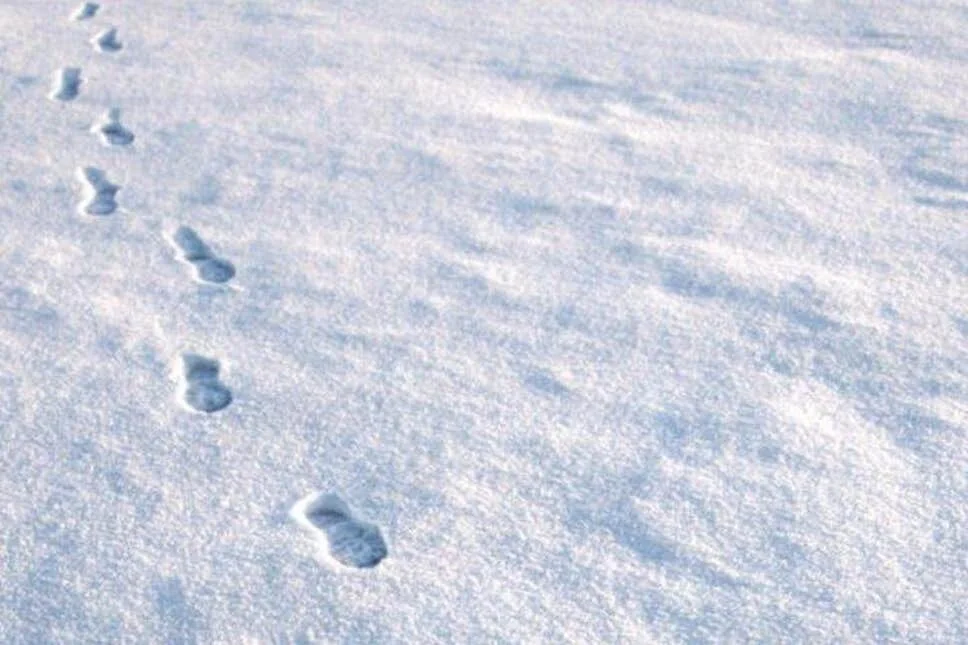
The evidence of life is often small. A line of hoofprints. A shallow hollow where an animal has rested. A scuffed patch of snow where something has slid. The dryness is constant; it shows in chapped hands, in the way wood feels brittle, in the dust that rises even in cold air when someone knocks snow from their boots. Water is present, but not generous. You see it mostly as ice: a glazed film over a trickle, or a frozen seep on a rock face.
For European travellers, this kind of day can feel unfamiliar: the agenda is not filled, the hours do not produce a tidy outcome. Yet this is precisely what many of the best essays and trip reports about the region capture—the weight of time, the slow accumulation of observation, the way a landscape teaches you to accept partial information. If a snow leopard appears, it does so on its own terms. If it does not, the day is still full of facts: temperature shifts, wind changes, the behaviour of prey, the signs left behind.
When the ghost appears
A sighting, when it comes, is often announced quietly. Someone adjusts the scope. A guide asks you to look where their finger points, but not at the finger—past it, to a ledge, a crease, a seam of rock that you would not have chosen. Through the optics, the shape resolves. The coat is not white; it is grey and buff and faintly patterned, designed to break up the body against stone. Movement is controlled, almost minimal, as if the animal is aware of how much effort a single step costs in winter.
There is usually no cheering. People hold their breath, not theatrically, but because they are concentrating. Cameras click softly. Someone’s glove brushes a tripod leg. The snow leopard may pause and then continue, the tail following with a heavy grace. It may stop behind a rock and not re-emerge. The moment can last minutes or seconds. It is often far enough away that you cannot see eyes, only direction. That distance, oddly, makes the encounter feel cleaner. The animal remains wholly in its environment, not in yours.
In the best-run snow leopard tours in Ladakh, guides do not turn the moment into a victory speech. They keep scanning, because the valley does not stop at one sighting, and because a single view does not exhaust the question of where the animal will go next. Back in the homestay, there may be a replay of the moment—someone shows a photo on a phone, someone points to the ridge on a map—but it remains anchored in the day’s practical realities: cold fingers, a late lunch, the need to drink enough water even when you do not feel thirsty.
Evenings in the Kitchen, Nights Under Ice Stars
Heat, food, and the part of the trip no one photographs well
The return to a warm room is not a luxury; it is recovery. Boots come off with effort, and socks steam faintly near the stove. Hands hover over heat until sensation returns. The kettle is back on, again. Dinner is filling and straightforward—rice, lentils, vegetables, sometimes meat—served in bowls that have been warmed. There is often a softness in these meals that travel writing misses: the repetitive care of feeding guests in a place where winter makes everything harder.
Conversations in the evening are rarely grand. People compare what they saw through the scope. Someone asks how far away the animal was. Guides talk quietly about weather for the next day, about which ridge might be worth trying, about whether the wind will make a certain viewpoint too exposed. In some homes, solar power or a small generator provides limited electricity, and charging becomes a shared routine: phones, camera batteries, headlamps. The reality of this kind of travel is not glamorous; it is a sequence of small management tasks that keep the next day possible.
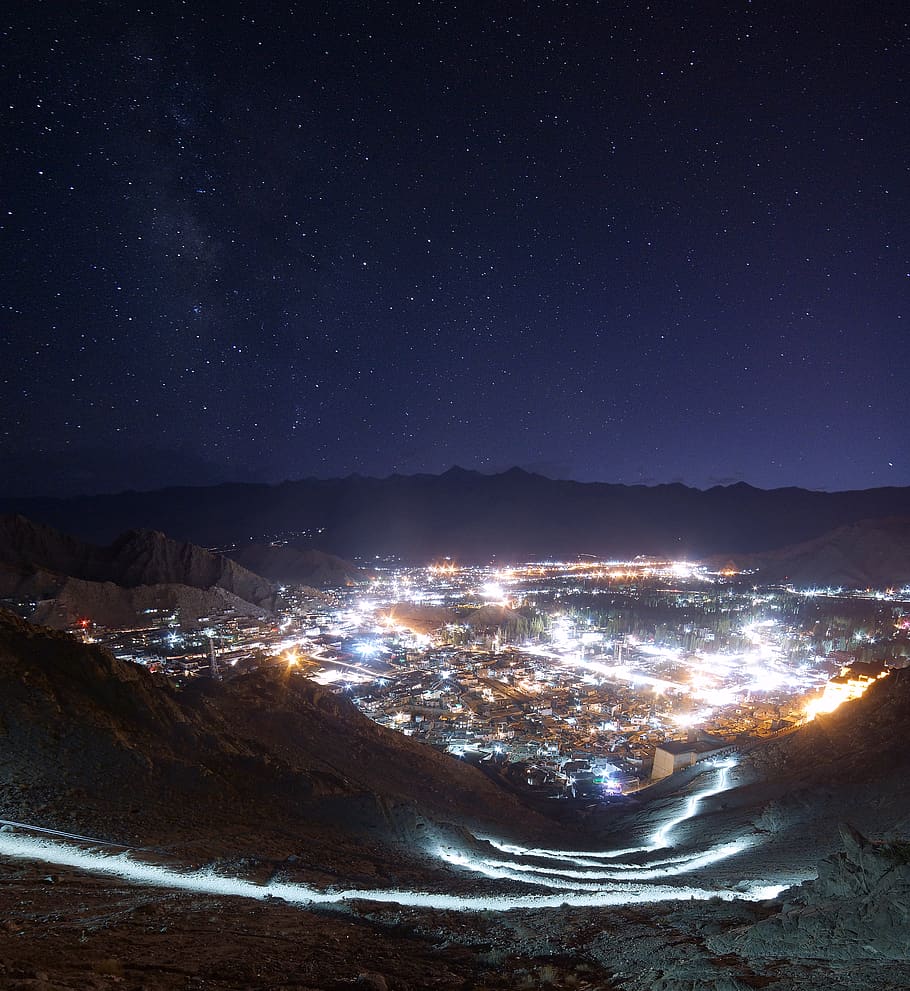
At night, if you step outside, the cold is immediate and clean. The sky can be crowded with stars, but it is not a scene meant for lingering unless you are properly dressed. Snow crunches underfoot. The village is quiet. Occasionally you hear an animal shift in a pen, a faint bell, a door closing, the distant bark of a dog. Back inside, layers of blankets do the work that central heating would do elsewhere. You sleep with a water bottle tucked near you so it does not freeze. You wake early, because light arrives quickly in winter and because the day’s rhythm is set by the need to be on a ridge when the valley begins to warm.
Leaving the Valley, Carrying Its Rules
What the search changes, without saying it does
The departure from Rumbak is usually practical: pack bags, settle accounts, thank hosts, lift a pack onto shoulders that have grown a little stronger in thin air. The path out looks different on the way back. You notice the steepness you did not register at first. You recognise certain stones, a bend in the trail, a section where wind always seems to cut. Returning towards Leh, the world gradually fills again—more vehicles, more voices, more signals on your phone.
Many travellers want to translate a snow leopard sighting into a lesson, but Ladakh does not lend itself to neat morals. What stays with you is often more specific: the discipline of waiting with a purpose, the way the guides’ attention is both trained and humble, the economics of a village making room for a predator, the physical reality of winter travel at altitude. You remember a stove’s heat on your palms, the scratch of dry air in your throat, the weight of a scope on a tripod, the time it takes to scan a single slope properly.
For European readers considering a winter trip to Ladakh, the most honest advice is also the simplest: arrive with patience, invest in a responsible operator who pays locally and respects distance, prepare for cold that interrupts photography and conversation alike, and accept that the search for snow leopards in Ladakh is, by design, not fully in your control. The valley does not perform on request. It offers what it offers—evidence, silence, and, sometimes, the brief movement of a body that belongs perfectly to stone.
a storytelling collective exploring the silence, culture, and resilience of Himalayan life.