
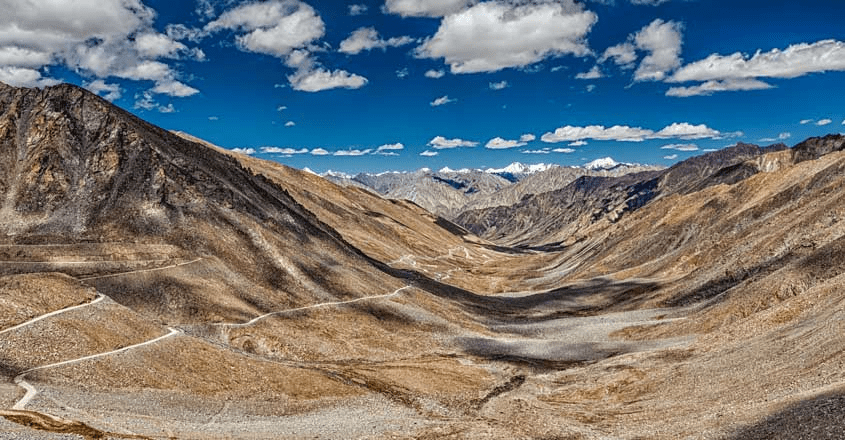
When Movement Followed Memory, Not Maps
By Declan P. O’Connor
Introduction: Rethinking the Silk Road from the Roof of Asia
The Question Ladakh Forces You to Ask
The phrase “Silk Road” arrives in the European imagination already varnished: a ribbon of caravans, a clean line drawn from one civilization to another, an antique promise that trade can domesticate distance. Yet Ladakh, once you enter its thin, luminous altitude, has the unsettling habit of undoing tidy stories. The valleys don’t lead you forward; they lead you sideways. The passes don’t connect two points; they turn travel into a negotiation with weather, fatigue, and the politics of whoever controls the crossing this decade. And the most important routes are not always the ones that look impressive on a modern map. They are the ones that can be remembered, repeated, and repaired—by people who know what a winter does to a promise.
To rethink the Silk Road from Ladakh is to accept that movement is rarely a straight march toward a destination. It is more often an art of timing, a choreography of waiting, a discipline of choosing which risk is survivable. If you stand in Leh and listen to the old logic beneath the present one, you begin to hear a network, not a road: corridors opening and closing with the season, with the availability of pack animals, with the temper of border guards, with the price of wool in a market you will never see, and with the whispered reputation of a guide who can keep a caravan intact when a storm arrives early.
This is why Ladakh matters to the Silk Road story. Not because it offers a museum version of history, but because it reveals the deeper truth the phrase “Silk Road” tends to hide: trade did not flow along a single artery. It pulsed through a system of crossings—high, hard, and human—where the most valuable thing was often not silk at all, but the knowledge of how to get through.
From Romance to Reality: A Network of Crossings
The romantic Silk Road is a line. The historical Silk Road is closer to weather. It swells, retreats, and reroutes itself. It avoids trouble when trouble becomes expensive. It chooses the known over the heroic. It prefers the pass that is merely difficult to the pass that becomes impossible after the first serious snow. And it depends on nodes—places where exchange can happen, where information can be traded alongside goods, where a caravan can rest without dissolving into disorder.
Ladakh was such a node. It sat between Central Asia and South Asia, between the Tibetan plateau and the river valleys that fed into larger economies. It was not simply “on the way” to somewhere else; it was a place where routes were reassembled. Cargo was redistributed. Language shifted. Credit changed hands. News travelled ahead of the goods. And in that sense, Ladakh gives us a more honest grammar for the Silk Road: not a road, but a set of practices. Not a single direction, but a habit of crossing.
If you are looking for the simplest version of the story, Ladakh will disappoint you. But if you are willing to read trade as a form of intelligence—seasonal, social, and practical—then Ladakh becomes an essential chapter in the larger history of ancient trade routes. It teaches you that the Silk Road was never a road. It was an argument between geography and human persistence, conducted across ridgelines and riverbeds, and settled—again and again—by people who learned how to cross.
The Illusion of a Single Road
The Modern Myth of the Silk Road
There is a particular comfort in imagining history as a highway. It flatters our sense of progress. It suggests that civilizations met because they were always meant to meet, that distance is a problem technology solves, and that commerce is naturally drawn to a single route the way water is drawn to gravity. In European retellings, the Silk Road becomes an elegant corridor, a neat exchange of luxury and ideas, a kind of ancient globalization without the modern discomforts.
But the myth is built on an anachronism: the expectation that movement should be reliable. For most of history, reliability was a privilege, not a baseline. A “route” could be a promise that lasted only as long as the next winter, the next conflict, the next drought that emptied pastures and weakened animals. The Silk Road, as people now use the phrase, is a retrospective label applied to a changing set of paths. It is a story we tell after the fact, when the messiness has been edited out.
Ladakh exposes the editing. Its terrain does not allow you to forget that travel is conditional. A pass can be open and still be unwise. A valley can be passable and still be dangerous if the wrong local power has decided to take interest. A caravan can leave on time and still arrive late, because “on time” in the mountains is only a polite guess. When we reduce the Silk Road to a single line, we also reduce the people who travelled it: we turn them into figurines in a diorama rather than agents making continuous decisions under pressure.
So the first correction Ladakh offers is moral as much as historical. It asks us to respect the uncertainty that shaped trade. It asks us to treat ancient trade routes not as a fixed infrastructure but as a living improvisation—a human response to a world that refused to be stable.
Why the Silk Road Was Always a Network
Networks are not romantic in the way roads are. Networks are messy. They involve redundancy, detours, and contingency. They require trust to move value across distance. They depend on nodes where information can be updated and mistakes can be corrected. In the highlands of Asia, a network was not a luxury; it was survival. If one corridor closed, another had to open, even if it was longer, harsher, or less profitable.
Ladakh belonged to this logic. It sat at the intersection of routes leading toward Central Asia, toward Kashmir, and toward the Tibetan plateau. Its role was not to offer a single passage but to participate in a system where multiple passages existed, each with its own season, risks, and political conditions. The very idea of a “primary route” was fluid. What mattered most was not the prestige of a path, but the probability that the crossing could be completed.
This is why the language of “corridors” is more faithful than the language of “roads.” A corridor implies width and variability. It allows for alternative tracks, for shifting campgrounds, for changes in pace dictated by animals and weather. A corridor also implies control: someone always claims authority over the crossing, whether through taxation, protection, or intimidation. In Ladakh, the corridor was not simply a geographic feature. It was a political and social fact, written into who travelled, what they carried, and how they paid to pass.
Seen this way, the Silk Road becomes less like a line and more like a set of questions: Which corridor is open? Who controls it? What can be moved safely this season? Who can be trusted to guide, to interpret, to extend credit, to offer shelter? Ladakh, with its layered routes and high-stakes crossings, answers these questions in the only way mountains permit: case by case, season by season, and never finally.
Ladakh as a High-Altitude Crossroads
Leh: A City Built on Waiting and Exchange
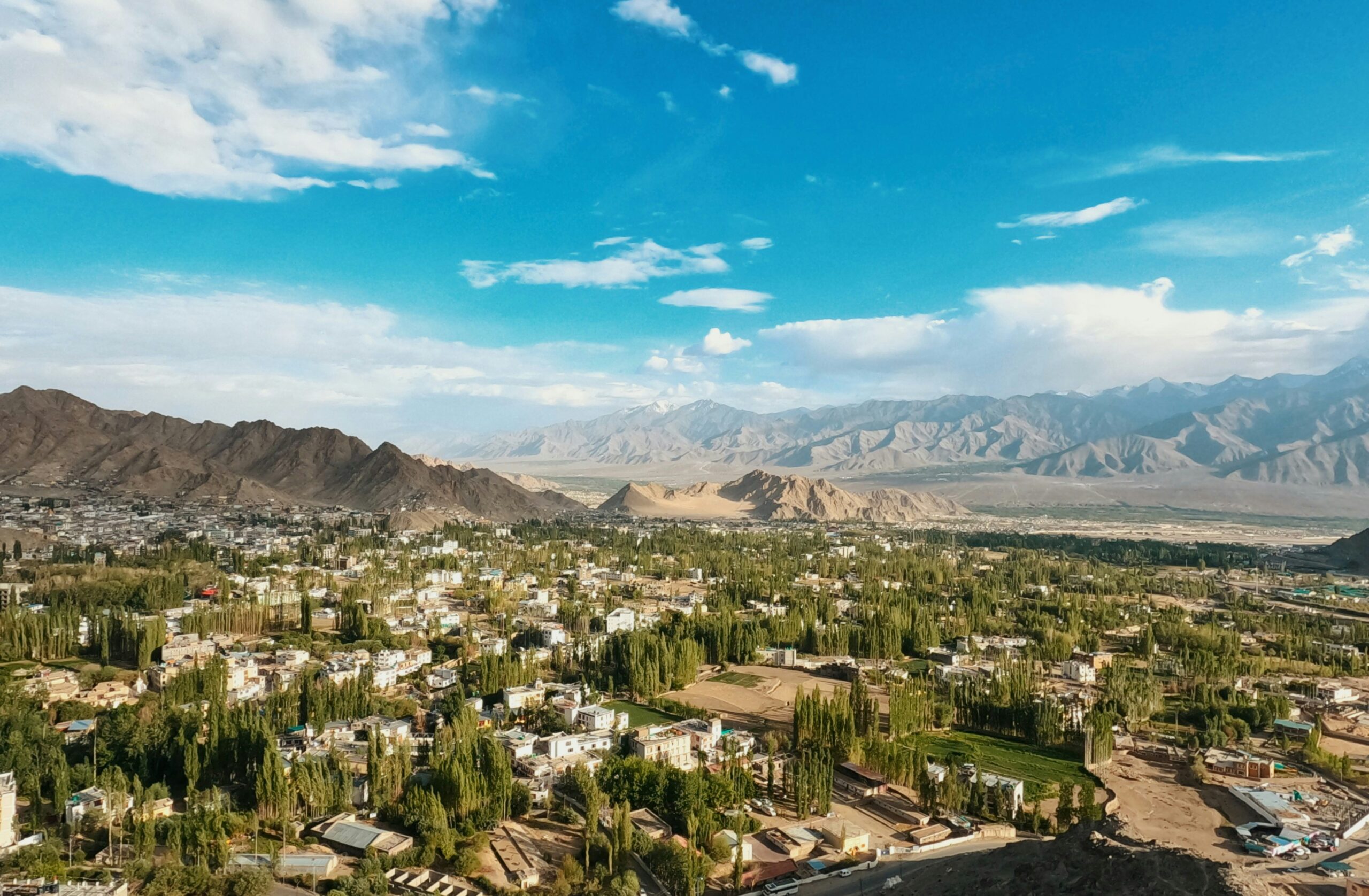
Leh, from a distance, can look like a quiet town holding still in the dry clarity of the Indus valley. But historically, its stillness was a kind of concentrated motion. It was a place where movement paused so that movement could continue. Caravans did not simply pass through; they reorganized themselves. Traders arrived with goods shaped by one economy and left with goods shaped by another. Languages overlapped. Measures and weights had to be reconciled. Credit was arranged. News was traded with the seriousness of a commodity.
A crossroads city does not thrive because it produces everything; it thrives because it makes exchange possible. In Leh’s case, the exchange was more than material. It was cultural and procedural. The procedures—how to hire animals, how to find reliable guides, how to secure a safe place to store goods, how to handle disputes—were part of the city’s value. The art of crossing required institutions, even informal ones, and Leh offered them in a landscape where institutions were otherwise scarce.
In European terms, it may help to think of Leh less as a “remote town” and more as a high-altitude port. Ports are where routes converge, where delay is normal, where the horizon of commerce is always elsewhere. A port is also where people learn to live with uncertainty. And that is one of Leh’s historical signatures: it trained traders and travellers to treat uncertainty not as a crisis but as the ordinary condition of movement.
This also explains why the Silk Road narrative feels different when told from Ladakh. The story is not primarily about dramatic arrivals; it is about the patient work of making the next crossing possible. Leh’s greatness, in that sense, was quiet. It was logistical. It was the greatness of a place that understood that trade is not only about goods. It is about continuity.
The Indus Valley as a Spine, Not a Highway
The Indus valley, in Ladakh, is often described as a corridor—and that is accurate, as long as we resist the temptation to imagine it as a modern road. Historically, the valley functioned as a spine: a structural support from which routes branched out, and to which routes returned. It offered a relatively stable axis in a region defined by extreme variation. Water, settlements, and arable land clustered along it. This made it a natural place for staging: gathering people, animals, supplies, and information before taking on the more volatile crossings beyond.
But a spine is not the same as a highway. A highway assumes speed and standardization. A spine assumes flexibility. From the Indus valley, the movement of trade could pivot north toward Nubra and onward to Central Asia, or east onto the plateau routes that connected with western Tibet, or west and south toward Kargil and Kashmir. Each direction demanded a different kind of preparation. Each demanded a different social network. Each implied different risks and different profits.
This is where Ladakh’s “art of crossing” begins to show its real depth. Crossing was not merely the act of traversing a pass. It was the act of choosing which pass made sense given the shifting circumstances of the year. It was the act of aligning natural conditions with political conditions and human capacity. A successful trader was not simply someone with goods. It was someone with judgment.
The Indus valley enabled judgment by providing a place to pause and reassess. In a world without instant communication, the pause mattered. It allowed travellers to learn which routes were safe, which were blocked, which demanded higher payments, which had suffered a late storm. The valley was, in a practical sense, a communication hub. It carried the memory of the region—stories of successful crossings and disastrous ones—and that memory, more than any map, guided the next caravan out of Leh.
The Northern Corridor: Ladakh to Central Asia
The Leh–Yarkand Trade Route
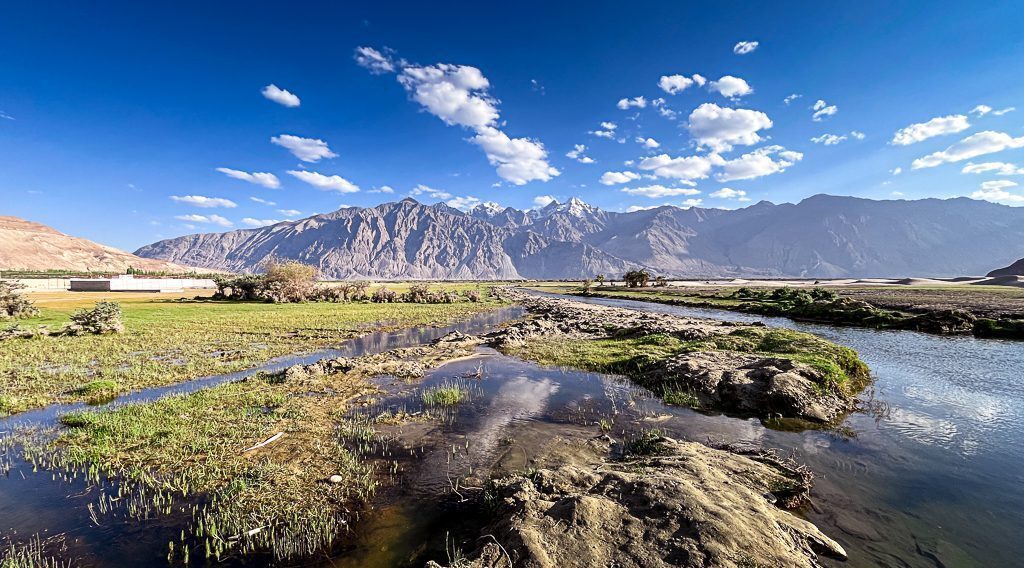
Among the most storied of Ladakh’s historical connections is the caravan route that linked Leh with the Central Asian markets of Yarkand and, beyond, Kashgar. To describe it as a single route is already to simplify it, because the journey depended on choices: which side valleys were usable, which camps were safe, which passes were open, which guides were available, and whether the political mood along the way permitted commerce to proceed without becoming a hostage.

Still, the outline is clear enough to reveal the scale of the undertaking. Traders moved north from Leh into the Nubra valley, a landscape that can feel unexpectedly lush after the austerity of the Indus corridor. From there the journey pushed deeper into high, spare spaces where the margin for error narrowed. The high plains and passes beyond were not a backdrop to heroism; they were an accounting problem. Every extra day cost food, fuel, wages, and animal strength. Every delay increased exposure to weather. Every choice had a price, even when the price was paid in fatigue rather than coin.
The route mattered because it made Ladakh part of a broader commercial world. It connected a high-altitude society to markets shaped by different climates, different economies, and different political centers. It brought goods, but it also brought standards, tastes, and information. The caravan was a moving archive of the region’s interdependence.
And yet the most important feature of the Leh–Yarkand trade route may be the way it teaches humility. Nothing about it was guaranteed. The crossing was an achievement even before the first deal was made. In that sense, the route embodies the central argument of this essay: the Silk Road was never a road. It was a sequence of decisions made under pressure, stitched together by experience, reputation, and the willingness to accept that the mountain always has the final vote.
What Moved North and South
The easy way to tell the story of the Silk Road is to list glamorous goods and leave it at that. The more honest way, especially in Ladakh, is to talk about value: what was valuable, to whom, and why. In the highlands, value often came from scarcity and portability. Goods that could endure harsh travel without losing their usefulness were favored. Goods that condensed a large price into a manageable load were prized.
Wool—particularly the fine varieties tied to high-altitude pastoral life—was a cornerstone of this economy. It represented not only material but labor, climate knowledge, and the ability to sustain herds in difficult environments. On the return flows, tea and textiles were more than comforts; they were social goods, shaping hospitality, daily ritual, and status. To understand this exchange is to understand that trade is never purely commercial. It reorders daily life. It changes what people consider necessary.
Yet what moved along these routes was not only goods. It was information: the rumor of a new tax, the news of conflict, the reputation of a market, the report of an early snowfall, the story of a caravan that lost animals and survived because it had the right guide. Information was the currency that allowed goods to move at all. In a world where routes could close suddenly, information was often the difference between profit and ruin.
This is another way Ladakh corrects the modern myth. The Silk Road, from the inside, was not a conveyor belt of luxury. It was a culture of risk management. The goods were the visible part; the invisible part was a network of knowledge and trust that made those goods movable. The art of crossing was, at its core, the art of keeping value intact across uncertainty.
The Eastern Plateau: Changthang and Western Tibet
Trade Across the Changthang
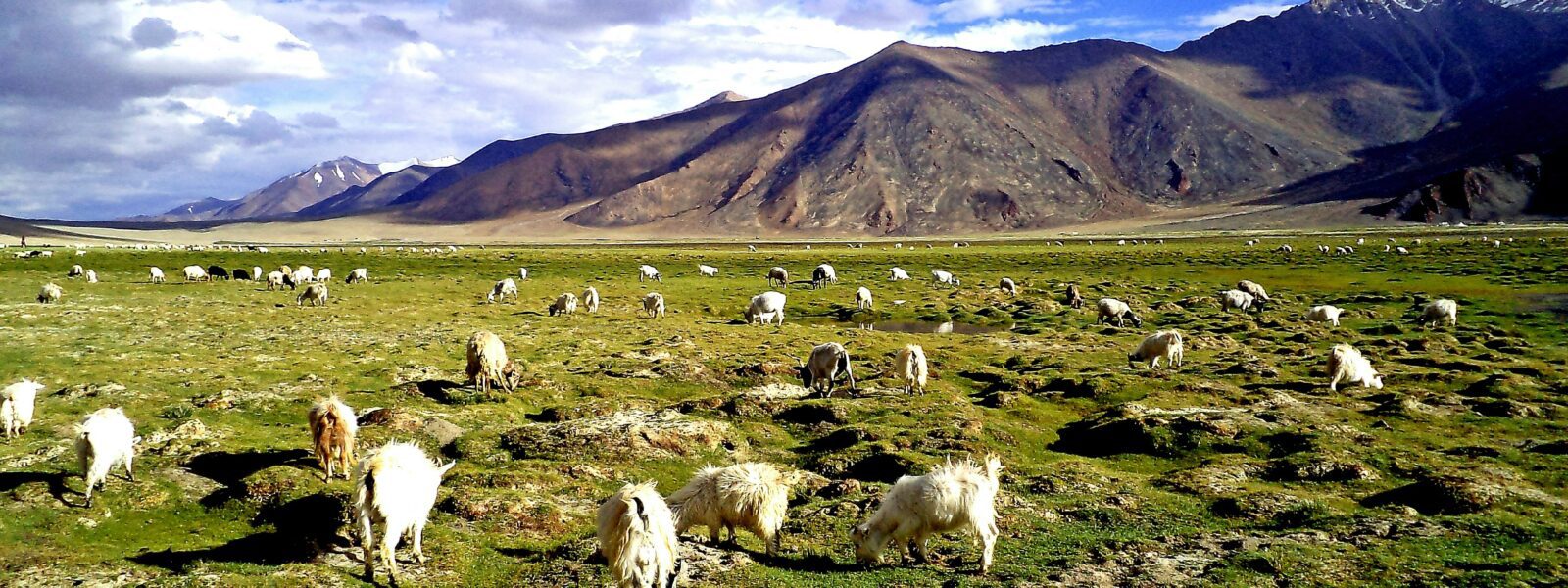
If the northern corridor toward Central Asia is often narrated as the dramatic route—high passes, long distances, and foreign markets—the plateau routes eastward across the Changthang have a different character. They are less about spectacle and more about continuity. The Changthang is frequently described as empty, but that is a misunderstanding born of looking for towns where there are instead patterns: pastoral movement, seasonal camps, and a social map written into water sources and grazing grounds.
Trade here was embedded in life. It moved with people who were already moving for pastoral reasons. It depended on relationships that were maintained not only through commerce but through shared knowledge of a landscape that could punish ignorance. Salt, wool, livestock, and other practical goods moved along these corridors, linking Ladakh with western Tibetan regions and the broader economy of the high plateau.
The crucial point is that this trade cannot be separated from ecology. To cross the Changthang was to accept that the land is not merely a surface to be traversed. It is an active participant. A dry year reshapes the route. A harsh winter reshapes the herd. A late thaw reshapes the schedule. Trade followed these rhythms because it had no choice.
This makes the Changthang corridor a powerful example of the Silk Road as a lived system rather than an abstract line. It shows that “route” can mean something as ordinary as a reliable sequence of camps, as practical as knowing which water sources hold in a dry season, and as human as knowing which communities will recognize you and treat you fairly. The art of crossing, here, is not a single heroic act. It is a long familiarity with a demanding world.
Seasonal Knowledge as Infrastructure
Modern infrastructure is concrete and steel. In the highlands, the older infrastructure was knowledge. It was the ability to read weather before it became visible. It was the memory of which pass holds snow longest. It was the understanding of how animals behave when the wind shifts. It was the social etiquette that turns a stranger into a guest and a guest into someone protected by reputation.
In Ladakh and across the plateau, seasonal knowledge functioned like a road. It told people where to go, when to go, and what to avoid. It also acted as a safety net. When a route failed, knowledge offered alternatives. When supplies ran low, knowledge offered the location of the next viable camp. When conflict made a corridor risky, knowledge offered the quiet ways around trouble—if not always safe, then safer than ignorance.
This is where the Silk Road story becomes less about commerce and more about culture. A culture that survives in a harsh environment builds its intelligence into daily life. It teaches children how to read the land. It preserves stories of past crossings not as entertainment but as instruction. It develops rituals of hospitality because isolation makes generosity a form of mutual insurance.
To call this “infrastructure” is not poetic exaggeration. It is a recognition that movement is always supported by something. In Ladakh, that support often came from people who could not afford to romanticize travel. They needed movement to work. Their knowledge kept the system alive. The Silk Road was never a road; it was the accumulated skill of communities who learned to make crossing possible.
The Southern Exit: Kashmir and the Markets Beyond
From High Plateau to Lowland Economy
Trade is not only about connecting distant places; it is about connecting different kinds of life. The corridor toward Kashmir—through Kargil and onward toward the larger markets of the subcontinent—was one of Ladakh’s essential linkages to lowland economies. Where the high plateau trade often dealt in goods shaped by scarcity and climate, the southern connections opened access to broader supplies, denser markets, and different forms of power.
This corridor also reminds us that geography alone does not define a route’s importance. A pass can be physically passable and still be economically constrained by taxation, permits, or conflict. The route toward Kashmir was not simply a matter of distance. It was a matter of governance. Who controlled the corridor? Who collected revenue? Who guaranteed protection, and at what price? These questions shaped the flow of goods as much as the terrain did.
For Ladakh, the southern corridor was an exit to scale. It connected a high-altitude hub to a world where volume could be larger, where money circulated differently, and where political authority could be more centralized. That connection mattered because it anchored Ladakh in a wider economic system. It also made Ladakh vulnerable to external shifts: changes in policy, conflict, or border regimes could disrupt the corridor, and disruption could echo back into daily life in the mountains.
To understand the Silk Road through this lens is to see it not as a romantic exchange of luxuries, but as a system that linked fragile highland economies to powerful lowland ones. Ladakh’s art of crossing included the art of dealing with scale—of moving between worlds that valued different things and enforced different rules.
Who Controlled the Crossing, and Why It Mattered
Every crossing has a gatekeeper, even if the gate is invisible. Sometimes the gatekeeper is a local authority collecting revenue. Sometimes it is an alliance of communities who can offer protection—or refuse it. Sometimes it is the blunt fact of a military presence. Historically, Ladakh’s corridors were shaped by shifting powers, and those powers understood a simple truth: whoever controls movement controls value.
Control did not always take the form of violence. It often took the form of administration: taxes, permissions, enforced routes, and negotiated arrangements that allowed commerce to proceed under certain conditions. But even administration has teeth when you are far from alternatives. The mountains amplify the cost of refusal. If a caravan is forced to reroute, the price is paid not only in money but in time, animal strength, and exposure to weather.
This is why the Silk Road should be read as political history as much as trade history. Routes did not merely exist; they were governed. Their safety was constructed. Their profitability was shaped by policy. In Ladakh, where a single corridor could be the difference between connection and isolation, governance was not an abstraction. It was lived.
And this is another way the “single road” myth fails. A single road implies a single authority, a stable regime of rules. A network implies negotiation—between powers, between communities, between seasons, and between the needs of trade and the realities of terrain. Ladakh’s crossings were never just physical. They were political agreements written into the landscape, revised whenever power shifted, and enforced by the fact that, in the mountains, there is rarely a cheap way around.
Crossing as a Skill, Not a Distance
Guides, Interpreters, and Middlemen
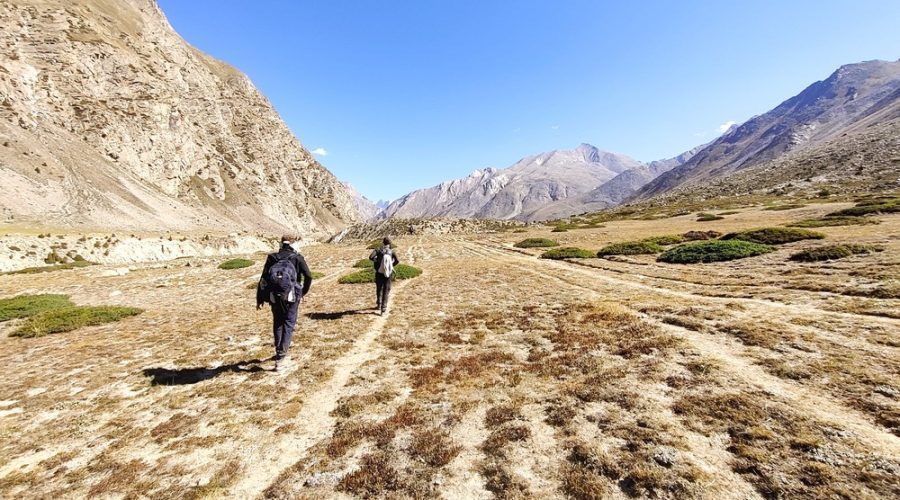
If you want to understand the Silk Road as it actually functioned, stop staring at the route and look at the people who made the route possible. In Ladakh, crossing was a profession. It belonged to guides who knew how quickly a storm can erase a track. It belonged to interpreters who could turn a misunderstanding into a negotiation rather than a fight. It belonged to caravan leaders who could read the condition of animals the way a sailor reads the sea.
These figures are often missing from popular retellings because they do not fit the romance. Yet they are the reason trade happened at all. A guide’s knowledge reduced risk. An interpreter’s skill reduced conflict. A middleman’s reputation reduced uncertainty by connecting strangers through trust. In a networked world, these roles were not peripheral; they were central infrastructure.
The presence of such roles also changes how we interpret “movement.” Movement was not simply the act of travelling. It was the act of sustaining a group through travel. It required logistics: food, fuel, shelter, animal care, and discipline. It required social intelligence: knowing when to press forward, when to wait, and when to retreat without panic. It required the ability to manage fear, because fear makes people stupid, and stupidity in the mountains can be fatal.
This is why Ladakh is such a powerful corrective to the Silk Road myth. It shows that the real story is not the road; it is the competence. A crossing is never merely a line between two points. It is a collective act of survival and negotiation. The art of crossing is the art of making that act repeatable.
Trust, Credit, and Reputation
Long-distance trade depends on an invisible technology: trust. Goods can be stolen. Deals can be broken. Promises can be revised in the cold light of a different market. In environments where formal enforcement is limited, trust becomes the system’s backbone. Ladakh’s role as a crossroads made it a place where trust had to be built, tested, and maintained across languages and cultures.
Credit is one of the most revealing forms of trust. To extend credit is to bet on someone’s future behavior. In a caravan economy, credit is also practical: it reduces the need to carry large amounts of currency, it allows trade to proceed despite delays, and it ties partners together in ways that can survive a failed season. But credit without trust is suicide. So reputation—carefully built and carefully guarded—became a form of currency.
Reputation travelled along the same corridors as goods. A trader known for fairness gained access to better terms. A guide known for competence gained more clients. A host known for hospitality became part of the route’s infrastructure. Conversely, a person known for betrayal could find themselves isolated in a world where isolation is expensive.
The mountains do not reward the loudest ambition; they reward the most dependable relationships.
This is why the Silk Road was never a road. A road implies you can travel alone, relying on the surface beneath you. A network of crossings implies you cannot. You rely on people, and people rely on what they believe about you. Ladakh’s art of crossing, at its deepest level, is an ethic: the quiet understanding that survival and commerce both depend on being someone others are willing to cross with.
When the Crossings Fell Silent
Borders, Modern States, and the End of Caravans
Networks can be resilient for centuries and still collapse quickly when the rules change. One of the most dramatic changes in the history of Ladakh’s trade corridors came with the modern hardening of borders. Where older systems often allowed for porous movement—regulated, taxed, negotiated, but possible—modern state boundaries increasingly demanded control that was absolute rather than conditional.
For corridor economies, this kind of border is a shock. It does not merely increase cost; it breaks the logic of the network. A route that depends on seasonal flexibility cannot easily survive a permanent closure. A trading relationship built on repeated crossings cannot easily survive when crossings become illegal or impractical. The caravan economy, which had been sustained by a combination of geography, knowledge, and negotiated authority, encountered a new kind of authority: one that preferred fixed lines to lived corridors.
The result was not only economic disruption but cultural amputation. When caravans stopped, the habits that supported them weakened. Knowledge that had been practically necessary became less teachable. Social networks that spanned regions thinned. A world that had been accustomed to exchange became accustomed to separation.
This is not nostalgia; it is historical consequence. The end of certain crossings did not only change what goods moved. It changed what kinds of relationships were possible. It changed how communities understood their place in a wider region. In Ladakh, the silence of the old corridors is not merely the absence of trade. It is the absence of a certain kind of familiarity with distance.
What Was Lost When the Routes Closed
When we say a route “closed,” we often mean a technical fact: fewer goods, fewer traders, fewer crossings. But what closes with a route is also a form of imagination. A networked world teaches you to think beyond your immediate horizon. It teaches you that other places are not abstractions but partners in a system of mutual influence. When the network collapses, the horizon can shrink.
Ladakh’s historical corridors carried a kind of cosmopolitanism that did not depend on modern institutions. It was built from repeated contact, from shared procedures, from the simple need to cooperate under harsh conditions. When those contacts diminished, the practical reasons for maintaining certain skills and relationships diminished as well.
The loss was also moral. The art of crossing required patience, restraint, and a disciplined respect for what you could not control. It required an ethic of hospitality because hospitality was part of the system’s resilience. When crossings become rare, hospitality can become performative rather than necessary, and systems of mutual support can weaken.
And yet the story is not only loss. The memory of crossings remains embedded in place names, in family histories, in the lingering logic of certain markets, and in the way Ladakh still understands movement as a serious undertaking rather than a casual activity. The silence is real, but it is not total. The corridors may no longer function as they once did, but the art that shaped them can still be read—if we choose to pay attention.
Conclusion: Ladakh and the Art of Crossing
The Silk Road Rewritten as Practice
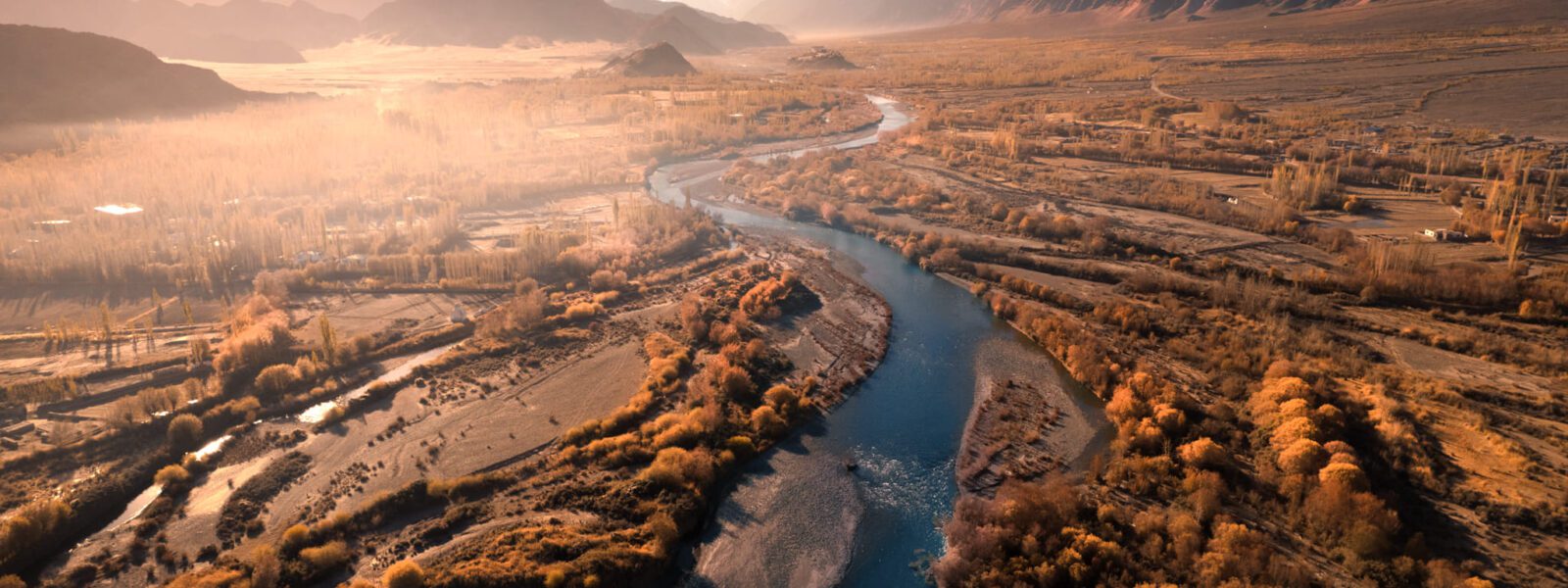
Ladakh does not allow the Silk Road to remain a decorative story. It makes the phrase accountable to terrain and time. It shows that trade was not a matter of moving along a convenient line, but a matter of creating continuity across discontinuity. Roads, in the modern sense, are built. Crossings, in the Ladakhi sense, are earned.
If we rewrite the Silk Road through Ladakh, we shift from objects to methods. We begin to see that the most enduring achievements were not the goods themselves but the systems that made goods movable: knowledge of seasons, networks of trust, institutions of hospitality, and the patient work of negotiation. We begin to see that the Silk Road was never one road because life in the highlands never permits only one solution.
This perspective also rescues the history from cliché. It returns agency to the people who actually sustained these routes: the guides who read weather like scripture, the traders who balanced risk against reward, the hosts who understood that shelter is a form of currency, and the communities who maintained corridors not as tourist legends but as living necessities.
In a time when we often confuse speed with success, Ladakh offers a different measure. It reminds us that movement can be wise or foolish, generous or exploitative, respectful or reckless. The Silk Road, seen from Ladakh, is not an antique fantasy. It is a lesson in how human beings build connection under constraint.
Clear Takeaways for Readers
First: the Silk Road is best understood as a network of corridors, not a single route. Second: Ladakh mattered because it served as a high-altitude node where routes were reassembled—logistically, culturally, and financially. Third: crossing was not a distance; it was a skill, supported by trust, credit, and seasonal knowledge. Fourth: modern borders did not merely change trade; they changed the relationships that trade sustained.
These takeaways are not only historical. They offer a way to think about our own age. Networks still depend on trust. Movement still depends on the hidden work that makes it possible. And the most important connections are often not the most visible ones, but the ones maintained by people who know how to cross responsibly.
The final truth Ladakh offers is simple, and quietly demanding: to cross well is to accept limits without surrendering curiosity. The old corridors asked for that balance. They still do, in their silence. And if we listen closely enough, Ladakh teaches us that the art of crossing is not a relic of the past. It is a human discipline—one we may need again.
FAQ
Q1: Was Ladakh really part of the Silk Road?
Yes—if we understand the Silk Road as a network of ancient trade routes rather than a single road. Ladakh, centered on Leh and the Indus valley, functioned as a crossroads linking corridors toward Central Asia, Kashmir, and the western Tibetan plateau, making it a key node in High Asia’s exchange system.
Q2: What is the Leh–Yarkand trade route?
It refers to the historical caravan connections between Leh and Central Asian markets such as Yarkand (and onward toward Kashgar). It was shaped by seasonal access, political conditions, and the practical limits of long mountain crossings, and it illustrates how trade relied on networks of knowledge rather than fixed “roads.”
Q3: What kinds of goods were traded through Ladakh?
Trade included practical and high-value goods suited to difficult transport: fine wool and pastoral products moving outward, and items such as tea and textiles moving inward, alongside everyday supplies. Just as important as goods was information—news, reputations, and route conditions—because it reduced risk and kept caravans viable.
Q4: Why do you say “the Silk Road was never a road”?
Because in mountainous regions like Ladakh, movement depended on multiple corridors that shifted with seasons, weather, and politics. A “road” suggests a stable surface and predictable access. A corridor network implies choices, negotiations, and contingency—an art of crossing sustained by guides, trust, and seasonal knowledge.
Q5: What caused many of these historical crossings to decline?
The tightening of modern borders and changing political regimes often disrupted older corridor systems that had relied on negotiated movement. When crossings became restricted or impractical, caravan networks weakened, and with them the skills and relationships that supported long-distance trade across High Asia.
About the Author
Declan P. O’Connor is the narrative voice behind Life on the Planet Ladakh,
a storytelling collective exploring the silence, culture, and resilience of Himalayan life.