
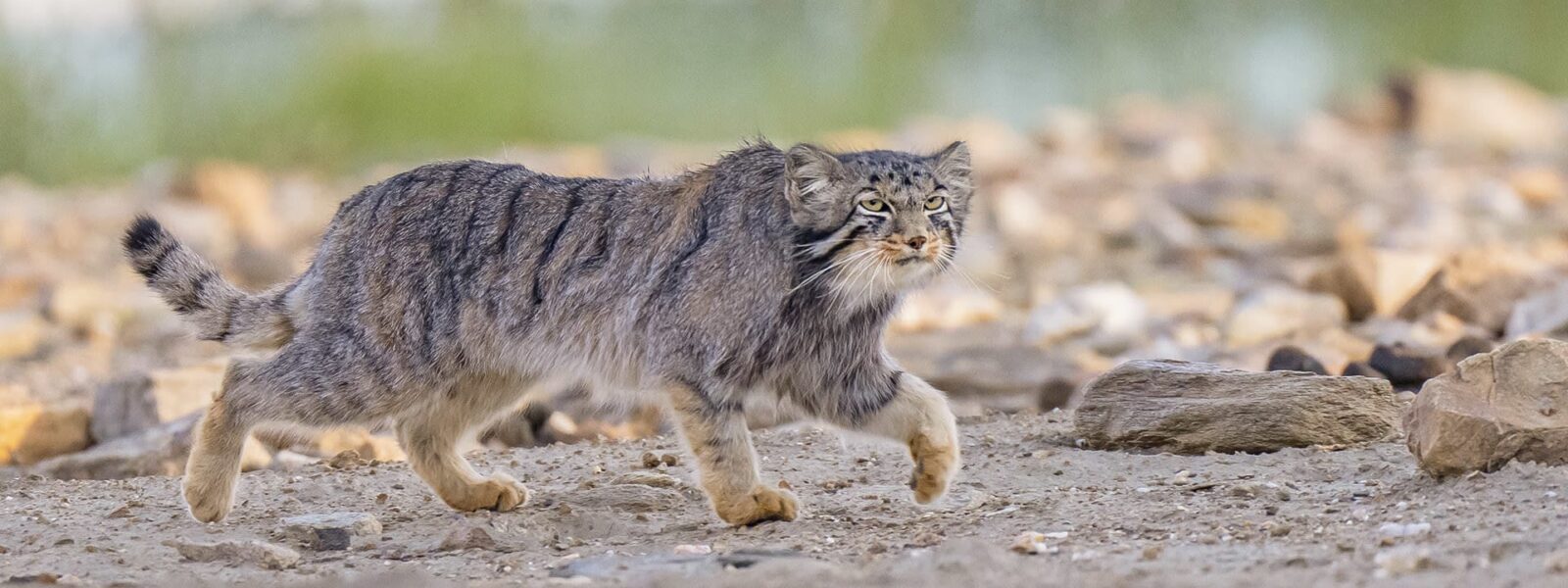
Discover the fascinating world of the Pallas’s cat, a small but fierce wild feline known for its distinct appearance, elusive nature, and resilience in harsh climates.
Also called the manul, this remarkable cat has a story that spans centuries, from the desolate mountains of Central Asia to its status as a beloved symbol in zoos and online culture.
Table of Contents
- Introduction to Pallas’s Cat
- Taxonomy and Classification
- Physical Characteristics
- Distribution and Habitat
- Behavior and Ecology
- Diet and Hunting
- Reproduction and Life Cycle
- Threats and Conservation Status
- In Captivity
- Fun Facts and Popular Culture
- Testimonials
- Q&A
Introduction to Pallas’s Cat
The Pallas’s cat (Otocolobus manul), sometimes called the manul, is one of nature’s most extraordinary wildcats. Adapted to survive in some of the most inhospitable environments on Earth, this stocky, long-haired feline thrives in the remote mountains, steppes, and shrublands of Central Asia.
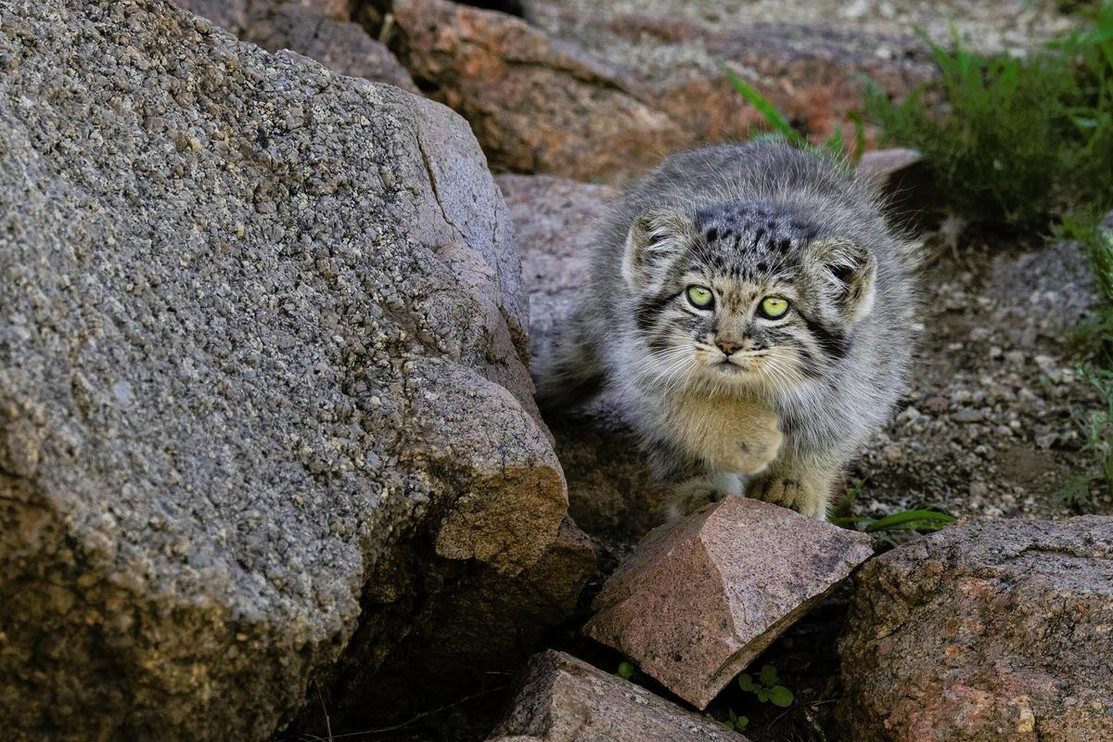
Known for its unique flat face, round pupils, and dense fur, the Pallas’s cat combines adorable looks with a fierce predatory instinct. Despite its status as Least Concern on the IUCN Red List, the species faces significant challenges due to habitat loss and human activity.
Taxonomy and Classification
| Scientific Name | Otocolobus manul |
|---|---|
| Common Name | Pallas’s Cat, Manul |
| Family | Felidae |
| Genus | Otocolobus |
| Described By | Peter Simon Pallas (1776) |
Subspecies:
- O. m. manul: Found in northern and western Central Asia.
- O. m. nigripectus: Inhabits the Himalayas.
The Pallas’s cat was first described by Peter Simon Pallas, a naturalist, who observed the animal near Lake Baikal. The genus name Otocolobus is derived from Greek, meaning “ugly ear,” though many find this feline anything but ugly.
Physical Characteristics
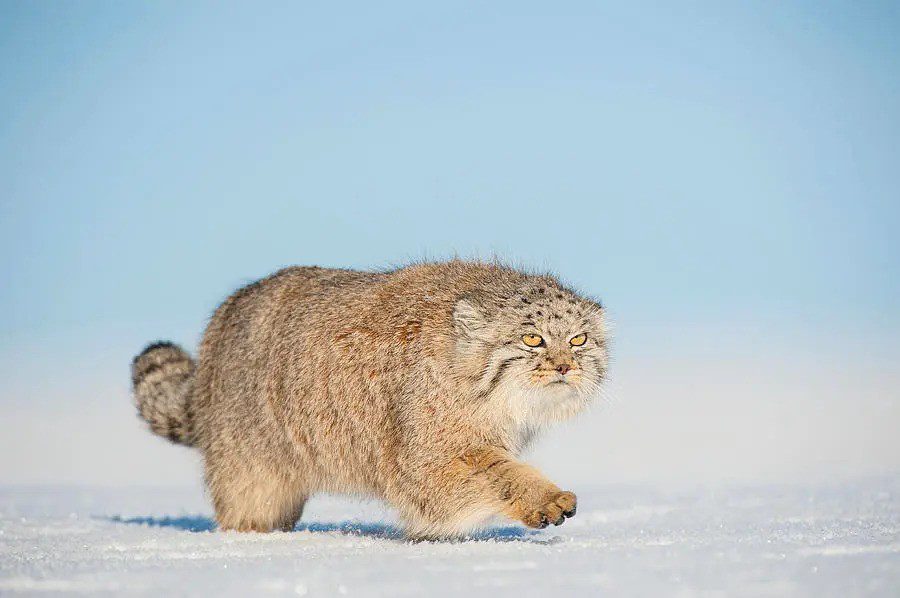
The Pallas’s cat is roughly the size of a domestic cat but appears larger due to its dense fur and stout build.
Key Features
- Fur: Light grey with yellowish or reddish hues. The coat changes seasonally, becoming denser in winter.
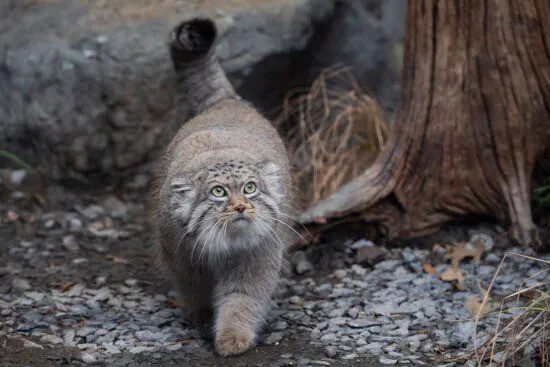
- Tail: Bushy, with black rings and a black tip.
- Head and Face: Flat skull with small, rounded ears set low on the sides of the head.
- Eyes: Unique round pupils, unlike the vertical slits typical of small cats.
- Size and Weight:
- Length: 46–65 cm (18–26 in)
- Tail: 21–31 cm (8.3–12.2 in)
- Weight: 2.5–4.5 kg (5.5–9.9 lbs)
Table: Comparison Between Domestic Cat and Pallas’s Cat
| Feature | Domestic Cat | Pallas’s Cat |
|---|---|---|
| Fur Length | Moderate | Very dense, long |
| Pupils | Vertical slits | Round |
| Habitat | Variable | Rocky, cold regions |
| Weight | 4–6 kg | 2.5–4.5 kg |
Distribution and Habitat
The Pallas’s cat has a wide but fragmented distribution across the montane grasslands and shrublands of Central Asia.
Geographic Range
- Found in 16 countries, from eastern Mongolia to western Iran.
- Key populations are concentrated in Mongolia and China.
Habitat Preferences
- Elevation: 3,000–5,050 meters.
- Terrain: Rocky slopes, ravines, and shrublands.
- Vegetation: Xerophytic grasses, sagebrush, and small shrubs.
In regions like Mongolia’s Gobi Desert and the Tibetan Plateau, the cat finds shelter in rock crevices and abandoned marmot burrows, allowing it to evade predators and extreme weather.
Behavior and Ecology
The Pallas’s cat is a solitary and primarily crepuscular animal, meaning it is most active during dawn and dusk.
Social Structure
- Solitary: Typically lives alone except during the breeding season.
- Dens: Uses caves, rock crevices, and marmot burrows for shelter and raising young.
Home Range
- Females: Home ranges vary from 7.4 to 125.2 km².
- Males: Ranges from 20.9 to 207.0 km², overlapping with females and sometimes other males.
Adaptations
- Low-set ears help avoid detection by predators and prey.
- Dense fur insulates against cold temperatures, while their small, compact body helps conserve heat.
Diet and Hunting
The Pallas’s cat is a highly specialized predator, relying heavily on small mammals like pikas and voles for survival.
Primary Prey
- Pikas: A staple in their diet.
- Rodents: Includes gerbils, voles, and squirrels.
- Occasional Prey: Birds, beetles, and grasshoppers.
Hunting Strategies
- Stalks prey near burrow entrances.
- Pulls rodents from burrows with its sharp paws.
- Ambushes prey by hiding in rocky crevices or behind shrubs.
Reproduction and Life Cycle
Breeding Season
- Occurs between December and March.
- Estrus lasts only 26–42 hours.
Gestation and Birth
- Gestation lasts 66–75 days.
- The female gives birth to litters of 2–6 kittens in dens or burrows.
Kitten Development
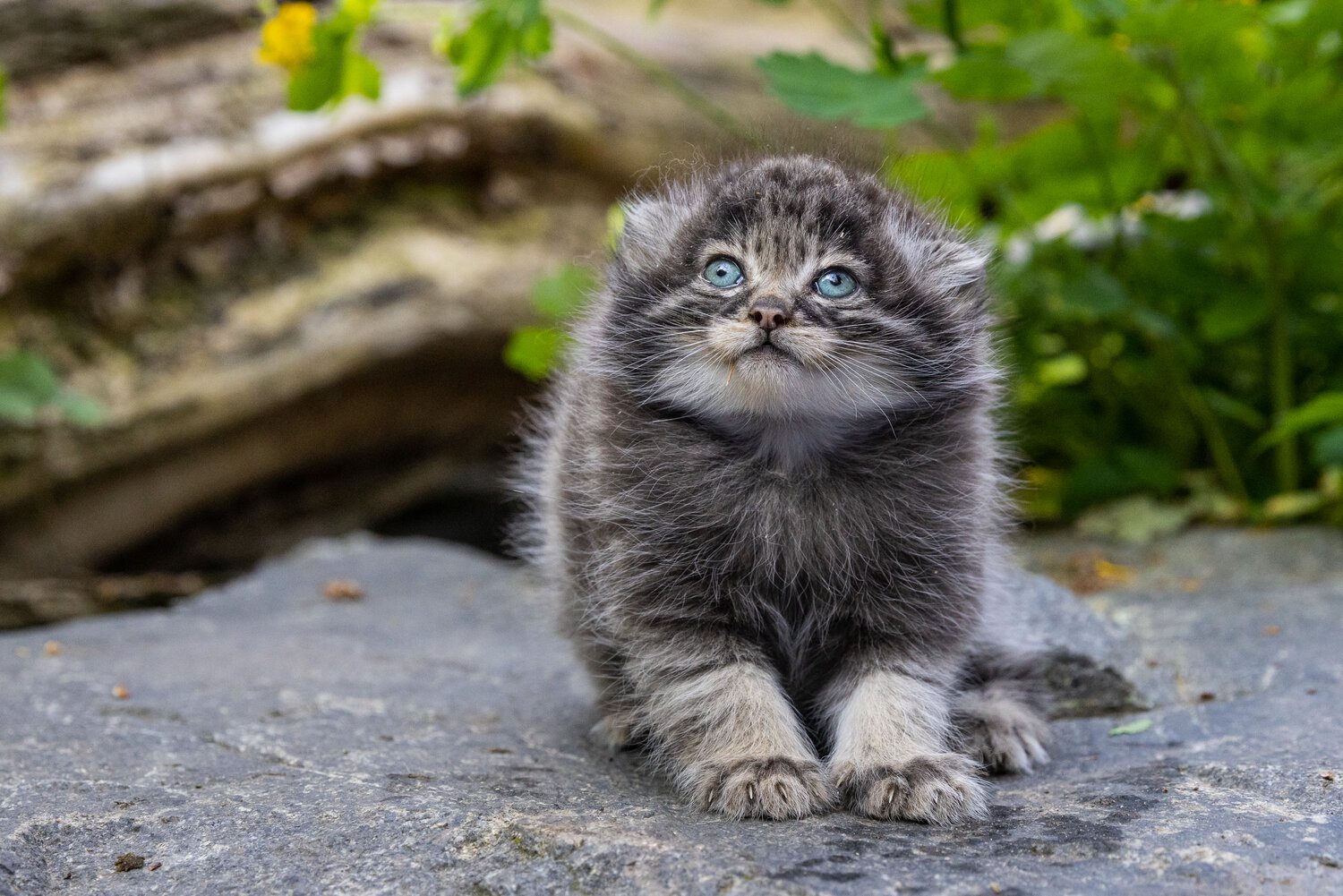
- Newborns: Fur is fuzzy, and eyes remain closed for the first two weeks.
- Weaning: Starts hunting at 5 months and reaches adult size by 6–7 months.
Maternal dens are carefully selected, often in rocky crevices or abandoned marmot burrows, providing protection from predators.
Threats and Conservation Status
Threats
- Habitat Loss: Mining, infrastructure projects, and agriculture destroy their natural habitat.
- Poaching: Hunted for their fur and use in traditional medicine.
- Predation: Often killed by domestic dogs.
- Prey Decline: Rodent control programs reduce their primary food source.
Conservation Efforts
- IUCN Status: Classified as Least Concern since 2020.
- CITES Appendix II: International trade is regulated.
- Protected in most range countries: Exceptions include Mongolia.
Mongolia has legal protections in place but continues to struggle with domestic trade of Pallas’s cat skins and body parts.
In Captivity
Captive breeding programs for the Pallas’s cat have achieved mixed success due to high infant mortality rates.
Notable Captive Breeding Facts
- Mortality rate: Nearly 50% of kittens die within the first 30 days.
- First artificial insemination: Achieved at Cincinnati Zoo in 2011.
- Captive population: As of 2018, 177 Pallas’s cats were housed in 60 zoos worldwide.
The Royal Zoological Society of Scotland manages the international studbook for Pallas’s cats, which coordinates captive breeding programs within the European Endangered Species Programme.
Fun Facts and Popular Culture
- The Pallas’s cat inspired the famous Russian meme “Pet the cat” in 2008.
- It is the official mascot of the Moscow Zoo since 2012.
- Their round pupils, unusual among small cats, make them unique in the animal kingdom.
Testimonials
“A Living Gem of the Highlands”
“I saw a Pallas’s cat during my trek in Ladakh. Its fierce yet adorable appearance left me speechless!”
— Emma D., Wildlife Photographer, Australia
“The Star of Our Visit”
“My children couldn’t stop talking about the Pallas’s cat at the zoo. It was the highlight of our trip!”
— Lucas F., Teacher, Canada
Q&A
Q1: Where can you find the Pallas’s cat?
A: The Pallas’s cat inhabits regions across Central Asia, from Mongolia to Iran, favoring rocky montane grasslands and steppes.
Q2: Why are Pallas’s cats difficult to spot?
A: Their solitary nature, camouflage, and preference for remote habitats make them elusive.
Q3: How does the Pallas’s cat survive harsh winters?
A: Its dense fur provides insulation, and it shelters in rock crevices and burrows to avoid extreme weather.
Q4: Can Pallas’s cats be kept as pets?
A: No, they are wild animals with specific needs that cannot be met in domestic environments.
Q5: How can I help conserve the Pallas’s cat?
A: Support organizations working on habitat preservation, anti-poaching efforts, and captive breeding programs.
Conclusion
The Pallas’s cat is a testament to nature’s ingenuity, thriving in extreme conditions with its specialized adaptations. Though elusive and mysterious, efforts to conserve this unique species are gaining momentum worldwide. Whether in the wilds of Mongolia or the enclosures of a zoo, the Pallas’s cat continues to fascinate and inspire those who encounter it.